Schizonepeta, a name in traditional Chinese medicine, refers to the dried aerial parts of Schizonepeta tenuifolia Briq., a plant belonging to the genus Schizonepeta in the Lamiaceae family.This herb has the effects of dispelling wind and relieving exterior syndromes, promoting the eruption of rashes and resolving sores, and stopping bleeding. It is primarily used to treat exterior syndromes caused by external pathogens, measles that fail to erupt, itching associated with rubella, early-stage sores and ulcers accompanied by exterior syndromes, as well as vomiting of blood, epistaxis, and hemorrhage.
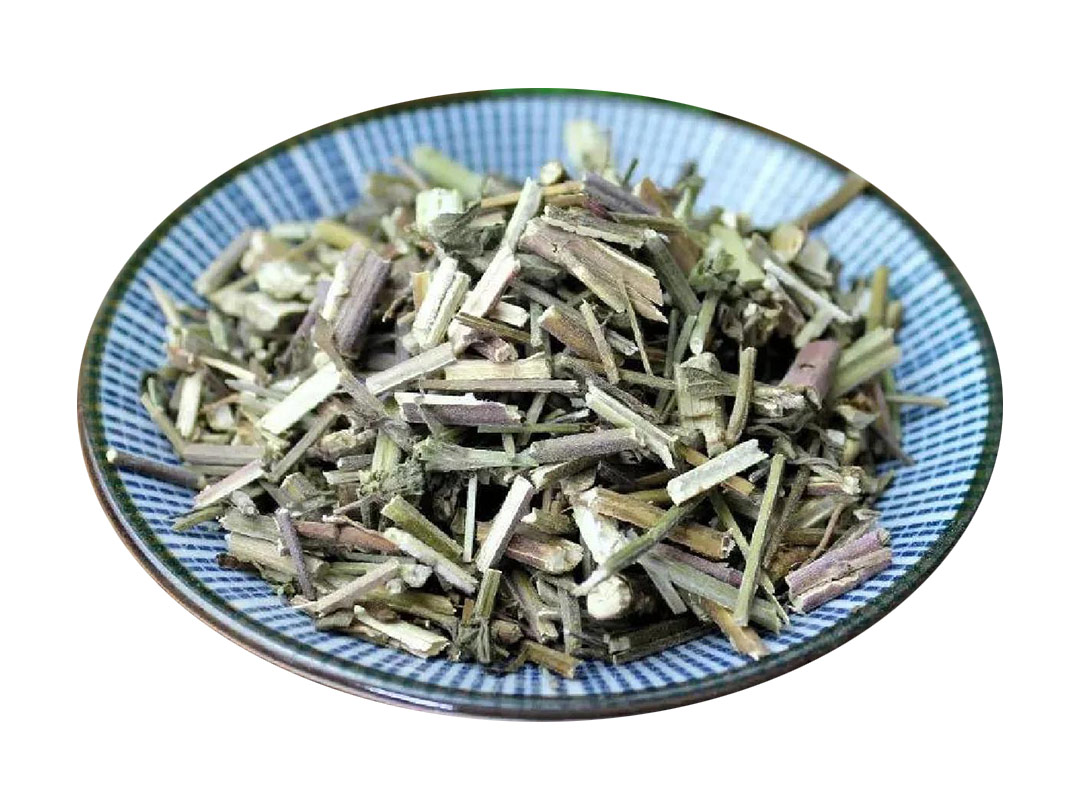
Schizonepeta
Schizonepeta, a name in traditional Chinese medicine, refers to the dried aerial parts of Schizonepeta tenuifolia Briq., a plant belonging to the genus Schizonepeta in the Lamiaceae family.This herb has the effects of dispelling wind and relieving exterior syndromes, promoting the eruption of rashes and resolving sores, and stopping bleeding. It is primarily used to treat exterior syndromes caused by external pathogens, measles that fail to erupt, itching associated with rubella, early-stage sores and ulcers accompanied by exterior syndromes, as well as vomiting of blood, epistaxis, and hemorrhage.
Chinese Name : 荆芥
Latin Name : Schizonepetae Herba
Aliases : False Perilla, Mouse-ear Herb, Ginger Mustard
Authentic Producing Area : Jiangsu, Zhejiang, Jiangxi, Hubei, Hebei
Nature, Flavor & Meridian Tropism : Slightly warm in nature, pungent in taste; enters the Lung and Liver meridians
Benefits & Efficacy
Benefits
Dispels wind and relieves exterior syndromes; promotes the eruption of rashes and heals sores; stops bleeding.
Indications
1. Exogenous Surface Syndromes: This herb has a pungent, dispersing nature and a fragrant aroma; it excels at releasing the exterior and dispelling wind. Furthermore, it is mildly warm without being harsh, and its properties are gentle, making it the most balanced of all herbs used to dispel wind-cold. It can be widely used for exogenous surface syndromes, regardless of whether they involve wind-cold, wind-heat, or cases where the distinction between cold and heat is unclear. 2. Retained measles and itchy rubella: This herb is light and penetrating, dispelling wind, relieving itching, and dispersing rash toxins. 3. Early-stage skin ulcers accompanied by exterior syndrome: This herb can dispel wind and resolve exterior syndrome, disperse pathogenic factors, and unblock stagnation to achieve the effect of resolving skin ulcers; therefore, it can be used for early-stage skin ulcers presenting with exterior syndrome. 4. Hemorrhage (vomiting blood, epistaxis, and bloody stools): When stir-fried until charred, the nature and properties of this herb change from pungent and warm to bitter, astringent, and mild. It excels at regulating blood and stopping bleeding, and can be used for various hemorrhagic conditions such as hematemesis, epistaxis, bloody stools, and metrorrhagia.
Usage and Dosage
Internal Use: Decoct in water, 4.5–9 g; avoid prolonged decoction. Use raw for relieving exterior syndromes, promoting the eruption of rashes, and resolving skin ulcers; use stir-fried for hemostasis. Schizonepeta spikelets are particularly effective for dispelling wind.
Precautions
1. As it is warm in nature, it should not be taken as a single herb in cases of exogenous wind-heat or warm-heat syndromes, internal heat, yin deficiency with excessive fire, or blood deficiency with blood heat. 2. It stimulates profuse sweat gland secretion; therefore, it should not be taken in large doses as a single herb for conditions such as spontaneous sweating or night sweats. Patients with seborrheic dermatitis should avoid its use. 3. Its pungent nature promotes dispersion; long-term use may deplete body fluids and qi. It is not suitable for long-term use by individuals with qi deficiency or those with weak constitutions, such as infants, young children, and the elderly.
Chemical Constituents
This product contains essential oils, the main components of which are (R)-menthone, racemic menthone, piperone, and small amounts of (R)-limonene. It also contains schizoneptin, schizoneptol, flavonoids, and other compounds.
Pharmacological Actions
A decoction of Schizonepeta can enhance cutaneous blood circulation, increase sweat gland secretion, and has a mild antipyretic effect; it exhibits strong antibacterial activity against Staphylococcus aureus and Corynebacterium diphtheriae, and has some inhibitory effect on Salmonella typhi, Shigella, Pseudomonas aeruginosa, and Mycobacterium tuberculosis.The raw herb does not significantly shorten bleeding time, whereas charred Schizonepeta does. Both methanol and ethyl acetate extracts of Schizonepeta exhibit certain analgesic effects. Schizonepeta has a marked anti-inflammatory effect against acetic acid-induced inflammation, and Schizonepeta spikes exhibit a pronounced anti-complement effect.
Relevant Discussions
1. *Shennong Bencao Jing*: Treats fever and chills, scrofula, scrofulous sores, disperses stagnant qi, expels stasis, and alleviates dampness-induced arthralgia.
2. *Treatise on the Nature of Medicinal Substances*: Treats malignant and sudden wind disorders, facial paralysis, generalized stubborn arthralgia, heart deficiency with forgetfulness, and enhances strength and vital essence. It primarily dispels pathogenic and toxic qi, relieves fatigue, and treats testicular swelling.
Applications
Clinical Applications
1. For treating wind-cold colds characterized by chills, fever, headache, and absence of sweating, it is commonly used in combination with herbs such as Fangfeng, Qianghuo, and Duhuo, as in the Jingfang Baidu Powder (from *The Collection of Wonderful Formulas for Nourishing Life*).
2. For wind-heat colds characterized by fever and headache, it is often combined with pungent-cool exterior-releasing herbs such as Lonicera japonica, Forsythia suspensa, and Mentha haplocalyx, as in the Yinqiao Powder (from *Treatise on the Differentiation of Warm Diseases*).
3. For conditions where exterior pathogens are trapped, such as the early stages of measles with incomplete eruption of the rash, it is commonly used with Cicada Slough, Mentha haplocalyx, and Lithospermum erythrorhizon;when combined with herbs such as Kushen, Fangfeng, and Bai Jili, it also treats itching associated with urticaria.
4. For the initial stage of skin ulcers accompanied by exterior syndrome. In cases dominated by wind-cold, it is often combined with herbs such as Qianghuo, Chuanxiong, and Duhuo; in cases dominated by wind-heat, it is frequently combined with herbs such as Lonicera, Forsythia, and Bupleurum.
5. For treating hemoptysis and epistaxis caused by uncontrolled blood heat, it is often combined with Sheng Dihuang, Bai Maogen, and Ce Bai Ye; for treating bloody stools and hemorrhoidal bleeding caused by blood heat, it is frequently combined with Di Yu, Huai Hua, and Huang Qin Tan; for treating excessive uterine bleeding and metrorrhagia in women, it can be combined with Zongmao Tan and Lianfang Tan—herbs that consolidate the uterus and stop bleeding.
Related Compatibility
1. Schizonepeta combined with Fangfeng: Both herbs are slightly warm without being dry or hot, and excel at dispelling wind and relieving exterior syndromes. Schizonepeta has a relatively strong diaphoretic effect, while Fangfeng is even more effective at dispelling wind. When used together, they dispel wind and induce sweating without causing dryness or harshness. This combination is commonly used for seasonal colds, chills, fever, body aches without sweating, and itchy hives.
2. Schizonepeta combined with Peppermint: Both herbs are aromatic, ascending, and floating in nature, with light and dispersing properties; they are both effective at ascending to the head and face. Schizonepeta is slightly warm and mild in nature, excelling at dispelling wind, relieving exterior syndromes, and promoting the eruption of rashes; Peppermint is cool in nature and not bitter, excelling at dispersing wind-heat, clearing and refreshing the head and eyes, and promoting the eruption of rashes while relieving itching.When used together, they complement each other: externally, they induce sweating to resolve exterior syndromes, bring rashes to the surface, and relieve itching; internally, they clear and refresh the head and eyes while dispersing stagnant heat. Combined with pungent-warm exterior-releasing herbs such as Fangfeng and Qianghuo, this combination is commonly used to treat wind-cold colds; when combined with pungent-cool exterior-releasing herbs such as Lonicera and Forsythia, it is commonly used to treat wind-heat colds;when combined with herbs that transform dampness and relieve summer heat—such as Huoxiang and Peilan—they are commonly used to treat colds complicated by dampness; when combined with herbs that dispel wind and relieve itching—such as Chantu and Baijiangcan—they are commonly used to treat urticaria with itching. Although the specific conditions differ, the treatment generally relies on their ability to induce sweating and resolve exterior syndromes.
3. Schizonepeta combined with raw gypsum: Schizonepeta is light in nature and dispersing, excelling at dispersing wind-pathogens; raw gypsum is pungent, sweet, and extremely cold, excelling at clearing and purging fire-heat from the lung and stomach. When used together, their pungent-cool and dispersing properties provide both clearing and penetrating effects. This combination is suitable for fever, headache, red eyes, and sore throat caused by exogenous wind-heat.
Medicinal Identification
Schizonepeta, Charred Schizonepeta, and Schizonepeta Spikes: Schizonepeta has a pungent and slightly warm nature, enters the Lung and Liver meridians, and has a relatively mild nature. It is a general-purpose herb for releasing the exterior and dispersing wind, with effects focused on resolving exterior pathogens, dispersing wind, promoting the eruption of rashes, and resolving sores. It is commonly used for the common cold, headaches, measles, rubella, and the early stages of skin ulcers.Charred Schizonepeta has a pungent, astringent, and slightly warm nature; it enters the Lung and Liver meridians. Its functions include astringency and hemostasis, and it is primarily used for hematochezia, metrorrhagia, and postpartum syncope. Schizonepeta Spikes have the same nature, taste, and functions as Schizonepeta, but their diaphoretic effect is stronger than that of Schizonepeta, and their potency is greater.
Related Medicines
Cold-Relieving and Heat-Clearing Granules (oral solution), Wind-Heat Common Cold Granules, Gastrodia Headache Tablets, Zanglian Pills, and Wind-Dispelling and Itch-Relieving Granules.
Related Prescriptions
Jingfang Baidu Powder (*Essential Formulas for Nourishing Life*), Yinqiao Powder (*Treatise on Warm Diseases*), Bamboo Leaf and Burdock Decoction (*Extensive Medical Notes*), Jingfang Burdock Decoction (*Golden Mirror of Medical Orthodoxy*), and Sophora Flower Powder (*Formulas for Universal Relief*).
Medicinal Diet Therapy
Schizonepeta Porridge:
1. Benefits: Clears the throat, promotes sweating, and relieves exterior syndromes. Suitable for consumption in winter, it helps boost immunity and reduce the risk of illness.
2. Ingredients: 5 g each of Schizonepeta and light fermented black soybeans, 3–5 g of peppermint, and 100 g of rice.
3. Preparation: First, decoct Schizonepeta, light fermented soybeans, and peppermint together for 5 minutes; strain to separate the liquid from the residue, and set aside. Next, wash the rice and cook it into porridge. When the porridge is nearly done, add the herbal decoction and simmer for another minute or two before serving.
4. Usage: Consume with meals in the morning and evening.
Notes
Patients requiring treatment with traditional Chinese medicine should first consult a licensed TCM hospital, where a TCM practitioner will conduct a professional diagnosis and prescribe the appropriate herbal formula.
Processing & Preparation
Harvesting & Processing
Harvest in summer and fall when the flowers have fully bloomed and the spikes are green; remove impurities, sun-dry, and cut into sections.
Processing Methods
1. Schizonepeta: Take the raw herb, remove residual roots and impurities, rinse with clean water, wash thoroughly, moisten thoroughly, cut into sections, and sun-dry.
2. Schizonepeta Panicles: Pick the flower panicles, sift out dust, and cut into sections.
3. Roasted Schizonepeta: Place Schizonepeta sections in a pot.Heat over low heat and stir-fry until they turn a light yellow color. Remove and allow to cool.
4. Charred Schizonepeta: Place the Schizonepeta segments in a pan and heat over high heat. Stir-fry until the surface turns dark brown and the interior turns charred brown. Then, sprinkle a small amount of clean water to extinguish all embers. Remove, air-dry, and allow to cool completely.
5. Charred Schizonepeta Spikes: Place the Schizonepeta spikes in a wok. Heat over high heat and stir-fry until the surface is charred black and the interior is dark brown. Spray with a small amount of water to extinguish any remaining embers, then remove, air-dry, and allow to cool completely.
6. Vinegar-Fried Schizonepeta: Take Schizonepeta segments and stir-fry with vinegar until most of the material turns black, retaining its inherent properties. Use 10 kg of rice vinegar for every 100 kg of Schizonepeta segments.
7. Honey Schizonepeta: Take refined honey, dilute it with an appropriate amount of boiling water, add clean Schizonepeta segments, mix well, and let stand briefly. Place the mixture in a pan and heat over low heat, stir-frying until the surface turns yellow and the mixture no longer sticks to the hands. Remove and let cool. For every 100 kg of Schizonepeta segments, add 25 kg of refined honey.
Storage Methods
Store in a dry container. Vinegar-processed Schizonepeta and honey-processed Schizonepeta should be kept in airtight containers and stored in a cool, dry place to prevent moisture absorption. Take precautions against reignition when storing Schizonepeta charcoal.
Crude Drug Identification
Identification
1. The powder of this product is yellowish-brown. The peristome epidermal cells of the persistent calyx have deeply undulating transverse walls. The heads of glandular scales consist of 8 cells, with a diameter of 96–112 μm; the stalks are single-celled and brownish-yellow. The heads of small glandular trichomes consist of 1–2 cells, with single-celled stalks. Non-glandular trichomes consist of 1–6 cells, most of which have wall warts.On the surface, exocarp cells appear polygonal, with mucilaginized walls and cell cavities containing brown material; in cross-section, the cells are square- or rectangular-like, with small cell cavities. Endocarp stone cells are pale brown; viewed from the surface, their vertical walls are deeply undulating and densely pitted. Fibers have a diameter of 14–43 μm, with straight or slightly undulating walls.
2. Take 0.8 g of the crude powder of this product, add 20 mL of petroleum ether (60–90 °C), seal tightly, shake occasionally, let stand overnight, filter, and evaporate the filtrate to 1 mL to prepare the test solution.Separately, take 0.8 g of Schizonepeta tenuifolia reference material and prepare a reference material solution using the same method. Perform thin-layer chromatography (General Chapter 0502): pipette 10 μL of each of the two solutions and apply them separately onto the same silica gel H plate. Develop with n-hexane–ethyl acetate (17:3) as the developing solvent, remove the plate, and allow it to air-dry.spray with a 5% ethanol solution of sulfuric acid containing 5% vanillin, and heat at 105°C until the spots become clearly visible. In the test sample chromatogram, spots of the same color appear at positions corresponding to those in the reference herbal material chromatogram.
Properties of Crude Drugs
The stem of this product is quadrangular, branched at the upper part, 50–80 cm long, and 0.2–0.4 cm in diameter; the surface is pale yellowish-green or pale purplish-red, covered with short soft hairs; it is light in weight, brittle, and the cross-section is off-white. The leaves are opposite, mostly fallen off; the leaf blades are 3–5-pinnately lobed, with slender, elongated lobes.The inflorescence is a terminal spicate corymb, 2–9 cm long and approximately 0.7 cm in diameter. The corollas have mostly fallen off; the persistent calyx is bell-shaped, 5-lobed at the apex, pale brown or yellowish-green, and covered with short soft hairs; the nutlets are brownish-black. It has an aromatic odor and a slightly astringent, pungent, and cool taste.
Properties of Processed Slices
1. Schizonepeta: This product consists of irregular segments. The stem is quadrangular, pale yellow-green or pale purplish-red in color, and covered with short soft hairs. The cross-section is off-white. Most of the leaves have fallen off. It bears spicate verticillate inflorescences. It has a fragrant aroma and a slightly astringent, pungent, and cool taste.
2. Schizonepeta Spikes: This product consists of cylindrical spikelike verticillate inflorescences, approximately 2–15 cm long and 7 mm in diameter. The corollas have mostly fallen off; the persistent calyx is yellowish-green or pale brown, bell-shaped, with 5 calyx teeth. It is brittle and easily broken, containing small brownish-black nuts inside. It has a fragrant aroma and a slightly astringent, pungent, and cool taste.
3. Charred Schizonepeta: This product consists of irregular segments, each 5 mm long. The entire specimen is blackish-brown. The stem is square-columnar, light in weight, brittle, and has a charred-brown cross-section. The leaves are opposite and mostly shed. The corolla is mostly shed, and the persistent calyx is bell-shaped. It has a slight charred aroma and a bitter, pungent taste.
Botanical Information
Botanical Classification
Derived from Schizonepeta tenuifolia, a plant of the genus Schizonepeta in the Lamiaceae family.
Morphological Characteristics
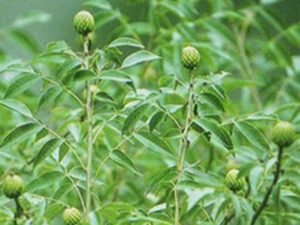
An annual herb, 60–90 cm tall. The stem is erect, quadrangular, slightly purplish at the base, densely branched toward the top, and covered with short soft hairs throughout.Leaves are opposite, deeply pinnately lobed; those at the base of the stem have 5 lobes; those in the middle and upper parts have 3–5 lobes, which are linear or lanceolate, 1.5–2 cm long, 2–4 mm wide, entire, pubescent on both surfaces, and with depressed glandular dots on the underside.Spike-like verticillate inflorescences, often densely clustered at the branch tips, 3–8 cm long; bracts leaf-like, linear, 0.4–1.7 cm long, green, sessile; calyx campanulate, ca. 3 mm long, with 5 longitudinal veins, hairy, 5-lobed at the apex;The corolla is pale purple, two-lipped, about 4 mm long, with the upper lip 2-lobed and the lower lip larger and 3-lobed; there are 4 stamens, 2 of which are longer than the others; the ovary is 4-lobed, the style is basal, and the stigma is 2-lobed. There are 4 nutlets, ovate or elliptical, about 1 mm long, and brown. Flowering occurs from June to August, and fruiting from July to September.
Distribution Area
Distributed throughout most of China.
Growth Habits
Prefers a warm and humid climate; seedlings can tolerate temperatures around 0°C, but frost damage occurs at temperatures below -2°C. Prefers full sun, is sensitive to drought, and does not tolerate waterlogging. Best grown in loose, fertile, well-drained sandy loam, oil sand, or sandy loam soils. Avoid continuous cropping.
Propagation Methods
Propagated by seed.
Cultivation Techniques
Seed Propagation: Select individual plants or plots in the field that are vigorous, have dense foliage, produce numerous and dense spikes, and are free of pests and diseases for seed production. Harvest seeds when they are fully mature, plump, and deep brown or brownish-brown in color. Either direct seeding or seedling transplantation may be used. For spring sowing, the optimal period is late March to early April;for fall planting, the period is September–October; for hole sowing, the row and plant spacing should be 17–20 cm each. The seed rate is 3.75–4.50 kg per hm².For row sowing, use a row spacing of 20 cm and a sowing depth of 5 cm. The seed rate is 7.50–11.25 kg per 1 hm². For the seedling transplanting method in spring, the seed rate is 11.25–15 kg per 1 hm². Transplant in May–June when seedlings reach a height of about 15 cm.
Pest and Disease Control
1. Damping-off disease: Ensure proper drainage or plant in raised beds. If the disease occurs, irrigate with an 800-fold dilution of Fungicide 401 or a 1,000-fold dilution of 50% carbendazim.
2. Black spot disease: Remove and burn infected plants, or control the disease with a 500-fold dilution of 65% zinc mancozeb wettable powder.
3. Schizonepeta stem rot may also occur. Pests include the silver-striped night moth and others.