Sterculia lychnophora is a commonly used herb for clearing heat and resolving phlegm. It is the mature seed of Sterculia lychnophora Hance, a plant in the Sterculiaceae family. It has the effects of clearing heat and moistening the lungs, relieving throat discomfort and restoring voice, and moistening the intestines to promote bowel movements. It is primarily used to treat hoarseness due to lung heat, dry cough without phlegm, dry and sore throat, constipation due to heat accumulation, and headache with red eyes.
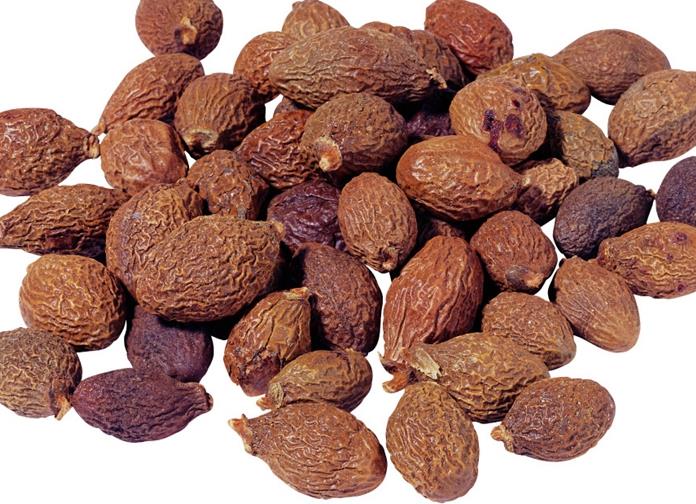
Sterculia
Sterculia lychnophora is a commonly used herb for clearing heat and resolving phlegm. It is the mature seed of Sterculia lychnophora Hance, a plant in the Sterculiaceae family. It has the effects of clearing heat and moistening the lungs, relieving throat discomfort and restoring voice, and moistening the intestines to promote bowel movements. It is primarily used to treat hoarseness due to lung heat, dry cough without phlegm, dry and sore throat, constipation due to heat accumulation, and headache with red eyes.
Chinese Name : 胖大海
Latin Name : Sterculiae Lychnophorae Semen
Aliases : Annanzi, Dahongguo, Hudahai, Dafa, Tongdahai, Dahai, Dahai Lan
Authentic Producing Area : Mainly produced in Thailand, Vietnam, and Cambodia
Nature, Flavor & Meridian Tropism : Sweet in taste, cold in nature; enters the Lung and Large Intestine meridians
Benefits & Efficacy
Benefits
Clears heat and moistens the lungs; soothes the throat and restores the voice; moistens the intestines and relieves constipation.
Indications
Used to treat hoarseness due to lung heat, dry cough without phlegm, dry and sore throat, constipation due to heat accumulation, and headache with red eyes.
Usage and Dosage
Take 2–3 seeds, steeped in boiling water or decocted.
Precautions
While taking Sterculia seeds, avoid tobacco, alcohol, and spicy, raw, cold, greasy, fried, or other irritating foods.
Chemical Constituents
This product primarily contains polysaccharides—composed of D-galactose, L-rhamnose, and sucrose—as well as organic acids such as 2,4-dihydroxybenzoic acid. Additionally, it contains carotene and other compounds.
Pharmacological Actions
Sterculia seed extract has a vasoconstrictive effect on vascular smooth muscle, can alleviate mucosal inflammation, and relieve spastic pain. The aqueous extract promotes intestinal peristalsis and has a mild laxative effect, with the seed kernel exhibiting the strongest effect. A solution of the seed kernel has a hypotensive effect. Furthermore, preparations such as tinctures exhibit antiviral, antibacterial, and anti-inflammatory effects.This product has a certain stimulating effect on specific immune function. Aqueous extracts from the outer skin, soft shell, and kernel all exhibit diuretic and analgesic effects, with the kernel exhibiting the strongest activity.
Relevant Discussions
1. *Supplements to the Compendium of Materia Medica*: “Treats measles caused by internal heat; upon ingestion, the rash appears immediately. It also treats all heat-related conditions and exhaustion-induced injuries, vomiting of blood, nosebleeds, and bloody stools; it disinfects, dispels summer heat, and cures epidemic red eye and wind-heat toothache… It is effective for dry cough without phlegm, bone-consuming internal heat, triple-burner fire syndromes, and various skin ulcers.”
2. *Ben Cao Zheng Yi*: “It excels at dispersing and regulating lung qi, and can also clear and drain the skin and hair. It treats external wind-pathogen obstruction, regardless of whether it manifests as cold or heat. Furthermore, it can restore the voice and treat hoarseness, relieve coughing, and expel phlegm.”
Applications
Clinical Applications
1. For treating hoarseness due to lung heat, sore throat, and cough—it helps resolve phlegm, soothe the throat, and restore the voice. It is commonly steeped and consumed alone, though it may also be combined with Platycodon grandiflorus (Jiegeng) and Glycyrrhiza uralensis (Gancao), among others.
2. For treating constipation caused by dry heat, headaches, and red eyes—it may be steeped and consumed alone, or combined with heat-clearing and laxative herbs to enhance efficacy.
Related Compatibility
1. Pangda Hai Combined with Raw Rehmannia: Pangda Hai is sweet, cold, and light in nature; it excels at clearing and dispersing lung qi, resolving phlegm, and soothing the throat. Raw Rehmannia is sweet, bitter, and cold; it both clears heat and cools the blood, while also nourishing yin and generating body fluids. When used together, these two herbs enhance the effects of clearing lung heat and soothing the throat. This combination is suitable for throat swelling and pain, as well as hoarseness caused by yin deficiency with excessive fire.
2. Sterculia seed combined with Northern Glehnia root: Sterculia seed is sweet, cold, and light in nature; it excels at clearing and dispersing lung qi, resolving phlegm, and relieving throat discomfort. Northern Glehnia root is sweet, moist, bitter, and cold; it both tonifies lung yin and clears lung heat. When used together, these two herbs combine clearing and tonifying actions to nourish yin, moisten the lungs, resolve phlegm, and relieve throat discomfort. This combination is suitable for dry cough with scant phlegm, hemoptysis, or a dry throat and hoarseness caused by yin deficiency and lung dryness.
3. Sterculia Seed Combined with Mulberry Bark: Sterculia Seed is sweet, cold, and light in nature; it excels at clearing and dispersing lung qi, resolving phlegm, and relieving throat discomfort. Mulberry Bark is sweet, cold, and descending in nature; it primarily enters the Lung Meridian and specializes in purging lung heat and alleviating wheezing and coughing. When used together, these two herbs enhance the effects of clearing and purging lung heat, resolving phlegm, and stopping cough. This combination is suitable for conditions characterized by severe lung heat, with coughing, wheezing, and yellow phlegm.
4. Sterculia Seed Combined with Platycodon Root: Sterculia Seed is sweet, cold, and light in nature; it excels at clearing and dispersing lung qi, resolving phlegm, and relieving throat discomfort. Platycodon Root is pungent and dispersing, bitter and draining; its primary function is to disperse lung qi, eliminate phlegm, and relieve throat discomfort. When combined, these two herbs work together to disperse lung qi, descend qi, relieve throat discomfort, restore voice, and resolve phlegm. This combination is suitable for conditions characterized by cough with copious phlegm, hoarseness, and chest tightness.
Medicinal Identification
1. Sterculia and Platycodon: Both herbs can promote lung function, resolve phlegm, soothe the throat, and restore the voice, and are used to treat coughs with excessive phlegm, sore throat, and other conditions. However, Sterculia is sweet, cold, and light in nature; it excels at clearing the lungs, resolving phlegm, moistening the intestines, and promoting bowel movements. It is often used for hoarseness due to lung heat, sore throat, dry-heat constipation, headaches, and red eyes;Platycodon, with its pungent and dispersing nature and bitter and draining properties, excels at opening and dispersing lung qi, eliminating phlegm, and regulating qi; it can also expel pus and is particularly effective for treating coughs with copious phlegm, chest tightness and discomfort, sore throat with loss of voice, and lung abscesses with pus discharge.
2. Sterculia and Schisandra: Both can clear the lungs and soothe the throat, making them commonly used herbs for treating sore throat and swelling.However, Pangda Hai is sweet, cold, and light in nature; it excels at clearing the lungs, resolving phlegm, moistening the intestines, and promoting bowel movements. It is often used for hoarseness due to lung heat, sore throat, dry-heat constipation, headaches, and red eyes; Mu Hudie is bitter, sweet, and cool in nature; it not only clears the lungs and soothes the throat but also regulates the liver and harmonizes the stomach. It is primarily used to treat laryngeal obstruction with hoarseness, coughs caused by lung heat, and liver-stomach qi pain.
Related Medicines
Compound Qingguo Granules, Huang’s Xiangsheng Pills, Jianmin Throat Tablets, and Jinguo Decoction.
Medicinal Diet Therapy
A medicinal dish featuring Pang Da Hai is Pang Da Hai tea.
1. Benefits: Clears heat, moistens the lungs, detoxifies, and soothes the throat. Suitable for symptoms such as sore throat, dry cough without phlegm, and hoarseness.
2. Ingredients: 3 Pang Da Hai, 15 grams of honey.
3. Preparation: Wash the Pang Da Hai, place them in a cup, add an appropriate amount of honey, pour boiling water over them, cover for 3 minutes, then uncover and stir well.
4. Usage: Drink as a tea substitute.
Notes
Patients requiring treatment with Chinese herbal medicine should first consult a licensed Traditional Chinese Medicine (TCM) hospital, where a TCM practitioner will conduct a professional pattern differentiation and prescribe an herbal formula.
Processing & Preparation
Harvesting & Processing
Harvest the seeds in April–June when the fruits ripen and split open, then sun-dry them.
Processing Methods
Take the raw herbal materials, remove impurities and empty seeds, and sift out dust and debris.
Storage Methods
Store in a dry container in a well-ventilated, dry place, protected from moisture and insect infestation.
Crude Drug Identification
Identification
1. Place several grains of this product in a beaker, add an appropriate amount of boiling water, and let stand for several minutes; the grains will absorb water and swell into a brown, translucent, sponge-like mass.
2. The powder of this product is brownish-black. The epidermal cells of the seed coat appear roughly square or pentagonal when viewed from the surface; they contain a pale brownish-yellow substance, and the vertical walls are thickened in a bead-like pattern, with paracytic stomata.The parenchyma cells of the seed coat are irregularly star-shaped, with single pits; some contain a pale brownish-yellow substance. Glandular trichomes are numerous, with fan-shaped or glandular-scale-like heads consisting of 8–20 cells containing brown secretions; the stalks are unicellular and extremely short. The lattice cells of the inner seed coat are pale yellow, polygonal in surface view, and contain a brownish-yellow substance within their vacuoles.
Properties of Crude Drugs
The seed is elliptical, olive-shaped, 2–3 cm long, 1.1–1.8 cm in diameter, and slightly pointed at both ends. The surface is yellowish-brown or brown, slightly glossy, with irregular fine wrinkles; the base is slightly pointed and bears a pale, circular hilum. The outer layer of the seed coat is extremely thin, brittle, and easily detached;the middle layer of the seed coat is relatively thick, blackish-brown, composed of parenchyma tissue, loose and brittle; when soaked in water, it swells rapidly into a spongy state, causing the outer layer of the seed coat to rupture; scattered resinous spots are visible on the cross-section;The inner seed coat is reddish-brown, slightly leathery, and can be separated from the middle layer. The endosperm is thick and pale yellow; there are two cotyledons, which are thin, yellow, and tightly adherent to the inner surface of the endosperm. It has a faint odor and a slightly sweet taste; when chewed for a long time, it becomes sticky. The best specimens are large, firm, brown, with fine wrinkles, and a luster.
Properties of Processed Slices
The seed is elliptical, with a pale, circular seed scar at one end. The outer skin is brown or dark brown, slightly glossy, and bears irregular fine wrinkles. The seed coat peels off easily, revealing a dark brown color; when soaked in water, the seed swells and becomes spongy. It has a faint odor and a slightly sweet taste; when chewed for a long time, it becomes sticky, and the seed kernel has an extremely numbing and spicy flavor.
Botanical Information
Botanical Classification
Pangda Hai, a plant of the Sterculiaceae family.
Morphological Characteristics
A deciduous tree reaching up to 40 m in height. The bark is rough and finely striated. Leaves are alternate; petioles are 5–15 cm long; leaf blades are leathery, oblong-ovate or slightly triangular, 10–20 cm long and 6–12 cm wide, with a blunt or acute apex, a rounded or nearly cordate base, entire margins or margins with three notches, smooth and glabrous, with prominent reticulate veins on the underside.Panicles are terminal or axillary; the plant is monoecious. The calyx is campanulate, 7–10 mm long, deeply lobed, with lanceolate lobes that are persistent and covered with stellate pubescence on the outside;Male flowers have 10–15 stamens; both anthers and filaments are sparsely pubescent, and the sterile carpels are covered with short soft hairs; female flowers have a single pistil composed of 5 short-pubescent carpels, with a slender, delicate ovary stalk; the stigma is 2–5-lobed; the staminodes consist of a cluster of anthers without filaments, attached in a ring around the ovary.There are 1–5 boat-shaped capsules, up to 24 cm long and 5–6 cm wide at the base; they split open before maturity and contain a single seed.The seeds are elliptical or oblong, sometimes spindle-shaped, 1.8–3 cm long and 1–1.6 cm in diameter, blackish-brown or yellowish-brown, with a sparsely covered surface of coarse wrinkles; the hilum is located on the lower part of the ventral surface and appears oblique.
Distribution Area
It is distributed in Vietnam, India, Malaysia, Thailand, and Indonesia. It has been introduced to Zhanjiang in Guangdong, Hainan, Dongxing in Guangdong, and Xishuangbanna in Yunnan, China.
Growth Habits
Gleditsia sinensis is native to the tropics; the average annual temperature in introduced areas ranges from 21–24.9°C. It prefers full sun, is drought-tolerant once mature, and is not particular about soil type, growing well in sandy loam, yellow soil, and brick-red soil. It is best planted in well-drained, sheltered areas.
Propagation Methods
Propagation is carried out via seeds, aerial layering, or grafting.
Cultivation Techniques
1. Seed Propagation: Harvest mature seeds with blackish-brown seed coats and distinctly wrinkled surfaces. Sow them in a clean sand bed using the furrow-and-spot method, with furrows spaced 12 cm apart, seeds spaced approximately 5 cm apart, and a planting depth of about 3 cm. After sowing, cover the seeds with sand, then cover the bed with rice straw, water thoroughly, and keep the bed surface moist.The dry seed weight is 1,270 g, with a seeding rate of approximately 675 kg per hectare. Once seedlings emerge, transplant them into nursery bags for further growth; when the seedlings reach a height of 30–50 cm, they can be transplanted into the field.
2. Air Layering: Select corky branches and perform ring barking 20–30 cm from the tip.About 1–2 days after ring-barking, once the wound has dried slightly, wrap the area around the wound with damp coconut husk or rice straw mixed with wet mud, then cover it with plastic film. New roots will develop in about 2 months; once these roots have begun to become corky, cut the branch and transplant it into a sand bed or directly into the field.
3. Grafting Propagation: Select branches from the upper canopy that are well-developed, with a diameter of 1–1.5 cm, and a brownish-green, relatively smooth surface. Cut a 12–15 cm section to serve as the scion. Use Scaphium wallichii Schott et Endl., a species within the same genus that has strong compatibility with Sterculia foetida, as the rootstock for side grafting. Alternatively, bud grafting can be performed by removing a bud segment from the scion.After the scion and rootstock have fused, cut off the main stem of the rootstock and regularly remove any suckers that sprout from it.
Pest and Disease Control
Pests include the green-scaled weevil; adults damage leaves and tender stems and can be removed by hand or by spraying with a 50-fold dilution of cottonseed oil soap.