Shuiwengye is the name of a traditional Chinese medicine. It consists of the leaves of Cleistocalyxoperculatus (Roxb.) Merr. et Perry, a plant in the Myrtaceae family.It is distributed in Guangdong, Hainan, Guangxi, Yunnan, and other regions. It has the effects of clearing heat and relieving food stagnation, detoxifying and killing parasites, and drying dampness to relieve itching. It is used to treat damp-heat diarrhea and dysentery, abdominal distension due to food stagnation, mastitis, damp sores, beriberi, scabies, skin itching, and wounds from knives or guns.
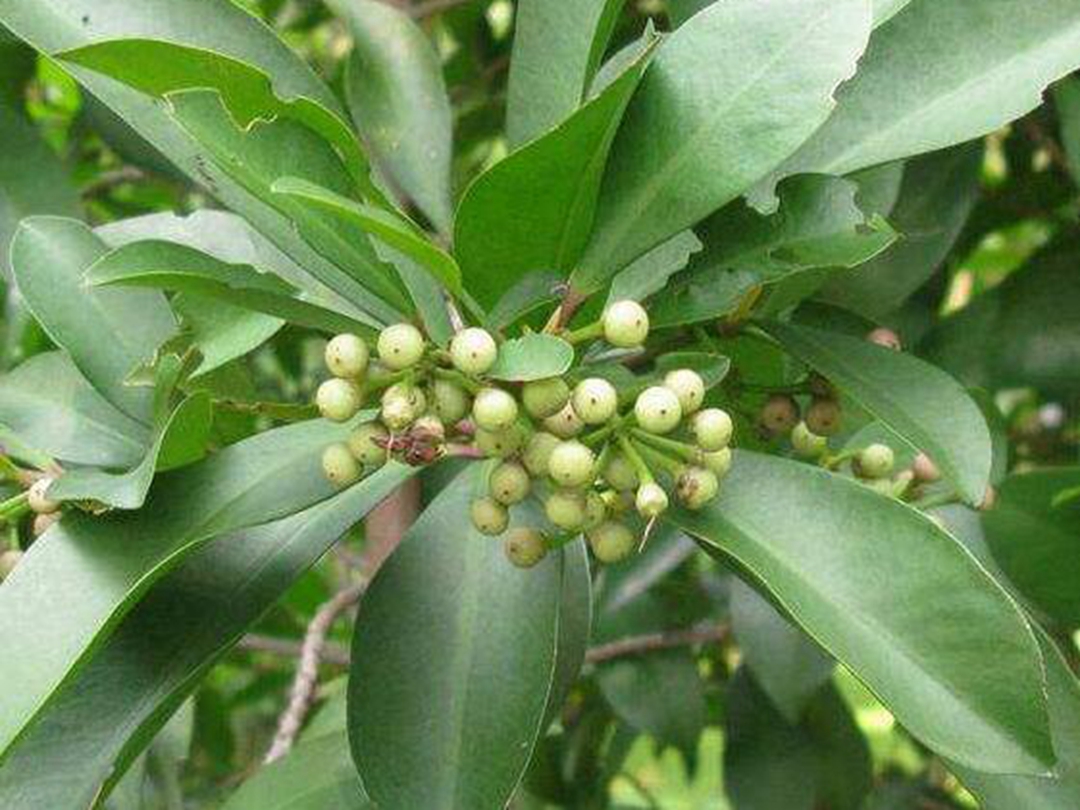
Water-Wong Leaf
Shuiwengye is the name of a traditional Chinese medicine. It consists of the leaves of Cleistocalyxoperculatus (Roxb.) Merr. et Perry, a plant in the Myrtaceae family.It is distributed in Guangdong, Hainan, Guangxi, Yunnan, and other regions. It has the effects of clearing heat and relieving food stagnation, detoxifying and killing parasites, and drying dampness to relieve itching. It is used to treat damp-heat diarrhea and dysentery, abdominal distension due to food stagnation, mastitis, damp sores, beriberi, scabies, skin itching, and wounds from knives or guns.
Chinese Name : 水翁叶
Nature, Flavor & Meridian Tropism : Bitter in taste, cold in nature. Entering the Liver Meridian
Benefits & Efficacy
Benefits
Clears heat and relieves food stagnation; detoxifies and kills parasites; dries dampness and relieves itching.
Indications
Used for damp-heat diarrhea and dysentery, abdominal distension due to food stagnation, mastitis, damp sores, beriberi, scabies, skin itching, and cuts or gunshot wounds.
Usage and Dosage
Internal use: Decocted as a soup, 6–15 g. External use: Apply an appropriate amount as a poultice or use the decoction for washing.
Relevant Discussions
*Selected Compendium of Guangxi Materia Medica*: “Clears heat and detoxifies. Treats mastitis, gunshot wounds, and knife wounds.”
Applications
Related Compatibility
1. For gastroenteritis and indigestion in children: 15–30 g of dried water fig leaves, decocted and taken orally. Halve the dose for children.
2. For mastitis: 120 g of fresh water fig leaves, pounded into a paste, boiled with wine, and applied as a hot compress to the affected area.
3. For chronic, festering sores: Use appropriate amounts of water fig leaves and purslane leaves; decoct in water and use the solution to wash the affected area repeatedly until healed. (Recipes 1–3 are from *Manual of Commonly Used Folk Medicinal Herbs in Beihai*)
4. For gunshot and knife wounds: Take an appropriate amount of fresh, tender water fig leaves, pound them into a paste, and apply to the wound. (*Selected Compendium of Guangxi Materia Medica*)
Processing & Preparation
Harvesting & Processing
Can be harvested year-round; use fresh or sun-dried.
Crude Drug Identification
Properties of Crude Drugs
Leaves are thin and leathery, oblong to elliptical, 11–17 cm long and 4.5–7 cm wide, with an acute or acuminate apex, a broadly cuneate or slightly rounded base, entire margins or slightly wavy edges, and numerous translucent glandular dots on both surfaces. Petioles are 1–2 cm long. When dried, the leaves turn a withered green color and may be wrinkled or fragmented. They have a faint odor and a bitter taste.
Botanical Information
Botanical Classification
Shuiweng, a plant of the Myrtaceae family.
Morphological Characteristics
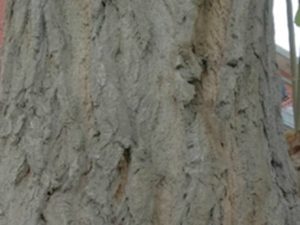
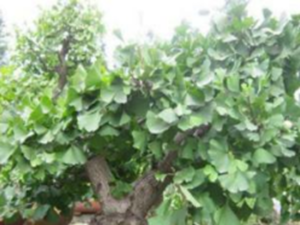
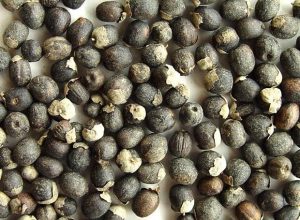
Shuiweng, also known as: Shuixiang, Jiuweng, or Shuirong. A tree reaching a height of 15 meters; the bark is grayish-brown and quite thick, with a highly branched trunk; young branches are flattened and grooved.Leaves are thin and leathery, oblong to elliptical, 11–17 cm long and 4.5–7 cm wide, with an acute or acuminate apex and a broadly cuneate or slightly rounded base; both surfaces bear numerous transparent glandular dots; there are 9–13 pairs of lateral veins, spaced 8–9 mm apart, angulated at 45°–65° and slanting upward; reticulate venation is distinct, and the marginal veins are 2 mm from the margin;Petiole 1–2 cm long. Panicles borne on leafless old branches, 6–12 cm long; flowers sessile, clustered in groups of 2–3; flower buds ovate, 5 mm long, 3.5 mm wide; calyx tube hemispherical, 3 mm long, cap-like structure 2–3 mm long, with a short beak at the apex; stamens 5–8 mm long;the style is 3–5 mm long. The berry is broadly ovate, 10–12 mm long and 10–14 mm in diameter, turning purplish-black when ripe. Flowering occurs from May to June.
Distribution Area
It is distributed in Guangdong, Hainan, Guangxi, Yunnan, and other regions.