Ophiopogon, a name in traditional Chinese medicine. It is the dried tuberous root of Ophiopogon japonicus (L.f.) Ker-Gawl., a plant in the Liliaceae family. It has the effects of nourishing yin and moistening the lungs, benefiting the stomach and promoting fluid production, and clearing the heart to relieve restlessness. It is primarily used to treat dry cough due to lung dryness, chronic cough due to yin deficiency, sore throat and throat obstruction, thirst due to fluid depletion, diabetes due to internal heat, restlessness and insomnia, and constipation due to intestinal dryness.

Ophiopogon
Ophiopogon, a name in traditional Chinese medicine. It is the dried tuberous root of Ophiopogon japonicus (L.f.) Ker-Gawl., a plant in the Liliaceae family. It has the effects of nourishing yin and moistening the lungs, benefiting the stomach and promoting fluid production, and clearing the heart to relieve restlessness. It is primarily used to treat dry cough due to lung dryness, chronic cough due to yin deficiency, sore throat and throat obstruction, thirst due to fluid depletion, diabetes due to internal heat, restlessness and insomnia, and constipation due to intestinal dryness.
Chinese Name : 麦冬
Latin Name : Ophiopogon japonicus (Linn. f.) Ker-Gawl.
Aliases : Ophiopogon, Ophiopogon japonicus
Nature, Flavor & Meridian Tropism : Sweet and slightly bitter in taste; slightly cold in nature; enters the Stomach, Lung, and Heart meridians
Benefits & Efficacy
Benefits
Nourishes yin and moistens the lungs; benefits the stomach and generates body fluids; clears the heart and relieves restlessness.
Indications
Mainly used to treat dry cough due to lung dryness, chronic cough due to yin deficiency, sore throat and throat obstruction, thirst due to fluid depletion, diabetes due to internal heat, restlessness and insomnia, and constipation due to intestinal dryness.
Usage and Dosage
Internal use: Decocted as a soup, 6–12 g; or incorporated into pills, powders, or ointments. External use: Apply an appropriate amount as a paste made from ground powder; apply as a decoction; or apply the juice extracted from fresh material.
Precautions
1. Contraindicated for those with spleen deficiency and loose stools, phlegm, fluid retention, or dampness in the lungs and stomach, as well as those with a cough resulting from an initial invasion of wind-cold. 2. *Essentials of Materia Medica*: “Those with a predominance of cold should not take it.” 3. *Commentary on the Classic of Materia Medica*: “It is contraindicated for those with deficiency-cold diarrhea, deficiency-cold diarrhea associated with smallpox, or postpartum deficiency-cold diarrhea.” 4. *Compendium of Medicinal Properties*: “Do not use in cases of stomach cold accompanied by excessive damp phlegm.” 5. *Original Source of the Classic of Herbs*: “It is not suitable for sudden coughs caused by wind-heat. It must not be mistakenly used for coughs associated with measles.”
Chemical Constituents
It contains steroidal saponins, various types of polysaccharides, high-molecular-weight isoflavonoid compounds, as well as monoterpene glycosides, xanthones, and other compounds.Among the steroidal saponins are Ophiopogon saponins A, B, C, and D; β-sitosterol; stigmasterol; campesterol; and their glucosides; among the sugars, glucose accounts for 9.1%, D-galactose for 6.7%, sucrose for 48%, and other oligosaccharides for 56.7%;The high isoflavone compounds include methyl-geraniolone A and B, methyl-ophiopogonone A and B, ophiopogonone A and B, and iso-ophiopogonone A.
Pharmacological Actions
1. Anti-shock effects: Intravenous administration of Ophiopogon injection improves left ventricular function and exerts anti-shock effects. 2. Anti-hypoxic effects: Intraperitoneal injection of 25 g/kg of Ophiopogon decoction or 20 mg/kg of Ophiopogon polysaccharides exerts anti-hypoxic effects. 3. Effects on the cardiovascular system: Ophiopogon injection significantly enhances myocardial contractility and cardiac pump function. At low doses, total saponins and total amino acids from Ophiopogon increase myocardial contractility and coronary blood flow; at high doses, they inhibit myocardial function and reduce coronary blood flow, but neither affects heart rate.Ophiopogon injection exerts a cardioprotective effect and helps prevent experimental arrhythmias. 4. Antimicrobial Effects: Ophiopogon powder inhibits Staphylococcus albus, Bacillus subtilis, Escherichia coli, and Salmonella typhi. A 50% Ophiopogon decoction inhibits Staphylococcus aureus, Shigella flexneri, and Salmonella typhi. 5. Effects on the Immune System: Ophiopogon has immune-enhancing effects. 6. Effects on Blood Glucose: A 50% Ophiopogon decoction increases blood glucose levels, whereas aqueous and ethanol extracts of Ophiopogon at a dose of 0.2 g/kg have hypoglycemic effects. 7. Antioxidant Effects: Ophiopogon’s aqueous and ethanol extracts counteract lipid peroxidation in liver microsomes. 8. Effects on the Digestive System: Ophiopogon oral solution promotes gastrointestinal motility. Additionally, Ophiopogon exhibits certain sedative and anticonvulsant effects.
Relevant Discussions
1. *Shennong Bencao Jing*: “Treats internal injuries, relieves arthralgia, regulates qi, tonifies deficiency and emaciation of the five viscera, strengthens the male reproductive system, and, when taken over a long period, fortifies the stomach and intestines.”
2. *Supplements to the Compendium of Materia Medica*: “Clears the stomach, eliminates deficiency heat, generates body fluids, and alleviates fatigue and debility.”
Applications
Clinical Applications
1. Used for symptoms of stomach yin deficiency with heat, such as dry tongue and thirst, epigastric pain, loss of appetite despite hunger, vomiting, and dry, hard stools. For example, to treat heat damaging stomach yin, resulting in dry mouth and tongue, it is often used in combination with Raw Rehmannia, Polygonatum, and Scrophularia. To treat diabetes insipidus, it can be used with Trichosanthes root and Black Plum.When combined with Pinellia and Ginseng, it treats qi reversal and vomiting caused by insufficient stomach yin, as in the Ophiopogon Decoction (from *Essentials of the Golden Cabinet*). When combined with Raw Rehmannia and Scrophularia, it treats constipation caused by heat pathogens depleting body fluids, as in the Fluid-Replenishing Decoction (from *Treatise on Warm Diseases*).
2. Used for symptoms of dryness in the nose and throat with heat due to lung dryness caused by yin deficiency, such as dry cough with scant sputum, hemoptysis, sore throat, and hoarseness. It is often combined with Ejiao, Shigao, Sangye, and Pipayye, as in the Qingzao Jiufei Decoction (*Yimen Falü*).
3. It is used for symptoms such as restlessness, insomnia, forgetfulness, palpitations, and anxiety caused by heart yin deficiency with heat. It should be combined with yin-nourishing and spirit-calming herbs such as raw Rehmannia (Sheng Di), sour jujube seed (Suan Zao Ren), and cypress seed (Bai Zi Ren), as in the Tianwang Buxin Dan (from *Secrets of Health Preservation*).For treating heat-injured heart ying with mental restlessness and insomnia, it should be used in combination with herbs that clear the heart, cool the blood, and nourish yin—such as Coptis, raw Rehmannia, and Scrophularia—as in the Decoction for Clearing the Ying (from *Treatise on the Differentiation of Warm Diseases*).
Related Compatibility
1. Ophiopogon combined with Mulberry Leaves: Ophiopogon is sweet, cold, and moist in nature, excelling at clearing heat, nourishing yin, moistening the lungs, and relieving coughs; Mulberry Leaves are sweet, cold, and light in nature, excelling at dispersing wind-heat, clearing the lungs, and relieving coughs. When combined, these two herbs enhance the effects of dispersing wind-heat, clearing heat, nourishing yin, moistening the lungs, and relieving coughs. They are suitable for conditions such as dry heat injuring the lungs, dry cough with sticky phlegm, lung and kidney yin deficiency, and chronic cough with hemoptysis.
2. Ophiopogon combined with Alisma: Ophiopogon nourishes the stomach, generates body fluids, and quenches thirst; Alisma promotes diuresis, drains dampness, and clears heat. When combined, these two herbs generate body fluids, quench thirst, promote diuresis, and drain dampness. This combination is suitable for unrelenting thirst, intense thirst with a strong urge to drink, frequent urination, and weakness in the limbs.
3. Ophiopogon combined with Phellodendron: Ophiopogon excels at nourishing yin and moistening the lungs;Phellodendron excels at clearing fire and reducing fever. When combined, these two herbs enhance the effects of nourishing yin and reducing fire. This combination is suitable for coughs caused by yin deficiency with excessive fire, which are most severe in the afternoon.
4. Ophiopogon combined with Schisandra: Ophiopogon excels at nourishing yin and moistening the lungs; Schisandra excels at consolidating the lungs and stopping cough. When combined, these two herbs enhance the effects of nourishing yin, moistening the lungs, consolidating the lungs, and stopping cough.It is suitable for severe dry cough due to yin deficiency, characterized by shortness of breath with minimal exertion, persistent coughing and phlegm production, and a dull complexion.
5. Ophiopogon combined with Scrophularia: Ophiopogon excels at nourishing yin and moistening the lungs; Scrophularia excels at nourishing yin and moistening dryness. When combined, these two herbs enhance the effects of nourishing yin and moistening dryness. This combination is suitable for conditions caused by lung yin deficiency, such as an itchy throat, dry cough without phlegm, thirst, and a dry throat.
6. Ophiopogon combined with Platycodon: Ophiopogon excels at clearing heat, nourishing yin, moistening the lungs, and relieving cough; Platycodon excels at dispersing lung qi, transforming phlegm, and promoting the flow of qi. When combined, these two herbs enhance the effects of moistening the lungs and relieving cough. This combination is suitable for the early stages of a dry cough, characterized by a dry throat and mouth, persistent coughing, and sticky phlegm that is difficult to expectorate.
7. Ophiopogon combined with Astragalus: Ophiopogon excels at nourishing yin, moistening the lungs, and relieving cough; Astragalus excels at tonifying qi, raising yang, and consolidating the exterior. When combined, these two herbs enhance the effects of tonifying qi, nourishing yin, moistening the lungs, and relieving cough. This combination is suitable for labor-induced cough with hemoptysis, deficiency of both qi and yin, fatigue in the limbs, and weakness in the lower back and knees.
8. Ophiopogon combined with Anemarrhena: Ophiopogon excels at nourishing yin and moistening the lungs; Anemarrhena excels at nourishing yin and clearing heat. When combined, these two herbs enhance the effects of clearing heat, moistening the lungs, nourishing yin, and relieving cough. This combination is suitable for conditions such as dry heat injuring the lungs, coughing with wheezing, sticky phlegm that is difficult to expectorate, and a sensation of fullness and restlessness in the chest.
9. Ophiopogon combined with Pollen of Arrowhead: Ophiopogon excels at nourishing yin and clearing heat; Pollen of Arrowhead excels at resolving blood stasis and arresting bleeding. When combined, these two herbs nourish yin, clear heat, resolve blood stasis, and arrest bleeding. This combination is suitable for cases of yin deficiency with excessive fire that damages the nasal collaterals, resulting in epistaxis, as well as for cases of yin deficiency with blood heat characterized by prolonged, recurrent, and unrelenting epistaxis.
10. Ophiopogon combined with Bi Zi Ren: Ophiopogon is sweet and cold in nature, entering the Heart Meridian; it clears the heart, relieves restlessness, calms the spirit, and alleviates palpitations. Bi Zi Ren is sweet and neutral in nature, entering the Heart Meridian; it nourishes the heart, calms the spirit, moistens the intestines, and promotes bowel movements.When used together, these two herbs enhance the effects of clearing the heart, relieving restlessness, nourishing the heart, and calming the spirit. It is indicated for conditions such as yin deficiency with excessive fire, disharmony between the heart and kidney, restlessness and insomnia, palpitations, mental fatigue, nocturnal emissions, and forgetfulness.
Related Prescriptions
1. Ophiopogon Pills (from *Formulas for Universal Relief*), used to treat ascending deficiency heat, heat in the spleen and lung, and sores in the throat.
2. Shengmai Powder (from *Thousand Gold Prescriptions*), used to treat heat damaging original qi, physical fatigue, shortness of breath and reluctance to speak, dry mouth and thirst, uncontrollable sweating, unsteady gait and darkened vision, and depletion of body fluids.
3. Ophiopogon Powder (from *Essential Prescriptions for Emergencies*), used to treat insufficient lactation.
4. Ophiopogon Powder (from *The Holy Benevolent Prescriptions of the Taiping Era*), used to treat yang spasm in typhoid fever, characterized by high fever, stiffness in the neck and back, restlessness in the chest and diaphragm, fever with chills, redness of the head and face, and pain in the limbs.
5. Ophiopogon Pills (from *Zhengzhi Zhunsheng: Pediatrics*), used to treat emaciation in children, bone heat, and reddish-yellow urine.
6. Ophiopogon Decoction (from *Wai Tai Mi Yao*), used to treat persistent heat due to mental exertion, dry and scorched skin and hair lacking luster, a red and dry mouth, and chest oppression.
7. Ophiopogon Decoction with Additives (from *Xuanming Lunfang*): Treats epigastric wasting with chest fullness, restlessness, deficiency of body fluids, shortness of breath, and chronic diabetes.
8. Ophiopogon Decoction (from *Jingui Yaolue*): Nourishes the stomach and generates body fluids; descends rebellious qi and regulates the flow of qi. Treats pulmonary atrophy caused by deficient heat in the stomach, insufficiency of body fluids, and the upward rebellion of qi and fire.
9. Ophiopogon and Licorice Decoction (from *Essential Prescriptions Worth a Thousand Gold for Emergency Use*): Treats upper-burner heat, abdominal distension with loss of appetite, or vomiting followed by diarrhea after eating, and limb cramps and pain.
10. Ophiopogon Lung-Harmonizing Decoction (from *A Clear Illumination of the Origins and Course of Miscellaneous Diseases: Chapter on Zang-Fu Organs*), used to treat the early stages of lung abscess, characterized by coughing, shortness of breath, dull chest pain, and the expectoration of purulent sputum.
11. Ophiopogon Nourishing Blood Decoction (from *Treatise on Blood Disorders*), used to treat deficiency of spleen yang, which fails to regulate and transport yin blood, leading to hemoptysis, palpitations, a weak pulse, cold limbs, poor appetite, spontaneous sweating, and body heat.
12. Ophiopogon and Sesame Seed Decoction (from *Treatise on Warm Diseases*), used to treat malaria-induced depletion of stomach yin, characterized by neither hunger nor satiety, difficulty defecating, tidal fevers, increased restlessness and heat after eating, and failure of body fluids to recover.
Medicinal Diet Therapy
Ophiopogon and Star Fruit Sweet Soup:
Benefits: Moistens the lungs and nourishes yin; clears acne; alleviates dry throat and mouth.
Ingredients: 1 star fruit, 4 perilla plums, 600 ml water, 15 g Ophiopogon tuber, 10 g Asparagus root, 1 tablespoon perilla plum juice, 1 tablespoon rock sugar.
Preparation: Place all the herbs in a muslin bag. Rub the star fruit skin with a small amount of salt. Cut off the top and bottom ends, then slice the fruit. Place the herbs and other ingredients in a pot, bring to a boil over low heat, then add rock sugar and stir until dissolved. Remove the herbs, add the perilla plum juice, and mix well. Allow to cool before consuming.
Usage: Drink in moderation.
Notes
Patients requiring treatment with traditional Chinese medicine should first consult a licensed TCM hospital, where a TCM practitioner will conduct a professional diagnosis and prescribe the appropriate herbal formula.
Processing & Preparation
Harvesting & Processing
Harvested in summer; wash thoroughly; repeatedly sun-dry and pile up until 70–80% dry; remove fibrous roots; then dry completely.
Processing Methods
Remove impurities, wash thoroughly, moisten thoroughly, flatten by rolling, and dry.
Storage Methods
Store in a cool, dry place, protected from moisture.
Crude Drug Identification
Identification
1. Schisandra and Ophiopogon: Both have a sweet and slightly bitter taste with a slightly cold nature; they enter the Lung and Stomach meridians. They both nourish yin, clear lung heat, tonify the stomach, and generate body fluids, and are used together to treat dry cough due to lung heat and symptoms of stomach yin deficiency.However, Saponaria excels at nourishing yin and clearing heat; Northern Saponaria has a stronger yin-nourishing effect, while Southern Saponaria also expels phlegm and tonifies qi, treating yin-deficiency coughs, exogenous febrile diseases, or dry mouth and tongue caused by damage to stomach yin due to chronic illness.Ophiopogon also enters the Heart meridian; it excels at nourishing yin and moistening the lungs, clearing the heart and relieving restlessness, while also moistening the intestines. It is used to treat dry cough with sticky phlegm due to lung dryness, as well as restlessness and insomnia caused by yin deficiency with excessive fire and disharmony between the heart and kidneys, and constipation due to intestinal dryness.
2. Lily and Ophiopogon: Both belong to the Liliaceae family, have a sweet taste and a slightly cold nature, and enter the Lung and Heart meridians. They are both capable of nourishing yin, moistening the lungs, and clearing the heart, and are similarly used to treat dry coughs due to lung heat, yin-deficient chronic coughs, and restlessness with insomnia. However, lily excels at moistening the lungs and relieving coughs, and can also clear the heart and calm the spirit; it is used to treat chronic coughs due to lung deficiency, restlessness with palpitations, and insomnia with frequent dreaming.Ophiopogon has a slightly bitter taste and excels at clearing the heart and relieving restlessness; it also nourishes the stomach and generates body fluids, treating restlessness and insomnia caused by yin deficiency with heat or by heat invading the heart’s nutritive level during warm-heat diseases, as well as dry mouth and tongue resulting from damage to stomach yin due to warm-heat diseases or chronic illness; it also moistens the intestines to treat constipation caused by intestinal dryness.
3. Anemarrhena and Ophiopogon: Both belong to the Liliaceae family, have a bitter-sweet taste and a cold nature, and enter the Lung and Stomach meridians. They are both capable of nourishing yin and moistening dryness, as well as moistening the intestines and promoting bowel movements. They are similarly used to treat dry cough due to lung heat, consumptive cough due to yin deficiency, thirst due to yin deficiency, and constipation due to intestinal dryness.However, Anemarrhena also enters the Kidney meridian and excels at clearing heat and purging fire; it is particularly effective for treating high fever, restlessness and thirst, and a forceful, large pulse caused by excess heat in the Qi aspect of the Lung and Stomach. Ophiopogon, on the other hand, also enters the Heart meridian and focuses on nourishing Yin and moistening the Lungs, benefiting the Stomach and generating body fluids; it can also clear the Heart and relieve restlessness, and is used for restlessness and insomnia due to Yin deficiency with excessive fire or Heart-Kidney disharmony, as well as restlessness and insomnia caused by febrile diseases.
4. Raw Rehmannia and Ophiopogon: Both have a sweet and bitter taste and a cold nature, entering the Heart Meridian; both nourish yin and generate body fluids, and are similarly used to treat thirst due to fluid depletion in febrile diseases and thirst caused by internal heat. However, Raw Rehmannia enters the Liver and Kidney meridians and is an excellent herb for clearing heat and cooling the blood; it is particularly effective for treating heat invading the营血 (nutritive blood) phase—manifesting as a dry mouth and crimson tongue—as well as uncontrolled blood flow due to blood heat, resulting in rashes, vomiting, and nosebleeds.Ophiopogon enters the Lung and Stomach meridians and excels at nourishing yin and moistening the lungs, as well as benefiting the stomach and generating body fluids. It can also clear the heart and relieve restlessness, and is used for dry cough with sticky phlegm due to lung dryness, yin deficiency with excessive fire, restlessness and insomnia caused by disharmony between the heart and kidneys, and restlessness and insomnia associated with febrile diseases.
Properties of Crude Drugs
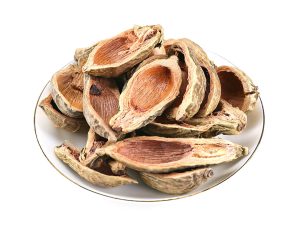
This product is spindle-shaped, slightly tapered at both ends, 1.5–3 cm long, and 0.3–0.6 cm in diameter. The surface is yellowish-white or pale yellow, with fine longitudinal striations. It is supple and resilient; the cross-section is yellowish-white, translucent, with a slender central column. It has a faintly fragrant aroma and a sweet, slightly bitter taste.
Properties of Processed Slices
This product resembles Ophiopogon tuber, or may be in the form of flattened spindle-shaped pieces. The surface is pale yellow or grayish-yellow, with fine longitudinal striations. It is supple and flexible; the cross-section is yellowish-white, translucent, with a slender central column. It has a faintly fragrant odor and a sweet, slightly bitter taste.
Botanical Information
Botanical Classification
Ophiopogon japonicus, a plant of the Liliaceae family.
Morphological Characteristics
A perennial evergreen herb with relatively thick roots that often swell in the middle or near the tip into small, oval or spindle-shaped tuberules; these tuberules are 1–1.5 cm long (or slightly longer) and 5–10 mm wide, pale brownish-yellow in color;The underground stolons are slender, 1–2 mm in diameter, with membranous sheaths at the nodes. The stem is very short; the leaves grow in a tuft at the base, are grass-like, 10–50 cm long (with a few even longer), 1.5–3.5 mm wide, with 3–7 veins, and have finely serrated margins.The flower stalk is 6–15 (–27) cm long, usually much shorter than the leaves; the raceme is 2–5 cm long, or sometimes longer, bearing several to over ten flowers; flowers are solitary or opposite in the axils of the bracts; bracts are lanceolate, with an acuminate apex, the lowest ones reaching up to 7–8 mm in length;The pedicel is 3–4 mm long, with the joint located above the middle or near the middle; the perianth segments are often slightly pendulous and not fully spread, lanceolate, about 5 mm long, white or pale purple; the anthers are triangular-lanceolate, 2.5–3 mm long; the style is about 4 mm long, relatively thick, about 1 mm wide, broad at the base, and gradually narrowing upward. The seeds are spherical, 7–8 mm in diameter.Flowering occurs from May to August, and fruiting from August to September. Consequently, the plant’s appearance varies considerably; for example, the density of the leaf clumps, as well as the width, narrowness, length, and shortness of the leaves, may sometimes differ markedly. However, the floral structure remains relatively consistent, particularly in traits such as the perianth segments opening only slightly when the flower is in full bloom, the broad base of the style, and the style being generally somewhat thick and short with a slightly conical shape—these are the primary characteristics used to identify this species.
Distribution Area
Ophiopogon is native to China and is cultivated in Guangdong, Guangxi, Fujian, Taiwan, Zhejiang, Jiangsu, Jiangxi, Hunan, Hubei, Sichuan, Yunnan, Guizhou, Anhui, Henan, Shaanxi (southern part), and Hebei (south of Beijing). It is also found in Japan, Vietnam, and India.
Growth Habits
Ophiopogon prefers a warm, humid climate with abundant rainfall. It can grow normally at temperatures ranging from 5 to 30°C, with an optimal growth temperature of 15 to 25°C. Growth ceases at temperatures below 0°C or above 35°C. It requires a large amount of water during its growth cycle and needs ample sunlight, especially during the tuber enlargement phase, when sufficient light is essential to promote tuber growth.Ophiopogon has specific soil requirements; it thrives in loose, fertile, moist, well-drained, slightly alkaline sandy loam. Soil that is too heavy impedes the development and growth of fibrous roots, resulting in poor tuber growth. Conversely, soil that is too sandy has poor water and nutrient retention capacity,resulting in poor plant growth and low yields. It is most suitable for cultivation on the first and second terraces of river alluvial fans. These terraces are flat, with soils predominantly consisting of recent alluvial deposits that have a moderate clay-sand ratio, meeting the growth needs of Ophiopogon. The first and second terraces of river alluvial fans often feature a network of gravity-fed irrigation channels, whose irrigation conditions can meet the water requirements for Ophiopogon growth.
Propagation Methods
Propagation is most commonly done by division. During the Ophiopogon harvest in April–May, dig up plants with deep green foliage, vigorous growth, and no signs of pests or diseases; shake off the soil and cut the tuberous roots for commercial sale.Next, cut off the lower stem nodes of the rhizome, leaving a 0.5 cm long stem base. It is best to select rhizomes with a white cross-section and leaves that do not spread apart. The rhizome should not be left too long; otherwise, most will develop double stem nodes after planting, commonly known as “long-stemmed seedlings.” Long-stemmed seedlings produce fewer tuberous roots and yield lower harvests. Loosen the base, separate them into individual plants, bundle them into small bundles with rice straw, and trim the leaf tips to reduce water evaporation.Plant immediately. For seedlings that cannot be planted right away, first soak the base of the stem in clean water for a short while to allow them to absorb sufficient moisture, then bury them in loose soil in a shaded area for temporary storage. Water once daily or every other day, but do not exceed 5 days; otherwise, it will affect the survival rate.
Cultivation Techniques
1. Before planting, deeply till the soil. As part of the land preparation, apply 1,000 kilograms of well-rotted manure or stable manure and 50 kilograms of superphosphate per mu. Before planting, shallowly till the soil once more, level and rake it finely, and create flat beds 1.3 meters wide with 40-centimeter-wide furrows. Dig drainage ditches around the perimeter.
2. Plant immediately after harvesting Ophiopogon japonicus.Plant on a sunny evening or on a cloudy day. On the prepared beds, dig transverse furrows with a row spacing of 15–20 cm and a depth of about 5 cm. Plant three seedlings in each furrow, spacing them 8–10 cm apart. Do not plant too deeply or too shallowly. If planted too deeply, seedlings will have difficulty emerging and may develop into spindly plants, resulting in low yields; if planted too shallowly, the roots will be exposed and may be scorched by the sun or cause the plants to topple over, affecting survival rates.Plant the seedlings vertically and flush against the trench wall, ensuring the roots are upright and not bent; otherwise, they will not root properly where they touch the trench wall.
3. After planting, cover the roots with soil and press it down firmly to ensure close contact between the roots and the soil. Then, use both feet to tamp the soil around the seedlings, ensuring they stand upright and stable. Water the plants immediately after planting to help them establish new roots early.
Pest and Disease Control
1. Diseases: The primary disease affecting Ophiopogon is black spot disease, which is particularly severe during the rainy season. Control measures include selecting vigorous, disease-free plants as planting stock and soaking them in a 1:1:100 Bordeaux mixture for 5 minutes before planting; promptly draining standing water during the rainy season to reduce field humidity;At the onset of the disease, spread 100 kilograms of wood ash per mu in the early morning while the dew is still wet; during the active disease period, spray a 1:1:100 Bordeaux mixture or a 500-fold dilution of 65% zinc dithionate once every 10 days for 3–4 consecutive applications.
2.Pests: The primary pest affecting Ophiopogon is the root-knot nematode. Control measures include rotating Ophiopogon with grass family crops; avoid root vegetables such as sweet potatoes, green beans, and potatoes as preceding or intercropped crops. During land preparation, apply 250–300 grams per mu of 20% methyl isothiophos emulsion or 5% granular formulation to create toxic soil, which is then scattered in the furrows and tilled into the soil to control nematodes.Wireworms appear in August and September; they can be controlled by spraying with a 200-fold dilution of 90% diazinon.