Eucommia is a medicinal herb used to tonify yang. It is derived from the bark of Eucommia ulmoides Oliv., a plant belonging to the genus Eucommia in the family Eucommiaceae. It has the effects of tonifying the liver and kidneys, strengthening tendons and bones, and stabilizing pregnancy. It is primarily used to treat liver and kidney deficiency, soreness and pain in the lower back and knees, weakness of tendons and bones, dizziness and vertigo, spontaneous vaginal bleeding during pregnancy, and fetal restlessness.

Eucommia
Eucommia is a medicinal herb used to tonify yang. It is derived from the bark of Eucommia ulmoides Oliv., a plant belonging to the genus Eucommia in the family Eucommiaceae. It has the effects of tonifying the liver and kidneys, strengthening tendons and bones, and stabilizing pregnancy. It is primarily used to treat liver and kidney deficiency, soreness and pain in the lower back and knees, weakness of tendons and bones, dizziness and vertigo, spontaneous vaginal bleeding during pregnancy, and fetal restlessness.
Chinese Name : 杜仲
Latin Name : Eucommiae Cortex
Aliases : Sixian, Sizhong, Mumen, Jie, Shixixian, Chesi Pi, Silian Pi, Mianpi (Henan), Yusi Pi (Sichuan), Simao Pi (Shaanxi)
Authentic Producing Area : Mainly produced in Shaanxi, Sichuan, Yunnan, Guizhou, and Hubei
Nature, Flavor & Meridian Tropism : Sweet in taste, warm in nature; enters the Liver and Kidney meridians
Benefits & Efficacy
Benefits
This product has the effects of tonifying the liver and kidneys, strengthening tendons and bones, and stabilizing the fetus.
Indications
It is primarily used to treat liver and kidney deficiency, soreness and pain in the lower back and knees, weakness of tendons and bones, dizziness and vertigo, spontaneous vaginal bleeding during pregnancy, and fetal restlessness.
Usage and Dosage
Internal use: Decocted as a soup, 6–10 g; or steeped in wine; or incorporated into pills or powders.
Precautions
1. Roasting breaks down its gelatinous substance, facilitating the extraction of active ingredients; therefore, it is more effective than when used raw. As this herb is a warming tonic, use with caution in cases of yin deficiency with excessive fire. 2. Should not be combined with Viper Skin or Scrophularia root. 3. Should not be used in conjunction with antihypertensive drugs such as Lisheping or Jiangyuling, as this may cause orthostatic hypotension and other adverse effects. 4. Should not be used with sedatives or hypnotics, as this may increase the risk of drug dependence.
Chemical Constituents
This product contains Eucommia gum, eucommioside, pinresinol diglucoside, coralloside, tannins, flavonoids, and other compounds.
Pharmacological Actions
This product exhibits sex hormone-like effects and has the following benefits: regulating bone metabolism, combating fatigue, boosting immunity, delaying aging, protecting against liver and kidney damage, preventing cardiac and cerebral ischemia, lowering blood pressure, reducing blood glucose levels, and lowering blood lipid levels.
Relevant Discussions
1. *Shennong Bencao Jing*: “Treats pain in the lower back and spine; tonifies the middle jiao; nourishes essence and vital energy; strengthens tendons and bones; fortifies the will; eliminates itching and dampness in the genital area; and alleviates dribbling urine. Long-term use lightens the body and promotes longevity.”
2. *Mingyi Bielu*: “Treats soreness and pain in the feet, making one reluctant to step on the ground.”
3. *Rihua Zi*: “Treats kidney exhaustion and spasms of the lower back and spine.”
4. *Yixue Qiyuan*: “It is used to strengthen tendons and bones, as well as for weak legs that lack the strength to walk.”
5. *Bencao Mengquan*: “Stops frequent urination and nocturnal emissions.”
Applications
Clinical Applications
1. To treat kidney-deficiency-induced low back pain or weakness and atrophy of the feet and knees, it is often used in combination with walnut meat and Psoralea corylifolia, as in the Qing’e Pill (*Formulas of the Bureau of Harmonious Medicinal Preparations*).
2. To treat rheumatic low back pain characterized by coldness and heaviness, it is used in combination with Duhuo, Sangjisheng, and Xixin, as in the Duhuo Jisheng Decoction (*Qianjin Fang*).
3. To treat low back pain caused by trauma, it is used in combination with Chuanxiong, Guixin, and Danshen, as in the Duzhong Powder (*Shenghui Fang*).
4. To treat menstrual lower back pain in women, it is used in combination with Danggui, Chuanxiong, and Shaoyao.
5. To treat kidney deficiency-induced impotence, cold semen, and frequent urination, it is used in combination with Lurong, Shan Zhu Yu, and Tusizi, as in the Shi Bu Wan (from *Bao’s Verified Formulas*).
6. To stabilize the pregnancy: It is effective when used alone, or it can be combined with Sangjisheng, Xuduan, Ejiao, and Tusizi. For example, the Du Zhong Pills in *Shengji Zonglu* use this herb alone, ground into powder and formed into pills with jujube pulp, to treat fetal restlessness; *Jianbian Danfang* combines it with Xuduan and Shanyao to treat habitual miscarriage.
Related Compatibility
1. Eucommia bark combined with Angelica pubescens: Eucommia bark excels at tonifying the liver and kidneys and strengthening tendons and bones; Angelica pubescens is effective at dispelling wind-dampness and relieving arthralgia. When combined, these two herbs enhance the effects of tonifying the liver and kidneys, strengthening tendons and bones, dispelling wind and dampness, and relieving arthralgia. This combination is suitable for conditions such as rheumatic low back pain characterized by a sensation of cold and heaviness.
2. Eucommia combined with Chuanxiong: Eucommia excels at tonifying the liver and kidneys and strengthening tendons and bones; Chuanxiong excels at promoting blood circulation, regulating qi, dispelling wind, and relieving pain. When combined, these two herbs enhance the effects of tonifying the liver and kidneys, strengthening tendons and bones, promoting blood circulation, and relieving pain. This combination is suitable for conditions such as traumatic low back pain.
3. Eucommia combined with Goji Berries: Eucommia tonifies the yang of the liver and kidneys, while Goji Berries nourish the yin of the liver and kidneys. When combined, these two herbs simultaneously tonify both the yang and yin of the liver and kidneys. This combination is suitable for conditions such as erectile dysfunction and nocturnal emissions due to kidney deficiency, as well as soreness, weakness, and lack of strength in the lower back and knees.
4. Eucommia combined with Angelica sinensis: Eucommia excels at tonifying the liver and kidneys and strengthening tendons and bones; Angelica sinensis excels at nourishing and invigorating blood, regulating menstruation, and relieving pain. When combined, these two herbs enhance the effects of tonifying the liver and kidneys, regulating menstruation, and relieving pain. This combination is suitable for conditions such as lower back pain during menstruation.
5. Eucommia combined with deer antler: Eucommia excels at tonifying the liver and kidneys and strengthening tendons and bones; deer antler excels at tonifying the kidneys, assisting yang, generating essence, and nourishing blood.When combined, these two herbs enhance the effects of tonifying the kidneys and strengthening yang. This combination is suitable for conditions such as kidney deficiency-induced erectile dysfunction, cold and loose semen, and frequent urination.
6. Eucommia combined with Mulberry Parasite: Eucommia excels at tonifying the liver and kidneys and stabilizing the pregnancy; Mulberry Parasite excels at nourishing the liver and kidneys and stabilizing the pregnancy.When combined, these two herbs enhance the effects of tonifying the liver and kidneys, as well as stabilizing the Chong and Ren meridians to secure the pregnancy. This combination is suitable for conditions such as fetal restlessness due to liver and kidney deficiency.
7. Eucommia Ulmoides Combined with Chinese Yam: Eucommia Ulmoides excels at tonifying the liver and kidneys and tonifying the kidneys to secure the pregnancy; Chinese Yam excels at tonifying the spleen and boosting qi, as well as tonifying the kidneys and retaining essence. When combined, these two herbs enhance the effects of tonifying the spleen and boosting qi, as well as tonifying the kidneys to secure the pregnancy. This combination is suitable for habitual miscarriage caused by deficiency of both the spleen and kidneys.
Medicinal Identification
1. Raw Eucommia, Roasted Eucommia, Charred Eucommia, and Salted Eucommia: Since the Liu Song Dynasty of the Southern and Northern Dynasties, auxiliary materials have been used in the processing of Eucommia, with various processing methods employed. However, in recent years, most regional processing standards have listed raw Eucommia and salted Eucommia; in particular, salted Eucommia is currently the primary processed form of Eucommia and is the most widely used.After salt processing, it can directly target the lower jiao, enhancing its ability to tonify the liver and kidneys. It is used for lower back pain due to kidney deficiency, impotence, nocturnal emissions, and unstable fetal development. Raw Eucommia is used less frequently; it excels at tonifying the liver and kidneys and is often used for dizziness and lower back pain caused by excessive dampness. It is generally believed that stir-frying Eucommia until the fibers break facilitates mixing, decoction, and pulverization, thereby better unleashing its medicinal efficacy. Therefore, traditional processing requirements stipulate that “the fibers should break without charring.”In practice, roasting Eucommia to break the fibers requires high heat and a long duration; it is often difficult to control the heat precisely to achieve this effect, resulting in the material being roasted into charcoal. Recent research, based on a review of relevant literature, has raised questions about charred Eucommia. It is argued that processing Eucommia to break the fibers without carbonization was the original intent of ancient practitioners and has been the primary method of use throughout history; the practice of using charred Eucommia, which began in modern times, does not align with the original principles of traditional processing.Research indicates that after processing, the content of pinresinol diglucoside—the primary antihypertensive component in Eucommia—increases, resulting in a significantly stronger antihypertensive effect compared to raw Eucommia.
2. Dodder Seed and Eucommia Bark: Both are sweet in taste and warm in nature, entering the Liver and Kidney meridians. They share the functions of tonifying the Liver and Kidney and stabilizing the fetus, and are similarly used to treat kidney deficiency-induced low back pain or weakness and fatigue, impotence and seminal emission, enuresis and frequent urination, as well as fetal restlessness and vaginal bleeding during pregnancy caused by insufficiency of the Liver and Kidney.However, Cuscuta seed is moist and mild in nature, with astringent properties; it also enters the Spleen meridian. As a herb that balances the tonification of yin and yang, it not only consolidates essence and reduces urination, tonifies the spleen, and stops diarrhea, but also nourishes the liver and improves eyesight. It is particularly effective for treating blurred vision and diminished visual acuity caused by liver and kidney deficiency, as well as loose stools or diarrhea resulting from deficiency of both the spleen and kidneys.Eucommia (Du Zhong) has a slightly warm and drying nature and possesses even stronger tonifying properties. It excels at tonifying the liver and kidneys, strengthening tendons and bones, and warming the lower jiao. It can also lower blood pressure and is particularly effective for treating lower back and knee soreness and weak tendons and bones caused by liver and kidney deficiency; impotence and uterine cold resulting from deficiency-cold in the lower jiao; as well as hypertension caused by kidney deficiency or excessive liver yang.
3. Mulberry Parasite and Eucommia: Both herbs tonify the liver and kidneys, strengthen tendons and bones, and stabilize the fetus. They are used to treat lower back and knee soreness due to liver and kidney deficiency, as well as fetal restlessness. However, Mulberry Parasite has both sweet and bitter tastes; the bitterness has a drying effect, while the sweetness has a tonifying effect. In addition to tonifying the liver and kidneys and strengthening tendons and bones, it excels at dispelling wind-dampness, making it particularly suitable for chronic bi syndrome that has damaged the liver and kidneys, resulting in soreness and weakness in the lower back and knees, as well as weakness in the tendons and bones.Eucommia is sweet and warm in nature; it tonifies the liver and kidneys, strengthens tendons and bones, and is particularly suitable for treating lower back pain caused by kidney deficiency, with the effect of reinforcing the body’s vital energy and consolidating its foundation.
Related Medicines
Eucommia Granules, Strong Tianma-Eucommia Capsules, Qing’e Pills, and Zishen Yutai Pills.
Related Prescriptions
Yougui Pills (*Jingyue Quanshu*), Yougui Decoction (*Jingyue Quanshu*), Duhuo Jisheng Decoction (*Qianjin Fang*), Sanbi Decoction (*Furen Liangfang*), and Tianma Gou Teng Decoction (*Zabing Zhengzhi Xinyi*).
Medicinal Diet Therapy
A medicinal dish associated with Eucommia is Eucommia Kidney Slices.
1. Effects: Tonifies the liver and kidneys; lowers blood pressure. Suitable for conditions such as kidney-deficiency-induced low back pain, unsteady gait, age-related hearing loss, and hypertension.
2. Ingredients: 12g of roasted Eucommia, 250g of pork kidneys, 25g of cooking wine, and appropriate amounts of scallions, MSG, salt, soy sauce, garlic, ginger, white sugar, Sichuan peppercorns, lard, vegetable oil, water, and bean starch.
3. Preparation: Cut the pork kidneys in half lengthwise, remove the membrane and tendons, and slice into kidney slices. Place the fried Eucommia bark in a pot. Add an appropriate amount of water and simmer to reduce to 50g of medicinal broth. Slice the ginger and cut the scallions into sections; set aside. Mix half of the medicinal broth with cooking wine, soybean starch, and salt, then toss with the kidney slices.Then add white sugar, soy sauce, and vinegar, mix well, and set aside. Place the wok on the stove and heat over high heat. Pour in lard and vegetable oil until the oil reaches 80% heat, then add Sichuan peppercorns. Add the kidney slices, scallions, ginger, and garlic, and quickly stir-fry to separate the pieces. Add MSG, toss to combine, and serve.
4. Usage: Serve as a side dish with meals, twice daily.
Notes
Patients requiring treatment with traditional Chinese medicine should first consult a licensed TCM hospital, where a TCM practitioner will conduct a professional diagnosis and prescribe the appropriate herbal formula.
Processing & Preparation
Harvesting & Processing
Harvest from April to June; remove the coarse bark and pile the material to allow it to “sweat” until the inner bark turns purplish-brown, then sun-dry. Use raw or stir-fried in salt water.
Processing Methods
1. Eucommia
Take the raw herb, scrape off any remaining coarse bark, wash thoroughly, cut into strips or chunks, and dry.
2. Salted Eucommia
Salted Eucommia is prepared by stir-frying with salt, which enhances its ability to tonify the kidneys and strengthen the lower back.
(1) Take Eucommia strips or chunks, mix thoroughly with salt water, let stand until thoroughly moistened, place in a pot, heat over low heat, and stir-fry until the strips break apart and the surface turns charred black. Remove and let cool.Use 2 kg of table salt per 100 kg of Eucommia strips or chunks.
(2) Take Eucommia strips or chunks, mix thoroughly with salt water until thoroughly moistened, place in a wok, and heat over medium heat. Stir-fry or pan-roast until the strips break easily, then remove and let cool. Use 2 kg of table salt per 100 kg of Eucommia strips or chunks.
(3) Take the Eucommia strips or chunks, moisten them thoroughly with salt water, let them sit overnight, steam for 1 hour, then remove and dry. Use 0.9 kg of table salt per 100 kg of Eucommia strips or chunks.
Storage Methods
Store in a dry container. Salted Eucommia should be kept in an airtight container and placed in a well-ventilated, dry location.
Crude Drug Identification
Identification
1. The powder of this product is brown. The rubber strands are in the form of strips or twisted into clumps, with a granular surface. There are numerous stone cells, mostly in clusters, which are rectangular, circular, elongated, or irregular in shape, up to approximately 180 μm in length and 20–80 μm in diameter, with thick walls; some cell cavities contain clumps of rubber.When viewed from the surface, cork cells are polygonal, with a diameter of 15–40 μm; their walls are unevenly thickened, lignified, and bear minute pores; when viewed from the side, they are rectangular, with walls thickened on three sides and thin on one side, and distinct pore channels.
2. Take 1 g of the powdered sample, add 10 mL of chloroform, and soak for 2 hours; then filter. Evaporate the filtrate to dryness, add 1 mL of ethanol, and an elastic gel film forms.
Properties of Crude Drugs
The bark appears as flat plates, rolls, or fragments with both edges slightly curled inward, varying in size and 2–7 mm thick. The outer surface is pale grayish-brown or grayish-brown, flat or rough, with distinct longitudinal wrinkles or irregular longitudinal fissures; specimens from which the coarse outer bark has not been scraped away exhibit oblique-square, transversely fissured lenticels, and pale gray lichen spots are sometimes visible.The inner surface is dark purplish-brown or reddish-brown and smooth. The bark is brittle and breaks easily; the fracture surface is rough and connected by fine, dense, silvery-white, elastic rubber-like fibers. It has a faint odor and a slightly bitter taste; chewing it leaves a gummy residue. The best quality is characterized by thick, large bark, thoroughly scraped-clean outer bark, a dark purplish inner surface, and a fracture surface with abundant silvery-white rubber-like fibers.
Properties of Processed Slices
1. Eucommia: This product appears as small squares or filaments. The outer surface is pale brown or grayish-brown, with distinct wrinkles. The inner surface is dark purple and smooth. The fracture surface is connected by fine, dense, silvery-white, elastic rubber-like fibers. It has a faint odor and a slightly bitter taste.
2. Salted Eucommia: It appears charred black or charred brown; the white fibers on the fracture surface break easily and have a slightly salty taste.
Botanical Information
Botanical Classification
Eucommia ulmoides, a plant of the genus Eucommia in the family Eucommiaceae.
Morphological Characteristics
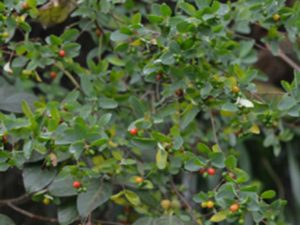
A deciduous tree reaching up to 20 m in height. The bark is grayish-brown and rough; when broken and pulled apart, it reveals numerous fine fibers. Young branches are covered with yellowish-brown hairs, later becoming glabrous; older branches have lenticels. Simple leaves are alternate; petioles are 1–2 cm long, grooved on the upper surface, and covered with scattered long hairs;the leaf blade is elliptic, ovate, or oblong, 6–15 cm long and 3.5–6.5 cm wide, with a gradually tapering apex and a rounded or broadly cuneate base; the upper surface is dark green, the lower surface pale green; mature leaves are slightly wrinkled, with serrated margins; there are 6–9 pairs of lateral veins. Flowers are unisexual, with separate male and female plants; they are borne at the base of current-year branches. Male flowers lack a perianth, and the pedicels are glabrous;The stamens are about 1 cm long, glabrous, and lack rudimentary pistils; the female flowers are solitary, with a pedicel about 8 mm long, a unilocular ovary that is bifid at the apex, and a very short ovary stalk. The samara is flat, oblong, bifid at the apex, wedge-shaped at the base, and surrounded by thin wings; the nut is located in the center and has a joint where it connects to the fruit stalk. It blooms in early spring, and the fruit ripens in autumn.
Distribution Area
It is distributed in Zhejiang, Henan, Hubei, Sichuan, Guizhou, Yunnan, Shaanxi, Gansu, and other regions. It is now widely cultivated throughout these areas.
Growth Habits
It prefers a warm and humid climate and has relatively strong cold tolerance. In its natural range, the average annual temperature is 13–17°C, and annual precipitation is 500–1,500 mm. It thrives best in full sun, in deep, fertile, humus-rich sandy loam or clay loam soils.
Propagation Methods
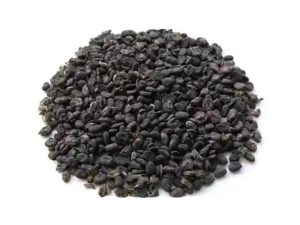
Propagation is achieved through seeds, cuttings, layering, suckers, and grafting. Seed propagation is the primary method.
Cultivation Techniques
Based on the morphological characteristics of its bark, Eucommia can be classified into two types: rough-barked Eucommia (Qinggangpi) and smooth-barked Eucommia (Baiyangpi); smooth-barked Eucommia is preferred for cultivation.
1. Seed Propagation: Select 20–40-year-old plants that are vigorous, have smooth bark, are free of pests and diseases, and have never been stripped of their bark. Harvest the fruits after they ripen in September–October, then air-dry and sift them clean; avoid direct exposure to the sun.Seeds that are glossy, plump, fresh, and light brown in color are particularly preferred. Seeds have a short viability period; old seeds should not be used. The dry seed weight ranges from 57 to 130 g. Sowing can be done in winter (November–December) or spring (February–March), with winter sowing being preferable.For spring sowing, because the seed coat contains a gel-like substance that can impair germination after drying, soak the seeds in warm water (20–25°C) for 2–3 days before sowing, changing the water once daily. Once the seeds have swollen, mix them thoroughly with moist sand and turn the mixture every 2–3 days; germination will begin in about 15 days. The seed rate is 75–150 kg per hectare.Use the row-seeding method: open furrows with a row spacing of 20–30 cm and a depth of 4 cm. Sow the seeds evenly into the furrows, cover with 1–1.5 cm of soil, lightly firm the soil, water, and cover with straw to protect against frost. After emergence, perform the first thinning on a cloudy day when seedlings reach 5–7 cm in height; perform the second thinning or final spacing when seedlings reach 15–20 cm in height.Water moderately during the seedling stage to keep the soil moist. During the period of vigorous growth in July and August, increase fertilization; apply fertilizer 6–8 times throughout the year, alternating between organic and inorganic fertilizers. Cultivate for 1–2 years before transplanting. Plant in holes with row and plant spacing of 2.5 m × 3 m.
2. Propagation by Cuttings: Cut one-year-old tender shoots into 5–6 cm long cuttings. In early May, dig holes with a row and plant spacing of 20 cm × 10 cm and insert the cuttings, burying two-thirds of the cutting in the soil and leaving one-third above ground. After planting, erect a shade structure to provide shade and keep the soil moist. Transplant the cuttings the following year once roots have formed.Treating the cuttings with 50 × 10⁻⁶ naphthalene acetic acid for 24 hours can also improve the survival rate of the cuttings.
3. Layering Propagation: Use standard layering or aerial layering. For standard layering, in early spring (January–February) before bud break, press a vigorous branch near the base of the mother plant into the soil to a depth of about 20 cm, leaving the tip above ground. Roots will form within one year, at which point the new plant can be separated from the mother plant and transplanted.For aerial layering, in March–April or June–July, select 2–3-year-old branches with a diameter of 1 cm. Make an incision on the branch, then fill a plastic bag or a bamboo tube split in half with fertile soil and wrap it around the incision site. Check the moisture level frequently; once roots have formed, separate the new plant from the mother plant and transplant it.
4. Propagation by suckers: Mound soil around the stump left after felling the tree to promote the sprouting of new shoots; split the clump and plant the individual plants in early winter.
5. Propagation by grafting: Use two-year-old seedlings as rootstocks and select one-year-old branches of superior varieties as scions; perform grafting using the cleft grafting method in early spring.
Pest and Disease Control
1. Diseases include damping-off. From late April to mid-June, affected seedlings develop brown rot near the stem base, causing the plant to shrivel, rot, topple over, and wither.Control measures include implementing crop rotation and ensuring proper drainage in the field. When the disease occurs, remove infected plants and water the area with a 1,000-fold dilution of 50% carbendazim. Leaf blight affects the leaves, causing brown lesions or cracks and holes; during the disease period, spray with a 1,000-fold dilution of 50% carbendazim. Root rot is another common disease.
2. Insect pests include the six-star black-spotted wood borer moth, the brown bagworm, the yellow sawfly, and the flat sawfly. After the Eucommia bark is stripped and new bark is regenerating, the plant is susceptible to damage from the cypress night moth, the cherry double-banded leafroller, and black beetles.To prevent insect damage, apply a 1:400 dilution of 50% carbaryl wettable powder or a 1:50 dilution of 50% carbaryl, mixed with a small amount of bovine glue (approximately 0.5%), to the trunk at both the top and bottom of the new bark to form two “protective rings.” Other pests include aphids.