Psoralea corylifolia, a name in traditional Chinese medicine, refers to the dried, mature fruit of Psoralea corylifolia L., a plant belonging to the genus Psoralea in the Fabaceae family.This herb has the effects of warming the kidneys and assisting yang, regulating qi and relieving wheezing, warming the spleen and stopping diarrhea, and dispelling wind and removing spots (for external use). It is primarily used to treat kidney yang deficiency, impotence and seminal emission, enuresis and frequent urination, cold pain in the lower back and knees, wheezing due to kidney deficiency, and early-morning diarrhea; externally, it is used to treat vitiligo and alopecia areata.

Psoralea
Psoralea corylifolia, a name in traditional Chinese medicine, refers to the dried, mature fruit of Psoralea corylifolia L., a plant belonging to the genus Psoralea in the Fabaceae family.This herb has the effects of warming the kidneys and assisting yang, regulating qi and relieving wheezing, warming the spleen and stopping diarrhea, and dispelling wind and removing spots (for external use). It is primarily used to treat kidney yang deficiency, impotence and seminal emission, enuresis and frequent urination, cold pain in the lower back and knees, wheezing due to kidney deficiency, and early-morning diarrhea; externally, it is used to treat vitiligo and alopecia areata.
Chinese Name : 补骨脂
Latin Name : Psoraleae Fructus
Aliases : Hu Jiu Zi, Po Gu Zhi, Po Gu Zhi, Bu Gu Chi, Hei Gu Zi, Hu Gu Zi, Ji Gu Zi, Hei Gu Zi
Authentic Producing Area : Henan, Sichuan, Anhui, Shaanxi
Nature, Flavor & Meridian Tropism : Warm in nature; bitter and pungent in taste; enters the Kidney and Spleen meridians
Benefits & Efficacy
Benefits
Warms the Kidney and aids Yang; anchors Qi and relieves wheezing; warms the Spleen and stops diarrhea; dispels wind and removes spots (for external use).
Indications
Mainly used for kidney yang deficiency, impotence and nocturnal emission, enuresis and frequent urination, cold pain in the lower back and knees, wheezing due to kidney deficiency, and early morning diarrhea; used externally to treat vitiligo and alopecia areata.
Usage and Dosage
1. Internal use: Decoct in water, 6–15 g, or incorporate into pills or powders. 2. External use: Apply an appropriate amount of wine-infused extract or tincture to the affected area.
Precautions
1. Do not use in combination with licorice. 2. Avoid use with hormones that promote implantation, as this may reduce contraceptive effectiveness. 3. Avoid consuming foods such as blood and Chinese cabbage. 4. Contraindicated for those with yin deficiency with excessive fire or severe constipation.
Chemical Constituents
This product contains coumarins, flavonoids, benzofurans, fatty acids, and other components.
Pharmacological Actions
This product exhibits sex hormone-like effects as well as pharmacological actions such as regulating intestinal motility, relieving asthma, boosting immunity, and preventing osteoporosis.
Relevant Discussions
1. *Treatise on the Nature of Medicinal Substances*: “Treats lower back pain and cold knees in men, dampness in the scrotum, dispels various forms of cold-induced arthralgia and stiffness, regulates urination and defecation, and alleviates abdominal cold.”
2. *Kaibao Materia Medica*: “Treats the ‘Five Labors’ and ‘Seven Injuries,’ wind-induced deficiency and cold, damage to bone marrow, kidney cold with seminal leakage, and miscarriage due to blood and qi deficiency in women.”
3. *Compendium of Materia Medica*: “Treats kidney-related diarrhea, opens the Gate of Life, warms the Dan Tian, and consolidates the spirit.”
Applications
Clinical Applications
1. For lower back pain: To treat lower back pain caused by kidney deficiency with insufficient essence and marrow, or by chronic bi syndrome leading to kidney deficiency, this herb may be used alone or in combination with ingredients that tonify the liver and kidneys and strengthen the tendons and bones, such as walnut meat and Eucommia bark, as in the Qing’e Pills from the *Taiping Huimin Heji Jufang*; if lower back pain during pregnancy results from kidney damage due to overwork, it should be used in synergy with walnut meat;For lower back pain caused by trauma with stagnant blood stasis, this herb may also be combined with Aniseed and Cinnamon—which warm the kidneys and dispel cold—ground into a powder for oral administration.
2. For erectile dysfunction, nocturnal emissions, frequent urination, and enuresis:To treat kidney deficiency resulting in impaired storage function and an unstable semen gate, it is often combined with Aniseed—which warms the kidneys—to warm the kidneys and consolidate the essence, as in the Psoralea Powder from the *Taiping Shenghui Fang*; when accompanied by deficiency of essence and blood, it is often combined with ingredients that replenish essence and generate blood, such as Deer Antler Gelatin, Prepared Rehmannia Root, and Dodder Seed, to achieve a more effective dual tonification of yin and yang, as in the Qingnang Banlong Pills from the *Yixue Zhengchuan*.To treat kidney qi deficiency with cold, manifesting as frequent urination or enuresis, Psoralea can be used alone or ground into a powder and taken with ingredients that warm the kidneys and reduce urination, such as Amomum villosum.
3. For spleen-kidney deficiency-cold manifesting as persistent diarrhea, “dawn diarrhea” (kidney-induced diarrhea), loss of appetite, or undigested food in the stool, this herb is often combined with cardamom, evodia, and schisandra—which warm the middle burner and astringe the intestines—as in the *Four Deities Pills* from *Essentials of Internal Medicine*.
4. For treating deficiency of both the lung and kidney, resulting in chronic wheezing and cough due to the kidney’s failure to retain qi, this herb is often added to the Ginseng and Walnut Decoction to jointly tonify lung and kidney qi and effectively alleviate wheezing caused by deficiency.
5. In recent years, Psoralea has often been formulated into tinctures for topical application or into injections for intramuscular administration to treat vitiligo and psoriasis.
Related Compatibility
1. Psoralea combined with Cuscuta: Psoralea excels at assisting kidney yang and consolidating essence; Cuscuta excels at nourishing the marrow and consolidating essence. When used together, these two herbs enhance the effect of tonifying the kidneys and consolidating essence. This combination is suitable for conditions such as nocturnal emissions and seminal leakage caused by kidney yang deficiency, deficiency-cold in the lower jiao, and unstable kidney qi.
2. Psoralea combined with Eucommia: Psoralea is pungent and warm, excelling at tonifying the kidneys, assisting yang, consolidating essence, and reducing urination; Eucommia is sweet and warm, excelling at nourishing the liver and kidneys, and strengthening tendons and bones. When used together, these two herbs have the effect of tonifying the liver and kidneys, assisting yang, and consolidating essence. This combination is suitable for treating erectile dysfunction, nocturnal emissions, and soreness and pain in the lower back and knees caused by liver-kidney deficiency and cold deficiency in the lower jiao.
3. Psoralea combined with Mulberry Parasite: Psoralea excels at tonifying the kidneys, assisting yang, consolidating semen, reducing urinary leakage, warming the spleen, and stopping diarrhea; Mulberry Parasite excels at tonifying the liver and kidneys, strengthening tendons and bones, and dispelling wind and dampness. When used together, these two herbs have the effect of warming the kidneys, assisting yang, and strengthening tendons and bones. This combination is suitable for cold pain in the lower back and knees, as well as soreness, weakness, and lack of strength.
4. Psoralea combined with Fennel: Psoralea excels at tonifying the kidneys and strengthening yang, as well as consolidating essence and reducing urinary leakage; Fennel excels at warming the kidneys and liver, and regulating qi to relieve pain. When used together, these two herbs strongly warm the kidneys and dispel cold when directed to the lower jiao; when directed to the middle jiao, they effectively warm the spleen and stomach and regulate qi. This combination is suitable for conditions such as kidney yang deficiency, instability of the lower jiao, seminal emission, enuresis, frequent urination, and premature ejaculation.
5. Psoralea combined with Schisandra: Psoralea is pungent and warm, excelling at replenishing fire and assisting yang, as well as warming the spleen and stopping diarrhea; Schisandra is sour and warm, excelling at tonifying the kidneys, astringing semen, and astringing to stop diarrhea. When used together, these two herbs have the effect of warming the kidneys and spleen, and astringing the intestines to stop diarrhea. This combination is suitable for spleen-kidney yang deficiency and early-morning diarrhea.
6. Psoralea combined with Cinnamon Bark: Psoralea excels at replenishing fire and assisting yang; Cinnamon Bark excels at replenishing fire and assisting yang, as well as dispelling cold and relieving pain. When combined, these two herbs enhance the effects of replenishing fire, assisting yang, dispelling cold, and relieving pain. This combination is suitable for conditions such as cold pain in the lower back and knees due to kidney deficiency.
7. Psoralea combined with Poppy Shell: Psoralea excels at tonifying fire and assisting yang, as well as warming the spleen and stopping diarrhea; Poppy Shell excels at consolidating the lungs to stop coughing and astringing the intestines to stop diarrhea.When used together, these two herbs address both the root cause and the symptoms, combining tonification and astringency to enhance the effects of warming the kidneys and spleen, and astringing the intestines to stop diarrhea. This combination is suitable for chronic diarrhea, chronic dysentery, and early-morning diarrhea.
Medicinal Identification
1. Raw Psoralea and Salt-Processed Psoralea: These are two different processed forms of Psoralea. Due to differences in processing methods, their effects have distinct emphases. Raw Psoralea is pungent, warm, and drying; it has a strong effect in warming the kidneys and assisting yang, and excels at warming and tonifying the spleen and kidneys to stop diarrhea. It is often used for spleen and kidney yang deficiency and pre-dawn diarrhea; externally, it is used to treat vitiligo.Salt-processed Psoralea has a milder pungent, warm, and drying nature, avoiding the drawback of injuring Yin. It directs the herb’s action to the Kidney meridian, enhancing its ability to warm the Kidney, support Yang, anchor Qi, and stop diarrhea. It is commonly used for impotence, seminal emission, enuresis, frequent urination, cold pain in the lower back and knees, asthma due to Kidney deficiency, and early-morning diarrhea.
2. Psoralea and Walnut Kernel: Both are warm in nature and enter the Kidney meridian; both can tonify the kidneys and strengthen the lower back, anchor the Qi and relieve wheezing, and are effective for treating kidney deficiency-induced lower back pain and weak legs, as well as wheezing due to the kidneys’ failure to anchor the Qi.However, Psoralea is pungent, bitter, and warm in nature, and also enters the Spleen meridian. It is a warming tonic with astringent properties; it is effective not only for tonifying the kidneys, assisting yang, consolidating essence, and reducing urination, but also for warming the spleen and stopping diarrhea. It is suitable for cold pain in the lower back and knees due to kidney yang deficiency and instability of the lower jiao, as well as for impotence, nocturnal emission, uterine cold leading to infertility, enuresis, frequent urination, and diarrhea caused by spleen-kidney yang deficiency.Walnut kernels are sweet, warm, and oily, and enter the Lung meridian; they excel at warming the lungs and kidneys, moistening the intestines, and promoting bowel movements. They are suitable for deficiency-cold-type wheezing and cough, as well as intestinal dryness and constipation.
3. Psoralea and Dipsacus: Both are bitter and warm in nature and enter the Kidney meridian; they can both tonify the kidneys and assist yang, and are used to treat kidney yang deficiency and decline of the Gate of Life fire.However, Psoralea is pungent, warm, and drying, and also enters the Spleen Meridian. Its action is primarily directed toward the Kidneys, with a strong ability to assist yang. It excels at tonifying the Kidneys and strengthening yang, consolidating essence, and reducing urination; it can also warm the Spleen and stop diarrhea. It is primarily used to treat impotence, nocturnal emission, enuresis, and wheezing and cough caused by Kidney yang deficiency, as well as early-morning diarrhea resulting from Spleen-Kidney yang deficiency. When soaked in alcohol and applied topically, it also treats vitiligo.Dipsacus root also enters the Liver Meridian; it not only tonifies the kidneys and strengthens the bones but also promotes blood circulation to relieve pain and mends tendons and bones. It is a commonly used herb in traumatology and can be used to treat contusions, tendon injuries, and fractures; when soaked in alcohol and applied topically, it also treats alopecia areata.
4. Psoralea corylifolia and Cordyceps sinensis: Both are warm in nature and enter the Kidney meridian. They have the effects of tonifying the Kidneys and assisting Yang, as well as anchoring Qi and alleviating wheezing. They are used for symptoms such as erectile dysfunction and cold pain in the lower back and knees caused by Kidney Yang deficiency and decline of Mingmen fire, as well as deficiency-type wheezing due to the Kidneys’ failure to anchor Qi.However, Psoralea also enters the Spleen Meridian and possesses the effects of tonifying fire and assisting yang, as well as warming the spleen and stopping diarrhea; it is used to treat spleen-kidney yang deficiency and early-morning diarrhea. Cordyceps sinensis also enters the Lung Meridian and has the effects of tonifying lung qi and nourishing lung yin; as it simultaneously tonifies both the lungs and kidneys, it can be used for lung-kidney qi deficiency with impaired retention, chronic cough, and deficiency-type wheezing, as well as for lung-kidney yin deficiency with chronic cough and hemoptysis.
5. Psoralea and Evodia: Both herbs have pungent and bitter flavors and possess the effects of warming the spleen, dispelling cold, assisting yang, and stopping diarrhea; they are used to treat early-morning diarrhea caused by spleen-kidney yang deficiency.However, Psoralea (Bu Gu Zhi) is pungent and bitter in taste, warm in nature, and enters the Spleen meridian. It is a warming tonic with astringent properties, excelling at tonifying the Kidneys and assisting Yang, consolidating essence, and reducing urination. It is primarily indicated for conditions such as cold pain in the lower back and knees, impotence, and seminal emission resulting from Kidney Yang deficiency and instability of the lower jiao, as well as uterine cold leading to infertility.Eucommia (Wu Zhu Yu) has a pungent and dispersing nature and a bitter and draining nature; it is hot in nature and dispels cold. It not only dispels cold pathogens from the Liver Meridian but also resolves stagnation of Liver Qi. It is a key herb for treating various pains caused by Liver cold and Qi stagnation, and is used to treat cold hernia-induced abdominal pain, Jueyin-type headaches, dysmenorrhea due to deficiency-cold in the Chong and Ren Vessels and blood stasis obstruction, as well as swelling and pain in the feet caused by cold-dampness;Eucommia is also particularly effective at regulating the liver, descending qi, and alleviating counterflow; warming the liver, dispelling cold, and harmonizing the stomach. It is used to treat cold pain in the epigastrium and abdomen caused by deficiency-cold in the middle jiao, as well as vomiting and acid regurgitation resulting from external cold invading the body and disrupting the stomach’s harmonious descent.
Related Medicines
Lumbar Pain Pills, Urinary Obstruction Relief Capsules, Nourish the Roots and Benefit the Intestines Tablets, Strengthen the Kidneys and Relieve Asthma Pills, Hair-Growth Tincture.
Related Prescriptions
Si Shen Pills (from *Zheng Zhi Zhun Sheng*), Qi Bao Mei Ran Dan (from *Compendium of Materia Medica*, citing *Ji Shan Tang Fang*), Qing E Pills (from *Sheng Sheng Zhong Miao Fang*), Bu Gu Zhi Pills (from *Compendium of Materia Medica*, Volume 14, citing *He Ji Ju Fang*), and Bu Gu Zhi Powder (from *Sheng Ji Zong Lu*).
Medicinal Diet Therapy
Psoralea and Celery Stew with White Pigeon:
1. Benefits: Nourishes the spleen and kidneys; lowers blood pressure. Suitable for patients with hypertension and deficiency of both yin and yang.
2. Ingredients: 10 g Psoralea, 100 g celery, 1 white pigeon, 5 g ginger, 10 g scallions, 5 g salt, 50 g vegetable oil.
3. Preparation: Dry the Psoralea corylifolia and grind it into a powder. Wash the celery, remove the leaves, and keep only the stalks. Cut into 4-cm-long segments. Slaughter the white pigeon, remove the feathers, internal organs, and claws, blanch in boiling water to remove blood, and cut into 4-cm squares.Slice the ginger and cut the scallions into sections. Heat a wok over high heat, add the vegetable oil, and when the oil is about 60% hot, add the ginger and scallions. Stir-fry until fragrant, then add the pigeon meat and stir-fry until it changes color. Add salt, celery, and Psoralea corylifolia powder. Stir-fry until well combined, then add 300 ml of broth. Bring to a boil over high heat, then simmer over low heat for 35 minutes until done.
4. Usage: Consume once every two days, eating 30–50g of pigeon meat each time; eat as much celery as desired.
Notes
Patients requiring treatment with Chinese herbal medicine should first consult a licensed Traditional Chinese Medicine (TCM) hospital to receive a prescription following a professional TCM differential diagnosis.
Processing & Preparation
Harvesting & Processing
Harvest the fruit clusters when the fruits ripen in autumn, sun-dry them, rub them to extract the fruits, and remove impurities.
Processing Methods
1. Psoralea: Take the raw herb and remove impurities.
2. Salted Psoralea: Take the cleaned Psoralea, mix thoroughly with salt water, and let it sit until moistened. Once the salt water has been fully absorbed, place it in a roasting container and heat over low heat. Roast until the seeds swell slightly, crack open, and release a fragrant aroma, then remove and let cool. Use 2 kg of salt per 100 kg of Psoralea.
Storage Methods
Store in a dry container; keep salted Psoralea hermetically sealed and place in a well-ventilated, dry location. Protect from mold.
Crude Drug Identification
Identification
1. The powder of this product is grayish-yellow. When viewed from the side, the grating cells of the seed coat exhibit longitudinal grooves and a single lustrous band located near the upper margin. When viewed from the top, they appear polygonal with an extremely small cell cavity and fine pores and grooves; when viewed from the bottom, they appear round-polygonal, with the cell cavity containing a reddish-brown substance.Support cells appear dumbbell-shaped when viewed from the side and nearly circular when viewed from the surface. Intracellular glands (endogenous glands) are mostly fragmented; intact ones are nearly circular and consist of tens to several tens of cells elongated longitudinally and arranged in a radial pattern. Fine prismatic calcium oxalate crystals occur in clusters within the mesocarp cells.
2. Take 0.5 g of the powdered sample, add 20 mL of ethyl acetate, sonicate for 15 minutes, filter, evaporate the filtrate to dryness, and dissolve the residue in 1 mL of ethyl acetate to prepare the test solution.Separately, take psoralen reference standard and isopsoralen reference standard, and dissolve them in ethyl acetate to prepare a mixed solution containing 2 mg of each per 1 mL; use this as the reference solution.Perform the test according to the thin-layer chromatography method (General Chapter 0502). Pipette 2–4 μL of each of the two solutions mentioned above and apply them separately to the same silica gel G thin-layer plate. Develop with n-hexane–ethyl acetate (4:1) as the developing solvent, remove the plate, and allow it to air-dry.spray with a 10% potassium hydroxide solution in methanol, and examine under a UV lamp (365 nm). In the chromatogram of the test article, two identical fluorescent spots appear at positions corresponding to those in the reference standard chromatogram.
Properties of Crude Drugs
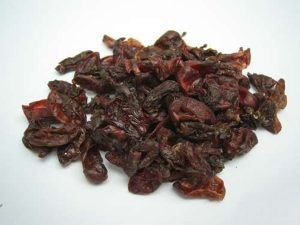
This product is kidney-shaped and slightly flattened, 3–5 mm long, 2–4 mm wide, and approximately 1.5 mm thick. The surface is black, dark brown, or grayish-brown, with fine reticulate wrinkles. The apex is rounded and blunt, with a small protrusion; the concave side bears a scar from the fruit stalk. It is hard in texture. The pericarp is thin and difficult to separate from the seed; there is one seed with two cotyledons, which are yellowish-white and oily.It has a fragrant aroma and a pungent, slightly bitter taste.
Properties of Processed Slices
1. Psoralea: See the “Medicinal Materials” entry.
2. Salted Psoralea: This product resembles Psoralea. The surface is black or dark brown and slightly convex. It has a faintly fragrant odor and a slightly salty taste.
Botanical Information
Botanical Classification
Psoralea, a plant of the genus Psoralea in the Fabaceae family.
Morphological Characteristics
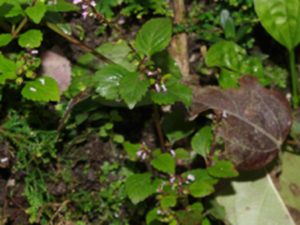
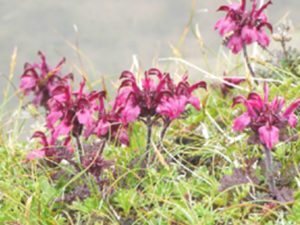
An annual herb, 60–150 cm tall. Stems are stiff and longitudinally ridged; the entire plant is covered with white soft hairs and blackish-brown glandular dots. Simple leaves are alternate; occasionally, small leaflets about 1 cm long are present laterally at the branch tips; petioles are 2–4 cm long and covered with white downy hairs; stipules are paired, triangular-lanceolate, about 1 cm long, and membranous;leaf blades are broadly ovate, 5–9 cm long and 3–6 cm wide, with a blunt or rounded apex, a cordate or rounded base, coarsely serrate margins, and prominent black glandular dots on both surfaces. Flowers are numerous and densely clustered in spike-like racemes, axillary; pedicels are 6–10 cm long;The calyx is bell-shaped, fused at the base into a tube, 5-lobed at the apex, and covered with black glandular hairs; the corolla is papilionaceous, pale purple or yellow, with the standard petal obovate, the wings broadly linear, and the keel petal oblong, with a blunt apex and slightly incurved; there are 10 stamens with small anthers;There is a single pistil; the ovary is superior, obovate or linear, with a filiform style. The pod is elliptical, approximately 5 mm long, indehiscent, with a black pericarp that adheres to the seed. There is a single seed with a fragrant aroma. Flowering occurs from July to August, and fruiting from September to October.
Distribution Area
It is distributed in Henan, Anhui, Guangdong, Shaanxi, Shanxi, Jiangxi, Sichuan, Yunnan, Guizhou, and other regions.
Growth Habits
It prefers a warm and humid climate and thrives in sunny, flat areas with ample sunlight.Although seedlings prefer moist conditions, they are susceptible to waterlogging. It is a fertilizer-loving plant; with ample base fertilizer and fertile soil, it grows vigorously. It is not particular about soil type and can be grown in most soils, but sandy loam rich in humus is best, while clay soil is less suitable. Seeds germinate in about 7–10 days at around 20°C in soil with sufficient moisture.
Propagation Methods
Propagated by seed.
Cultivation Techniques
1. For spring sowing, prior to planting, the land should be prepared during the fall of the previous year in conjunction with fall plowing, applying sufficient base fertilizer at a rate of 45,000–60,000 kg of manure and 225 kg of superphosphate per hectare.After leveling the soil in the spring, sow the seeds using row seeding. Space rows 30–50 cm apart, make shallow furrows, scatter the seeds evenly, cover with 1–2 cm of soil, lightly firm the soil, and then water. The seeding rate is 15–22.5 kg per 1 hm².
2.Field Management: Pay close attention to management during the seedling stage; loosen the soil and remove weeds promptly to prevent the topsoil from becoming compacted. Stop loosening the soil once the plants have closed the rows. Water promptly if the soil dries out. When seedlings reach a height of about 10 cm, thin them to a spacing of 15–20 cm between plants. After final thinning, apply 225 kg of superphosphate and 75 kg of potash per hectare as a topdressing, applying it in furrows, then cover with soil and water.
Pest and Disease Control
1. Diseases include root rot, which occurs during the rainy season. Plant in well-drained areas; during outbreaks, irrigate affected plants with carbendazim.
2. Pests include cutworms, which damage seedlings.