Atractylodes is a commonly used herb for tonifying qi. It is the dried rhizome of the Asteraceae plant Atractylodes, named for the resemblance of its roots, stems, branches, and leaves to the ancient seal script character “术,” and for the white interior of its rhizome. It is primarily produced in Zhejiang and Anhui; traditionally, the variety from Yuqian, Zhejiang, is considered the finest and is commonly known as “Yu Shu.”This herb has the effects of strengthening the spleen and tonifying qi, drying dampness and promoting diuresis, stopping sweating, and stabilizing the fetus. It is commonly used to treat spleen deficiency with poor appetite, abdominal distension and diarrhea, phlegm-retention with dizziness and palpitations, edema, spontaneous sweating, and fetal restlessness. In addition, Atractylodes macrocephala can be incorporated into daily meals, such as in congee or soups, to help nourish and strengthen the body.

Atractylodes
Atractylodes is a commonly used herb for tonifying qi. It is the dried rhizome of the Asteraceae plant Atractylodes, named for the resemblance of its roots, stems, branches, and leaves to the ancient seal script character “术,” and for the white interior of its rhizome. It is primarily produced in Zhejiang and Anhui; traditionally, the variety from Yuqian, Zhejiang, is considered the finest and is commonly known as “Yu Shu.”This herb has the effects of strengthening the spleen and tonifying qi, drying dampness and promoting diuresis, stopping sweating, and stabilizing the fetus. It is commonly used to treat spleen deficiency with poor appetite, abdominal distension and diarrhea, phlegm-retention with dizziness and palpitations, edema, spontaneous sweating, and fetal restlessness. In addition, Atractylodes macrocephala can be incorporated into daily meals, such as in congee or soups, to help nourish and strengthen the body.
Chinese Name : 白术
Latin Name : Atractylodis Macrocephalae Rhizoma
Aliases : Mountain Thistle, Atractylodes, Mountain Mustard, Mountain Coptis, Winter Atractylodes, Zhejiang Atractylodes, Yu Atractylodes
Authentic Producing Area : Mainly produced in Zhejiang and Anhui
Nature, Flavor & Meridian Tropism : Taste: bitter and sweet; nature: warm; enters the Spleen and Stomach meridians
Benefits & Efficacy
Benefits
White Atractylodes has the effects of strengthening the spleen and tonifying qi, drying dampness and promoting diuresis, stopping sweating, and stabilizing the fetus.
Indications
White Atractylodes is primarily used to treat spleen qi deficiency, phlegm-fluid retention and internal dampness, spontaneous sweating, and fetal restlessness.
Usage and Dosage
Clinically, Atractylodes macrocephala is most commonly decocted into a herbal decoction, with a standard dosage of 6–12 g. Additionally, depending on specific circumstances, it may be prepared as a paste for oral administration or incorporated into pills or powders. It is important to note that due to differences in each patient’s condition and constitution, the specific dosage of Atractylodes macrocephala may vary from person to person; patients should strictly follow the doctor’s prescription when using this product. Atractylodes macrocephala has diverse therapeutic effects, and different preparation methods should be selected based on the intended effect. Specifically, the raw form is suitable for drying dampness and promoting diuresis; the wheat-bran-fried variety is appropriate for tonifying qi and strengthening the spleen; and the charred or earth-fried varieties are recommended for strengthening the spleen and stopping diarrhea.
Precautions
1. Patients should strictly follow their doctor’s instructions when taking this medication to ensure treatment efficacy and safe use. 2. If patients need to take other medications concurrently while using Atractylodes macrocephala, they should consult their doctor or pharmacist promptly to prevent drug interactions that could affect treatment efficacy or cause adverse reactions. 3. According to traditional records, Atractylodes macrocephala should not be consumed alongside foods such as peaches, plums, grass carp, or garlic. 4. Before using Atractylodes macrocephala, pregnant and breastfeeding women must proactively inform their doctor of their physiological status (such as stage of pregnancy or breastfeeding status), so that the doctor can assess the safety and suitability of the medication based on individual circumstances. 5. When administering this medication to children, an adult must be present to provide supervision throughout the entire process to ensure safety and prevent medication errors or accidents. 6. If Atractylodes macrocephala is found to be spoiled, moldy, or has an unusual odor, discontinue use immediately. Such herbal materials may have produced harmful substances that could cause harm to one’s health if ingested.
Chemical Constituents
Atractylodes macrocephala contains various chemical components, including essential oils, sesquiterpene lactones, and polyene alcohols. 1. Essential oils: These include α- and β-humulene, β-olibanol, α-curcumene, atractylone, 3β-acetoxy atractylone, apigenone, eucalyptol, palmitic acid, and maoshu alcohol, among others. 2. Sesquiterpene lactones: These include Atractylolide I, II, III, and IV; Bis-Atractylolide; Atractylolide amide; and 8-β-methoxyatractylolide, among others. 3. Polyene alcohols: These include 14-acetyl-12-stachydyl-8-cis-Atractylol, 14-acetyl-12-stachydyl-8-trans-Atractylol, and 12-stachydyl-8-cis-Atractylol, among others. 4. Others: In addition to the above components, raw Atractylodes macrocephala also contains scopolamine, mannan AM-3, and various amino acids.
Pharmacological Actions
Modern pharmacological studies have found that Atractylodes macrocephala promotes gastrointestinal motility, enhances immune function, inhibits uterine smooth muscle contractions, acts as a diuretic, delays aging, and exhibits antitumor and anti-hepatotoxic effects.
Relevant Discussions
1. *The Classic of Herbal Medicine*: “Bitter in taste, warm in nature, non-toxic; primarily treats wind, cold, and dampness-induced arthralgia, necrotic muscle, spasms, jaundice; stops sweating, clears heat, and aids digestion.”
2. *Hui Yan of Materia Medica*: “Atractylodes macrocephala is an essential herb for supporting the spleen and stomach, dispelling dampness and alleviating arthralgia, and aiding digestion to relieve fullness. When the spleen is deficient and weak, Atractylodes macrocephala can tonify it; when the stomach is deficient and unable to accept food, Atractylodes macrocephala can assist it.”
3. *The Origin of Medicine*: “It dispels dampness and promotes dryness, harmonizes the middle, and tonifies qi. Its uses are ninefold: first, warming the middle; second, removing dampness from the spleen and stomach;third, it clears stomach heat; fourth, it strengthens the spleen and stomach and promotes appetite; fifth, it harmonizes the stomach and generates body fluids; sixth, it treats muscle heat; seventh, it treats fatigue in the limbs, reluctance to open the eyes, lethargy with a tendency to lie down, and loss of appetite; eighth, it quenches thirst; and ninth, it stabilizes the fetus.”
4. *Supplement to the Extensive Commentary on Materia Medica*: “Its efficacy in removing dampness is outstanding. Furthermore, it stops sweating when there is sweat and induces sweating when there is none.”
Applications
Clinical Applications
1. Clinical Applications in Traditional Chinese Medicine
(1) Spleen Qi Deficiency Syndrome: Atractylodes macrocephala is commonly used to treat spleen qi deficiency syndrome and can be combined with ginseng, Poria cocos, and fried licorice root; if spleen deficiency leads to impaired transformation and transportation, undigested food accumulation, and stagnation of qi, resulting in epigastric and abdominal distension and fullness, it can be used in conjunction with Zhi Shi, which promotes qi circulation and resolves stagnation;In cases of long-standing spleen deficiency leading to the generation of internal cold, manifested as cold pain in the epigastrium and abdomen, cold extremities, vomiting, and loose stools, it is often combined with ginseng, dried ginger, and fried licorice; for spleen deficiency with qi collapse, chronic diarrhea with rectal prolapse, as well as uterine prolapse, gastric ptosis, or other visceral prolapse, it is often combined with astragalus, cimicifuga, and bupleurum, which tonify qi and raise yang.
(2) Syndromes of Phlegm-Dampness and Internal Retention of Water and Dampness: Atractylodes macrocephala can be used for various syndromes resulting from spleen deficiency failing to transport and transform, leading to the internal retention of phlegm-dampness and water-dampness.To treat difficulty urinating and edema, it is often combined with Cinnamomum cassia, Poria, and Alisma; to treat deficiency of spleen yang with internal retention of phlegm and fluid, it is often combined with Poria, Cinnamomum cassia, and fried licorice; if spleen deficiency causes damp turbidity to descend, resulting in thin, clear vaginal discharge, it can be combined with Dioscorea, Atractylodes lancea, and Plantago seed.
(3)Sweating Disorders: Atractylodes macrocephala is frequently used for uncontrollable spontaneous sweating due to qi deficiency; it can be decocted alone, taken as a powder, or combined with herbs such as Astragalus membranaceus and Saposhnikovia divaricata. It can also treat night sweats caused by yin deficiency; in such cases, it is stir-fried with Astragalus membranaceus, Dendrobium nobile, oyster shell, and wheat bran, then ground into a powder and taken with millet soup.
(4) Fetal Restlessness: Atractylodes macrocephala can be used to treat fetal restlessness.If qi deficiency is accompanied by internal heat, it can be combined with Scutellaria baicalensis; if accompanied by qi stagnation with chest and abdominal distension, it can be combined with Perilla stem and Amomum villosum; if fetal restlessness results from qi and blood deficiency, it should be combined with Ginseng, Astragalus, and Angelica sinensis; if fetal restlessness is caused by kidney deficiency, it can be used in combination with Eucommia ulmoides, Dipsacus asper, and donkey-hide gelatin.
2. Modern Medical Applications
(1)Digestive System Disorders: Atractylodes macrocephala can be used to treat gastrointestinal ulcers, irritable bowel syndrome, functional diarrhea, and gastrointestinal dysfunction caused by various factors.
(2) Constipation: When used alone, increase the dosage and prefer the raw form; it can also be combined with Zhi Shi and other herbs to treat constipation.
(3) Other Uses: Atractylodes macrocephala can also be used to treat hypertension, insomnia, and vascular dementia, as well as for adjuvant cancer therapy.
Related Compatibility
1. Atractylodes macrocephala combined with Poria cocos: Atractylodes macrocephala excels at strengthening the spleen and drying dampness, while Poria cocos excels at draining dampness and benefiting the spleen.When used together, one dries dampness and the other drains it, thereby eliminating dampness and strengthening spleen qi. This combination strengthens spleen qi while promoting the proper transport of fluids, making it suitable for conditions of spleen deficiency with excessive dampness, such as fatigue in the limbs, epigastric and abdominal distension and fullness, loss of appetite, loose stools, edema, difficulty urinating, and leukorrhea due to spleen deficiency.
2.Atractylodes macrocephala combined with Atractylodes lancea: Atractylodes macrocephala leans toward tonification, possesses strong spleen-tonifying properties, and excels at strengthening the spleen and drying dampness; Atractylodes lancea leans toward drying, possesses strong dampness-drying properties, and excels at drying dampness and strengthening the spleen. When combined, these two herbs enhance the effects of strengthening the spleen and drying dampness, making them suitable for various conditions characterized by spleen deficiency with excessive dampness.
3. Atractylodes macrocephala combined with Pinellia ternata: Atractylodes macrocephala excels at tonifying qi, strengthening the spleen, and drying dampness; Pinellia ternata excels at drying dampness, resolving phlegm, and stopping vomiting.When combined, they enhance the effects of strengthening the spleen, drying dampness, and resolving phlegm, making this combination suitable for symptoms such as dizziness, headache, chest tightness, and nausea caused by phlegm generated from spleen deficiency.
4. Atractylodes macrocephala combined with Astragalus membranaceus: Atractylodes macrocephala excels at tonifying qi and strengthening the spleen, while Astragalus membranaceus excels at consolidating the exterior and stopping sweating. When used together, they invigorate qi and fortify the exterior, preventing excessive sweating. This combination is suitable for conditions such as spontaneous sweating due to exterior deficiency or for individuals with constitutional weakness who are prone to colds.
Medicinal Identification
1. Raw Atractylodes, Earth-Fried Atractylodes, Charred Atractylodes, and Bran-Fried Atractylodes: All four are processed forms of Atractylodes. Raw Atractylodes primarily dries dampness, strengthens the spleen, promotes diuresis, and reduces swelling; it is used for conditions such as phlegm-fluid retention, edema, and rheumatic arthralgia.Earth-fried Atractylodes, by harnessing the earth’s energy to assist the spleen, is more effective at tonifying the spleen and stopping diarrhea; it is used for spleen deficiency with poor appetite, diarrhea, and loose stools.Charred Atractylodes can invigorate the spleen and stomach and has a strong effect in stopping diarrhea; it is used for diarrhea caused by spleen deficiency. Bran-fried Atractylodes moderates the drying nature of the herb; by incorporating bran into the formula, it enhances the spleen-tonifying effect. It is used for conditions such as poor appetite, bloating, and fatigue caused by disharmony between the spleen and stomach and impaired transformation and transportation, as well as for symptoms like spontaneous sweating due to exterior deficiency and restless fetus.
2. Cang Zhu and Bai Zhu: Both belong to the Asteraceae family and enter the Spleen and Stomach meridians; they both have the effects of drying dampness and strengthening the spleen, and are used to treat conditions such as spleen deficiency with fluid retention and dampness stagnation in the middle jiao. However, Cang Zhu is a dampness-transforming herb that excels at drying spleen dampness and can also induce sweating to release the exterior, dispel wind, and overcome dampness.White Atractylodes is a qi-tonifying herb, particularly effective at tonifying spleen qi, and it can also stop sweating and stabilize the fetus. Therefore, Atractylodes lancea is often used for excess patterns with severe dampness, while White Atractylodes is often used for deficiency patterns with spleen deficiency; Atractylodes lancea is used for wind-cold colds and rheumatic arthralgia, whereas White Atractylodes is used for spontaneous sweating due to spleen deficiency and fetal restlessness. Additionally, Atractylodes lancea can improve vision and is used to treat night blindness and various symptoms of blurred vision.
3. Ginseng and White Atractylodes: Both have a sweet and bitter taste and a warm nature; they enter the Spleen meridian and are essential herbs for tonifying qi. They both possess the ability to tonify qi and strengthen the spleen, and are often used in combination to enhance each other’s effects.However, ginseng has a much stronger tonifying effect and also enters the Heart and Lung meridians. It can greatly tonify primordial qi, restore the pulse, and prevent collapse, making it suitable for critical conditions such as qi deficiency with impending collapse and a faint, nearly imperceptible pulse. It can also nourish blood and generate body fluids, making it useful for thirst in febrile diseases, conditions where both qi and body fluids are depleted, and diabetes insipidus. Furthermore, it can calm the mind, enhance mental clarity, tonify qi, and support yang to treat insomnia, forgetfulness, and erectile dysfunction.Although Atractylodes macrocephala is far less potent than ginseng, it specifically enters the Spleen and Stomach meridians and excels at strengthening the spleen and stomach, drying dampness, and promoting diuresis. It also has the effects of stopping sweating and stabilizing the fetus, and is used for conditions such as impaired spleen function, spleen deficiency with fluid retention, instability of the skin and muscles, and fetal restlessness.
4. Astragalus and Atractylodes: Both are sweet and warm in nature and enter the Spleen meridian; they can tonify qi and strengthen the spleen, promote diuresis and reduce swelling, consolidate the exterior, and stop sweating. They are similarly used to treat spleen-stomach deficiency, edema due to fluid retention, and an unstable defensive exterior.However, Astragalus has a stronger qi-tonifying effect and is particularly effective at tonifying qi and raising yang; it also aids in promoting tissue regeneration in ulcers. It is used for conditions such as failure of spleen yang to rise, sinking of central qi, as well as ulcers that have sunken inward, pus formation without ulceration, and ulcers that remain open for an extended period without healing. Atractylodes has a relatively weaker qi-tonifying effect but focuses specifically on the spleen and stomach meridians; it also has the effect of tonifying qi and stabilizing the fetus. It is used for spleen deficiency and qi weakness during pregnancy, as well as restless fetus.
5. Poria and Atractylodes: Both have a sweet taste, enter the Spleen meridian, and possess the function of strengthening the spleen; they are used together to treat various symptoms of spleen deficiency and are often combined for synergistic effects. However, Poria is sweet, bland, and neutral in nature, entering the Heart and Kidney meridians; it excels at promoting diuresis and draining dampness, and can also calm the heart and soothe the spirit, making it suitable for treating various types of edema, palpitations, and insomnia.Atractylodes macrocephala is bitter, sweet, and warm in nature, and also enters the Stomach meridian. It excels at drying dampness, strengthening the spleen, and promoting diuresis; it can also consolidate the exterior to stop sweating, tonify qi, and stabilize the fetus. It is used to treat impaired spleen function, a weak exterior, and fetal restlessness.
Related Medicines
1. Spleen-Strengthening Pills
(1) Composition: Codonopsis, fried Atractylodes, tangerine peel, fried Trifoliate Orange, fried Hawthorn, and fried Barley Malt.
(2) Functions and Indications: Strengthens the spleen and stimulates appetite. Indicated for epigastric and abdominal distension, reduced appetite, and loose stools resulting from spleen-stomach deficiency.
2. Harmonizing the Middle and Regulating the Spleen Pills
(1) Composition: Atractylodes macrocephala (fried with bran), Atractylodes lancea (fried with rice water), Codonopsis pilosula, Poria cocos, Tangerine peel, Pinellia ternata (processed), Magnolia officinalis (processed with ginger),Zhike (seed-removed and wheat bran-fried), Amomum villosum, Cardamom, Cyperus rotundus (vinegar-fried), Aquilaria agallocha, Patchouli, Southern Hawthorn, Liushengqu (wheat bran-fried), Barley Malt (roasted), Radish Seeds (roasted), Licorice.
(2) Functions and Indications: Strengthens the spleen and harmonizes the stomach; regulates qi and transforms dampness. Indicated for chest and diaphragm fullness, epigastric and abdominal distension and oppression, nausea and vomiting, loss of appetite, and irregular stools caused by disharmony of the spleen and stomach.
3. Xiang Sha Zhi Shu Pills
(1) Composition: Atractylodes macrocephala (wheat bran-fried), Wood Fragrance, Amomum villosum, and wheat bran-fried Zhi Shi.
(2) Functions and Indications: Strengthens the spleen and stimulates appetite; regulates qi and relieves fullness. Indicated for spleen deficiency with qi stagnation, epigastric and abdominal fullness and oppression, loss of appetite, and loose stools.
4. Bai Dai Pills
(1) Composition: Atractylodes macrocephala, Alisma orientale, Poria cocos, Plantago seed, and Toona bark.
(2) Functions and Indications: Strengthens the spleen and dries dampness. Used for white, turbid vaginal discharge and loose stools.
5. Pregnant Women’s Fire-Clearing Pills
(1) Composition: Scutellaria baicalensis, Anemarrhena asphodeloides, Dendrobium, Bupleurum, Rehmannia glutinosa, Mentha, Paeonia lactiflora, Atractylodes macrocephala, Glycyrrhiza uralensis.
(2) Functions and Indications: Clears internal heat and stabilizes the pregnancy. Indicated for pregnant women with fetal heat manifested as dry mouth, burning sensation in the chest and abdomen, mouth and tongue sores, dry and sore throat, constipation, or dark yellow urine.
Related Prescriptions
1. Formula for Painful Diarrhea (from *Danxi’s Heart Method*)
(1) Ingredients: Atractylodes macrocephala, Paeonia lactiflora, Citrus reticulata, Saposhnikovia divaricata.
(2) Functions and Indications: Tonifies the spleen, soothes the liver, dispels dampness, and stops diarrhea. Indicated for painful diarrhea due to spleen deficiency with liver hyperactivity, manifested as intestinal rumbling and abdominal pain, loose stools, abdominal pain that occurs only during defecation and subsides afterward, a thin white tongue coating, and an irregular pulse at both Guan positions—string-like on the left and slack on the right.
2. Seven-Ingredient Atractylodes Powder (from *Direct Decisions on Pediatric Medicines and Syndromes*)
(1) Composition: Ginseng, Poria, Fried Atractylodes, Licorice, Agastache Leaf, Wood Fragrance, Pueraria Root.
(2) Functions and Indications: Strengthens the spleen and tonifies qi; harmonizes the stomach and generates body fluids. Indicated for spleen-stomach deficiency with fluid deficiency and internal heat, manifested as vomiting and diarrhea, fever, and intense thirst.
3. Four Gentlemen Decoction (from *Formulas of the Bureau of Harmonious Preparations*)
(1) Ingredients: Ginseng, Atractylodes macrocephala, Poria, Licorice.
(2) Functions and Indications: Tonifies qi and strengthens the spleen. Indicated for spleen qi deficiency presenting with a sallow complexion, a weak voice, weakness in the limbs, reduced appetite, loose stools, a pale tongue, and a fine, slow pulse.
4. Ginseng-Poria-Atractylodes Powder (from *Formulas of the Bureau of Harmonious Preparations*)
(1) Composition: Ginseng, Atractylodes macrocephala, Poria, lotus seed kernel, coix seed, amomum, platycodon, mung bean, Chinese yam, licorice.
(2) Functions and Indications: Tonifies qi and strengthens the spleen; drains dampness and stops diarrhea. Indicated for spleen-stomach deficiency manifested as poor appetite, loose stools, diarrhea, or vomiting; a sallow complexion; weakness in the limbs; emaciation; a pale tongue with a white coating; and a fine, slow or deficient-slow pulse.
5. Zhi-Shu Pills (from *Discussions on Distinguishing Confusions in Internal and External Injuries*)
(1) Composition: Zhi Shi, Bai Zhu.
(2) Functions and Indications: Strengthens the spleen and eliminates fullness. Indicated for spleen deficiency with qi stagnation and food stagnation, manifested as fullness and distension in the chest and epigastrium, and loss of appetite.
Medicinal Diet Therapy
As a medicinal herb that is also a food, Atractylodes macrocephala can be combined with other herbs or ingredients to create medicinal dishes that help regulate related conditions and promote health and wellness.
1. Atractylodes macrocephala and Pork Stomach Porridge
(1) Ingredients: 30g Atractylodes macrocephala, 10g areca nut, 10g ginger, 1 pork stomach, 100g japonica rice, 3 stalks of scallion whites (finely chopped), and salt to taste.
(2) Preparation: Place the Atractylodes macrocephala, areca nut, and ginger into a muslin bag and tie it closed; wash the pork stomach thoroughly, insert the herb bag into the stomach, and sew the opening shut; boil the pork stomach in an appropriate amount of water until cooked, strain the broth, and use it to cook the rice into porridge; when the porridge is done, add the scallion whites and salt to taste.
(3) Benefits and Applications: Strengthens the spleen, aids digestion, regulates qi, and relieves stagnation. Suitable for those with spleen and stomach deficiency, impaired digestion and absorption, and qi stagnation. Such individuals often experience epigastric and abdominal distension and pain, reduced food intake, loss of appetite, and loose stools.
2. Spleen-Nourishing Cakes
(1) Ingredients: 30g Atractylodes macrocephala, 250g red dates, 15g chicken gizzard membrane, 6g dried ginger, 500g flour, and salt to taste.
(2) Preparation: Place Atractylodes macrocephala and dried ginger in a muslin bag, tie the opening tightly, and place it in a pot. Add the red dates and 1L of water. Bring to a boil over high heat, then reduce to low heat and simmer for 1 hour. Remove the herb bag;Remove the pits from the red dates and mash the flesh into a paste. Grind the chicken gizzard lining into a fine powder, mix it thoroughly with the flour, then add the date paste, additional flour, and a small amount of salt. Knead into a dough, then shape the dough into thin pancakes. Pour a small amount of vegetable oil into a skillet, place the pancakes in the pan, and cook until done.
(3) Benefits and Applications: Strengthens the spleen and boosts qi, warms the middle burner and dispels cold, and aids digestion. Suitable for those with cold-dampness in the spleen and stomach or internal food stagnation.
3. Fish Soup with Atractylodes and Dried Tangerine Peel
(1) Ingredients: 640 grams of fish, 40 grams of Atractylodes, 8 grams of dried tangerine peel, and 4 slices of ginger.
(2) Preparation: Clean the fish, remove the intestines, and cut into chunks. Wash the Atractylodes macrocephala; soak the dried tangerine peel until soft, then scrape off the white pith. Wash the ginger and cut into thin strips. Place all ingredients in a pot, add an appropriate amount of water, and bring to a boil over high heat. Add the fish, reduce to low heat, and simmer for 2 hours. Season to taste and serve.
(3) Benefits and Applications: Tonifies the spleen and boosts qi; promotes qi circulation and stimulates appetite. Suitable for those with weak spleen and stomach who require nourishment.
4. Other Uses
(1) 30–60 g of raw Atractylodes macrocephala, 50–100 g of granulated sugar. Grind the Atractylodes macrocephala into a powder, sift it, and mix thoroughly with the sugar. Take 10 g at a time, add an appropriate amount of water to form a paste, and steam over boiling water or in a rice cooker before consuming. Take twice daily. Suitable for treating excessive drooling in children; however, it is not recommended for children whose drooling is caused by mouth ulcers.
(2) 9 g of Atractylodes macrocephala, an appropriate amount of pumpkin, and a small amount of maltose. Decoct Atractylodes macrocephala to extract the liquid, mix it into pumpkin porridge, and add 1 spoonful of maltose before consuming. This is suitable for treating threatened miscarriage.
Processing & Preparation
Harvesting & Processing
Harvest in winter when the lower leaves have withered and turned yellow and the upper leaves have become brittle. After harvesting, remove dirt and sand, dry in an oven or in the sun, and then remove the fibrous roots.
Processing Methods
1. Atractylodes: Take the raw herb, remove impurities, wash thoroughly, moisten until thoroughly softened, cut into thick slices, and after sun-drying or low-temperature drying, sift out any碎屑.
2. Wheat Bran-Fried Atractylodes: First, heat a wok over medium heat. Sprinkle in wheat bran (or honey-fried wheat bran). When smoke begins to rise, add the Atractylodes slices. Stir-fry continuously until the surface turns brownish-yellow and a fragrant aroma is released. Remove from heat, sift out the wheat bran, and allow to cool.For every 100 kg of Atractylodes macrocephala slices, use 10 kg of wheat bran or honey-fried wheat bran.
3. Earth-Roasted Atractylodes macrocephala: Place stove-hearth soil powder in a wok and heat over medium heat. Once the soil becomes loose and crumbly, add the Atractylodes macrocephala slices. Stir-fry until the slices are evenly coated with the soil powder, then remove from heat, sift out the soil powder, and allow to cool.For every 100 kg of Atractylodes macrocephala slices, use 25 kg of stove-hearth soil.
4. Charred Atractylodes macrocephala: Place clean Atractylodes macrocephala slices in a wok and stir-fry over medium heat until the surface turns a charred brown color. Remove from heat and allow to cool.
Storage Methods
Store in a dry container in a cool, dry place to prevent mold and insect infestation.
Crude Drug Identification
Properties of Crude Drugs
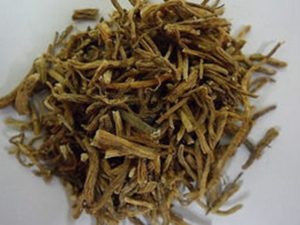
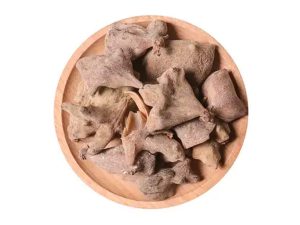
This product consists of irregular, thick lumps, 3–13 cm long and 1.5–7 cm in diameter. The surface is grayish-yellow or grayish-brown, with tuberous protrusions, intermittent longitudinal wrinkles and grooves, and traces of fibrous roots; the top retains remnants of the stem base and bud scars.It is hard and difficult to break; the fracture surface is uneven, yellowish-white to pale brown, with scattered brownish-yellow punctate oil glands. When dried, the fracture surface is horn-like, darker in color, or may have fissures. It has a fragrant aroma, a sweet and slightly pungent taste, and is slightly sticky when chewed.
Properties of Processed Slices
1. Atractylodes: Irregular, thick slices. The outer surface is grayish-yellow or grayish-brown. The cross-section is yellowish-white to pale brown, with scattered brownish-yellow punctate oil glands; the woody part exhibits a radiating grain pattern. When dried, the cross-section appears horny, with a darker color or fissures. It has a fresh, fragrant aroma; a sweet, slightly pungent taste; and is slightly sticky when chewed.
2. Wheat-Bran-Fried Atractylodes: Resembles Atractylodes slices. The surface is yellowish-brown, occasionally with scorched spots. It has a slight roasted aroma.
3. Earth-Fried Atractylodes: Resembles Atractylodes slices. The surface is earthy yellow, covered with fine earth particles. It has an earthy aroma.
4. Charred Atractylodes: Resembles Atractylodes slices. The surface is charred brown, and the texture is loose and brittle. It has a faint roasted aroma and a slightly bitter taste.
Botanical Information
Botanical Classification
A plant of the genus Atractylodes in the Asteraceae family.
Morphological Characteristics
Perennial herb.
1. Rhizome and Leaf Characteristics: The rhizome is thick and tuberous. The stem is 50–80 cm tall, branched toward the top, and lignified at the base.The lower stem leaves have long petioles; the leaf blades are trilobed or pinnately 5-lobed, with lobes ranging from ovate-lanceolate to lanceolate, 5–8 cm long and 1.5–3 cm wide, with a long, acuminate apex, a gradually narrowing base, and margins bearing long or short spiny cilia, hairs, or appressed fine spiny teeth; the apical lobe is larger;Leaves on the upper part of the stem have progressively shorter petioles; they are narrowly lanceolate, either lobed or entire, 4–10 cm long, and 1.5–4 cm wide.
2. Floral Characteristics: A solitary capitulum is borne at the branch apex, approximately 2.5 cm long and 3.5 cm wide; the basal bracts are leaf-like, 3–5 cm long, with pinnately lobed, spiny segments;The involucral bracts are arranged in 5–8 layers, membranous, imbricate, and slightly pubescent on the outer surface; the outermost layer is short, ovate, and blunt at the apex; the flowers are numerous, all tubular, with purplish-red corollas approximately 1.5 cm long, 5 stamens, and a slender style. Flowering period: September–October.
3. Fruit characteristics: Achenes are inverted conical or oblong-elliptical, densely covered with yellowish-white tomentum, slightly flattened, approximately 7.5 mm long; the pappus is approximately 1.3 cm long, pinnate, off-white, and fused at the base. Fruiting period: October–December.
Distribution Area
It is distributed throughout most regions of China.
Growth Habits
It prefers a cool climate, is cold-tolerant, and is sensitive to humid heat and drought. It can withstand temperatures as low as approximately -10°C; growth is inhibited when temperatures exceed 30°C, and it grows rapidly at 24°C–29°C. The optimal temperature for rhizome growth is 26°C–28°C. The optimal temperature for seed germination is 25°C–30°C.It is best cultivated on slightly sloping, elevated, dry sites with deep, loose, fertile, well-drained sandy loam soil. Continuous cropping should be avoided; planting on newly cultivated land is preferred. Land previously planted with this crop must lie fallow for at least 5 years before replanting, otherwise disease is likely to occur. Grass family crops are ideal as preceding crops; crop rotation with cruciferous or solanaceous crops—which are prone to white mold—should be avoided.
Propagation Methods
Propagate seedlings from seed and transplant them.
Cultivation Techniques
1. Propagation Methods
(1) Seed Selection and Treatment: Carefully select bright, plump seeds harvested in the current year. On a sunny day before sowing, sun-dry the seeds for 2–3 days. Then, soak them in a 500-fold dilution of 50% carbendazim wettable powder for 30 minutes. Remove the seeds, rinse them thoroughly with clean water, and let them air-dry. Next, soak the seeds in warm water (25°C–30°C) for 12 hours.Remove the seeds and place them indoors at 25°C–30°C. Rinse them with warm water once in the morning and once in the evening each day. After 4–5 days, when the seeds begin to sprout, they are ready for sowing.
(2) Sowing and Seedling Rearing: From late March to early April, make transverse furrows on prepared raised beds for row sowing, with a row spacing of 15–20 cm and a sowing width of 7–10 cm.with a furrow depth of 3–5 cm. Sow the pre-germinated seeds into the furrows at a rate of 5–8 kg per mu. Broadcast 40–50 kg of calcium-magnesium phosphate fertilizer per mu, followed by an appropriate amount of charcoal ash. Cover with a layer of fine soil approximately 3 cm thick to completely cover the seeds. Finally, cover the bed surface with rice straw to retain heat and moisture.
(3) Seedling Stage Management: Seedlings emerge 7–10 days after sowing; remove the straw covering once the seedlings emerge. When the seedlings reach a height of about 7 cm, thin them to a plant spacing of 3–5 cm. When the seedlings have developed 2–3 true leaves, apply the first top-dressing during cultivation and weeding, applying 1,500 kg of human urine per mu and 50 kg of wood ash per mu.Begin controlling iron leaf disease in Atractylodes macrocephala in early June by spraying the seedlings with a 1,000-fold dilution of 70% carbendazim. Spray once every 7–10 days for 3–4 consecutive applications. Apply the second top-dressing in late July, applying 2,000–2,500 kg of human urine per mu. Water promptly during droughts to alleviate drought stress; during the rainy season, clear ditches promptly to drain excess water. Promptly prune any flower buds that emerge.
(4) Harvesting and Storage: From late October to early November, when the stems and leaves have turned yellow and withered, dig up the Atractylodes rhizomes on a sunny day. Trim off the stems, leaves, and fine roots, select only robust, uniformly sized rhizomes, and store them in a well-ventilated, cool indoor area. During storage, turn the pile and inspect it once every 15 days, promptly removing any diseased rhizomes.
2. Transplanting and Planting
The optimal planting period for Atractylodes rhizomes is late December through early January of the following year. The wide-narrow row planting method is generally used. Beds should be 1.2 m wide with 25 cm wide furrows. Plant four rows of Atractylodes rhizomes on the bed surface, with a 40 cm wide central row and 25 cm wide side rows; plant at 23–27 cm intervals using the hole-planting method.Use medium-sized rhizomes (200 per kg) for planting, at a rate of 40–45 kg per mu. Plant at a depth of 10 cm, placing 1–2 rhizomes per hole. Ensure the buds face upward during planting, and cover with 10 cm of soil afterward.
Pest and Disease Control
1. Diseases and Their Control
(1) White Mold Disease: This disease commonly occurs during the hot and rainy seasons from April to June or August to September, and is particularly prevalent in fields with heavy, clay-like soil and poor drainage. Control measures include crop rotation with grasses;select disease-free planting material and soak seeds in a 1,000-fold dilution of 50% Tebuconazole before sowing; treat the soil with 1 kg of pentachloronitrobenzene per mu prior to planting; irrigate affected areas with a 1,000-fold dilution of 50% Carbendazim or 50% Thiram; promptly uproot diseased plants and apply lime to the affected planting holes.
(2)Damping-off: A disease affecting seedlings; it is particularly severe in early spring due to overcast and rainy weather or soil compaction. The base of affected seedlings turns brown, shrinks, and becomes sunken, causing the seedlings to collapse and die. Control measures include soil disinfection; treat the soil with pentachloronitrobenzene before planting.
(3) Rust: Lesions appear on the leaves, which are fusiform or nearly circular, brown in color, and surrounded by a yellow-green halo.Yellow granular material forms on the underside of the leaves at the lesion sites, which later breaks down into a yellow powder. Control measures include maintaining field hygiene and burning plant debris and diseased leaves; at the onset of the disease, spray a 300-fold dilution of 97% sodium dioxonitrobenzene, or a lime-sulfur solution at 0.2–0.3° Baumé, once every 7–10 days for 2–3 consecutive applications.
(4) Others: In addition to the diseases mentioned above, Atractylodes macrocephala is also susceptible to iron leaf disease, root rot, and other diseases.
2. Pests and Their Control
(1) Cutworms: Cutworms cause the most severe damage from the time Atractylodes macrocephala seedlings emerge until May; manual removal is generally the primary control method.During the seedling stage, inspect the field daily or every other day. If fresh seedlings or leaves are found to have been bitten off, and small holes are visible on the affected plants, dig open the holes and follow the tunnels to locate and capture the cutworms. After June, as the plants mature, cutworm damage gradually decreases.
(2) White Atractylodes Aphids: Damage is most severe from late March to early June. To control them, mix 1 part fish-bush extract with 400 parts water, stir thoroughly, and spray in the early morning after the dew has dried; this method is highly effective.
(3) Wireworms: Damage occurs from the beginning of summer through the first frost, prior to the harvest of white atractylodes, with the most severe damage occurring from the beginning of summer to just before the first frost.Control methods include manual removal; turning the soil in September–October, when the grubs have not yet burrowed deep into the soil to overwinter, and digging deeply to capture them; spraying with tung oil or copper sulfate; and, after removing flower buds, applying 200–300 g of tung oil per dan of manure water during the third fertilization.
(4) Others: These include termites, seed weevils, and others.