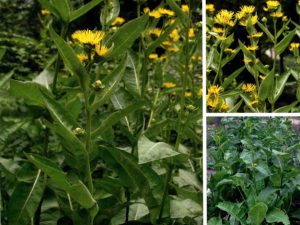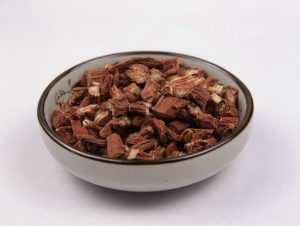
Wild Rose Flower, a name for a traditional Chinese medicinal herb. It is the dried flower of the wild rose (Rosa multiflora Thunb.) of the Rosaceae family. It has the effects of relieving summer heat, harmonizing the stomach, promoting blood circulation and stopping bleeding, and detoxifying. It is primarily used to treat summer heat-induced restlessness and thirst, epigastric distension and fullness, hematemesis, epistaxis, mouth ulcers, boils and abscesses, and irregular menstruation.

Rose Flower
Wild Rose Flower, a name for a traditional Chinese medicinal herb. It is the dried flower of the wild rose (Rosa multiflora Thunb.) of the Rosaceae family. It has the effects of relieving summer heat, harmonizing the stomach, promoting blood circulation and stopping bleeding, and detoxifying. It is primarily used to treat summer heat-induced restlessness and thirst, epigastric distension and fullness, hematemesis, epistaxis, mouth ulcers, boils and abscesses, and irregular menstruation.
Chinese Name : 蔷薇花
Latin Name : Rosar Multiflorae Flos
Aliases : Thorn Flower, White Withered Flower, Chai Mi Mi Hua
Authentic Producing Area : Widely found growing wild throughout the country
Nature, Flavor & Meridian Tropism : Taste: bitter and astringent; nature: cool; enters the Stomach and Liver meridians
Benefits & Efficacy
Benefits
Clears summer-heat, harmonizes the stomach, promotes blood circulation and stops bleeding, and detoxifies.
Indications
Summer heat with restlessness and thirst; epigastric distension and fullness; hematemesis; epistaxis; mouth ulcers; boils and abscesses; irregular menstruation.
Usage and Dosage
1. Internal use: Decoct 3–6 g in water. 2. External use: Apply an appropriate amount as a powder or as a poultice.
Precautions
Use with caution in patients with spleen and stomach deficiency-cold and in pregnant women.
Chemical Constituents
The essential oil of the flower contains 28 compounds, the main components of which are 2,5,5-trimethylheptadiene and methyl geraniate (methyl 2,5-dimethylhexan-1-one).
Pharmacological Actions
This herb has cholagogue and antibacterial effects.
Relevant Discussions
1. *Compendium of Medical Essentials: Properties of Medicinal Herbs*: “When dried, it can be applied to treat wounds caused by sharp objects, removing blood stasis and promoting tissue regeneration.”
2. *Supplement to the Compendium of Materia Medica*: “Treats malaria and blood vomiting caused by stagnation in women.”
3. *Modern Practical Chinese Herbal Medicine*: “Stomachic.”
4. *Flora of Medicinal Plants of Tianmu Mountain*: “Serves as a laxative and diuretic.”
5. *Qingdao Manual of Chinese Herbal Medicine*: “Primarily used to treat heat-induced boils.”
6. *Anhui Chinese Herbal Medicine*: “Clears heat and transforms turbidity; regulates qi and harmonizes the stomach. Primarily used to treat summer heat-induced chest tightness, loss of appetite, and stabbing pain in the epigastrium and abdomen.”
7. *Hebei Chinese Herbal Medicine*: “Resolves abscesses and swellings; neutralizes the toxicity of sores. Used for indigestion, abscesses, swellings, and toxic sores, as well as red and dim vision and mouth ulcers.”
8. *Flora of Medicinal Plants of Zhejiang*: “Mainly used to treat thirst, vomiting, and mouth ulcers.”
Applications
Clinical Applications
1. For summer heat-induced chest tightness and loss of appetite: 9 g of Bai Canhua; decoct in water and drink frequently as a tea substitute. Alternatively, take 9 g each of Bai Canhua and Peilan, decocted and taken orally.
2. For stabbing pain in the epigastrium and abdomen: 9 g each of Bai Canhua and Xiangfu; 6 g of Zhike; 4.5 g each of Sheng Puhuang and Wulingzhi. Decoct and take orally. (Formulas 1–2 are from *Anhui Medicinal Herbs*)
3. For sores at the corners of the mouth and chronic oral ulcers that do not heal: White Residual Flower, Honeysuckle, Forsythia, Scrophularia, and Raw Rehmannia in appropriate amounts. Decoct in water and drink. (*Flora of Medicinal Plants of Zhejiang*)
4. For postpartum paralysis resulting in prolonged inability to lift the hands: 4 liang of rose flowers, 2 liang of Angelica sinensis, 1 liang of safflower, and aged wine as a vehicle. Place all ingredients in the wine and steep for several days. Drink as desired. (From *The Secret Transmission of Hua Tuo, the Divine Physician*: Hua Tuo’s Miraculous Formula for Postpartum Paralysis)
Notes
Patients requiring treatment with Chinese herbal medicine should first consult a licensed Traditional Chinese Medicine (TCM) hospital, where a TCM practitioner will conduct a professional pattern differentiation and prescribe an herbal formula.
Processing & Preparation
Harvesting & Processing
Harvest during the flowering season in May–June on a sunny day, then sun-dry.
Processing Methods
Sift the raw herb to remove ash and debris, and sort out impurities.
Storage Methods
Store in a cool, dry place to prevent insect infestation and mold.
Crude Drug Identification
Properties of Crude Drugs
Most flowers are broken and incomplete; the calyx is lanceolate and densely covered with fine hairs; the petals range from yellowish-white to brown, with most having withered, shriveled, and curled; when flattened, they are triangular-ovate, approximately 1.3 cm long and 1 cm wide, with a slightly concave central tip, a wedge-shaped middle section, and visible striated veins (vascular bundles).There are numerous stamens, attached to the calyx tube; they are yellow and curled into a mass. The receptacle is small and urn-shaped, with pedicels of varying lengths at the base. The texture is brittle and easily broken. It has a faintly fragrant odor and a slightly bitter and astringent taste.
Properties of Processed Slices
See “Characteristics of the Medicinal Material.”
Botanical Information
Botanical Classification
A plant of the genus Rosa in the Rosaceae family, specifically the wild rose.
Morphological Characteristics
A climbing shrub with short, thick, slightly curved thorns on the twigs. There are 5–9 leaflets; those near the inflorescence are sometimes 3 in number, and the total length (including the petiole) is 5–10 cm;Stipules are comb-toothed and mostly adnate to the petiole; leaflets are obovate, oblong, or ovate, 1.5–5 cm long and 0.8–2.8 cm wide, with an acute or rounded apex, a nearly rounded or cuneate base, and serrated margins; the upper surface is glabrous, while the lower surface is pubescent; the petiolules and rachis bear scattered glandular hairs.Flowers are hermaphroditic; arranged in numerous panicles, with flowers 1.5–2 cm in diameter; sepals 5, lanceolate, sometimes with 2 linear lobes in the middle; petals 5, white, broadly obovate, slightly concave at the apex, wedge-shaped at the base; numerous stamens; styles fused into a bundle.The fruit is nearly spherical, 6–8 mm in diameter, reddish-brown or purplish-brown, and glossy; flowering occurs from May to June, and fruiting from September to October.
Distribution Area
It is distributed in Shandong, Jiangsu, Henan, and other areas.
Growth Habits
It prefers a warm and humid climate, thrives in full sun but tolerates partial shade, prefers fertile soil but tolerates poor soil, and does not tolerate waterlogging; it can be cultivated in most types of soil.
Propagation Methods
Propagate by cuttings or layering.
Cultivation Techniques
1. Cuttings: In September–October, select sturdy, plump, current-year shoots and cut them into 20–25 cm long cuttings. Use the mud-slurry method for propagation, inserting 2/3 or 1/2 of the cutting into the slurry. Plant approximately 1,000 cuttings per square meter. Transplant in February of the following year.
2. Layering: In February–March, select two-year-old branches and lay down the middle section. Score the part to be buried with a knife, bury it about 5–6 cm deep, and firm the soil around it. Use a wooden stick to prop up the branch tip that remains above ground. Water frequently after layering; roots will form within a year, and the plant can be cut off and transplanted in January of the following year.When planting, dig holes with a row spacing of 70 cm and a plant spacing of 50 cm.