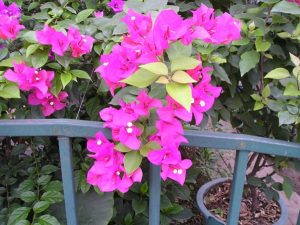
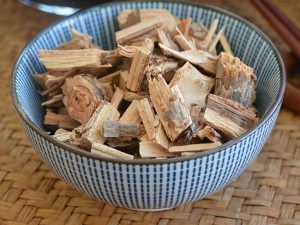
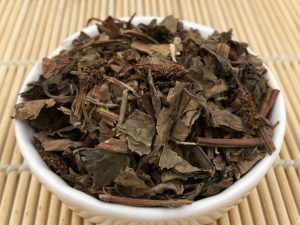
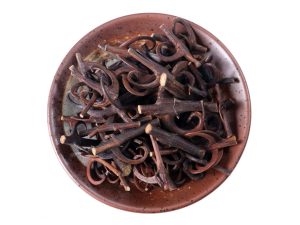
Gentiana, a name in traditional Chinese medicine. It refers to the dried roots and rhizomes of Gentiana or Triflorus Gentiana, plants of the Gentianaceae family. It has the effects of clearing heat, drying dampness, and purging liver and gallbladder fire. It is primarily used to treat damp-heat jaundice, genital swelling and itching, leukorrhea, itchy eczema, red eyes, deafness, rib pain, bitter taste in the mouth, and convulsions.

Gentian
Gentiana, a name in traditional Chinese medicine. It refers to the dried roots and rhizomes of Gentiana or Triflorus Gentiana, plants of the Gentianaceae family. It has the effects of clearing heat, drying dampness, and purging liver and gallbladder fire. It is primarily used to treat damp-heat jaundice, genital swelling and itching, leukorrhea, itchy eczema, red eyes, deafness, rib pain, bitter taste in the mouth, and convulsions.
Chinese Name : 龙胆草
Aliases : Lingyou, Grass Gentian, Gentian, Mountain Gentian, Water Gentian, Bitter Gentian, Ground Gentian, Gentian Herb, Four-Leaf Gentian
Nature, Flavor & Meridian Tropism : Bitter in taste, cold in nature; enters the Liver and Gallbladder meridians
Benefits & Efficacy
Benefits
Clears heat and dries dampness; purges liver and gallbladder fire.
Indications
Damp-heat jaundice; genital swelling and itching; leukorrhea; itchy eczema; red eyes; deafness; rib pain; bitter taste in the mouth; convulsions and spasms.
Usage and Dosage
1. Internal use: Decoct 3–6 grams; or incorporate into pills or powders. 2. External use: Use an appropriate amount; decoct in water for washing; or grind into a powder and apply topically.
Precautions
This herb has a bitter and cold nature; prolonged use is not recommended.
Chemical Constituents
Gentian contains mainly gentianin and gentianine, among other components.
Pharmacological Actions
This herb has hepatoprotective, cholagogue, stomachic, sedative, antihypertensive, diuretic, antibacterial, anti-inflammatory, and immunomodulatory effects.
Relevant Discussions
1. *Compendium of Materia Medica*: “It treats sore throat and night sweats caused by wind-heat. Since the ‘ministerial fire’ resides in the liver and gallbladder—where there is only purgation and no tonification—Gentiana benefits the qi of the liver and gallbladder precisely by purging pathogenic heat from these organs. However, because it is extremely bitter and cold, excessive use may injure the generating qi of the stomach and conversely aid pathogenic fire; this principle is similar to how prolonged use of Coptis can lead to its transformation into fire.”
2. *Medicine: Integrating Chinese and Western Principles*: “Gentian, with a bitter and slightly sour taste, is a primary herb for the stomach. Its bitterness descends stomach qi and strengthens the stomach’s constitution; its sourness replenishes the stomach’s acidic juices to aid in the digestion of food.For those suffering from stomach heat with qi rebellion, insufficient gastric juices, and an inability to eat, taking it can stimulate the appetite and promote food intake. Its slight sourness corresponds to the Wood element; therefore, it can also enter the Liver and Gallbladder meridians to nourish Liver blood, enhance bile secretion, and reduce heat in the Liver and Gallbladder to prevent it from rising upward. It can cure all conditions—including eye diseases, hemoptysis, epistaxis, blood in the urine or stool, convulsions, and dizziness—caused by heat in the Liver and Gallbladder.“Its ability to clear excess heat from the liver and gallbladder is several times greater than that of peony root (Shāoyào), but in terms of subduing and harmonizing deficient heat in the liver and gallbladder, it is certainly not as effective as peony root.”
3. *Treatise on the Properties of Medicinal Herbs*: “It is primarily used for childhood convulsions affecting the heart, high fever with bone-deep heat, and abscesses and swellings; it also treats epidemic diseases characterized by fever and jaundice, as well as mouth sores.”
Applications
Related Compatibility
1. Gentiana combined with Artemisia capillaris: Gentiana dries dampness, clears heat, purges liver fire, and promotes bile secretion. Artemisia capillaris dries dampness, promotes bile secretion, alleviates jaundice, and has a diuretic effect. When used together, these two herbs work synergistically to clear heat, drain dampness, and promote bile secretion. This combination is suitable for jaundice caused by stagnation of damp-heat.
2. Gentiana combined with Oyster Shell: Gentiana is bitter and cold, entering the Liver and Gallbladder meridians; its heavy and sinking nature enables it to direct heat downward, making it a key herb for subduing and purging excess fire in the Liver and Gallbladder. Oyster Shell is salty, cold, and heavy, entering the Liver meridian; it is a key herb for clearing the Liver, calming the Liver, subduing Yang, and quelling wind.When used in combination, these two herbs significantly enhance their ability to subdue Liver Yang and clear Liver fire. This formula is indicated for dizziness, headache, redness, and swelling of the eyes caused by ascending Liver fire and hyperactive Liver Yang; as well as febrile convulsions and spasms of the hands and feet resulting from excessive fire in the Liver meridian and heat-induced wind.
Medicinal Identification
1. Gentiana and Prunella: Both enter the Liver and Gallbladder meridians and serve to clear and drain excess fire from the Liver and Gallbladder. They can both be used to treat symptoms such as red, swollen, and painful eyes, dizziness, and headaches caused by ascending Liver fire; however, their specific effects and clinical applications differ.Gentiana has a strong ability to clear heat and dry dampness; it is suitable for conditions such as jaundice, costal pain, tinnitus, deafness, bitter taste in the mouth, genital swelling, genital pain, and leukorrhea caused by damp-heat in the Liver Meridian. Prunella vulgaris has the function of relieving depression and dispersing nodules; it can be used to treat scrofula, phlegm nodules, and goiters caused by the stagnation of phlegm-fire.
2. Gentiana and Qinpi: Both enter the Liver and Gallbladder meridians and serve to clear heat, dry dampness, and purge excess heat from the Liver and Gallbladder. They can be used to treat conditions such as red, swollen, and painful eyes and corneal opacities caused by excess heat in the Liver and Gallbladder; however, their specific effects and clinical applications differ.Gentian has a very bitter and extremely cold nature; its properties are sinking and descending. It excels at clearing excess heat in the Liver and Gallbladder meridians and purging damp-heat from the Liver meridian. As a primary herb for treating excess heat and damp-heat in the Liver meridian, it is suitable for various conditions caused by excess heat or damp-heat in the Liver and Gallbladder meridians, such as headaches and dizziness due to ascending Liver fire, convulsions and spasms caused by intense heat in the Liver meridian, as well as damp-heat jaundice, leukorrhea, genital swelling, and genital itching.Qinpi has a bitter taste and enters the Large Intestine meridian. In addition to clearing heat, purging fire, and drying dampness, it also possesses astringent properties. It is primarily used to treat damp-heat dysentery and may also be used for diarrhea and metrorrhagia.
Related Prescriptions
Longdan Xiegan Decoction (*Heji Jufang*), Xieqing Pills (*Direct Decisions on Pediatric Medicines and Syndromes*).
Notes
Patients requiring treatment with Chinese herbal medicine should first consult a licensed Traditional Chinese Medicine (TCM) hospital to receive a prescription following a professional TCM differential diagnosis.
Processing & Preparation
Harvesting & Processing
Harvest in spring or fall; the autumn harvest is of the highest quality. After digging up the plant, remove the stems and leaves, wash thoroughly, and sun-dry.
Processing Methods
Take the raw herb, remove impurities, wash thoroughly, moisten thoroughly, cut into pieces, and dry.
Storage Methods
Store in a well-ventilated, dry place.
Crude Drug Identification
Properties of Crude Drugs
The rhizome is irregularly lumpy, 1–3 cm long and 0.3–1 cm in diameter; the surface is dark grayish-brown or dark brown, with a stem scar or residual stem base at the upper end; numerous slender roots emerge from the sides and lower end; the roots are cylindrical, slightly twisted, 10–20 cm long, and 0.2–0.5 cm in diameter;the surface is pale yellow or yellowish-brown; the upper part often has prominent transverse wrinkles, while the lower part is thinner, with longitudinal wrinkles and marks from lateral roots. The texture is brittle and breaks easily; the fracture surface is slightly flat, with the cortex yellowish-white or pale yellowish-brown, and the xylem lighter in color, arranged in dotted rings. It has a faint odor and a very bitter taste.
Botanical Information
Botanical Classification
Plants of the Gentianaceae family: Gentiana and Triflorus Gentiana.
Morphological Characteristics
1. Gentiana: A perennial herb, 35–60 cm tall. The rhizome is short, bearing numerous slender roots in clusters; the roots can reach 25 cm in length and are pale brownish-yellow. The stem is erect, stout, usually unbranched, rough, and often with internodes shorter than the leaves.Leaves are opposite and sessile; the basal leaves (2–3 pairs) are very small and scale-like; the middle and upper leaves are ovate, ovate-lanceolate, or narrowly lanceolate, approximately 3–8 cm long and 0.4–4 cm wide, with an acuminate or acute apex; the base is fused and clasping the node; the leaf margins and veins are rough; there are three basal main veins.Flowers are sessile, arranged in clusters of several flowers, and borne in clusters at the stem apex and in the axils of upper leaves; bracts are lanceolate; the calyx is green, bell-shaped, membranous, about 2.5 cm long, 5-lobed at the apex, with lobes ranging from lanceolate to linear;Corolla deep blue to blue, bell-shaped, about 5 cm long, 5-lobed at the apex, with ovate lobes ending in sharp points; between the lobes are 5 skirt-like, triangular corona lobes, entire or occasionally with 2 teeth; 5 stamens, attached below the middle of the corolla tube; ovary oblong, 1-chambered, style short, stigma 2-lobed.The capsule is oblong, short-stalked, and splits into two valves when mature. The seeds are minute, linear and flattened, brown, and winged on all sides. Flowering occurs from September to October, and fruiting in October.
2. Three-flowered Gentian: A perennial herb, 30–80 cm tall. The rhizome is short, with several slender roots growing in a tuft. The stem is erect, unbranched, smooth, and glabrous.Leaves are linear-lanceolate, 5–11 cm long and 0.5–1.2 cm wide, with an acuminate apex, slightly revolute margins, smooth and glabrous, and a single, prominent midrib. Flowers are sessile, occurring in clusters of 1–3 (rarely 5), borne at the stem apex and in the upper leaf axils; bracts are lanceolate to linear-lanceolate;the calyx is 2–2.5 cm long, 5-lobed at the apex, with lobes of unequal length, 5–15 mm long; the corolla is deep blue, bell-shaped, approximately 3.5–4.5 cm long, 5-lobed at the apex, with ovate lobes that are obtuse or nearly obtuse at the tip; the corona consists of 5 very short and small lobes; flowering period: August–September; fruiting period: September–October.
Distribution Area
1. Gentian: Found in Heilongjiang, Jilin, Liaoning, Inner Mongolia, Hebei, Shandong, Jiangsu, Anhui, Zhejiang, Fujian, Jiangxi, Hunan, Hubei, Guizhou, Sichuan, Guangdong, and Guangxi. 2. Three-flowered Gentian: Found in Heilongjiang, Jilin, and Liaoning.