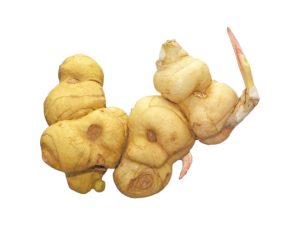
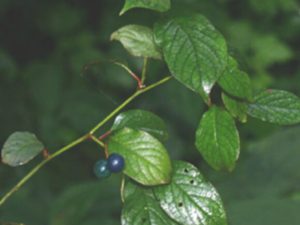
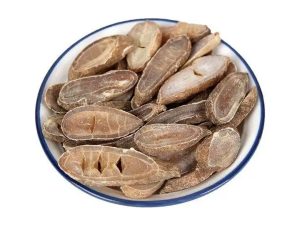
Weilingxian is the name of a traditional Chinese medicine consisting of the dried roots and rhizomes of the plants Clematis chinensis Osbeck, Clematis hexapetala Pall., or Clematis manshurica Rupr., all belonging to the Ranunculaceae family. It is primarily produced in Liaoning, Jilin, Heilongjiang, Shandong, and other regions.This product has the effects of dispelling wind-dampness and unblocking the meridians; it is primarily used to treat rheumatic arthralgia, numbness of the limbs, stiffness of tendons and vessels, and difficulty in flexing and extending the limbs.

Weilingxian
Weilingxian is the name of a traditional Chinese medicine consisting of the dried roots and rhizomes of the plants Clematis chinensis Osbeck, Clematis hexapetala Pall., or Clematis manshurica Rupr., all belonging to the Ranunculaceae family. It is primarily produced in Liaoning, Jilin, Heilongjiang, Shandong, and other regions.This product has the effects of dispelling wind-dampness and unblocking the meridians; it is primarily used to treat rheumatic arthralgia, numbness of the limbs, stiffness of tendons and vessels, and difficulty in flexing and extending the limbs.
Chinese Name : 威灵仙
Latin Name : Clematidis Radix et Rhizoma
Aliases : Nengxiao, Iron-Footed Wilfordia, Lingxian, Black-Footed Wilfordia, Black Bone
Authentic Producing Area : Liaoning, Jilin, Heilongjiang, Shandong
Nature, Flavor & Meridian Tropism : Pungent and salty in taste; warm in nature; enters the Bladder Meridian
Benefits & Efficacy
Benefits
Dispels wind-dampness and unblocks the meridians.
Indications
Clematis is primarily used to treat rheumatic pain, numbness in the limbs, stiffness of tendons and meridians, and difficulty in flexing and extending the limbs.
Usage and Dosage
1. Internal use: Decoct 6–9 g; up to 30 g may be used to treat bone-related throat discomfort; or incorporate into pills or powders; or steep in wine. 2. External use: Apply an appropriate amount, pounded into a paste; or decoct in water for fumigation and washing; or use as a blistering agent.
Precautions
Patients requiring treatment with Chinese herbal medicine should first consult a licensed Traditional Chinese Medicine (TCM) hospital to receive a prescription following a professional TCM differential diagnosis.
Chemical Constituents
This product primarily contains protoanemonein, anemone lactone, sterols, carbohydrates, and saponins.
Pharmacological Actions
This herb has analgesic, anti-inflammatory, hepatoprotective, cholagogue, and smooth muscle relaxant effects.
Relevant Discussions
1. *Compendium of Materia Medica*: “Warm in nature, with a slightly pungent and salty taste. Pungency disperses qi, and saltiness drains fluids; therefore, for conditions involving wind-dampness and phlegm-retention, those with robust qi will find it highly effective. Its nature is generally dispersing and draining; prolonged use may deplete vital qi, so those with weak qi should not take it.”
2. *Ben Cao Zheng Yi*: “Its primary functions are to move rapidly through the body and disperse stagnation; it is suitable for conditions involving accumulated dampness, retained phlegm, blood stasis, and qi stagnation.”
3. *Yao Pin Hua Yi*: “It has a vigorous and rapid nature; it moves without lingering, promoting the flow of qi through the twelve meridians.”
Applications
Clinical Applications
1. To treat wind-cold-induced pain in the lower back and spine, use it in combination with Angelica sinensis and Cinnamomum cassia, as in the Shenying Pill (*Zhengzhi Zhunsheng*).
2. To treat bone-like obstruction in the throat, it may be used alone or decocted with sugar and vinegar, then swallowed slowly. The *Compendium of Materia Medica* recommends decocting it with Amomum villosum and sugar.
Related Compatibility
1. Weilingxian Combined with Qianghuo: Both herbs have the ability to dispel wind, remove dampness, and relieve pain. However, Weilingxian has a rapid action and strong penetrating power, effectively unblocking the meridians; Qianghuo excels at dispersing wind-dampness from the exterior. When combined, they provide superior effects in eliminating wind-dampness, unblocking the meridians, and relieving pain. This combination is suitable for bi syndrome and joint pain, and is particularly commonly used for bi pain in the upper body.
2.Weilingxian Combined with Sangjisheng: Weilingxian traverses all twelve meridians and is one of the most mobile wind-dispelling herbs; it can dispel wind-dampness and unblock the meridians. Sangjisheng tonifies the liver and kidneys, strengthens tendons and bones, nourishes the blood, and moistens the tendons. When used together—one dispersing and one tonifying—they nourish the blood and dispel wind-dampness, allowing Weilingxian to maintain stability amidst its mobility and preventing it from moving too erratically. This combination is suitable for patients with wind-dampness bi pain due to constitutional deficiency.
3. Weilingxian Combined with Chou Wutong: Weilingxian has a naturally penetrating nature. It dispels wind and dampness, unblocks the meridians, and relieves pain; Chou Wutong can dispel wind and dampness, unblock the meridians, and also promote blood circulation. When combined, this pairing is suitable for rheumatic arthralgia and joint stiffness.
4. Weilingxian Combined with Fangji: Weilingxian excels at unblocking the meridians and relieving pain;Fangji clears heat, relieves arthralgia, and is particularly effective at dispelling dampness. In cases of arthralgia caused by wind, cold, and dampness, the condition cannot be resolved unless the dampness is eliminated; therefore, using these two herbs together enhances their ability to dispel wind and dampness and unblock the meridians. This combination is suitable for rheumatic arthralgia, joint stiffness, and pain and edema in the lower limbs.
5. Weilingxian combined with Amomum: Weilingxian dissolves bone fragments lodged in the throat; Amomum regulates qi and relieves epigastric distension.When combined, they have the efficacy of relieving epigastric fullness and dissolving bone fragments stuck in the throat. This combination is suitable for treating fishbone stuck in the throat. Weilingxian can unblock the meridians and relieve pain; Sha Ren can invigorate the spleen, regulate the stomach, promote the flow of qi, and relieve pain. When used together, they are suitable for treating qi-stagnation-induced stomach pain.
6. Weilingxian combined with Gusuibù: Weilingxian warms and unblocks the meridians, dispels wind, and relieves pain; Gusuibù warms the kidneys, promotes blood circulation, strengthens tendons and bones, and relieves pain.When combined, these two herbs simultaneously dispel wind-dampness and tonify the kidneys, resulting in enhanced efficacy in strengthening tendons and bones, dispelling wind-dampness, and relieving arthralgic pain. This combination is suitable for cases of wind-cold-dampness obstruction in the pubic region; postpartum pubic arthralgia caused by wind-cold-dampness obstruction; or toothache due to kidney deficiency with wind-cold invasion.
7. Weilingxian combined with Cangzhu: Both herbs possess the ability to dispel wind-dampness and relieve arthralgic pain. Weilingxian excels at unblocking the meridians, activating the collaterals, and relieving pain; Cangzhu excels at dispersing cold and dampness, drying the spleen, and transforming dampness. When combined, these two herbs can both disperse cold and dampness on the exterior and unblock the meridians to relieve arthralgic pain. This combination is suitable for joint pain and low back pain caused by stagnation of wind-dampness or cold-dampness.
Medicinal Identification
Weilingxian and Duhuo: Both can dispel wind and dampness, unblock the meridians, and relieve pain; they are used to treat rheumatic arthralgia, joint stiffness, and numbness in the limbs, and are both key herbs for treating rheumatic pain. However, Weilingxian has a potent and penetrating nature, capable of circulating through all twelve meridians; it can be applied regardless of whether the condition is acute or chronic, or affects the upper or lower body.Duhu, on the other hand, has a nature that tends to descend; it primarily acts on the lower part of the body and the interior, making it more suitable for wind-cold-damp bi syndrome characterized by aching, heaviness, and pain in the lower body. Additionally, Weilingxian has a salty taste and can soften hardness and disperse nodules, treating various conditions such as bone fragments lodged in the throat, as well as women’s masses (zheng-jia), pain due to stagnation of qi and blood, and breast lumps. Due to its strong penetrating nature, it can also be used for trauma injuries, bruising, swelling, and pain.Duhuo has a bitter and pungent taste; it can release the exterior and disperse cold, and also has a drying effect on dampness. It is used to treat external invasion by wind, cold, and dampness pathogens, manifested as aversion to cold, fever, absence of sweat, heaviness of the body, and pain. Leveraging its ability to disperse latent wind within the Shao Yin Kidney Meridian, it is used for headaches aggravated by wind (latent wind headaches); it can also be used for wind-fire toothaches, among other conditions.
Related Medicines
Rheumatic Tablets, Rheumatic Lingxian Liquid, Bone Spur Pain-Relieving Liquid, Bone-Strengthening Ointment, and Joint Pain-Relieving Pills.
Related Prescriptions
Weiling Pills (*Danxi’s Heart Methods*), Weilingxian Formula (*Shenghui Formulas*).
Medicinal Diet Therapy
Weilingxian Vinegar and Honey Decoction:
1. Efficacy: This decoction softens hard masses, breaks up stagnation, expels phlegm, and eliminates food stagnation. It is suitable for gastric cancer cases characterized by the obstruction of both phlegm and qi, presenting symptoms such as dysphagia, vomiting, regurgitation of the morning meal in the evening, abdominal distension and pain, fullness and oppression in the chest and diaphragm, thirst and dry throat, and progressive weight loss. This decoction can be used as a dietary therapy.
2. Ingredients: 12g of Weilingxian, half a bowl each of aged vinegar and honey.
3. Preparation: Wash the three herbs thoroughly, place them in a pot, and add enough water to cover them. Bring to a boil over high heat, then reduce to low heat and simmer for about 30 minutes. Strain and drink approximately half a bowl of the decoction.
4. Usage: Take as appropriate.
Processing & Preparation
Harvesting & Processing
Harvest in the fall, remove dirt and sand, and sun-dry.
Processing Methods
1. Weilingxian: Take the raw herb, remove impurities, wash thoroughly, moisten thoroughly, cut into sections, and dry.
2. Wine-Processed Weilingxian: Take Weilingxian sections, mix thoroughly with yellow wine, let stand until thoroughly moistened, place in a pan, and stir-fry over low heat until dry; remove and allow to cool. Use 10 kg of yellow wine for every 100 kg of Weilingxian.
Storage Methods
Store in a dry container; for Wine-Processed Weilingxian, store in an airtight container in a cool, dry place, protected from moisture.
Crude Drug Identification
Identification
1. Transverse Section of the Root
(1) Clematis: The outer walls of the epidermal cells are thickened and brownish-black. The cortex is wide and consists entirely of parenchyma cells; the cells of the outer cortex are tangentially elongated. The inner cortex is distinct. The outer part of the phloem often contains fiber bundles and stone cells; the fiber diameter ranges from 18 to 43 μm. The cambium is distinct. The xylem is completely lignified. The parenchyma cells contain starch grains.
(2) Cottonball Clematis: Cells of the outer pericycle are mostly radially elongated; the cell walls of the 1–2 rows immediately adjacent to the outer pericycle are slightly thickened. No fiber bundles or stone cells are present on the outer side of the phloem.
(3) Northeast Clematis: Cells of the outer pericycle are radially elongated; in older roots, they are slightly tangentially elongated. Fibers and stone cells are occasionally present on the outer side of the phloem.
2.Take 1 g of the powdered sample, add 50 mL of ethanol, reflux for 2 hours, filter, concentrate the filtrate to 20 mL, add 3 mL of hydrochloric acid, reflux for 1 hour, add 10 mL of water, allow to cool, add 25 mL of petroleum ether (60–90 °C) and shake to extract, evaporate the petroleum ether to dryness, dissolve the residue in 10 mL of anhydrous ethanol, and use this as the test solution.Separately, take a reference standard of oleuropeic acid and dissolve it in anhydrous ethanol to prepare a solution containing 0.45 mg per mL; use this as the reference solution.Perform the test by thin-layer chromatography (General Chapter 0502). Pipette 3 μL of each of the two solutions mentioned above and apply them separately onto the same silica gel G plate. Use a developing system of toluene–ethyl acetate–formic acid (20:3:0.2). Place the plate in a developing chamber and presaturate for 30 minutes, then develop, remove, and air-dry.spray with a 10% ethanol solution of sulfuric acid, and heat at 105°C until the spots become clearly visible. In the chromatogram of the test sample, spots of the same color appear at positions corresponding to those in the reference standard chromatogram.
Properties of Crude Drugs
1. Clematis: The rhizome is columnar, 1.5–10 cm long and 0.3–1.5 cm in diameter; the surface is pale brownish-yellow; a remnant of the stem base is present at the apex; the texture is relatively tough, with a fibrous cross-section; numerous fine roots are attached to the lower side.The roots are slender and cylindrical, slightly curved, 7–15 cm long, and 0.1–0.3 cm in diameter; the surface is dark brown with fine longitudinal striations; in some cases, the cortex has peeled off, exposing a yellowish-white xylem; the texture is hard and brittle, breaking easily; the cross-section shows a relatively broad cortex, with a pale yellow xylem that is slightly square in shape; there are often fissures between the cortex and the xylem. It has a faint odor and a bland taste.
2. Cottonball Clematis: The rhizome is short and cylindrical, 1–4 cm long and 0.5–1 cm in diameter. The roots are 4–20 cm long and 0.1–0.2 cm in diameter; the surface is brownish to brownish-black; the cross-section of the woody core is circular. It has a salty taste.
3. Northeast Clematis: The rhizome is cylindrical, 1–11 cm long, and 0.5–2.5 cm in diameter. The roots are relatively dense, 5–23 cm long, and 0.1–0.4 cm in diameter; the surface is brownish-black; the cross-section of the woody core is nearly circular. It has a pungent taste.
Properties of Processed Slices
1. Clematis: This product consists of irregular segments. The surface is dark brown, brownish-black, or brownish-black, with fine longitudinal striations; in some cases, the bark has peeled off, exposing a yellowish-white woody core. In cross-section, the bark is relatively wide, and the woody core is pale yellow, slightly square or nearly circular; there is often a fissure between the bark and the woody core.
2. Wine-Infused Clematis: Resembles Clematis in appearance, but with a darker surface color and a faint aroma of wine.
Botanical Information
Botanical Classification
Plants of the genus Clematis in the Ranunculaceae family, including Clematis chinensis, Clematis tomentosa, and Clematis nordica.
Morphological Characteristics
1. Clematis: A woody vine, 3–10 m long. The entire plant turns black when dried. Stems are nearly glabrous. Leaves are opposite; petioles are 4.5–6.5 cm long;once-pinnately compound, with 5 leaflets, sometimes 3 or 7; leaflets papery, narrowly ovate, ovate, ovate-lanceolate, or linear-lanceolate, 1.5–10 cm long, 1–7 cm wide, apex acute or acuminate, base rounded, broadly cuneate, or shallowly cordate, margin entire, nearly glabrous on both surfaces, or sparsely covered with short soft hairs on the underside.Panicle-like corymbs, many-flowered, axillary or terminal; flowers bisexual, 1–2 cm in diameter; sepals 4, oblong or rounded-obovate, 0.5–1.5 cm long, 1.5–3 mm wide, spreading, white, apex often emarginate, outer margin densely tomentose, or with short soft hairs in the center;petals absent; stamens numerous, unequal in length, glabrous; carpels numerous, pubescent. Achenes flattened, ovate, 3–7 mm long, sparsely covered with appressed soft hairs; persistent style pinnate, up to 2–5 cm long. Flowering period: June–September; fruiting period: August–November.
2. Cottonball Clematis: An erect herb, 30–100 cm tall. Stems are cylindrical, longitudinally grooved, sparsely pubescent, and later becoming glabrous. Leaves are opposite; petioles are 0.5–3.5 cm long;leaf blades are nearly leathery, green, often turning black when dry, deeply pinnately or bipinnately lobed; lobes are linear-lanceolate, oblong-lanceolate, elliptic, or linear, 1.5–10 cm long, 0.1–2 cm wide, with acute or obtuse apices, sometimes blunt, entire margins, sparsely covered with long soft hairs on both surfaces or along the veins, or nearly glabrous,with prominent reticulate veins. Cymes are terminal or axillary, usually bearing 3 flowers.Occasionally solitary, with a pubescent pedicel; bracts linear. Flowers bisexual, 2.5–5 cm in diameter; sepals 4–8, usually 6, oblong or narrowly obovate, 1–2.5 cm long, 0.3–1 cm wide, white, spreading, densely covered with white fine hairs on the outer surface (resembling a cotton ball when in bud), glabrous on the inner surface;petals absent; stamens numerous, filaments slender and long, about 9 mm long, glabrous, anthers linear; carpels numerous, covered with white soft hairs. Achenes obovate, flattened, about 4 mm long, densely pubescent, with a persistent, feathery style 1.5–3 cm long. Flowering period: June–August; fruiting period: July–October.
3. Northeast Clematis: A climbing vine. The stems and branches are glabrous or nearly glabrous, except for white soft hairs at the nodes. The leaves are once-pinnately compound; the leaflets are entire, nearly leathery, ovate, long-ovate, or lanceolate-ovate, with an acuminate or acute apex, rarely obtuse, and not slightly concave; the upper surface is glabrous with prominent reticulate veins, while the lower surface is nearly glabrous.Inflorescences are relatively long and erect, reaching up to 25 cm in length; peduncles and pedicels are nearly glabrous or slightly pubescent with short soft hairs; sepals are glabrous or slightly pubescent with short soft hairs on the outer surface, except for the margins, which are tomentose. Achenes are small, 4–6 mm long. Flowering occurs from June to August, and fruiting from July to September.
Distribution Area
1. Clematis chinensis: Found in southern Shaanxi, southern Jiangsu, areas south of the Huai River in Anhui, Zhejiang, Fujian, Jiangxi, Central and South China, Sichuan, Guizhou, southern Yunnan, and Taiwan. 2. Clematis pilosa: Found in Hebei, Inner Mongolia, Liaoning, Jilin, Heilongjiang, Shanxi, Shaanxi, eastern Gansu, Shandong, and Central and South China. 3. Clematis nordica: Found in Northeast China, as well as Inner Mongolia, Shanxi, and other areas.
Growth Habits
It prefers a warm and humid climate, and calcareous soil rich in humus is most suitable for cultivation.
Propagation Methods
Propagate by seeds or root suckers.
Cultivation Techniques
1. Seed Propagation: The seeds are covered with long hairs and are easily blown away by the wind; therefore, care should be taken to harvest them in batches during the ripening period in September. Start seedlings in early to mid-April: first water the seedbed, then broadcast the seeds over it, cover with a thin layer of soil, and keep the soil consistently moist at a suitable temperature; seedlings will emerge in about 10 days.When seedlings reach 3 cm in height, thin them once, while continuing to water and weed. They can be transplanted 1–1.5 months after sowing. Plant in holes spaced 36 cm × 30 cm apart; after planting, cover with soil, firm it down, and water.
2. Root-bud Propagation: Plants that have been transplanted for 2–3 years can be used as material for root-bud propagation. In early spring, before new shoots and leaves emerge, dig up the roots, separate the buds with a knife, and plant them in holes spaced 30 cm apart in both rows and plants; propagation can also be achieved through layering and cuttings.