Apocynum venetum, a plant of the genus Apocynum in the Apocynaceae family, is used medicinally for its leaves. Apocynum venetum leaves have the effects of calming the liver and soothing the mind, clearing heat, and promoting diuresis. They are primarily used to treat dizziness caused by liver yang hyperactivity, palpitations, insomnia, and edema with scant urination.
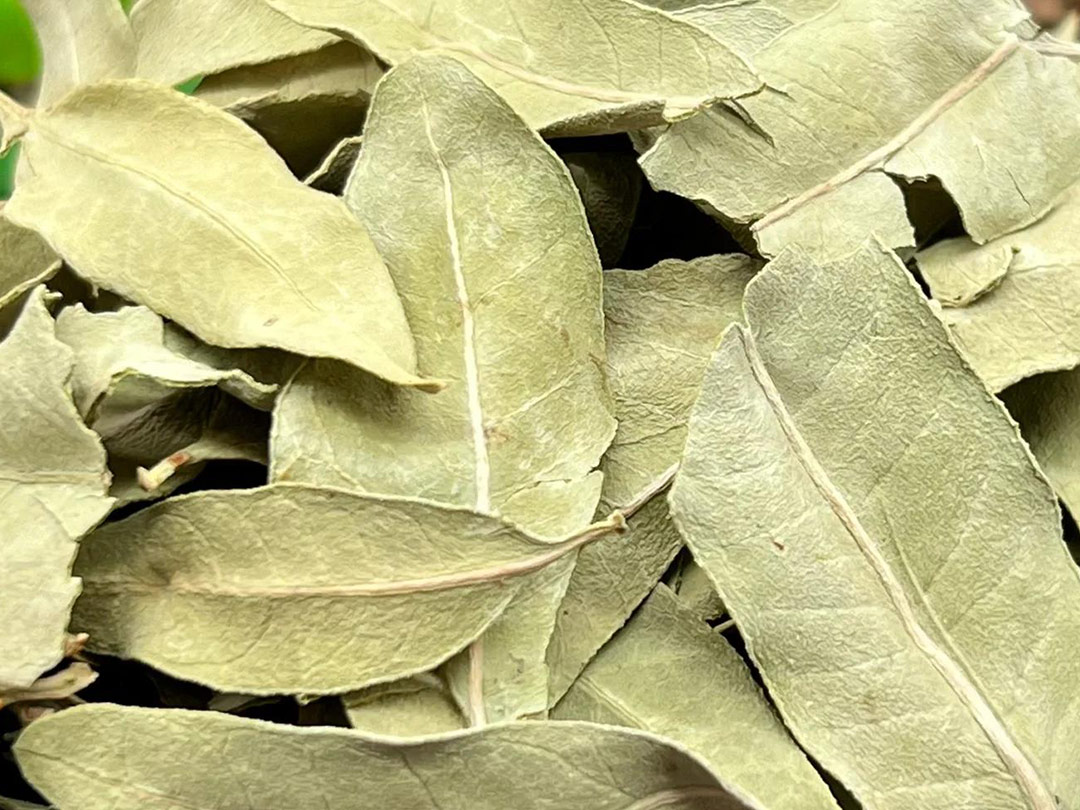
Ruo Bu Ma
Apocynum venetum, a plant of the genus Apocynum in the Apocynaceae family, is used medicinally for its leaves. Apocynum venetum leaves have the effects of calming the liver and soothing the mind, clearing heat, and promoting diuresis. They are primarily used to treat dizziness caused by liver yang hyperactivity, palpitations, insomnia, and edema with scant urination.
Chinese Name : 罗布麻
Latin Name : Folium Apocyni Veneti
Aliases : Jijima, Yangdula Jiao, Red Flower Grass, Wild Tea, Zeqi Ma, Tea Leaf Flower, Red Hemp, Lanceolate-leaved Tea Leaf Flower, Small-flowered Wild Hemp, Wild Tea Leaf, Herbaceous Oleander, Small-flowered Robusta, Red Willow, Zeqi Ke, Salt Willow, Wild Willow
Authentic Producing Area : Inner Mongolia, Gansu, Xinjiang
Nature, Flavor & Meridian Tropism : Sweet and slightly bitter in taste; cool in nature
Benefits & Efficacy
Benefits
Calms the liver and soothes the mind; clears heat and promotes diuresis.
Indications
Apocynum veneti leaves are primarily used to treat dizziness caused by liver yang hyperactivity, palpitations, insomnia, and edema with scant urination.
Usage and Dosage
Oral use: Decoct 5–10 g; or steep as tea.
Precautions
1. Robama leaves should not be used in conjunction with digoxin-containing medications. 2. Patients requiring treatment with traditional Chinese medicine should first consult a licensed TCM hospital, where a TCM practitioner will conduct a professional differential diagnosis and issue a prescription.
Chemical Constituents
Robusta leaf primarily contains flavonoids (hyperoside, rutin, kaempferol, quercetin, etc.) and organic acids (fumaric acid, succinic acid, chlorogenic acid, etc.), as well as tannins, anthraquinones, and amino acids.
Pharmacological Actions
Apocynum leaf has sedative, antidepressant, anti-atherosclerotic, vasodilatory, antihypertensive, anti-inflammatory, and hepatoprotective effects.
Relevant Discussions
*Shaanxi Chinese Herbal Medicine* states: “It clears heat and reduces fire, strengthens the heart and promotes diuresis, lowers blood pressure, and treats heart disease, hypertension, neurasthenia, and edema caused by nephritis.”
Applications
Clinical Applications
1. For symptoms of liver yang hyperactivity—such as headaches, dizziness, palpitations, and insomnia—it can be steeped in water as a tea substitute or decocted and taken orally; it may also be combined with herbs that clear the liver and subdue wind, such as Hyssop (Xia Kucao), chrysanthemum, and Uncaria.
2. For edema caused by damp-heat and difficulty urinating, it has the effects of clearing heat, promoting urination, and reducing swelling; it may also be combined with Poria, Alisma, and Akebia.
Related Compatibility
1. Robama leaves combined with Tianma: Robama leaves are sweet and cool in nature and function to subdue Liver Yang; Tianma is sweet and neutral in nature, subduing Liver Yang, calming wind, and relieving spasms. When used together, the effect of subduing Liver Yang is enhanced, and they can also calm wind, relieve spasms, and unblock the meridians. This combination is suitable for conditions such as Liver Yang transforming into wind, dizziness, convulsions, and numbness in the limbs.
2. Robama Leaf Combined with Ziziphus Seed: Robama Leaf primarily enters the Liver Meridian and has the effects of calming the Liver, clearing heat, and calming the mind; Ziziphus Seed is sweet and sour in taste, neutral in nature, and can nourish Heart Yin and enrich Liver Blood, thereby nourishing the Heart and calming the mind. When used together, these two herbs nourish the blood, soothe the Liver, calm the Heart, and settle the mind. This combination is suitable for conditions such as blood deficiency with Liver stagnation, palpitations, and insomnia.
3. Apocynum Leaf Combined with Antelope Horn: Apocynum Leaf is cool in nature and serves to subdue Liver Yang and clear Liver heat; Antelope Horn is cold in nature and clears Liver fire, calms Liver wind, and subdues Liver Yang. When used together, these two herbs clear fire and purify the Liver, subdue wind, relieve spasms, and subdue Yang. This combination is frequently used for conditions where extreme heat gives rise to wind.
Medicinal Identification
Apocynum Leaf and Chrysanthemum: Both have the ability to subdue liver yang and clear liver heat, making them suitable for symptoms such as dizziness, vertigo, irritability, and insomnia caused by hyperactive liver yang or ascending liver fire.However, Robama leaves also clear heat and promote diuresis, making them useful for edema and difficulty urinating. Chrysanthemum flowers can also dispel wind and improve vision, as well as clear heat and eliminate toxins; they are used for wind-heat exterior syndromes, the early stages of warm diseases, and conditions such as boils, abscesses, and toxic swellings.
Related Medicines
Compound Robama Granules, Robama Leaf Tablets.
Related Prescriptions
Robama Tea (*Manual of Xinjiang Chinese Herbal Medicine*), Formula for Treating Hepatitis and Abdominal Distension (*Manual of Xinjiang Chinese Herbal Medicine*).
Processing & Preparation
Harvesting & Processing
Harvest in summer, remove impurities, and dry.
Processing Methods
Take the raw herbal material, remove impurities, and sift out ash and debris.
Storage Methods
Store in a dry container in a cool, dry place.
Crude Drug Identification
Properties of Crude Drugs
This product is mostly shriveled and curled, with some fragments; when flattened, intact leaves are elliptic-lanceolate or ovate-lanceolate, 2–5 cm long and 0.5–2 cm wide, pale green or gray-green, with a blunt apex and a small awn-like tip, a bluntly rounded or wedge-shaped base, finely serrated margins that are often revolute, and both surfaces glabrous, with prominent veins on the underside;The petiole is slender, approximately 4 mm long. The texture is brittle. It has a faint odor and a bland taste.
Properties of Processed Slices
See “Characteristics of the Medicinal Material.”
Botanical Information
Botanical Classification
Robusta (Robusta genus, Apocynaceae family).
Morphological Characteristics
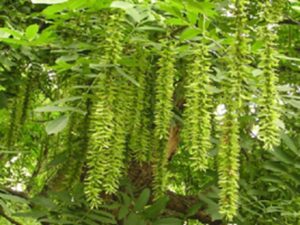
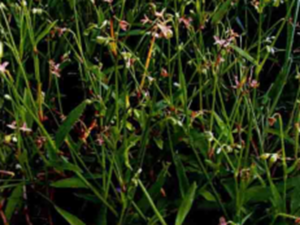
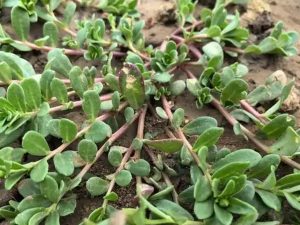
An erect subshrub, 1.5–3 m tall. The entire plant contains latex; branches are cylindrical, smooth and glabrous, purplish-red or pale red. Leaves are opposite; petioles are 3–6 mm long;leaf blades elliptic-lanceolate to ovate-oblong, 1–5 cm long, 0.5–1.5 cm wide, apex acute to obtuse with a short tip, base acute to obtuse, margins finely toothed, both surfaces glabrous. Panicles are simple or branched, usually terminal, sometimes axillary;Bracts membranous, lanceolate, ca. 4 mm long, ca. 1 mm wide; flowers 5-merous; calyx lobes lanceolate or ovate-lanceolate, pubescent on both surfaces; corolla tube campanulate, purplish red or pink, 6–8 mm long, 2–3 mm in diameter; corolla lobes ovate-oblong, nearly as long as the corolla tube;The stamens are attached at the base of the corolla tube; the anthers are arrow-shaped, concealed within the corolla throat, with a raised dorsal surface and an ventral surface adhering to the base of the stigma; the filaments are short; the pistil is 2–2.5 mm long, with a short style that is swollen at the upper part and narrowed at the lower part; the stigma is disc-shaped at the base and 2-lobed at the apex; the ovary consists of two free carpels;The disk is annular, fleshy, and attached to the receptacle. There are two capsules, arranged parallel or in a fork, pendulous, 8–20 cm long, and 2–3 mm in diameter. The seeds are numerous, ovate-oblong, yellowish-brown, 2–3 mm long, 0.5–0.7 mm in diameter, with a tuft of slender white hairs at the apex, approximately 1.5–2.5 cm long.Flowering period: April–September; fruiting period: July–December.
Distribution Area
It is distributed in North China, Northwest China, and in provinces such as Jilin, Liaoning, Shandong, Jiangsu, Anhui, and Henan.
Growth Habits
It is not demanding in terms of environmental conditions and is found in large, contiguous stands in saline-alkali and sandy wasteland areas. It is cold-tolerant, drought-tolerant, alkali-tolerant, and wind-tolerant, adapting to a variety of climates and soil types; it even grows well in the Turpan Basin, where summer droughts occur and temperatures exceed 50°C.
Propagation Methods
Propagation is achieved through seeds, rootstock cuttings, and division.
Cultivation Techniques
1. Seed propagation: Robusta seeds are small, with 2,000 seeds per gram. They are best sown directly into sandy loam with low salt and alkali content. Prepare raised beds in early April, with a seeding rate of 7.5 kg per hectare.Mix the seeds thoroughly with moist sand before sowing. After the seedlings emerge, weed and loosen the soil, and provide careful management. Approximately 150,000 seedlings can be retained on-site, while the remaining seedlings can be transplanted elsewhere; in areas with heavy wind and sand, it is advisable to raise seedlings in a nursery before transplanting.
2. Propagation by rhizome cuttings: Cut the taproot and lateral roots into 10–15 cm segments, ensuring each segment has an adventitious bud. Dig holes with a row spacing of 60 cm and a plant spacing of 30 cm, placing 1–2 segments per hole. Early spring or winter is the best time for planting.
3. Propagation by Division: This is carried out in spring and fall. Dig up clumps that have formed near the surface of the rhizomes, taking a small amount of fibrous roots with them, and transplant the divided clumps.
Pest and Disease Control
1. Diseases include stem spot and rust. Control stem spot by spraying a 1,000-fold dilution of 25% triazole; control rust by spraying a 1,000-fold dilution of 25% triazole.
2. No significant insect pests.