Ma Liuguo, a name in traditional Chinese medicine. It is the fruit of Pterocarya stenoptera C.DC., a plant in the genus Pterocarya of the family Juglandaceae. It is distributed in East China, Central and South China, Southwest China, as well as Shaanxi and Taiwan; in Northeast and North China, it is cultivated only. It has the effects of warming the lungs and relieving coughs, as well as detoxifying and promoting the healing of sores. It is primarily used to treat wind-cold coughs, swollen and toxic sores, and impetigo.
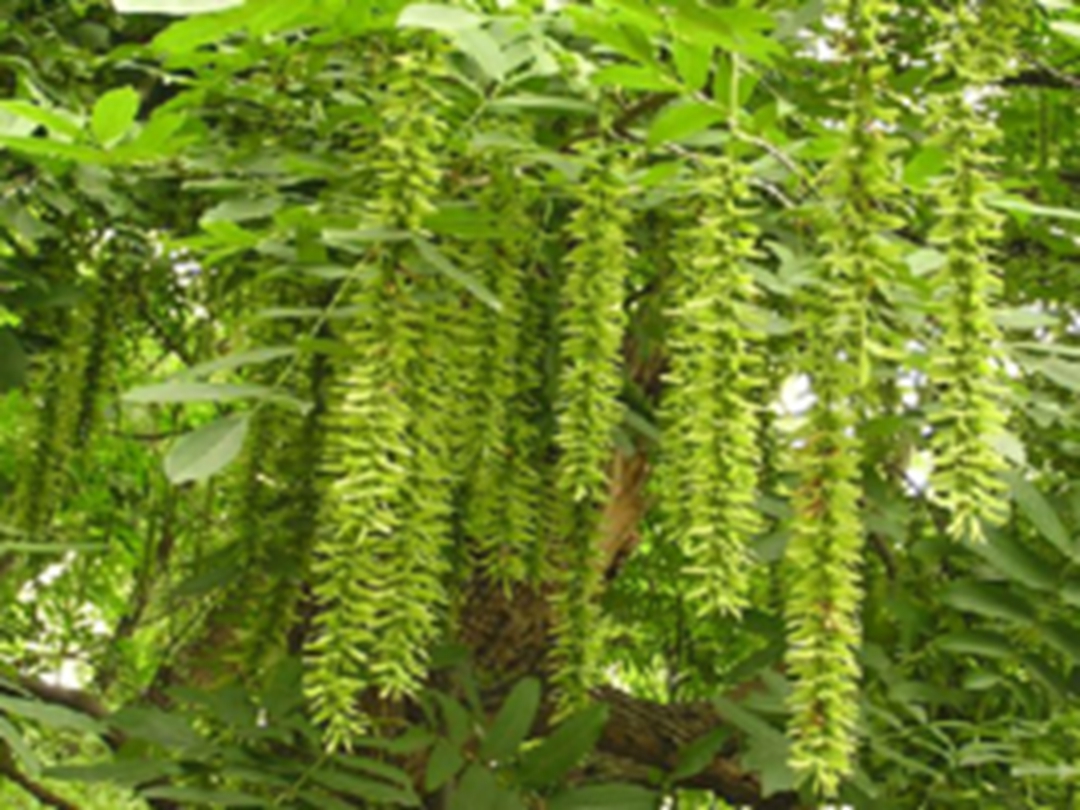
Ma Liu Guo
Ma Liuguo, a name in traditional Chinese medicine. It is the fruit of Pterocarya stenoptera C.DC., a plant in the genus Pterocarya of the family Juglandaceae. It is distributed in East China, Central and South China, Southwest China, as well as Shaanxi and Taiwan; in Northeast and North China, it is cultivated only. It has the effects of warming the lungs and relieving coughs, as well as detoxifying and promoting the healing of sores. It is primarily used to treat wind-cold coughs, swollen and toxic sores, and impetigo.
Chinese Name : 麻柳果
Aliases : A flock of ducks, geese, and swans *Compendium of Commonly Used Folk Herbs*
Nature, Flavor & Meridian Tropism : Bitter in taste, warm in nature. Enters the Lung Meridian
Benefits & Efficacy
Benefits
Warms the lungs and relieves cough; detoxifies and promotes wound healing.
Indications
Coughs caused by wind-cold, sores, swellings, and toxic infections, and impetigo.
Usage and Dosage
Internal use: Decoct as a soup, 9–25 g. External use: Apply an appropriate amount; decoct in water and use for washing.
Relevant Discussions
*Compendium of Commonly Used Folk Herbs*: “Dispels cold and relieves cough.”
Applications
Related Compatibility
To treat impetigo, use 500 g of young branches, leaves, and fruits of the Chinese hackberry. Decoct in water until reduced to one basinful, then use the solution for washing. (Southern Medicinal Herbs: *Pharmacognosy*)
Processing & Preparation
Harvesting & Processing
Harvest the fruits in summer or fall when nearly ripe; use fresh or sun-dry.
Crude Drug Identification
Properties of Crude Drugs
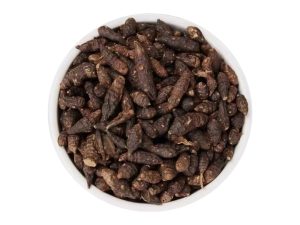
The small nuts are ovate, yellowish-green when fresh and brownish-red when dried, approximately 6 mm long, with a bifid, persistent style at the apex. There are two wings attached to the dorsal surface of the fruit apex; the wings are oblong to oblong-lanceolate, parallel or slightly spreading at the apex, and bear longitudinal striations. The texture is hard and not easily broken; the fracture surface is white. It has a faint, pleasant aroma and a mild taste.
Botanical Information
Botanical Classification
A plant of the genus Populus in the family Juglandaceae.
Morphological Characteristics
Maple-willow, also known as “Cabinet Willow” (commentary by Guo Pu in *Erya*),Maple Willow (*Xinxiu Bencao*), Elm Willow and Ghost Willow (*Guang Qunfang Pu*), Hemp Willow (*Caomu Bianfang*), Large-leaved Willow, Ghost Poplar Willow, and Ghost Willow Tree (*Hunan Medicinal Plant Compendium*), Ghost-leaved Willow (*Guizhou Flora*), Swallow Tree, Willow Silk Seed, and Ping Willow (Shandong), Water Locust Tree (Jiangsu), Locust Willow, Pingyang Willow,Centipede Willow (Anhui), Stream Gully Tree, and Paper Mulberry (Zhejiang), Treasure-Inlaid Maple (Taiwan), Ingot Tree, and Stinky Willow (Guangxi), Water Hemp Willow (Gansu, Hubei, Yunnan, Sichuan), and Stream Hemp Willow (Sichuan). A deciduous tree reaching 18–30 m in height. The bark is blackish-gray, deeply fissured longitudinally; young trees bear long soft hairs and lenticels, with prominent leaf scars.Winter buds are slender and stalked, exposed, and covered with rust-brown hairs. The pith is thin and lamellar. Leaves are alternate, mostly even-pinnate, rarely odd-pinnate, 8–16 cm long,with narrow wings on both sides of the rachis; 10–28 leaflets, oblong to long-elliptic-lanceolate, 8–12 cm long, 2–3 cm wide, with a bluntly rounded or short-pointed apex, an oblique base, finely serrated margins, and minute wart-like protrusions on the upper surface; a tuft of very short stellate hairs is present in the axils of the midrib and lateral veins.The inflorescences are catkins, blooming simultaneously with the leaves. The flowers are unisexual, and the plant is monoecious. Male inflorescences are solitary, arising from the axils of last year’s branches, 6–10 cm long, and pendulous. Male flowers have one bract and two small bracteoles, along with 1–2 developed perianth segments, and 6–18 stamens;Female inflorescences are solitary at the tips of new branches, 10–20 cm long; the inflorescence axis is densely covered with stellate hairs and simple hairs; female flowers are solitary in the axils of bracts, with one small bract on each side; there are 4 perianth segments, adnate to the ovary; the ovary is inferior, composed of 2 carpels; the style is short, and the stigma is 2-lobed;The fruit cluster is 20–45 cm long; the nutlets are oblong, 6–7 mm long, often with longitudinal ridges, and have fruit wings on both sides that have developed from enlarged bracts; these wings are linear or broadly linear. Flowering occurs from April to May, and fruiting from August to September.
Distribution Area
Distributed in East China, Central and South China, Southwest China, as well as Shaanxi and Taiwan; cultivated only in Northeast and North China.