
Dipsacus, a name in traditional Chinese medicine, refers to the dried roots of Dipsacus asper Wall. ex Henry, a plant belonging to the genus Dipsacus in the family Dipsacaceae. This product has the effects of tonifying the liver and kidneys, strengthening tendons and bones, and promoting blood circulation. It is primarily used to treat liver and kidney deficiency, soreness and pain in the lower back and knees, pain caused by cold and dampness, metrorrhagia and menorrhagia, fetal restlessness, and injuries from falls or blows, as well as fractures and sprains.
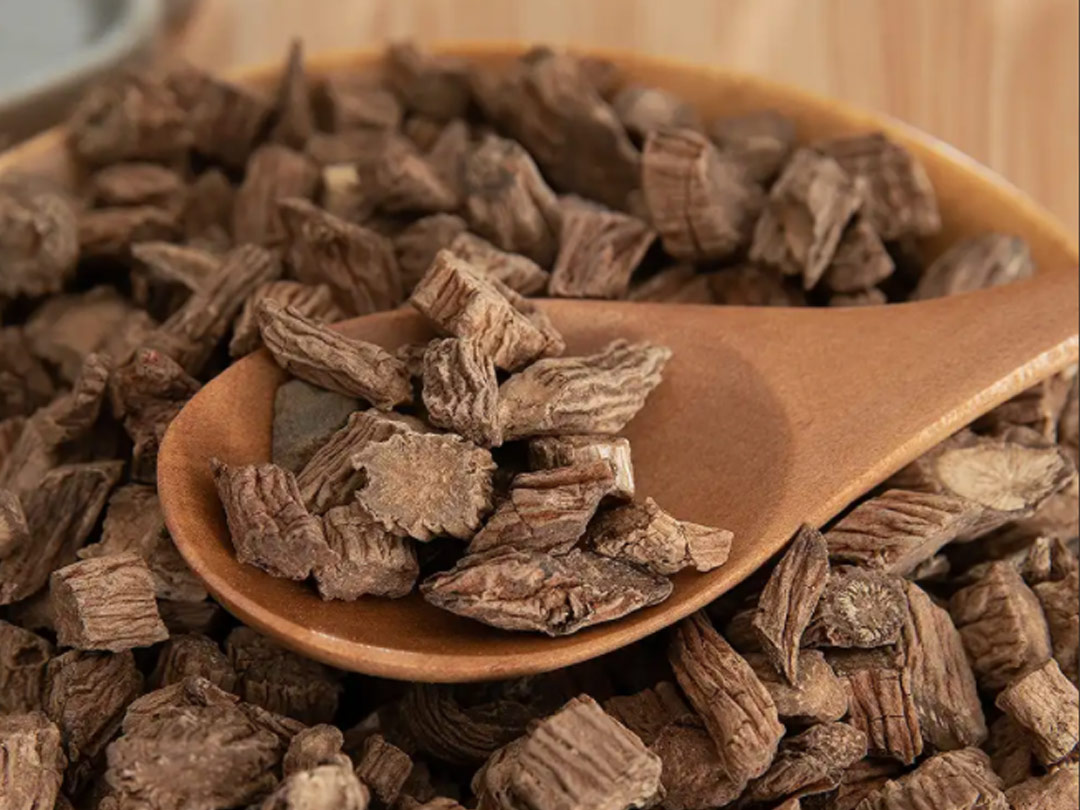
Dipsacus
Dipsacus, a name in traditional Chinese medicine, refers to the dried roots of Dipsacus asper Wall. ex Henry, a plant belonging to the genus Dipsacus in the family Dipsacaceae. This product has the effects of tonifying the liver and kidneys, strengthening tendons and bones, and promoting blood circulation. It is primarily used to treat liver and kidney deficiency, soreness and pain in the lower back and knees, pain caused by cold and dampness, metrorrhagia and menorrhagia, fetal restlessness, and injuries from falls or blows, as well as fractures and sprains.
Chinese Name : 续断
Latin Name : Dipsaci Radix
Aliases : Dragon Bean, Shuozhe, Bone-Setting Herb, Southern Grass, Bone-Setting Grass, Drumstick Grass, Monk’s Head, Sichuan Duan, Sichuan Radish Root, Horse Thistle, Black Crow’s Head, Small Dipsacus, Mountain Radish
Authentic Producing Area : Sichuan, Hubei, Hunan, Guizhou
Nature, Flavor & Meridian Tropism : Slightly warm in nature; bitter, sweet, and pungent in taste; enters the Liver and Kidney meridians
Benefits & Efficacy
Benefits
Tonifies the liver and kidneys, strengthens tendons and bones, and promotes blood circulation.
Indications
Mainly used to treat deficiency of the Liver and Kidney, soreness and pain in the lower back and knees, pain caused by cold and dampness, metrorrhagia and menorrhagia, fetal restlessness, trauma from falls and blows, and injuries to tendons and bones.
Usage and Dosage
1. Internal use: Decoct 6–15 g; or incorporate into pills or powders. 2. External use: Pound an appropriate amount of the fresh herb into a paste and apply topically.
Precautions
1. Contraindicated for patients with rheumatic arthralgia caused by wind-heat. 2. Contraindications for combination with other Chinese herbs: Rehmannia glutinosa acts as its “assistant” herb; incompatible with Leiwan.
Chemical Constituents
This herb primarily contains triterpene saponins (such as hederacoside, Dipsacus saponin VI, Schisandra saponin A, Dipsacus saponin B, Akebia saponin D, and Dipsacus linensis saponin), alkaloids (such as camptothecin and Dipsacus alkaloid),terpenoids (such as ursolic acid, crotonoside, and hederaglycoside aglycone). It also contains flavonoids, sterols, and polysaccharides.
Pharmacological Actions
This product promotes the healing of bone injuries, combats osteoporosis, relaxes uterine smooth muscle, improves memory, lowers blood lipids, boosts immunity, and exerts anti-inflammatory effects.
Relevant Discussions
1. *The Classic of Herbal Medicine*: Treats typhoid fever, replenishes deficiencies, heals gunshot wounds, treats abscesses and ulcers, treats fractures and sprains, mends tendons and bones, and alleviates difficult lactation in women; long-term use enhances vitality.
2. *The Supplementary Record*: Treats uterine bleeding (including metrorrhagia and menorrhagia), internal bleeding from gunshot wounds, relieves pain, promotes tissue regeneration, treats wrist injuries, removes stagnant blood, alleviates lower back pain, and relieves joint stiffness and spasm.
3. *Treatise on the Nature of Medicinal Substances*: Treats severe injuries, eliminates various heat toxins, and unblocks the meridians.
4. *Rihua Zi Bencao*: Boosts qi, regulates blood circulation, tonifies the “Five Labors” and “Seven Injuries,” breaks up masses and stagnant blood, eliminates swelling and toxicity, treats intestinal wind, hemorrhoids and fistulas, mastitis, scrofula, contusions, all postpartum and prenatal disorders in women, sallow complexion with edema due to deficiency, reduces urine output, stops seminal emission, hematuria, threatened miscarriage, and uterine cold.
5. *Herbal of Southern Yunnan*: Tonifies the liver, strengthens tendons and bones, circulates through the meridians, relieves aching and pain in the tendons and bones during menstruation, stabilizes the fetus, treats leukorrhea in women, generates new blood, breaks up stagnant blood, expels a dead fetus, stops coughing and hemoptysis, and treats bloody and cloudy stools.
6. *Illustrated Materia Medica of Southern Yunnan*: Treats all types of unexplained swellings and toxic sores, syphilis, and various skin ulcers.
Applications
Clinical Applications
1. Erectile dysfunction and seminal emission; nocturnal emission and enuresis. This herb is sweet and warm to assist yang, and pungent and warm to dispel cold; it is used to treat kidney yang deficiency, deficiency-cold in the lower jiao, erectile dysfunction, seminal emission, seminal leakage, enuresis, and frequent urination.It is often combined with ingredients that strengthen yang and treat impotence, such as deer antler, Cistanche, and dodder seed, as in the Deer Antler and Dipsacus Powder (from *Jifeng Puji Fang*); or used with ingredients that strengthen yang, nourish yin, and harmonize the heart and kidneys, such as polygala, Cnidium, and Chinese yam, as in the Polygala Pills (from *Wai Tai Mi Yao*);It may also be combined with dragon bone and Poria to treat involuntary seminal discharge, as in the Semen Retention Pills (from *Ruizhutang Experienced Formulas*).
2. Aching pain in the lower back and knees; cold-damp arthralgia. This herb is sweet and warm to assist yang, pungent to disperse blood stasis, and also serves to tonify the liver and kidneys, strengthen the bones, and promote the free flow of blood and qi.It can be combined with Smilax glabra, Eucommia ulmoides, and Achyranthes bidentata to treat liver and kidney deficiency with soreness and pain in the lower back and knees, such as in the Xuduan Dan (from *Zhengzhi Zhunsheng*); it can also be combined with Saposhnikovia divaricata and Aconitum carmichaeli to treat liver and kidney deficiency complicated by cold-damp bi pain, such as in the Xuduan Wan (from *Heji Jufang*).
3. Menorrhagia, metrorrhagia, and fetal restlessness. This herb tonifies the liver and kidneys, regulates the Chong and Ren meridians, and has the effect of consolidating the root and stabilizing the fetus. It can be used for conditions such as liver and kidney deficiency, menorrhagia, metrorrhagia, and fetal restlessness. When combined with Charred Platycladus, Angelica sinensis, and Artemisia argyi—herbs that stop bleeding, promote blood circulation, warm the meridians, and nourish the blood—it is used to treat persistent menorrhagia and metrorrhagia that will not stop (from *Yonglei Qianfang*).; or it may be combined with Sangjisheng and Ejiao to treat spontaneous abortion, as in the Shoutai Pill (*Medical Synthesis of Chinese and Western Medicine*).
4. Traumatic injuries, tendon injuries, and fractures. This herb’s pungent and warm nature, which disperses stagnation, is highly effective at promoting blood circulation and removing blood stasis; its sweet and warm tonifying properties also strengthen bones and tendons, thereby possessing the ability to mend tendons, set bones, heal injuries, and relieve pain.It is used to treat trauma, swelling and pain caused by blood stasis, tendon injuries, and fractures. It is commonly combined with Peach Kernel (Taoren), Safflower (Honghua), Manchurian Pangolin Scale (Chuanshanjia), and Sappan Wood (Sumu); or used together with Chinese Angelica (Danggui), Papaya (Mugua), and Astragalus (Huangqi) to treat post-recovery deficiency following injuries to the feet and knees, resulting in tendon contracture and pain, such as in Qiu Zu’s Tendon-Stretching Pill (from *Sai Jin Dan*).
Related Compatibility
1. Dipsacus asper combined with deer antler: Dipsacus asper is bitter, pungent, and slightly warm; it excels at tonifying the liver and kidneys, strengthening yang, and treating impotence. Deer antler is sweet, salty, and warm; it excels at tonifying the kidneys, assisting yang, generating essence, and nourishing blood. When combined, these two herbs enhance the effect of nourishing kidney yang. This formula is suitable for conditions such as erectile dysfunction and inability to maintain an erection due to kidney yang deficiency and cold deficiency in the lower jiao, as well as seminal emission, frequent urination, and enuresis.
2. Dipsacus asper combined with Chinese yam: Dipsacus asper tonifies the liver and kidneys, strengthens yang, and treats erectile dysfunction; Chinese yam nourishes the kidneys, astringes essence, and harmoniously balances yin and yang. When combined, these two herbs enhance the effects of strengthening yang, nourishing yin, consolidating essence, and stopping seminal emission. This combination is suitable for conditions such as seminal emission and spermatorrhea.
3. Dipsacus asper combined with dragon bone: Dipsacus asper excels at tonifying the liver and kidneys; dragon bone excels at astringent and consolidating actions.When combined, these two herbs enhance the effects of tonifying the liver and kidneys, as well as astringing and consolidating. This combination is suitable for conditions involving uncontrollable diarrhea and seminal leakage.
4. Dipsacus asper combined with Eucommia ulmoides: Dipsacus asper is sweet and warm to assist yang and pungent to disperse blood stasis; it has the effects of tonifying the liver and kidneys, strengthening tendons and bones, and promoting blood circulation. Eucommia ulmoides has a sweet taste that nourishes, is warm in nature to invigorate yang, and benefits the liver and kidneys by supplementing fire to assist yang, as well as strengthening tendons and the lower back.When combined, these two herbs enhance their ability to tonify the liver and kidneys and strengthen tendons and bones. This combination is suitable for conditions such as liver and kidney deficiency, as well as soreness and pain in the lower back and knees.
5. Dipsacus asper combined with Aconitum carmichaeli: Dipsacus asper has the effects of tonifying the liver and kidneys, strengthening tendons and bones, and promoting blood circulation; Aconitum carmichaeli dispels wind and dampness, warms the meridians to relieve pain, and improves joint mobility.When combined, these two herbs enhance the effects of tonifying the liver and kidneys, strengthening tendons and bones, and dispelling wind and dampness. This combination is suitable for conditions such as liver and kidney deficiency complicated by cold-damp arthralgia.
6. Dipsacus asper combined with Artemisia argyi: Dipsacus asper has the effects of tonifying the liver and kidneys and regulating the Chong and Ren meridians; Artemisia argyi has the effects of warming the meridians, stopping bleeding, dispelling cold, and relieving pain.When combined, these two herbs enhance the effects of tonifying the liver and kidneys, arresting bleeding, promoting blood circulation, warming the meridians, and nourishing the blood. This combination is suitable for gynecological conditions such as metrorrhagia and menorrhagia with unstoppable bleeding.
7. Dipsacus asper combined with Mulberry Parasite: Dipsacus asper excels at tonifying the liver and kidneys and consolidating the root to stabilize the fetus; Mulberry Parasite excels at tonifying the liver and kidneys, nourishing the blood, and stabilizing the fetus. When combined, these two herbs enhance the effects of tonifying the liver and kidneys to stabilize the fetus. This combination is suitable for cases of threatened miscarriage.
8. Dipsacus asper combined with Sappanwood: Dipsacus asper, with its pungent and warm nature that disperses stagnation, excels at promoting blood circulation and resolving blood stasis; its sweet and warm nature also tonifies the body, strengthens bones and tendons, and possesses the ability to mend tendons, set bones, treat injuries, and relieve pain. Sappanwood, with its salty nature that enters the Blood system and its pungent nature that disperses, serves to promote blood circulation, resolve blood stasis, reduce swelling, and relieve pain.When combined, these two herbs enhance the effects of promoting blood circulation, resolving blood stasis, mending tendons and setting bones, and treating injuries and relieving pain. This combination is suitable for contusions and bruises, swelling and pain caused by blood stasis, tendon injuries, and fractures.
9. Dipsacus asper combined with Carica papaya: Dipsacus asper promotes blood circulation, dispels blood stasis, mends tendons and sets bones, and treats injuries and relieves pain; Carica papaya relaxes tendons, activates meridians, nourishes tendons, promotes blood circulation, and alleviates arthralgia and pain. When combined, these two herbs enhance the effects of promoting blood circulation, dispelling blood stasis, relaxing tendons, activating meridians, mending tendons, setting bones, and treating injuries and relieving pain. This combination is suitable for conditions such as insufficient post-recovery nourishment following fractures of the feet or knees, and pain caused by tendon contractures.
10. Dipsacus asper combined with dandelion: Dipsacus asper promotes blood circulation, removes blood stasis, and relieves pain; dandelion clears heat, detoxifies, and disperses nodules. When combined, these two herbs promote blood circulation, remove blood stasis, and clear heat and toxins. This combination is suitable for treating abscesses, swellings, sores, and conditions involving swelling and pain caused by blood stasis.
Medicinal Identification
1. Eucommia and Dipsacus: Both have a sweet taste and warm nature, enter the Liver and Kidney meridians, and are capable of tonifying the Liver and Kidneys, strengthening tendons and bones, and stabilizing the fetus. They treat lower back and knee soreness and weakness of tendons and bones caused by Liver and Kidney deficiency, as well as spontaneous vaginal bleeding, fetal restlessness, and recurrent miscarriages resulting from insufficiency of the Liver and Kidneys.However, Eucommia has a warm nature and a stronger tonifying effect; it also warms the lower jiao and can lower blood pressure. It is used to treat impotence and nocturnal emissions caused by kidney yang deficiency, as well as frequent urination and enuresis, and hypertension attributed to kidney deficiency or excessive liver yang.Dipsacus root has a bitter and pungent taste and a slightly warm nature; its tonifying effect is relatively mild, and it tonifies without causing stagnation. It also promotes blood circulation to treat injuries and fractures, reduce swelling, and relieve pain. It is particularly effective for treating rheumatic arthralgia, bruises and hematomas from falls or blows, fractures, and abscesses, swellings, and toxic sores.
2.Mulberry Parasite and Dipsacus: Both enter the Liver and Kidney meridians, and both can tonify the Liver and Kidneys, strengthen tendons and bones, and stabilize the fetus. They are similarly used to treat lower back and knee soreness, weakness of tendons and bones, spontaneous vaginal bleeding, and fetal restlessness caused by deficiency of the Liver and Kidneys. However, Mulberry Parasite has a bitter and sweet taste and a neutral nature; it is particularly effective at dispelling wind-dampness and relieving arthralgia, while also nourishing the blood. It is used to treat rheumatic arthralgia complicated by blood deficiency or deficiency of the Liver and Kidneys.Dipsacus root has a bitter and pungent taste and a slightly warm nature; it possesses a strong warming and tonifying effect without causing stagnation. It also heals injuries, mends fractures, reduces swelling, and relieves pain, making it suitable for treating contusions and bruises, fractures, tendon injuries, and abscesses and toxic sores.
3. Achyranthes and Dipsacus: Both enter the Liver and Kidney meridians and possess the effects of tonifying the Liver and Kidneys, strengthening tendons and bones, and promoting blood circulation. They are similarly used to treat lower back and knee soreness, as well as weakness of the tendons and bones, resulting from deficiency of the Liver and Kidneys.However, Achyranthes root has a bitter taste and a descending nature; it naturally travels downward to directly reach the Liver and Kidney meridians. It can promote blood circulation, dispel blood stasis, break up masses and masses, disperse pathogenic blood, and regulate menstrual flow. It excels at invigorating blood and removing stasis, as well as regulating menstruation and relieving pain, and its action of invigorating blood and removing stasis is characterized by its ability to unblock, drain, and descend.Achyranthes root effectively enters the Liver and Kidney meridians; while moving, it also nourishes. It can tonify the Liver and Kidney, replenish deficiencies, strengthen tendons and bones, fortify the lower back and knees, disperse blood stasis, unblock meridians, improve joint mobility, dispel wind-dampness, restore function in cases of atrophy and paralysis, and relieve bi pain. Therefore, it is particularly suitable for treating various syndromes of atrophy and bi pain caused by the invasion of wind, cold, and dampness pathogens, blood stasis obstruction, and deficiency of the Liver and Kidney.Achyranthes has a slippery and lubricating nature and excels at descending; it promotes diuresis and relieves dysuria, as well as invigorates blood and dispels stasis. It is commonly used for dysuria with burning pain and hematuria caused by the accumulation of damp-heat in the bladder and the scorching of the meridians, as well as for edema and difficulty urinating resulting from the mutual obstruction of fluid and blood stasis. It is an excellent herb for promoting diuresis and relieving dysuria.Achyranthes root is neutral in nature, not cold; it has a bitter taste and a descending action. It can direct heat downward and guide blood flow downward to subdue upward-rising fire; therefore, it can be used to treat headaches, dizziness, hemoptysis, and epistaxis—symptoms resulting from upward-rising fire and yin deficiency with excessive fire.Dipsacus root (Xuduan), on the other hand, has a bitter and pungent taste and a slightly warm nature. It possesses strong warming and tonifying properties without causing stagnation, and is also effective in healing injuries, mending fractures, reducing swelling, and relieving pain. It is used for contusions and bruises, fractures, tendon injuries, as well as abscesses, swellings, and toxic sores.
4. Notoginseng and Dipsacus: Both enter the Liver Meridian and possess the efficacy of treating injuries and relieving pain. However, Notoginseng is particularly effective at dispersing blood stasis, reducing swelling, and relieving pain, making it an excellent remedy in trauma medicine. It is frequently used for contusions and bruises, qi stagnation and blood stasis, or torn tendons and fractures resulting in collateral vessel damage and blood leakage.Panax notoginseng is sweet and mild in nature, with a slightly bitter and dispersing quality; it is warm and promotes circulation. It enters the Blood system and excels at stopping bleeding. It also activates blood circulation and dispels blood stasis, making it an excellent hemostatic agent with the unique ability to stop bleeding without causing blood stasis. It is particularly suitable for various types of internal and external bleeding accompanied by blood stasis. Whether taken internally or applied externally, and whether used alone or in combination with other herbs, it demonstrates exceptional efficacy.Panax notoginseng also possesses the ability to disperse stasis and relieve pain, as well as to invigorate blood circulation and reduce swelling; it is highly effective for abscesses and swellings accompanied by pain. In the early stages, using Panax notoginseng can promote internal resolution; when applied to already ulcerated lesions, it aids in tissue regeneration and wound healing. With its sweet and slightly warm nature, Panax notoginseng also serves to tonify qi and blood and strengthen the body.Therefore, it can also be used for conditions involving blood loss, anemia, and deficiency of qi and blood following childbirth or illness. It is often combined with tonic herbs to enhance the efficacy of tonifying qi and blood. Dipsacus root, with its pungent nature to promote dispersion and its warm nature to unblock meridians, has the effects of unblocking and invigorating the blood vessels, as well as mending tendons and setting bones. It is a key herb in orthopedics and is commonly used for contusions, bruises, blood stasis, swelling, and pain, as well as tendon and bone fractures.Dipsacus root is sweet and pungent in nature and warm in property; its sweetness nourishes deficiencies, and its warmth assists yang. Therefore, it has the effects of tonifying the liver and kidneys and strengthening tendons and bones. It is suitable for conditions of liver and kidney deficiency, soreness and pain in the lower back and knees, or lower back and knee bi pain accompanied by wind-cold, as well as stiffness and numbness.Dipsacus root also tonifies the liver and kidneys, regulates the Chong and Ren meridians, stabilizes menstruation, and secures the fetus; therefore, it can be used to treat metrorrhagia and menorrhagia, as well as fetal restlessness, caused by deficiency of the liver and kidneys and instability of the Chong and Ren meridians.
Related Medicines
Zhuanggu Joint Pills, Gu Song Bao Granules, Lower Back Pain Pills, Nourish the Kidney and Nurture the Fetus Pills, and Bone-Setting Pills.
Related Prescriptions
Taishan Pan Shi Powder (*Comprehensive Compendium of Ancient and Modern Medicine*), Sanbi Decoction (*Effective Formulas for Women*), Ai Fu Nuan Gong Pills (*Direct Pointers from Ren Zhai*), Shoutai Pills (*Record of Integrating Chinese and Western Medicine*), Xuduan Pills (*Formulas for Prolonging Life*), Xuduan Powder (*Wei Family’s Private Formulas*), and Xuduan Decoction (*Comprehensive Record of Holy Remedies*).
Medicinal Diet Therapy
Du Huo Xu Duan Decoction:
1. Efficacy: It is particularly effective for lower back and leg pain caused by kidney qi deficiency or external invasion by wind, cold, and dampness, or for conditions involving stiffness and pain in the lower back and legs.
2. Ingredients: Du Huo 6g, Xu Duan 6g, Du Zhong 6g, Gui Xin 6g, Fang Feng 6g, Chuan Xiong 6g, Niu Xi 6g, Xi Xin 3g, Qin Jiao 9g,Poria 9g, Ginseng 6g, Angelica sinensis 6g, White Peony Root 6g, Dried Rehmannia 9g, Licorice 9g (roasted).
3. Preparation: Rinse all herbs briefly. Place the herbs in a pot, add 100 milliliters of water, and simmer for 30 minutes.
4. Usage: Drink as desired.
Notes
Patients requiring treatment with Chinese herbal medicine should first consult a licensed Traditional Chinese Medicine (TCM) hospital to receive a prescription following a professional TCM differential diagnosis.
Processing & Preparation
Harvesting & Processing
Harvest in the fall; remove the root crown and fibrous roots. Dry over low heat until half-dry, then pile it up to “induce sweating” until the interior turns green, after which it should be dried thoroughly. Cut into thick slices. The best quality is soft in texture with a greenish-brown cut surface.
Processing Methods
1. Dipsacus: Wash off dirt and sand, remove any remaining root tips, moisten thoroughly, slice, sun-dry, and sift out debris.
2. Roasted Dipsacus: Place Dipsacus slices in a pan and roast over low heat until slightly charred.
3. Salted Dipsacus: Place Dipsacus slices in a pan, add salt water, and stir-fry until completely dry.
4. Wine-processed Dipsacus: Mix Dipsacus slices with wine until the liquid is fully absorbed, then stir-fry in a pan over low heat until completely dry.
Storage Methods
Store in a dry container. For wine-processed and salt-processed Dipsacus, seal tightly and keep in a cool, dry place to prevent moisture and insect infestation. Charred Dipsacus should be cooled to prevent reignition.
Crude Drug Identification
Identification
1. Cross-section of this product: Several rows of cork cells. The inner cork layer is relatively narrow. Phloem sieve tube groups are sparsely distributed. The cambium ring is distinct or not very distinct. Xylem rays are broad; vessels are denser near the cambium and gradually become sparser inward, often occurring singly or in clusters of 2–4. The pith is small; fine roots are mostly pithless.Parenchymatous cells contain clusters of calcium oxalate crystals.
The powder is yellowish-brown. Numerous clusters of calcium oxalate crystals, 15–50 μm in diameter, are scattered or present within shrunken parenchymatous cells; occasionally, several are arranged in tight rows. Spindle-shaped parenchymatous cells have slightly thickened walls with fine, obliquely intersecting striations.Vessels with marginal pores and reticulate vessels measure up to approximately 72 (90) μm in diameter. Cork cells are pale brown; when viewed from the surface, they appear rectangular, square, polygonal, or elongated polygonal, with thin walls.
2. Take 3 g of the powdered sample, add 4 mL of concentrated ammonia solution, mix thoroughly, and let stand for 1 hour. Add 30 mL of chloroform,sonicate for 30 minutes, filter, and extract the filtrate in 30 mL of hydrochloric acid solution (4:100) in portions by shaking. Adjust the pH of the extract to 10 with concentrated ammonia solution, then extract again in 20 mL of chloroform in portions by shaking. Combine the chloroform extracts and concentrate to 0.5 mL to obtain the test solution.Separately, take 3 g of Dipsacus astragalus reference material and prepare a reference material solution using the same method.Test by thin-layer chromatography (General Chapter 0502): Pipette 5 μl of each of the two solutions and apply them separately to the same silica gel G thin-layer plate. Develop with ether-acetone (1:1) as the developing agent, remove the plate, allow it to air-dry, and spray with a modified potassium bismuth iodide solution.In the test sample chromatogram, spots of the same color appear at positions corresponding to those in the reference herbal material chromatogram.
3. Take 0.2 g of the powdered sample, add 15 mL of methanol, sonicate for 30 minutes, filter, evaporate the filtrate to dryness, and dissolve the residue in 2 mL of methanol to prepare the test solution. Separately, take a reference standard of Dipsacus asper saponin VI, dissolve it in methanol to prepare a solution containing 1 mg per mL, and use this as the reference solution.Perform the test according to the thin-layer chromatography method (General Chapter 0502). Pipette 5 μL of each of the two solutions and apply them separately to the same silica gel G plate. Develop the plate using the upper layer of a n-butanol–acetic acid–water (4:1:5) mixture as the developing solvent. Remove the plate, allow it to air-dry, spray it with a 10% ethanol solution of sulfuric acid, and heat until the spots become clearly visible.In the chromatogram of the test article, spots of the same color appear at positions corresponding to those in the reference standard chromatogram.
Properties of Crude Drugs
This product is cylindrical, slightly flattened, and sometimes slightly curved, 5–15 cm long and 0.5–2 cm in diameter. The surface is grayish-brown or yellowish-brown, with slightly or markedly twisted longitudinal wrinkles and grooves; transverse lenticel-like marks and a few fibrous root scars are visible.The texture is soft but hardens with prolonged storage; it breaks easily, with an uneven fracture surface. The cortex is dark green or brown, with a brown or light brown outer margin; the xylem is yellowish-brown, and the vascular bundles are arranged radially. It has a faintly fragrant odor and a bitter, slightly sweet, and subsequently astringent taste.
Properties of Processed Slices
1. Dipsacus Root Slices: This product consists of thick, round or oval slices. The outer surface is grayish-brown to yellowish-brown with longitudinal wrinkles. The cross-section shows a dark green or brownish-black cortex and a grayish-yellow or yellowish-brown xylem; radially arranged vascular bundle patterns are visible, and a dark ring is often present at the cambium. It has a faint odor and tastes bitter, slightly sweet, and astringent.
2. Roasted Dipsacus: Resembles Dipsacus Slices, with a yellow surface and scorched spots.
3. Wine-Processed Dipsacus: Resembles Dipsacus Slices, with a slightly blackish or grayish-brown surface and a faint aroma of wine.
4. Salted Dipsacus: Resembles Dipsacus Slices, with a blackish-brown surface and a slightly salty taste.
Botanical Information
Botanical Classification
Chuanxuduan, a plant of the genus Chuanxuduan in the family Chuanxuduanaceae.
Morphological Characteristics
A perennial herb, 60–200 cm tall. The root system consists of one to several roots; they are cylindrical, yellowish-brown, slightly fleshy, with slender, sparsely distributed lateral roots. The stem is erect, with 6–8 ridges bearing prickly hairs.Basal leaves are sparsely clustered, with long petioles; the leaf blades are lyre-shaped and pinnately lobed, 15–25 cm long and 5–20 cm wide, with 3–4 pairs of lateral lobes that are obovate or spatulate, the largest measuring 4–9 cm long and 3–4.5 cm wide, with short hairs on the upper surface and prickly hairs along the veins on the lower surface;Cauline leaves on the middle to lower part of the stem are deeply pinnately lobed; the central lobe is exceptionally long, with a gradually tapering apex and sparse, coarse teeth; the lateral lobes number 2–4 pairs, are smaller, and have long petioles that gradually shorten upward; upper leaves are lanceolate, either entire or 3-lobed at the base. The inflorescence is a globose capitulum, 2–3 cm in diameter; the peduncle may reach 55 cm in length;5–7 leaf-like phyllaries, lanceolate or linear-lanceolate, 1–4.5 cm long, covered with stiff hairs; bracteoles obovate-cuneate, 7–11 mm long, apex slightly truncate, covered with short soft hairs; each side of the involucel bears two shallow longitudinal grooves; the apex is 4-lobed, with lobes ending in acute tips and irregular fine divisions between them;The calyx is quadrangular and cup-shaped, approximately 1 mm long, externally covered with short hairs, with longer hairs at the apex; the corolla is pale yellowish-white, with a narrow, funnel-shaped tube 9–11 mm long, 4-lobed at the apex, the lobes obovate, one slightly larger than the others, and externally covered with short soft hairs; there are 4 stamens, attached to the upper part of the corolla tube and clearly protruding beyond the corolla; the filaments are flattened, and the anthers are purple;The style is shorter than the stamens; the stigma is short and club-shaped; the ovary is inferior and enclosed within a small involucre. The achene is long, obovate-columnar, approximately 4 mm long, with only the apex protruding from the small involucre. Flowering occurs from August to September; fruiting occurs from September to October.
Distribution Area
It is distributed in Jiangxi, Hubei, Hunan, Guangxi, Sichuan, Guizhou, Yunnan, Tibet, and other regions.
Growth Habits
It prefers a relatively cool and humid climate, is cold-tolerant, and cannot tolerate high temperatures. It is best cultivated in deep, fertile, and well-aerated soil. When grown in arid regions or in heavy, clay-like soil with poor drainage, it not only grows poorly but is also prone to disease and death. During summer when temperatures exceed 35°C, the leaves wilt, growth ceases, and the plant is susceptible to drought damage; conversely, in rainy or humid conditions, the underground parts are prone to rot.
Propagation Methods
Propagation is by seed or division.
Cultivation Techniques
1. Seed Propagation: Spring sowing is from late March to early April; fall sowing is from late September to late October.Seeds should be soaked in warm water at 40°C for about 10 hours. After removing them, place them in a gauze bag or a basin and keep them in a warm place to promote germination; sow once sprouts appear. Sow in rows. Before sowing, deeply till the soil, rake it finely, and level it. Prepare wide, raised beds [30 cm × (15–20) cm] with row spacing of 20–35 cm and a sowing depth of 3 cm. Cover the seeds with soil and firm the surface after sowing.The seeding rate is 34.5 kg per 1 hm². For hole sowing, space rows 35–40 cm apart; make holes 7–10 cm deep and 17–20 cm in diameter, planting 7–9 seeds per hole. The seeding rate for this method is 7.5 kg per 1 hm². After sowing, apply 12,000 kg of human and animal manure per 1 hm² and cover with 1–1.5 cm of fine soil.
2. Propagation by Division: In the fall, replant root crowns with buds and fine roots, placing one plant per hole with a row spacing of 50 cm × (25–33) cm. Water immediately after planting to promote root development.
Pest and Disease Control
Diseases include root rot; ensure that sowing is not too dense, do not leave too many seedlings, and maintain good soil drainage at all times.If the disease is severe, promptly remove infected plants and treat the roots with an appropriate fungicide. At the same time, strengthen field management and apply fertilizer appropriately to enhance the plants’ disease resistance and prevent losses. Pests include red spider mites; during the seedling stage, spray with a 0.2–0.3° Baumé lime-sulfur solution or a 1,500-fold dilution of 40% water-soluble phosmet.