Burdock Seed, a traditional Chinese medicine, is the dried, mature fruit of Arctium lappa L., a plant in the genus Arctium of the Asteraceae family. It is primarily produced in Hebei, Jilin, Liaoning, and Zhejiang.This product has the effects of dispersing wind-heat, promoting lung function and the eruption of rashes, and detoxifying and soothing the throat. It is primarily used to treat wind-heat colds, coughs with excessive phlegm, measles, rubella, sore throat, mumps, erysipelas, and abscesses, swellings, and skin infections.

Burdock Seeds
Burdock Seed, a traditional Chinese medicine, is the dried, mature fruit of Arctium lappa L., a plant in the genus Arctium of the Asteraceae family. It is primarily produced in Hebei, Jilin, Liaoning, and Zhejiang.This product has the effects of dispersing wind-heat, promoting lung function and the eruption of rashes, and detoxifying and soothing the throat. It is primarily used to treat wind-heat colds, coughs with excessive phlegm, measles, rubella, sore throat, mumps, erysipelas, and abscesses, swellings, and skin infections.
Chinese Name : 牛蒡子
Latin Name : Arctii Fructus
Aliases : E Shi, Shu Nian Zi, Shu Nian Zi, Da Li Zi, Mao Ran Ran Zi, Hei Feng Zi, Mao Zhui Zi, Nian Cang Zi, Da Niu Zi, Niu Zi, Tu Da Tong Zi, Wan Ba Gou, Shu Jian Zi
Authentic Producing Area : Hebei, Jilin, Liaoning, Zhejiang
Nature, Flavor & Meridian Tropism : Cold in nature; pungent and bitter in taste; enters the Lung and Stomach meridians
Benefits & Efficacy
Benefits
Dispels wind-heat, promotes lung function and the eruption of rashes, detoxifies, and relieves sore throat.
Indications
Mainly used for wind-heat common cold, cough with excessive phlegm, measles, rubella, sore throat, mumps, erysipelas, and abscesses, swellings, and toxic sores.
Usage and Dosage
1. Internal use: Decocted, 5–10 g; or incorporated into powdered formulations. 2. External use: An appropriate amount, decocted into a solution for gargling.
Precautions
This product has a cold nature and acts as a laxative; use with caution in cases of qi deficiency with loose stools.
Chemical Constituents
This herb contains arctioside, fatty oil, laparin, vitamin A, vitamin B1, and alkaloids.
Pharmacological Actions
This herb has antimicrobial, immunomodulatory, and hypoglycemic effects.
Relevant Discussions
1. *Treatise on the Properties of Medicinal Substances*: “Eliminates various types of wind… relieves discomfort in the lower back and legs… disperses various nodules, and clears heat and toxins from the tendons and bones.”
2. *The Interpretation of Medicinal Properties*: “Burdock seeds can both ascend and descend, and are highly effective at resolving heat toxins. Their bitter taste clears fire, while their pungent nature dispels wind. They are primarily used to treat wind-phlegm in the upper body, facial and ocular edema, throat discomfort, various toxic heat obstructions, scrofula, phlegm nodules in the neck, blood-heat-induced smallpox, epidemic rashes, and skin urticaria.“It is suitable for all cases of stagnant fire in the Lung Meridian and wind-heat in the Lung Meridian.”
3. *Ben Cao Zheng Yi*: “Burdock is used to disperse wind-heat, induce the eruption of smallpox and rashes, and effectively promote bowel movements. However, unless there is intense heat or the spleen qi is weak, its administration will invariably cause diarrhea, as its pungent nature induces purgation and its bitter nature promotes descent, with a predominant downward-moving action.”
Applications
Clinical Applications
1. Wind-heat common cold and early stages of warm diseases: This herb possesses pungent dispersing and bitter purgative properties; its cold nature clears heat, and within its ascending and dispersing action lies a clearing and descending quality. It functions to disperse wind-heat; although its dispersing power is not as strong as that of herbs such as mint, it excels at promoting lung function, eliminating phlegm, and clearing and soothing the throat. Therefore, it is frequently used for wind-heat common colds presenting with redness, swelling, and pain in the throat, or coughs with copious, difficult-to-expel phlegm.For treating wind-heat common cold or the early stage of warm diseases, with symptoms such as fever and sore throat, it is often combined with Honeysuckle (Yinhua), Forsythia (Lianqiao), Schizonepeta (Jingjie), and Platycodon (Jiegeng), as in the Yinqiao Powder (from *Treatise on the Differentiation of Warm Diseases*). For wind-heat cough with copious, difficult-to-expel phlegm, it is commonly combined with Mulberry Leaf (Sangye), Platycodon (Jiegeng), and Peucedanum (Qianhu).
2. Retained Measles and Itchy Rubella: This herb clears, drains, and disperses; it can disperse wind-heat, expel heat toxins, and promote the eruption of rashes. For treating measles that fail to erupt or that reappear after initially breaking out, it is often combined with Mentha, Salix, and Bambusa folia, as in the Bambusa Folia, Salix, and Arctium Decoction (from *Extensive Medical Notes from the Xianxing Studio*).For itching caused by sores and scabies resulting from wind-dampness invading the blood vessels, this herb can disperse wind and relieve itching. It is often combined with herbs such as Schizonepeta, Cicada Shedding, and Atractylodes, as in the Xiao Feng San (from *Authentic Treatise on Surgery*).
3. Boils, abscesses, toxic sores, erysipelas, mumps, and sore throat: This herb has a pungent and bitter taste with a cold nature; while possessing ascending and floating properties, it also exhibits a clearing and descending action. It can disperse wind-heat externally and resolve heat toxins internally, offering effects of clearing heat, resolving toxins, reducing swelling, and relieving throat discomfort. Therefore, it is suitable for treating heat-toxin conditions such as boils, abscesses, toxic sores, erysipelas, mumps, and sore throat.Because of its slippery and lubricating nature, which also promotes bowel movements, it is particularly suitable for the aforementioned conditions when accompanied by heat-induced constipation. When treating external invasion by wind-heat and internal accumulation of fire-toxin—such as abscesses, swellings, and skin infections—that are accompanied by constipation, it is often combined with rhubarb, mirabilite, gardenia, forsythia, and mint.To treat swollen and painful mastitis that has not yet formed pus, it can be used in combination with herbs such as Honeysuckle, Forsythia, Gardenia, and Trichosanthes, as in the Burdock Seed Decoction (from *Authentic Treatise on Surgery*).When combined with heat-clearing, fire-purging, and detoxifying herbs such as Scrophularia, Scutellaria, Coptis, and Isatis root, this herb can also be used to treat heat-toxin syndromes such as epidemic rashes, mumps, and sore throat, as seen in the Universal Relief and Disinfection Decoction (from *Dongyuan’s Effective Prescriptions*).
Related Compatibility
1. Burdock Seed Combined with Platycodon: Burdock seed is effective at dispersing wind-heat, promoting lung function, and soothing the throat; platycodon is effective at opening and dispersing lung qi, soothing the throat, restoring the voice, eliminating phlegm, and relieving cough.When combined, they work synergistically to disperse wind-heat, promote lung function, soothe the throat, eliminate phlegm, and relieve cough. This combination is commonly used to treat wind-heat exogenous syndromes, sore throat, cough, and difficult expectoration.
2. Burdock Seed Combined with Forsythia: Burdock seed excels at dispersing wind-heat, detoxifying, and reducing swelling;Forsythia excels at clearing heat and detoxifying, resolving abscesses and dispersing nodules, and is also capable of dispersing wind-heat. When combined, these two herbs enhance the effects of dispersing wind-heat, clearing heat and detoxifying, and resolving abscesses and dispersing nodules. They are commonly used to treat wind-heat colds or the early stages of warm diseases, as well as sore throat, mouth and tongue ulcers, and abscesses and skin sores.
3. Burdock Seed Combined with Tamarix: Burdock Seed can disperse exterior pathogens, detoxify, and promote the eruption of rashes; Tamarix can induce the eruption of rashes. When combined, these two herbs enhance the ability to resolve exterior pathogens and promote rash eruption. They are commonly used to treat measles with incomplete eruption and itchy, hidden rashes.
4.Burdock Seed Combined with White Angelica Root: Burdock seed clears heat, detoxifies, and reduces swelling; white angelica root reduces swelling and drains pus. When combined, their ability to detoxify, reduce swelling, and drain pus is significantly enhanced. This combination is commonly used for painful abscesses and boils, or when pus has formed but has not yet ruptured, and is often used in conjunction with honeysuckle and forsythia to further enhance its pus-draining and detoxifying effects.
5. Burdock Seed Combined with Chinese Yam: Burdock Seed clears heat, promotes lung function, and eliminates phlegm; Chinese Yam excels at tonifying the spleen and lungs. When combined, these two herbs clear and transform phlegm-dampness without harming the body’s vital energy, and tonify the spleen and lungs without causing phlegm stagnation. They are effective at clearing phlegm-heat and tonifying the spleen and lungs, and are commonly used for chronic, persistent coughs with difficult expectoration and in individuals with a relatively weak constitution.
Medicinal Identification
Raw Burdock Seeds vs. Roasted Burdock Seeds: Burdock seeds have a bitter, pungent, and cold nature and enter the Lung and Stomach meridians. They disperse wind-heat, promote lung function to facilitate the eruption of rashes, detoxify, and relieve sore throat. They are suitable for treating wind-heat common cold, cough with excessive phlegm, measles, rubella, sore throat, mumps, erysipelas, and abscesses, swellings, and skin infections.When used raw, burdock seeds excel at dispersing wind-heat, detoxifying, and resolving nodules; they are commonly used for the early stages of wind-heat syndromes, mumps, erysipelas, and abscesses, swellings, and skin ulcers.When stir-fried, burdock seeds mitigate their cold and slippery nature to prevent damage to the middle jiao; they also develop a fragrant aroma, enhancing their dispersing action. They are particularly effective at detoxifying, promoting the eruption of rashes, relieving sore throats, resolving nodules, resolving phlegm, and suppressing coughs, and are commonly used for measles that fail to erupt, sore throats, and wind-heat coughs.
Related Medicines
Goral Cold Capsules (Tablets), Pediatric Throat-Clearing Granules, Lung-Clearing and Anti-Inflammatory Pills, Five Blessings Toxin-Resolving Pills, and Throat-Clearing and Diaphragm-Relieving Pills.
Related Prescriptions
Yinqiao Powder (*Treatise on Warm Diseases*), Bamboo Leaf, Willow, and Burdock Decoction (*Extensive Notes on Medicine*), Xiaofeng Powder (*Authentic Treatise on Surgery*), and Puji Disinfecting Decoction (*Dongyuan’s Effective Prescriptions*).
Medicinal Diet Therapy
Burdock Seed Porridge:
1. Efficacy: Treats heat-type colds. Symptoms include difficulty expectorating phlegm, sore throat, excessive thirst, thick nasal discharge, a red tongue, a yellow tongue coating, and a pulse that is faster than usual.
2. Ingredients: 6 g of mint, 10 g of burdock seeds, and an appropriate amount of japonica rice.
3. Preparation: First, boil the burdock seeds for 15 minutes; remove them and set the liquid aside. Cook the japonica rice into porridge for 10 minutes, then add the peppermint. When the porridge is nearly done, add the burdock seed decoction and simmer for another 5 minutes.
4. Usage: Consume warm in the morning and evening.
Notes
Patients requiring treatment with Chinese herbal medicine should first consult a licensed Traditional Chinese Medicine (TCM) hospital, where a TCM practitioner will conduct a professional pattern differentiation and prescribe an herbal formula.
Processing & Preparation
Harvesting & Processing
In July–August, when the fruits turn grayish-brown, harvest them in batches, pile them up for 2–3 days, sun-dry them, thresh them, sift out impurities, and then sun-dry them until completely dry.
Processing Methods
1. Arctium Lappanum Seeds: Take the raw herbal material. Remove impurities, wash thoroughly, and dry.
2. Roasted Arctium Lappanum Seeds: Place the cleaned seeds in a pan and roast over low heat until they swell and crackle. Remove when the surface shows slight scorch marks and a fragrant aroma is released. Crush before use.
Storage Methods
Store in a dry container in a well-ventilated, dry place to prevent insect infestation.
Crude Drug Identification
Identification
1. The powder of this product is grayish-brown. The stone cells of the inner pericarp are slightly flattened; when viewed from the surface, they appear spindle-shaped, oblong, or obovate, measuring 70–224 μm in length and 13–70 μm in width, with walls up to approximately 20 μm thick, lignified, and featuring transversely elongated pores; when viewed from the side, they are roughly rectangular or elongated and laterally curved.The reticulate cells of the mesocarp appear polygonal in cross-section, with fine punctate thickenings on the vertical walls; in longitudinal section, the cells are elongated, with walls exhibiting a fine, densely interwoven reticulate pattern. Calcium oxalate prisms, 3–9 μm in diameter, occur in clusters within the yellow parenchyma cells of the mesocarp; the boundaries of the crystal-containing cells are indistinct.Cotyledon cells are filled with starch grains; some starch grains contain minute clusters of crystals and fat oil droplets.
2. Take 0.5 g of the powdered sample, add 20 mL of ethanol, subject to ultrasonic treatment for 30 minutes, filter, evaporate the filtrate to dryness, and dissolve the residue in 2 mL of ethanol to prepare the test solution.Separately, take 0.5 g of Arctium lappa seeds as the reference herbal material and prepare a reference herbal material solution using the same method. Then, take the arctioside reference standard, dissolve it in ethanol to prepare a solution containing 5 mg per mL, and use this as the reference standard solution.Perform the test according to the thin-layer chromatography method (General Chapter 0502). Pipette 3 μL each of the test solution and the reference herbal material solution, and 5 μL of the reference standard solution; apply them separately onto the same silica gel G thin-layer plate. Develop the plate using a mobile phase of chloroform–methanol–water (40:8:1), remove the plate, and allow it to air-dry.spray with a 10% ethanol solution of sulfuric acid, and heat at 105°C until the spots become clearly visible. In the test sample chromatogram, spots of the same color appear at positions corresponding to those in the reference herbal material chromatogram and the reference standard chromatogram.
Properties of Crude Drugs
This product is oblong-obovate, slightly flattened, and slightly curved, measuring 5–7 mm in length and 2–3 mm in width. The surface is grayish-brown with purplish-black spots and features several longitudinal ridges, of which 1–2 in the middle are usually more prominent.The apex is bluntly rounded and slightly wider, with a circular ring on the top surface and a punctate remnant of the style in the center; the base is slightly narrower, and the attachment surface is paler in color. The pericarp is relatively hard; there are two cotyledons, pale yellowish-white in color and rich in oil. It has a faint odor; the taste is bitter, followed by a slight pungency and a mild numbing sensation on the tongue.
Properties of Processed Slices
1. For Burdock Seed, see the description of the medicinal material.
2. Roasted Burdock Seed resembles Burdock Seed but is darker in color and slightly swollen. It has a faint aroma.
Botanical Information
Botanical Classification
Arctium lappa, a plant of the genus Arctium in the Asteraceae family.
Morphological Characteristics
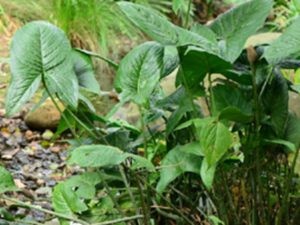
A biennial herb, 1–2 m tall. The root is stout, fleshy, and conical. The stem is erect, heavily branched toward the top, purplish-brown, and has longitudinal ridges. Basal leaves are large, clustered, and long-petiolate; cauline leaves are alternate;leaf blades are long-ovate or broadly ovate, 20–50 cm long and 15–40 cm wide, with a blunt apex bearing a spiny tip; the base is often cordate, with entire margins or irregular, slightly wavy, fine teeth; the upper surface is green or dark green. The upper surface is sparsely hairy, while the lower surface is densely covered with grayish-white short tomentum.Capitula are clustered at the stem apex or arranged in corymbs, 2–4 cm in diameter; peduncles are 3–7 cm long, with shallow grooves on the surface and densely covered with fine hairs;The involucre is globose, with numerous bracts arranged in an imbricate pattern; the bracts are lanceolate or linear-lanceolate, with hooked apices; the flowers are small, reddish-purple, all tubular, and bisexual; the corolla is shallowly 5-lobed at the apex; there are 5 stamens with fused anthers, arranged alternately with the corolla lobes, and the anthers are yellow; the ovary is inferior, unilocular, with a disc-like apex bearing short, bristly pappus;The style is slender and elongated, with a 2-lobed stigma. The achene is oblong or oblong-obovate, grayish-brown, with longitudinal ridges, and bears short, spiny pappus that is pale yellowish-brown. Flowering occurs from June to August, and fruiting from August to October.
Distribution Area
It is distributed in Northeast, Northwest, Central-South, and Southwest China, as well as in Hebei, Shanxi, Shandong, Jiangsu, Anhui, Zhejiang, Jiangxi, and Guangxi.
Growth Habits
It prefers a warm and humid climate, is cold- and drought-tolerant, but is sensitive to waterlogging. The optimal temperature for seed germination is 20–25°C, with a germination rate of 70%–90%. It is best cultivated in deep, loose, fertile, well-drained sandy loam.
Propagation Methods
Propagated by seed.
Cultivation Techniques
Sowing takes place in the south during the fall (August–September) and in the north during the spring (March–April); sowing is also possible in the summer. In the event of drought, seedlings may not emerge uniformly; if fall sowing is too late, the plant will not flower or set fruit the following year.Both direct seeding and seedling transplanting methods are used, with direct seeding being the primary method. Before sowing, soak the seeds in warm water (30–40°C) for 24 hours. Dig holes with a row spacing of 70 cm and a plant spacing of 50 cm, each 10 cm deep. Apply well-rotted manure or compost to the bottom of each hole, cover with a thin layer of fine soil, sow 5–6 seeds per hole, water, cover with 3–5 cm of soil, and lightly firm the soil.Seed rate: 15–30 kg per hectare. Seedlings emerge approximately 10 days after sowing. For the seedling transplanting method, start seedlings in early March and transplant them in early May.
Pest and Disease Control
1. Diseases: Major diseases include powdery mildew, brown spot, and mosaic virus. For powdery mildew, spray a 1,000-fold dilution of 50% methyl thiophanate at the onset of infection to control the disease; brown spot typically occurs in May–June, and when it appears, spray a 600-fold dilution of 65% zinc mancozeb wettable powder.
2. Pests: Pests include seed-eating insects, aphids, red spider mites, silver-striped night moths, and cutworms.