Bitter melon is the dried, nearly ripe fruit of Momordica charantia L., a plant in the Cucurbitaceae family. It possesses both medicinal and edible value; it can be used as a traditional Chinese medicinal herb for clinical treatment and incorporated into daily diets for health maintenance.According to traditional medicine, it has a bitter taste and a cold nature, and affects the Heart, Spleen, Liver, and Lung meridians. It is effective in relieving summer heat and clearing internal heat, clearing the liver and improving eyesight, and detoxifying the body. It can be used to treat summer heat-induced thirst and restlessness, red, swollen, and painful eyes, and abscesses and swellings caused by toxins.

Bitter Melon
Bitter melon is the dried, nearly ripe fruit of Momordica charantia L., a plant in the Cucurbitaceae family. It possesses both medicinal and edible value; it can be used as a traditional Chinese medicinal herb for clinical treatment and incorporated into daily diets for health maintenance.According to traditional medicine, it has a bitter taste and a cold nature, and affects the Heart, Spleen, Liver, and Lung meridians. It is effective in relieving summer heat and clearing internal heat, clearing the liver and improving eyesight, and detoxifying the body. It can be used to treat summer heat-induced thirst and restlessness, red, swollen, and painful eyes, and abscesses and swellings caused by toxins.
Chinese Name : 苦瓜
Latin Name : Momordica charantia L.
Aliases : Jin Lizhi, Le Grape, Red Girl, Bitter Melon, Le Melon, Red Sheep
Authentic Producing Area : Mainly produced in Sichuan, Guangxi, and other regions
Nature, Flavor & Meridian Tropism : Bitter in taste, cold in nature; enters the Heart, Spleen, Liver, and Lung meridians
Benefits & Efficacy
Benefits
Bitter melon has the effects of relieving summer heat, clearing heat, clearing the liver and improving vision, and detoxifying.
Indications
Bitter melon is primarily used to treat summer heat-induced thirst and restlessness, red, swollen, and painful eyes, and abscesses and toxic swellings.
Usage and Dosage
Bitter melon can be taken internally or applied externally. 1. Internal use: Decoct into a soup; the standard dosage is 6–15 g, or 30–60 g of fresh bitter melon. Since factors such as each patient’s condition, constitution, and age vary, the specific dosage of bitter melon may differ from person to person; patients should strictly follow the dosage prescribed by their doctor. 2. External use: Apply an appropriate amount; mash fresh bitter melon and apply as a poultice, or extract the juice and apply it to the affected area.
Precautions
1. Before using bitter melon, a TCM practitioner must conduct a pattern differentiation to avoid blind use without proper diagnosis. 2. If you need to use other medications concurrently while taking bitter melon, consult a doctor or pharmacist first. Do not take other medications on your own to avoid drug interactions that could affect efficacy or increase the risk of adverse reactions. 3. During treatment, patients should maintain a light diet.
Chemical Constituents
Bitter melon contains components such as cucurbitane triterpenes, proteins, steroids, alkaloids, saponins, flavonoids, and gallic acid.
Pharmacological Actions
Modern pharmacological research indicates that bitter melon possesses antiviral, anti-inflammatory, analgesic, lipid-lowering, blood-glucose-lowering, and wound-healing properties.
Relevant Discussions
1. *Herbal Compendium of Southern Yunnan*: “Treats toxic heat from scarlatina, malignant boils with accumulated toxins, or widespread sesame-seed-like boils causing unbearable pain.” “Purges excess fire from the Six Meridians, clears summer heat, tonifies qi, and quenches thirst.”
2. *Compendium of Vitality*: “Eliminates pathogenic heat, relieves fatigue, and clears the mind and sharpens vision.”
3. *Ben Cao Qiu Zhen*: “It dispels heat and relieves restlessness.”
4. *Sui Xi Ju Dietary Spectrum*: “When raw, it clears heat, sharpens vision, and calms the mind. When cooked, it nourishes the blood, tonifies the liver, moistens the spleen, and tonifies the kidneys.”
5. *Quanzhou Materia Medica*: “It is primarily used to treat restlessness, heat, excessive thirst with a strong urge to drink, wind-heat red eyes, heatstroke, and dysentery.”
Applications
Related Compatibility
1. Bitter Melon with Watermelon Rind: Bitter melon relieves summer heat and clears heat, while watermelon rind clears heat and quenches thirst; when combined, they can be used to treat summer heat-induced restlessness and thirst.
2. Bitter Melon with Plantain Herb: Bitter melon relieves summer heat and clears heat, while plantain herb clears heat, promotes urination, and relieves urinary obstruction; when combined, they can be used to treat damp-heat diarrhea and symptoms such as dark, scanty, and painful urination.
3. Bitter melon with chrysanthemum: Bitter melon clears the liver and improves vision, while chrysanthemum clears liver heat and improves vision. When combined, they can be used to treat red, swollen, and painful eyes caused by liver heat.
Medicinal Diet Therapy
1. Bitter Melon and Celery Salad: 150g each of bitter melon and celery; sesame paste and minced garlic to taste. First, peel and deseed the bitter melon, then cut it into thin strips. Blanch the strips in boiling water, rinse them under cold water, and drain thoroughly. Mix the celery and bitter melon together, add the seasonings, and toss to combine.This dish has the effect of cooling the liver and lowering blood pressure, making it suitable for patients with hypertension caused by liver yang hyperactivity.
2. Bitter Melon Tea: 1 bitter melon, green tea to taste.Cut off the top of the bitter melon, scoop out the seeds and pulp, fill it with green tea, and hang the melon in a well-ventilated area to air-dry. Once dried, remove the melon, wash it thoroughly, chop it up along with the tea leaves, and mix well. Place 10g of the mixture into a cup, pour boiling water over it, and drink. This tea helps clear heat, relieve summer heat, promote urination, and soothe restlessness; it is suitable for conditions such as heatstroke, fever, thirst, and irritability.
3. Bitter Melon Juice: 500g fresh bitter melon. First, wash and slice the bitter melon. Place the slices in a pot with 250ml of water and boil for about 10 minutes, until tender. Eat the melon and drink the juice. This juice helps clear heat and improve eyesight, and is suitable for those with liver fire rising or red, painful eyes.
4. Bitter Melon Porridge: 100 grams of bitter melon, 50 grams of japonica rice, and 100 grams of rock sugar. Cook into porridge and consume. Used to treat red, painful eyes.
Notes
Patients requiring treatment with Chinese herbal medicine should first consult a licensed Traditional Chinese Medicine (TCM) hospital, where a TCM practitioner will conduct a professional pattern differentiation and prescribe an herbal formula.
Processing & Preparation
Harvesting & Processing
Harvest nearly ripe fruits in the fall, split them lengthwise into two halves, remove the pulp and seeds, then slice them crosswise and sun-dry them. In folk medicine, the fresh fruit is also used.
Processing Methods
Take the raw herbal material and remove any impurities.
Storage Methods
Store in a well-ventilated, dry place to prevent mold and insect infestation.
Crude Drug Identification
Properties of Crude Drugs
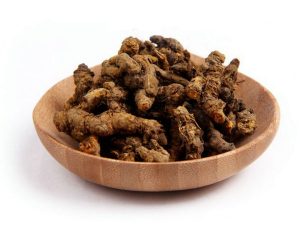
This product is strip-shaped or irregularly shaped slices, 2–4 cm long, 0.3–1.2 cm wide, and 0.2–0.5 cm thick. It is shriveled and uneven, curved, with edges slightly curled outward.The outer surface is grayish-green or light yellowish-brown, with shriveled, nodular protrusions and deep grooves. The inner surface is yellowish-white, with visible light yellow scars left after the seeds have fallen off. The texture is hard and brittle. The fracture surface is irregular; the outer layer is grayish-green or light yellowish-brown, while the inner layer is yellowish-white. It has a faintly fragrant odor and a bitter taste.
Properties of Processed Slices
Same as “Characteristics of the Medicinal Material.”
Botanical Information
Botanical Classification
Bitter melon (a plant of the Cucurbitaceae family).
Morphological Characteristics
An annual climbing herb, highly branched, with fine soft hairs; tendrils are unbranched.
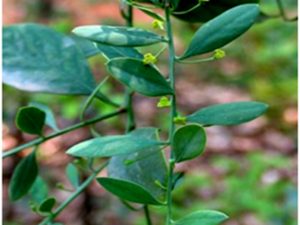
1. Leaf characteristics: Leaves are large, reniform-orbicular, approximately 5–12 cm in length and width, usually deeply lobed into 5–7 segments; lobes are ovate-elliptical, narrowed at the base, with wavy teeth along the margins; both surfaces are nearly smooth or hairy; petioles are 3–6 cm long.
2. Flower Characteristics: The plant is monoecious. Male flowers are solitary, pedicellate, 5–15 cm long, with bracts at the middle or base; the bracts are reniform-cordate, 5–15 mm wide, and entire; the calyx is campanulate, 5-lobed, with lobes that are ovate-lanceolate, short-acuminate at the apex, and 4–6 mm long;the corolla is yellow, 5-lobed, with lobes that are ovate-elliptic, 1.5–2 cm long, and rounded or slightly concave at the apex; there are 3 stamens, adnate to the throat of the calyx tube. Female flowers are solitary, pedicellate, 5–10 cm long, with bracts at the base;ovary spindle-shaped, with spiny tubercles, beaked at the apex; style slender and elongated, with 3 stigmas; numerous ovules. Flowering period: June–July.
3. Fruit Characteristics: The fruit is oblong, ovate, or narrowed at both ends, 8–30 cm long, covered throughout with blunt, irregular tubercles; it turns orange-yellow when ripe and splits into three valves from the apex. Fruiting period: September–October.
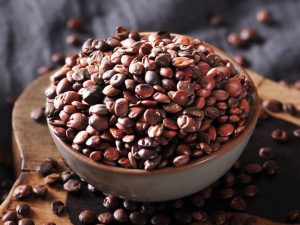
4. Seed Characteristics: The seeds are elliptical and flattened, 10–15 mm long, with horn-like teeth at both ends and uneven striations on both surfaces; they are enclosed in a red, fleshy aril.
Growth Habits
It prefers warm conditions, is relatively heat-tolerant, but not cold-tolerant; it thrives in full sun but does not tolerate shade, and grows well in fertile, loose loam soil with good water and nutrient retention.
Propagation Methods
Propagation is by seed or by raising seedlings for transplanting.
Cultivation Techniques
For commercial production, sowing takes place in March–April; seeds must be soaked and pre-germinated before sowing. Sow in holes with a row spacing of 1 m and a plant spacing of 0.4 m, placing 2–3 seeds per hole and covering with 2–3 cm of soil; alternatively, seedlings can be raised in a greenhouse and transplanted. For spring sowing in February–March, use vegetative propagation to raise seedlings. Seedlings emerge approximately 2 weeks after sowing and are transplanted when they have 2–3 true leaves.
Pest and Disease Control
1. Bitter Melon Wilt
(1) Symptoms: When seedlings are infected, the base of the stem turns brown and shrinks, and the leaves wilt and droop; in severe cases, the plant dies suddenly. When mature plants are infected, they grow slowly, wilt at midday, and recover in the morning and evening; after several days, the entire plant wilts and dies.
(2) Control Measures: Select varieties resistant to wilt; avoid continuous cropping with cucurbit vegetables and implement a crop rotation of 3–4 years or more; thoroughly disinfect seeds before sowing.At the first sign of the disease, promptly remove infected plants and spray with a 500–800-fold dilution of 75% chlorothalonil, a 500–600-fold dilution of 50% carbendazim ultra-fine wettable powder, or a 500–800-fold dilution of 70% disulfan sodium technical grade powder. Spray once every 7–10 days for 3–4 consecutive applications.
2. Bitter Melon Vine Wilt
(1) Symptoms: In bitter melon vine wilt, leaf spots are relatively large, ranging from circular to oval or irregular in shape, and appear gray-brown to yellow-brown. Lesions on stems and vines are mostly elongated and irregular in shape, with a light gray-brown color. Infected fruit tissue deteriorates, making the fruit prone to cracking and rotting.
(2) Control Methods: Select disease-free seeds and soak them in a disinfectant to reduce the number of infected seeds; use loofah as a rootstock and graft the bitter melon onto it using the tongue grafting method; apply Xingao Lipid Film to the grafting site to effectively reduce damage from bitter melon vine blight; implement a 2–3-year crop rotation with non-cucurbit crops; and thoroughly remove all dead branches, fallen leaves, and plant debris after harvesting.At the onset of the disease, spray with a 600-fold dilution of 70% thiophanate-methyl wettable powder or a 600-fold dilution of 75% chlorothalonil wettable powder.Alternatively, apply 1 kg per mu of 5% chlorothalonil dust or 5% Chunlei oxychloride copper dust in the morning or evening, repeating every 7–10 days; the number of applications depends on the severity of the disease.