Henna leaves, a name in traditional Chinese medicine. These are the leaves of Lawsonia inermis L., a plant belonging to the genus Lawsonia in the family Lythraceae. Lawsonia inermis is cultivated in gardens throughout Jiangsu, Zhejiang, Fujian, Taiwan, Guangdong, Hainan, and Guangxi in China. It has astringent and hemostatic properties. It is primarily used to treat bleeding from wounds.

Henna Leaves
Henna leaves, a name in traditional Chinese medicine. These are the leaves of Lawsonia inermis L., a plant belonging to the genus Lawsonia in the family Lythraceae. Lawsonia inermis is cultivated in gardens throughout Jiangsu, Zhejiang, Fujian, Taiwan, Guangdong, Hainan, and Guangxi in China. It has astringent and hemostatic properties. It is primarily used to treat bleeding from wounds.
Chinese Name : 指甲花叶
Nature, Flavor & Meridian Tropism : Bitter in taste, cool in nature
Benefits & Efficacy
Benefits
Astringent and hemostatic.
Indications
Primarily used to treat bleeding from wounds.
Usage and Dosage
External use: Apply an appropriate amount of the fresh plant, pounded into a paste; or roast it until dry, grind into a powder, and apply to the affected area.
Precautions
Patients requiring treatment with Chinese herbal medicine should first consult a licensed Traditional Chinese Medicine (TCM) hospital, where a TCM practitioner will conduct a professional pattern differentiation and prescribe an herbal formula.
Chemical Constituents
The leaves, fruit peel, and seeds all contain indigoquinone.
Pharmacological Actions
1. Anthelmintic effect. 2. Hepatoprotective effect. 3. Hemostatic effect. 4. The seeds have a mild, slow-acting stimulating effect on the brain.
Relevant Discussions
1. *Essentials of Chinese Medicine*: “Treats traumatic bleeding.”
2. *Fujian Materia Medica*: “Astringent, clears heat. Treats traumatic bleeding; apply fresh leaves, pounded into a paste, to the affected area.”
Applications
Notes
References: [1] Xiong Fuxin, Cun Shufen. A Compilation of Modern Research on Traditional Chinese Medicine [M]. Kunming: Yunnan Science and Technology Press, 2002: 615–616. [2] Yang Chengzi, Lin Yu. Encyclopedia of Chinese Medicinal Resources: Fujian Province Medicinal Resource Catalog [M]. Fuzhou: Fujian Science and Technology Press, 2021: 279.
Processing & Preparation
Harvesting & Processing
Harvested in summer and autumn; wash thoroughly; use fresh or sun-dry.
Crude Drug Identification
Properties of Crude Drugs
This product is curled and fragmented; intact specimens, when moistened with water and flattened, are elliptical or oblong, rarely obovate, 2–4 cm long and 10–15 mm wide, with an acute apex and a wedge-shaped base. They are thin and papery, with entire or slightly wavy margins, and a yellowish-green to green surface; they have short petioles or are nearly sessile; they are extremely brittle and easily broken; they have a faint odor and a bland or slightly salty taste.
Botanical Information
Botanical Classification
Shanmohua, a plant of the genus Sannomohua in the family Lythraceae.
Morphological Characteristics
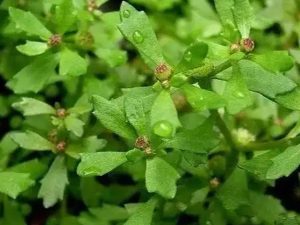
The plant, *Sparganium*, is a large shrub that can reach a height of 6 meters. The stem is cylindrical, and the twigs are slightly quadrangular and glabrous. Leaves are alternate and opposite, thin and leathery, with short petioles; the leaf blades are elliptic or elliptic-lanceolate, 1.5–5 cm long and 1–2 cm wide;with a short acute apex and a base that is cuneate or gradually narrowing into the petiole; there are 5 pairs of lateral veins, which are slender and slightly raised on both surfaces. The inflorescence is a terminal panicle, 7–15 cm long or longer; the flowers are highly fragrant, white or ranging from rose-red to vermilion, approximately 6 mm in diameter, expanding to 8–10 mm when fully open; the calyx is 2–5 mm long, deeply 4-lobed, with lobes that are broadly ovate-triangular;petals 4, slightly longer than the calyx lobes, margins inrolled and toothed; stamens usually 8, filaments filiform, twice as long as the calyx lobes; ovary nearly globose, style filiform, slightly longer than the stamens, stigma filiform, slightly longer than the stamens, stigma drill-shaped. Capsule flattened-globose, 6–7 mm in diameter.Seeds are numerous, fleshy, and triangular-pyramidal. Flowering period: June–October; fruiting period: December.
Distribution Area
It is cultivated in gardens throughout Jiangsu, Zhejiang, Fujian, Taiwan, Guangdong, Hainan, and Guangxi in China.