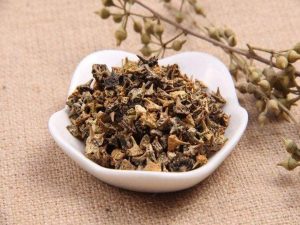
Dried Sandalwood is a name for a traditional Chinese medicine. It consists of the entire plant of Osyris wightiana Wall. ex Wight or its variety, Osyris wightiana Wall. ex Wight var. rotundifolia (Tam) Tam, both belonging to the Santalaceae family.Osyris wightiana is distributed in Guangxi, Sichuan, Yunnan, Tibet, and other regions; Osyris wightiana var. rotundifolia is distributed in southwestern Sichuan. It has the therapeutic effects of dispelling wind and relieving exterior syndromes, as well as promoting blood circulation and regulating menstruation. It is used to treat colds, coughs, irregular menstruation, and dysmenorrhea.
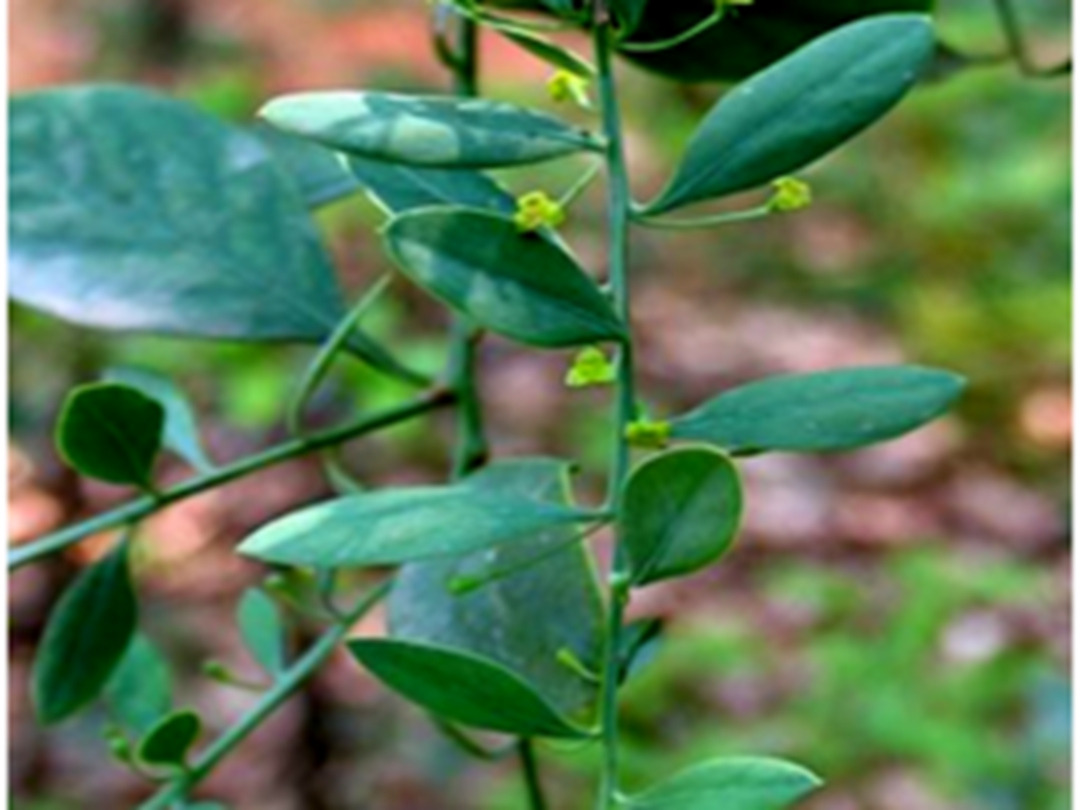
Dried Sandalwood
Dried Sandalwood is a name for a traditional Chinese medicine. It consists of the entire plant of Osyris wightiana Wall. ex Wight or its variety, Osyris wightiana Wall. ex Wight var. rotundifolia (Tam) Tam, both belonging to the Santalaceae family.Osyris wightiana is distributed in Guangxi, Sichuan, Yunnan, Tibet, and other regions; Osyris wightiana var. rotundifolia is distributed in southwestern Sichuan. It has the therapeutic effects of dispelling wind and relieving exterior syndromes, as well as promoting blood circulation and regulating menstruation. It is used to treat colds, coughs, irregular menstruation, and dysmenorrhea.
Chinese Name : 干檀香
Aliases : Xiaoqingpi, Xiaoqingxiang, Xiao Xianrenzhang, Xianggedada, Ganxiangshu, Shansu Mu, Tutanxiang, Doubanxiang
Nature, Flavor & Meridian Tropism : Pungent and bitter in taste; neutral in nature
Benefits & Efficacy
Benefits
Dispels wind and relieves exterior symptoms; promotes blood circulation and regulates menstruation.
Indications
Mainly used to treat colds, coughs, irregular menstruation, and dysmenorrhea.
Usage and Dosage
Oral use: Decoction, 9–15 g. Please note that due to differences in each patient’s condition, constitution, age, and other factors, the specific dosage of dried sandalwood may vary from person to person. Patients should strictly adhere to the dosage prescribed by their doctor.
Precautions
1. Patients requiring treatment with traditional Chinese medicine should first consult a licensed TCM hospital to receive a prescription following a professional TCM differential diagnosis. 2. If you need to take other medications concurrently during treatment, consult your doctor or pharmacist first. Do not take any medications on your own to avoid drug interactions that may reduce efficacy or increase the risk of adverse reactions. 3. Pregnant women, women planning to become pregnant, and breastfeeding women must proactively inform their doctor of their physiological status (such as stage of pregnancy or breastfeeding status) before taking this medication. The doctor will then assess the safety and suitability of the medication based on individual circumstances.
Applications
Clinical Applications
For treating colds and coughs, use 9–15 g of the whole dry sandalwood plant. Decoct in water and drink. (*Selected Medicinal Herbs of Simao, Yunnan*)
Notes
References for this entry: [1] Editorial Committee of *Chinese Materia Medica*, State Administration of Traditional Chinese Medicine. *Chinese Materia Medica* [M]. Shanghai: Shanghai Science and Technology Press, 1999. [2] Xie Yu, Zhou Jiancheng. *Comprehensive Color Illustrated Encyclopedia of Chinese Herbal Medicines* [M]. Vol. 1. Changsha: Hunan Science and Technology Press, 2018.
Processing & Preparation
Harvesting & Processing
It can be harvested throughout the year. Remove impurities, wash thoroughly, and sun-dry.
Crude Drug Identification
Botanical Information
Botanical Classification
Species of the genus *Saussurea* in the family Santalaceae, specifically *Saussurea* or its variety *Saussurea chinensis*.
Morphological Characteristics
1. Sand Needle
(1) Life form: Shrub or small tree.
(2) Plant height: 2–5 m.
(3) Branches: Slender and elongated, triangular in cross-section when young.
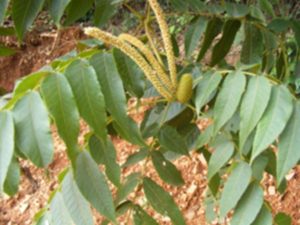
(4) Leaves: Thin, leathery, gray-green, elliptic-lanceolate or elliptic-obovate, 2.5–6 cm long, 0.6–2 cm wide, with an acute apex and a short tip; the base tapers gradually and extends downward to form a short petiole.
(5) Flowers: Small; male flowers in small cymes of 2–4;pedicels 4–8 mm long; perianth approximately 4 mm in diameter, with 3 lobes; disk fleshy, notched; stamens 3, filaments very short; the sterile ovary forms a minute protuberance located in the center of the disk; pistillate flowers solitary, occasionally in clusters of 4 or 3; bracts 2; pedicels swollen at the apex; disk and stamens similar to those of male flowers, but stamens sterile;Hermaphroditic flowers resemble female flowers in appearance but possess developed stamens; there are usually 3 ovules, and the stigma is 3-lobed.
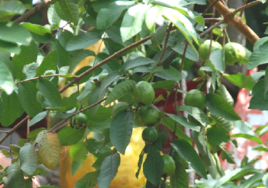
(6) Fruit: The drupe is nearly spherical, with a circular scar from the disk at the apex; it is orange-yellow to red when ripe and turns light black when dry, with a diameter of 8–10 mm.
(7) Phenological period: Flowering occurs from April to May; fruiting occurs in October.
2. Bean-leaf Cinnamomum
Leaves are thick and leathery, nearly round to broadly obovate, 12–15 mm long and 9–10 mm wide, with a blunt or nearly rounded apex and a blunt base; both surfaces are rough and densely covered with prominent glands; lateral veins are indistinct; petioles are 1–2 mm long or nearly sessile; fruit diameter is 4.5 mm.
Distribution Area
1. Sand Needle: Found in Guangxi, Sichuan, Yunnan, Tibet, and other areas. 2. Bean-leaf Fragrant Tree: Found in southwestern Sichuan.