
Chuan Niuxi is the name of a traditional Chinese medicine. It is the dried root of Cyathula officinalis Kuan, a plant in the Amaranthaceae family. Authentic medicinal material specifically refers to Chuan Niuxi produced in Baoxing, Tianquan, Jinkouhe, and surrounding areas of Ya’an, Sichuan.This herb has the effects of removing blood stasis and regulating menstruation, unblocking the joints, and promoting urination to relieve dysuria. It is primarily used to treat amenorrhea and masses, retained placenta, trauma and contusions, rheumatic arthralgia, foot paralysis and muscle spasms, hematuria, and dysuria with blood.
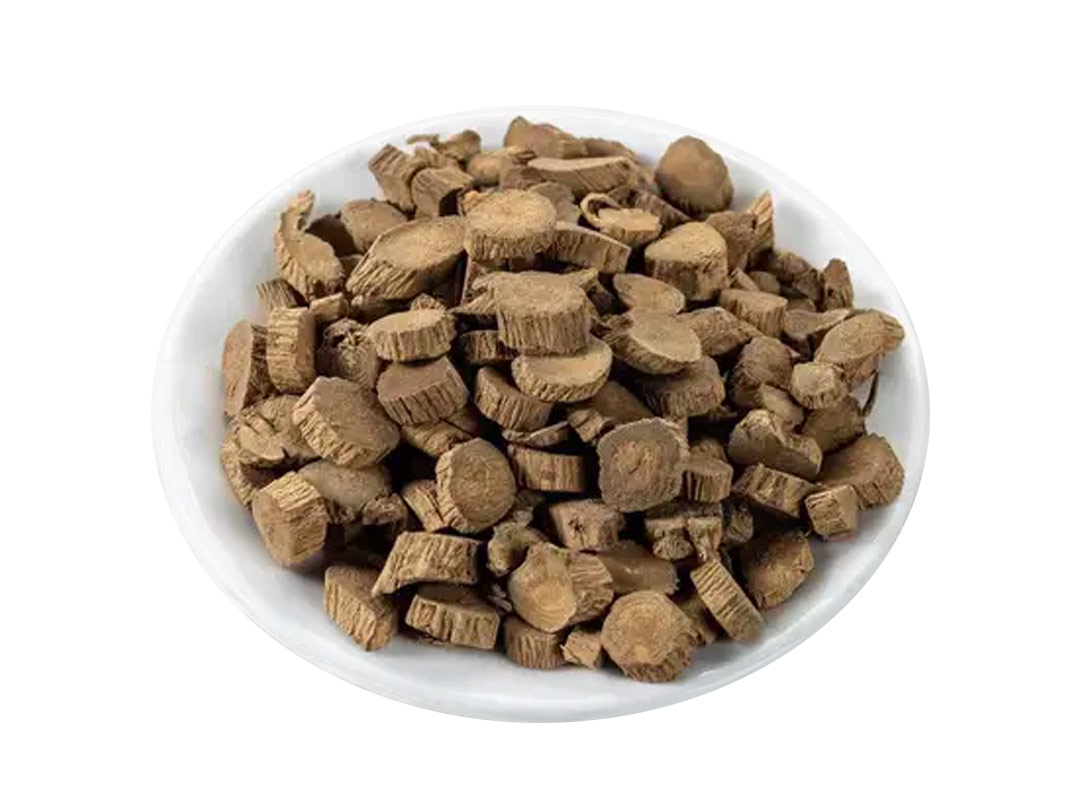
Sichuan Achyranthes
Chuan Niuxi is the name of a traditional Chinese medicine. It is the dried root of Cyathula officinalis Kuan, a plant in the Amaranthaceae family. Authentic medicinal material specifically refers to Chuan Niuxi produced in Baoxing, Tianquan, Jinkouhe, and surrounding areas of Ya’an, Sichuan.This herb has the effects of removing blood stasis and regulating menstruation, unblocking the joints, and promoting urination to relieve dysuria. It is primarily used to treat amenorrhea and masses, retained placenta, trauma and contusions, rheumatic arthralgia, foot paralysis and muscle spasms, hematuria, and dysuria with blood.
Chinese Name : 川牛膝
Latin Name : Cyathulae Radix
Aliases : Achyranthes, Common Achyranthes, Rice-Heart Achyranthes, Domestic Achyranthes, Fleshy Achyranthes, Large Achyranthes, Crooked Achyranthes, Sweet Achyranthes, Sweet Sichuan Achyranthes, Dragon Achyranthes
Authentic Producing Area : Sichuan
Nature, Flavor & Meridian Tropism : Sweet and slightly bitter in taste; neutral in nature; enters the Liver and Kidney meridians
Benefits & Efficacy
Benefits
Removes blood stasis and unblocks the meridians; promotes joint mobility; promotes urination and relieves dysuria.
Indications
Amenorrhea with masses, retained placenta, trauma from falls or blows, rheumatic arthralgia, foot atrophy and muscle spasms, hematuria, and bloody dysuria.
Usage and Dosage
Internal use: Decocted as a soup, 5–10 g; or incorporated into pills or powders; or steeped in wine.
Precautions
Patients requiring treatment with Chinese herbal medicine should first consult a licensed Traditional Chinese Medicine (TCM) hospital, where a TCM practitioner will conduct a professional pattern differentiation and prescribe an herbal formula.
Chemical Constituents
It primarily contains steroidal components, such as β-ecdysterone, cyathulone, cephalanthrone, ecdysone, and red sterone; it also contains polysaccharides and trace elements such as titanium.
Pharmacological Actions
This herb has pharmacological effects including improving microcirculation, lowering blood pressure, and boosting immunity.
Relevant Discussions
1. *Leigong’s Explanation of Medicinal Preparation and Properties*: “Primarily used to replenish essence and marrow.”
2. *Huiyue Yijing*: “Relieves rheumatic pain in the feet and knees; no other tonic is as effective.”
3. *Ben Cao Zheng Yi*: “When applied to the shoulders, back, and arms, it unblocks the meridians and facilitates joint mobility.”
4. *Compendium of Chinese Herbal Medicines*: “Treats rheumatic pain in the lower back and knees, osteoarthritis, sequelae of poliomyelitis, dysuria, hematuria, amenorrhea due to blood stasis, difficult labor, retained placenta, and postpartum abdominal pain caused by blood stasis.”
5. *Chronicle of Sichuan Chinese Medicinal Herbs* (1979 edition): “Activates blood circulation, removes blood stasis, unblocks the meridians, and directs blood downward. Used for amenorrhea due to blood stasis, dysmenorrhea, toothache, hemoptysis, epistaxis, swollen and painful joints, and trauma.”
Applications
Clinical Applications
1. To treat amenorrhea due to blood stasis and dysmenorrhea, combine with Danggui, Chuanxiong, and Honghua to achieve the combined effects of promoting blood circulation, regulating menstruation, and relieving pain.
2. To treat trauma and contusions, combine with Ruxiang and Xuejie to promote blood circulation, remove blood stasis, and relieve pain.
3. To treat rheumatic pain in the lower back and knees, as well as joint stiffness, combine with Sangjisheng, Xuduan, and Duhuo to achieve synergistic effects.
4. To treat damp-heat descending to the lower body, causing redness, swelling, and pain in the joints, combine with Phellodendron and Atractylodes.
5. To treat hematuria and blood in the urine, Chuan Niuxi promotes urination, relieves dysuria, and removes blood stasis; combine with Akebia, Lycopodium, and Pollen of Typha to enhance therapeutic efficacy.
Related Compatibility
1. Sichuan Achyranthes combined with Safflower: Sichuan Achyranthes functions to remove blood stasis, regulate menstruation, and relieve joint stiffness; Safflower functions to invigorate blood circulation, remove blood stasis, regulate menstruation, and relieve pain.When used together, these two herbs both remove blood stasis and regulate menstruation, as well as invigorate blood circulation and relieve pain. They are suitable for menstrual abdominal pain caused by blood stasis, postpartum abdominal pain due to blood stasis obstruction, as well as conditions such as trauma-induced pain, epigastric and abdominal pain, and arthralgia caused by blood stasis obstruction.
2. Sichuan Achyranthes combined with Phellodendron: Sichuan Achyranthes has a naturally descending nature and can remove blood stasis and improve joint mobility; Phellodendron is bitter and cold in nature and descends, capable of clearing damp-heat and improving joint mobility. When combined, these two herbs clear heat, drain dampness, reduce swelling, and relieve pain. They are suitable for redness, swelling, heat, and pain in the feet and knees caused by descending damp-heat, or numbness in both feet.
3. Sichuan Achyranthes combined with Puhuang: Sichuan Achyranthes promotes blood circulation, removes blood stasis, and promotes urination to relieve dysuria; Puhuang resolves blood stasis, stops bleeding, and promotes urination to relieve dysuria. When used together, these two herbs not only enhance the diuretic and dysuria-relieving effects but also resolve blood stasis and stop bleeding, making them suitable for conditions such as hematuria and bloody dysuria.
Medicinal Identification
1. Raw Sichuan Achyranthes and Wine-Processed Sichuan Achyranthes: These are two different processed forms of Achyranthes, with largely similar effects; both promote the elimination of blood stasis, regulate menstruation, and improve joint mobility. They are both used for amenorrhea, masses, rheumatic arthralgia, and foot atrophy with muscle spasms. Raw Sichuan Achyranthes has a weaker effect in promoting blood circulation and strengthening tendons and bones; it also has diuretic and urinary tract-clearing effects and can treat hematuria and bloody dysuria.Sichuan Achyranthes processed with wine has enhanced effects in promoting blood circulation, unblocking meridians, and strengthening tendons and bones; therefore, it is commonly used to treat long-standing bi syndrome, foot atrophy and tendon spasms caused by malnutrition of tendons and bones, rheumatic bi pain, joint stiffness, as well as amenorrhea and masses caused by blood stasis.
2. Sichuan Achyranthes vs. Achyranthes: Although their names are similar, their functions differ. Both promote blood circulation, regulate menstruation, tonify the liver and kidneys, strengthen tendons and bones, promote urination, relieve dysuria, and direct blood downward; they can treat conditions such as amenorrhea due to blood stasis, dysmenorrhea, weakness of tendons and bones, dysuria, edema, headaches, and dizziness.Among these, Sichuan Achyranthes (Chuan Niuxi) is particularly effective at expelling blood stasis, regulating menstruation, unblocking joints, reducing swelling, and relieving pain; it primarily focuses on promoting blood circulation and expelling blood stasis, and is especially effective for treating amenorrhea, masses, and swelling and pain caused by trauma. Achyranthes (Niuxi) is particularly effective at tonifying the liver and kidneys and strengthening tendons and bones, and is especially effective for treating liver and kidney deficiency and weakness of tendons and bones.
Related Medicines
Powerful Tianma and Du Zhong Capsules, Synovitis Granules.
Notes
References: [1] Li Xue, Yu Liwei, Bai Fengyun, Song Yijun, and Ao Qiang (eds.). Characteristics of Traditional Chinese Medicinal Material Processing Techniques in Shaanxi [M]. 2024:64–65. [2] Guo Lanping, Huang Luqi (eds.). Research on Technical Specifications for the Production of Authentic Medicinal Materials [M]. 2023:85–90. [3] Hu Changjiang, Chen Zhimin (eds.). Processing and Clinical Application of Authentic Medicinal Materials from Sichuan [M]. 2023:67–70. [4] State Pharmacopoeia Commission. Clinical Guidelines for the Pharmacopoeia of the People’s Republic of China: Decoction Pieces of Traditional Chinese Medicine (2020 Edition) [M]. Beijing: China Pharmaceutical Science and Technology Press, 2022: 875–876. [5] China Association of Traditional Chinese Medicine. General Rules for the Formulation of Standards for Authentic Medicinal Materials [S]. Beijing: China Association of Traditional Chinese Medicine, 2019: 310–318.
Processing & Preparation
Harvesting & Processing
Harvest in the fall and winter seasons; remove the root crown, fibrous roots, and soil; dry in an oven or under the sun until half-dry; pile up to allow re-moistening; then dry thoroughly in an oven or under the sun.
Processing Methods
1. Sichuan Achyranthes: Take the raw herb, remove impurities and the root crown, wash thoroughly, moisten thoroughly, slice thinly, and dry.
2. Wine-Processed Sichuan Achyranthes: Take sliced Sichuan Achyranthes, mix thoroughly with rice wine, let it sit until thoroughly moistened, place in a pot, heat over low heat, stir-fry until dry, then remove and let cool. Use 10 kg of rice wine for every 100 kg of Sichuan Achyranthes.
3. Salted Sichuan Achyranthes: Take the Sichuan Achyranthes slices, mix thoroughly with salt water, let them soak until thoroughly moistened, place them in a pan, heat over low heat, stir-fry until dry, then remove and let cool. Use 2 kg of salt per 100 kg of Sichuan Achyranthes.
Storage Methods
Store in a dry container. Keep the wine-processed and salt-processed Sichuan Achyranthes root tightly sealed and store in a cool, dry place to prevent moisture absorption.
Crude Drug Identification
Identification
Key Distinguishing Features Between Sichuan Achyranthes from the Authentic Production Area and Those from Other Regions:
1. Sichuan Achyranthes from the Authentic Production Area: Fewer branches, primarily single-stemmed. Fewer fibrous roots.
2. Sichuan Achyranthes from Other Regions: More branches, more fibrous roots.
Properties of Crude Drugs
Chuan Niuxi is nearly cylindrical, slightly twisted, tapering slightly toward the base, with branches at the lower end; it is 30–60 cm long and 0.5–3 cm in diameter. The surface is yellowish-brown or grayish-brown, featuring longitudinal wrinkles, traces of lateral roots, and numerous transverse, lenticular protrusions.It is tough and difficult to break; the cross-section is pale yellow or brownish-yellow, with vascular bundles appearing as dots arranged in several concentric rings. It has a faint odor and a sweet taste.
Authentic Sichuan Achyranthes is nearly cylindrical, slightly twisted, with a stout rhizome that tapers slightly toward the base. It is predominantly single-stemmed, with only some specimens having few branches; it measures 30–60 cm in length and 0.5–3 cm in diameter.The surface is yellowish-brown to grayish-brown, featuring longitudinal wrinkles, traces of lateral roots, and numerous transverse lenticel-like protrusions. It is tough and resilient, not easily broken; the cross-section is pale yellow or brownish-yellow, with vascular bundles appearing as dots arranged in several concentric rings. It has a faint odor and a sweet taste.
Properties of Processed Slices
1. Sichuan Achyranthes: Roundish thin slices with a yellowish-brown or grayish-brown outer surface and a cross-section ranging from pale yellow to brownish-yellow. Numerous yellow, dot-like vascular bundles arranged in several concentric rings are visible. It has a faint odor and a sweet taste.
2. Wine-processed Sichuan Achyranthes: Similar in shape to Sichuan Achyranthes, with a dark brown surface and a faint odor of wine.
3. Salt-processed Sichuan Achyranthes: Similar in shape to Sichuan Achyranthes, with a dark brown surface and a salty taste.
Botanical Information
Botanical Classification
A plant of the Amaranthaceae family, known as Sichuan Achyranthes.
Morphological Characteristics
A perennial herb, 50–100 cm tall. The taproot is cylindrical, with nearly white bark. The stem is slightly quadrangular, highly branched, and sparsely covered with long, rough hairs.Leaves are opposite; petioles are 5–15 mm long; leaf blades are elliptic or narrowly elliptic, with a few obovate, 3–12 cm long and 1.5–5.5 cm wide, with an acuminate or caudate apex, a cuneate or broadly cuneate base, and entire margins; the upper surface bears appressed rough hairs, while the lower surface is more densely hairy.Compound cymes form dense flower heads; flower heads are numerous, 1–1.5 cm in diameter, pale green, becoming nearly white when dry, arranged in opposite pairs along the terminal inflorescence axis, either densely clustered or spaced 2–3 cm apart; compound cymes are 3–6-times branched;The cymes are bisexual, with fertile flowers in the center and sterile flowers on either side; bracts are ovate, 4–5 mm long, glossy, with a spiny or hooked apex; the perianth segments of sterile flowers are modified into hooked, rigid spines; bisexual flowers are 3–5 mm long, with lanceolate perianth segments ending in a spiny tip, the inner three segments being narrower;Filaments densely covered with nodular tufts of hairs at the base; rudimentary stamens rectangular, 0.3–0.4 mm long, about half as wide as long, with shallowly toothed apices; ovary cylindrical or obovate, 1.3–1.8 mm long; style about 1.5 mm long, persistent; stigma capitate.The capsule is elliptical or obovate, 2–3 mm long, 1–2 mm in diameter, pale yellow, and enclosed within the persistent perianth. The seeds are elliptical, lens-shaped, 1.5–2 mm long, reddish, and glossy. Flowering occurs from June to July, and fruiting from August to September.
Distribution Area
It is distributed in Sichuan, Guizhou, Yunnan, and other regions.
Growth Habits
It prefers a cool, humid climate. Cultivation in mountainous areas at elevations of 1,500–1,800 m yields the best results, with high root quality and yield; it thrives in sunny locations with deep, humus-rich loam soil. Avoid continuous cropping.
Propagation Methods
Propagated by seed.
Cultivation Techniques
Seeds from 3- to 4-year-old plants are used for propagation. Spring sowing takes place in March–April; fall sowing in September. In major production areas, spring sowing is practiced in high-altitude regions, while fall sowing is used in low-altitude regions.Before sowing, moisten the seeds with wood ash mixed with a small amount of manure slurry, then mix thoroughly. For hole sowing, dig holes with row and plant spacing of 33–45 cm each; the holes should be shallow and level. After applying fertilizer, sprinkle a pinch of ash-mixed seeds (about 10 seeds) into each hole. For row sowing, maintain a row spacing of 33–40 cm. Seed rate is 7.5–11.25 kg per hectare.
Pest and Disease Control
1. White rust: At the onset of the disease, spray a 1:1:120 Bordeaux mixture for control.
2. Root-knot nematode damage: To prevent this, avoid continuous cropping and select disease-free land.
3. Giant leaf beetle damage: Control by applying a 1,000-fold dilution of diazinon.