Taizi Shen is a commonly used tonic herb for replenishing qi; it is the tuberous root of Pseudostellaria heterophylla (Miq.) Pax ex Pax et Hoffm., a plant in the genus Pseudostellaria of the Caryophyllaceae family. It has the effects of tonifying qi and strengthening the spleen, as well as generating body fluids and moistening the lungs. It is primarily used to treat spleen deficiency with fatigue, loss of appetite, post-illness weakness, deficiency of qi and yin, spontaneous sweating and thirst, and dry cough due to lung dryness.

Prince Ginseng
Taizi Shen is a commonly used tonic herb for replenishing qi; it is the tuberous root of Pseudostellaria heterophylla (Miq.) Pax ex Pax et Hoffm., a plant in the genus Pseudostellaria of the Caryophyllaceae family. It has the effects of tonifying qi and strengthening the spleen, as well as generating body fluids and moistening the lungs. It is primarily used to treat spleen deficiency with fatigue, loss of appetite, post-illness weakness, deficiency of qi and yin, spontaneous sweating and thirst, and dry cough due to lung dryness.
Chinese Name : 太子参
Latin Name : Pseudostellariae Radix
Aliases : Tongzi Shen
Authentic Producing Area : Mainly produced in Jiangsu and Shandong
Nature, Flavor & Meridian Tropism : Taste: sweet with a slight bitterness; nature: neutral; enters the Spleen and Lung meridians
Benefits & Efficacy
Benefits
It has the effects of tonifying qi and strengthening the spleen, as well as generating body fluids and moistening the lungs.
Indications
It is primarily used for spleen deficiency with fatigue, loss of appetite, post-illness weakness, deficiency of qi and yin, spontaneous sweating and thirst, and dry cough due to lung dryness.
Usage and Dosage
Decoct and take 9–30 g.
Precautions
1. Should not be used in combination with Li Lu. 2. Should not be used in combination with vitamin C, niacin, glutamic acid, or gastric enzyme preparations, as this may cause the aforementioned drugs to decompose, reducing their efficacy. 3. Should not be used with codeine, morphine, pethidine, or phenobarbital, as this may exacerbate sedation and respiratory depression. 4. Should not be used in combination with cardiac glycosides to avoid additive effects and increased toxicity. 5. While taking this medication, avoid radishes, mung beans, and strongly alkaline foods such as grapes, tea leaves, wine, kelp sprouts, and kelp.
Chemical Constituents
Main saponin components: Taizishen saponin A, Dianthus acuminatus saponin D; cyclopeptide components: Taizishen cyclopeptides A–H; fatty acids and esters: palmitic acid, linoleic acid,1-linoleic acid glyceride; sterols and their glycosides: β-sitosterol, carotene glycoside,7-stigmast-3β-ol; Phospholipids: soluble phosphatidylcholine, phosphatidylinositol, phosphatidylserine, phosphatidylethanolamine, phosphatidylglycerol, and phosphoric acid, etc.; Polysaccharides: Panax pseudoginseng polysaccharides PHP-A and PHP-B; It also contains various amino acids.
Pharmacological Actions
This product has immune-boosting, anti-aging, anti-lung injury, anti-myocardial ischemia, and blood glucose-lowering effects.
Relevant Discussions
1. *Flora of Medicinal Plants of China*: “Excellent for treating spontaneous sweating in children.”
2. *Compendium of Jiangsu Medicinal Materials*: “Nourishes lung yin and strengthens the spleen and stomach.”
Applications
Clinical Applications
1. Treatment of chronic renal failure: Administer “Ren Shu No. 1” (Angelica sinensis, red and white peony root, Ligusticum chuanxiong, Bupleurum chinense, Panax pseudoginseng, Astragalus membranaceus, Scutellaria baicalensis,Alisma, Poria, Salvia, Pinellia, and charred rhubarb) orally; add raw rhubarb, calcined oyster shell, white flower snake tongue grass, and peach kernels, decoct thoroughly, and administer as an enema; this is effective for treating chronic renal failure.
2.Treatment of Viral Myocarditis: The Qi-Tonifying and Yin-Nourishing Formula (Astragalus, Taizi Shen, Raw Rehmannia, Ophiopogon, Poria, Moutan Bark) is effective for treating viral myocarditis.
3. Treatment of Fatty Liver: The use of herbal granules for fatty liver (Taizi Shen, Hawthorn, Raw Coix Seed, Pueraria Root, Processed Rheum and Green Tangerine Peel, Goji Berries, Alisma, etc.) is effective for treating fatty liver.
4. Treatment of Primary Thrombocytopenic Purpura: For the syndrome-differentiated treatment of primary thrombocytopenic purpura, the Gui Pi Decoction, Er Zhi Pills, or Sheng Mai Decoction with appropriate modifications are selected for the spleen-kidney deficiency pattern.
5. Treatment of Acute Exacerbations of Chronic Bronchitis: Ultrasonic nebulization of Taizishen Cough-Relieving and Asthma-Relieving Powder (containing Taizishen, Cordyceps sinensis, Zhebei Mu, Tianhuafen, Banxia, etc.), combined with Western medicine, is effective in treating acute exacerbations of chronic bronchitis. In addition, there are reports of Taizishen being used to treat congestive heart failure, lung cancer, neurasthenia, chronic atrophic gastritis, benzene poisoning, and anemia.
Related Compatibility
1. Prince Ginseng with Dendrobium: Prince Ginseng is sweet and bitter in taste with a neutral nature; it both tonifies spleen qi and nourishes stomach yin, making it a mild tonic. Dendrobium is sweet and slightly cold in nature; it excels at nourishing stomach yin, generating body fluids, and relieving thirst and restlessness. When combined, these two herbs enhance the effects of tonifying spleen qi, nourishing stomach yin, generating body fluids, and relieving thirst and restlessness.This combination is suitable for symptoms such as fatigue, loss of appetite, dry throat, and thirst caused by spleen qi deficiency and stomach yin deficiency.
2. Taizishen Combined with Astragalus: Taizishen excels at tonifying qi, generating body fluids, strengthening the spleen, and benefiting the lungs; Astragalus excels at tonifying qi, raising yang, benefiting the defensive qi, and fortifying the exterior. When combined, these two herbs enhance the effects of tonifying qi, generating body fluids, fortifying the exterior, and stopping sweating.Indicated for symptoms such as spontaneous sweating, palpitations, restlessness, and thirst resulting from concurrent deficiency of qi and yin in the late stages of febrile diseases.
3. Taizi Shen Combined with Shan Yao: Taizi Shen excels at tonifying qi and generating body fluids; Shan Yao excels at tonifying qi and nourishing yin. When combined, these two herbs enhance the effects of tonifying qi, generating body fluids, and nourishing yin. Indicated for conditions resulting from damage to the spleen and stomach, such as fatigue, spontaneous sweating, and reduced appetite; it is particularly suitable for use as an initial tonic.
4. Taizi Shen Combined with Beishashen: Taizi Shen is sweet and neutral in nature, excelling at tonifying qi, generating body fluids, and moistening dryness; Beishashen is sweet and slightly cold in nature, excelling at nourishing yin, clearing the lungs, and generating body fluids. When combined, these two herbs enhance the effects of nourishing yin, moistening the lungs, and relieving cough. This combination is suitable for lung deficiency with dry cough, shortness of breath, and scant phlegm caused by dry or heat pathogens invading the lungs, resulting in deficiency of both qi and yin.
5. Taizi Shen Combined with Sheng Di Huang: Taizi Shen excels at tonifying qi, generating body fluids, strengthening the spleen, and benefiting the lungs; Sheng Di Huang excels at clearing heat, cooling the blood, nourishing yin, and generating body fluids. When combined, these two herbs enhance the effects of clearing heat, nourishing yin, generating body fluids, and relieving thirst. This combination is suitable for cases of qi deficiency and fluid depletion in the late stages of febrile diseases, characterized by thirst, a fine pulse, and a red tongue.
6. Taizi Shen combined with Ziziphus Seed: Taizi Shen excels at tonifying qi and generating body fluids; Ziziphus Seed excels at nourishing the heart and calming the spirit. When combined, these two herbs have the effects of tonifying qi, generating body fluids, nourishing the heart, and calming the spirit. This combination is suitable for cases of deficiency of both qi and body fluids accompanied by palpitations and insomnia.
7. Taizi Shen combined with Artemisia annua: Taizi Shen excels at tonifying qi and generating body fluids; Artemisia annua excels at clearing deficient heat and eliminating bone-steaming fever. When combined, these two herbs have the effects of tonifying qi, generating body fluids, clearing heat, and eliminating bone-steaming fever. This combination is suitable for children with both qi and yin deficiency who experience profuse spontaneous sweating.
Medicinal Identification
1. Ginseng and Taizi Shen: Both have a sweet and slightly bitter taste and enter the Spleen and Lung meridians. They possess the functions of tonifying qi, generating body fluids, and strengthening the spleen and lungs. They can be used for conditions involving deficiency of spleen and lung qi, as well as deficiency of both qi and body fluids.However, ginseng (Panax ginseng) is a plant of the Araliaceae family. It has a slightly warm nature and enters the Heart meridian. It possesses strong tonifying power, capable of greatly replenishing primordial qi, restoring the pulse, and preventing collapse. It is used for emergency treatment of critical conditions such as qi deficiency with impending collapse and a faint, nearly imperceptible pulse. It also has effects of calming the mind, enhancing cognitive function, arresting bleeding, and strengthening yang, and can be used for insomnia, forgetfulness, qi failure to retain blood, and erectile dysfunction.Prince Ginseng is a plant of the Dianthus family. It has a neutral nature, and its tonifying power is far inferior to that of ginseng; it lacks the ability to significantly replenish original qi. Its primary functions are to tonify qi and generate body fluids, and it is used for spleen qi deficiency and stomach yin deficiency.
2. American Ginseng and Prince Ginseng: Both have the effects of tonifying qi and generating body fluids, and are used together to treat conditions involving both qi and yin deficiency.However, Taizi Shen, derived from the Dianthus family, has a neutral nature; its ability to tonify qi, nourish yin, and generate body fluids is weaker than that of American ginseng, and it lacks the ability to clear heat. It is commonly used for spleen deficiency with weak qi and insufficiency of stomach yin. American ginseng, derived from the Araliaceae family, has a cold nature and the ability to clear heat; it excels at nourishing yin and clearing the lungs. It is also used for restlessness, fatigue, and thirst resulting from concurrent deficiency of qi and yin in febrile diseases, particularly when symptoms of heat are prominent.
Related Medicines
Stomach-Strengthening and Digestion-Promoting Tablets, Kidney Failure Relief Capsules, Children’s Treasure Granules, and Children’s Health Granules.
Medicinal Diet Therapy
A medicinal dish featuring Taizi Shen is Braised Lamb with Taizi Shen.
1. Benefits: Warms the middle burner, tonifies deficiency, boosts qi, and promotes fluid production.
2. Ingredients: 350g cooked lamb ribs, 7g Taizi Shen, 25g rehydrated shiitake mushrooms, 25g dried lily bulb slices, 1 egg, and seasonings, scallions, and shredded ginger to taste.
3. Preparation: Decoct Prince Ginseng in water to obtain 5 ml of concentrated decoction; set aside. Slice the lamb into thin strips. Beat the egg with cornstarch and a small amount of sugar water to form a batter, then mix in the lamb until well combined. Slice the shiitake mushrooms and bamboo shoots diagonally; set aside. Heat oil in a wok until it reaches medium heat (about 50% heat), then add the ingredients. Fry until golden-brown, then remove from the wok and drain excess oil.Leave 50g of oil in the wok, add about 10 Sichuan peppercorns, and fry until golden; then remove them. Immediately add the scallions, ginger, shiitake mushrooms, and lily bulbs to the wok and stir-fry. Add 400ml of clear broth along with soy sauce, salt, MSG, and cooking wine to taste. Then add the lamb and the concentrated Prince Ginseng decoction. Simmer until the sauce thickens and the ingredients are tender, then transfer to a serving plate.
Notes
Patients requiring treatment with Chinese herbal medicine should first consult a licensed Traditional Chinese Medicine (TCM) hospital, where a TCM practitioner will conduct a professional pattern differentiation and prescribe an herbal formula.
Processing & Preparation
Harvesting & Processing
Harvest when most of the stems and leaves have withered in summer, then wash thoroughly.
Processing Methods
Remove the fibrous roots, blanch briefly in boiling water, then sun-dry, or sun-dry directly.
Storage Methods
Store in a well-ventilated, dry place to prevent insect infestation.
Crude Drug Identification
Properties of Crude Drugs
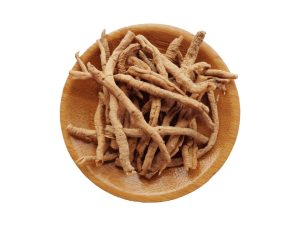
It is slender and spindle-shaped or elongated, slightly curved, 3–10 cm long, and 0.2–0.6 cm in diameter. The surface is yellowish-white, relatively smooth, with faint longitudinal wrinkles; the indentations bear traces of fibrous roots. There is a stem scar at the apex. The texture is hard and brittle; the cross-section is flat, pale yellowish-white, and horn-like; or off-white with a powdery texture. It has a faint odor and a slightly sweet taste.
Properties of Processed Slices
See “Characteristics of Medicinal Materials.”
Botanical Information
Botanical Classification
A plant of the genus Pseudostellaria in the family Caryophyllaceae, known as “Child’s Ginseng.”
Morphological Characteristics
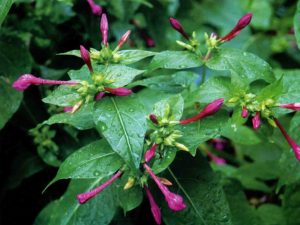
A perennial herb, 7–20 cm tall. It has a fleshy, erect, spindle-shaped tuber underground, with sparse fibrous roots extending from its periphery. The stem is single and unbranched; the lower part is purplish and nearly square in cross-section, while the upper part is green, cylindrical, with distinctly swollen nodes, and smooth and glabrous.Leaves are simple and opposite; those on the lower part of the stem are the smallest, oblanceolate, with an acute apex, the base tapering into a petiole, entire margins, and gradually increasing in size toward the top; the leaves at the stem apex are the largest, usually arranged in two closely joined pairs to form a whorl of four, long-ovate or ovate-lanceolate, 4–9 cm long and 2–4.5 cm wide, with a gradually tapering apex, the base narrowing into a petiole, sparse hairs along the veins on the underside, and slightly wavy margins.Flowers are dioecious: those near the ground are small and closed.The flower stalks are purple and short-pubescent; there are 4 sepals, purple on the back with white, membranous margins; there are no petals. The flowers at the stem apex are larger and open; the flower stalks are slender, 1–2 (–4) cm long, short-pubescent, erect during flowering, and drooping after flowering; the sepals number 5, are lanceolate, green, and bear long hairs on the back and margins;There are 5 white petals, with the apex shallowly dentate and 2-lobed or obtuse; 10 stamens; the ovary is ovate, with 3 styles. The capsule is nearly spherical. It contains a few seeds, which are brown, flattened-round or oblong-reniform, with wart-like projections. Flowering occurs in April, and fruiting in May–June.
Distribution Area
Distributed in North China, Northeast China, East China, Northwest China, and in Hubei and Hunan provinces.
Growth Habits
It prefers a warm and humid climate, has relatively strong cold tolerance, is sensitive to high temperatures, dislikes intense sunlight, and is susceptible to waterlogging. It exhibits the characteristics of germinating, rooting, and overwintering at low temperatures. Germination and root development occur slowly when the air temperature is 15°C and the soil temperature is 10°C; growth ceases when temperatures exceed 30°C. It does not tolerate continuous cropping.It is best suited to shaded, moist mountainous areas with deep, loose, fertile, humus-rich sandy soil; it should not be planted in low-lying, waterlogged areas, saline-alkali soils, or soils that are excessively heavy or barren. Sweet potatoes and vegetables are ideal preceding crops, and it can be intercropped with corn.
Propagation Methods
Propagate using tubers.
Cultivation Techniques
Dig up the tubers in June–July and store them in moist sand. Alternatively, use the in-field seed preservation method: interplant early-maturing soybeans in the Prince Ginseng field in early May, and dig up the Prince Ginseng after the soybeans have been harvested. The planting season is October. Select tubers with intact buds, plump and uniform in shape, and free of scars. There are two planting methods: flat planting and diagonal planting.For horizontal planting, dig furrows 15–20 cm apart and 6–9 cm deep. Place the tubers horizontally in the furrows, end-to-end, and cover with soil. For diagonal planting, place the tubers diagonally in the furrows with the “head” facing up and the “tail” facing down, ensuring the “heads” align but the “tails” do not, leaving a 2-cm gap from the surface before covering with soil. Natural seed fall can also be used for in-situ seedling propagation.
Pest and Disease Control
Diseases include leaf spot and root rot, which can be treated by spraying with a 1:1:100 Bordeaux mixture; alternatively, spray with a 65% zinc dithion wettable powder solution diluted 500–600 times. Pests such as grain weevils, wireworms, cutworms, and wireworms damage the roots.