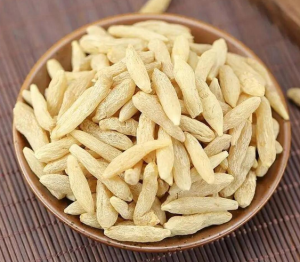
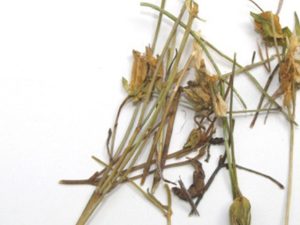
Arnebia, a name in traditional Chinese medicine. It refers to the dried roots of Arnebia euchroma (Royle) Johnst. (Xinjiang Arnebia) or Arnebia guttata Bunge (Inner Mongolia Arnebia) from the Boraginaceae family. It has the effects of clearing heat and cooling the blood, promoting blood circulation and detoxifying, and promoting the eruption of rashes and eliminating spots. It is primarily used to treat conditions characterized by excessive blood heat and toxin accumulation, purplish-black macules, measles that fail to erupt, sores and ulcers, eczema, and burns from fire or water.

Arnebia
Arnebia, a name in traditional Chinese medicine. It refers to the dried roots of Arnebia euchroma (Royle) Johnst. (Xinjiang Arnebia) or Arnebia guttata Bunge (Inner Mongolia Arnebia) from the Boraginaceae family. It has the effects of clearing heat and cooling the blood, promoting blood circulation and detoxifying, and promoting the eruption of rashes and eliminating spots. It is primarily used to treat conditions characterized by excessive blood heat and toxin accumulation, purplish-black macules, measles that fail to erupt, sores and ulcers, eczema, and burns from fire or water.
Chinese Name : 紫草
Latin Name : Arnebiae Radix
Aliases : Zicao, Zidan, Dixue, Yaxiancao, Shanzicao, Hongshigen, Yezicao, Yemadeng
Authentic Producing Area : Xinjiang, Inner Mongolia
Nature, Flavor & Meridian Tropism : Sweet and salty in taste; cold in nature; enters the Heart and Liver meridians
Benefits & Efficacy
Benefits
Clears heat and cools the blood; promotes blood circulation and detoxifies; promotes the eruption of rashes and eliminates spots.
Indications
Excessive blood heat and toxin, purpura and black spots, measles that fail to erupt, sores and ulcers, eczema, and burns from fire or water.
Usage and Dosage
1. Internal use: Decoct and take 5–10 g. 2. External use: Apply an appropriate amount as a paste or soak in vegetable oil and rub onto the affected area.
Precautions
Use with caution in patients with spleen deficiency and loose stools.
Chemical Constituents
This product primarily contains hydroxynaphthoquinone compounds, such as β,β'-dimethylacryloyl acanin, acetyl lithospermic acid, deoxy lithospermic acid, lithospermic acid, isobutyryl lithospermic acid, isopentanoyl lithospermic acid,α-methylbutyryl lithospermic acid, trimethylacryloyl lithospermic acid, β-hydroxyisopentyryl lithospermic acid, β-acetoxyisopentyryl lithospermic acid, dehydrated acaranin,1-methoxyacetyl lithospermic acid, etc., as well as phenols, alkaloids, and phenolic acids.
Pharmacological Actions
This product exhibits antimicrobial, anti-inflammatory, immune-boosting, hepatoprotective, and antitumor effects.
Relevant Discussions
1. *Shennong’s Classic of Materia Medica*: “It treats pathogenic qi in the heart and abdomen, the five types of jaundice, tonifies the middle and boosts qi, clears the nine orifices, and promotes urination.”
2. *Compendium of Materia Medica*: “Its primary functions are to cool the blood, promote blood circulation, and regulate the large and small intestines. Therefore, it is used for cases where smallpox lesions are about to erupt but have not yet done so, accompanied by blood heat and excessive toxins, as well as constipation. It may also be used when lesions have already erupted but are purplish-black and constipation persists. However, it must be strictly avoided if lesions have already erupted and are bright red and active, or if they are pale and sunken with loose stools.”
Applications
Clinical Applications
1. To treat warm-toxin-induced rashes, blood heat with severe toxicity, and purplish-black rashes, it is commonly combined with Red Peony Root (Chi Shao), Cicada Shed Skin (Chan Tui), Licorice (Gan Cao), and other herbs, such as the Purple Grass Rapid Rash Decoction (Zi Cao Kuai Ban Tang) from *Zhang’s Medical Compendium*;When combined with Arctium lappa seeds, Sophora flavescens root, and Forsythia, it can treat measles that have not fully erupted, with dark purple rashes accompanied by swelling and pain in the throat, as in the Purple Grass Toxin-Eliminating Decoction (*Zhang’s Comprehensive Treatise on Medicine*); when combined with Astragalus, Cimicifuga, and Schizonepeta, it can treat measles with qi deficiency and incomplete eruption of the rash, as in the Purple Grass Muscle-Relieving Decoction (*Standards for Diagnosis and Treatment*).
2. For the treatment of abscesses, swellings, and skin ulcers, it can be combined with herbs such as Lonicera japonica, Forsythia, and Taraxacum; when combined with Angelica sinensis, Angelica dahurica, and Dragon’s Blood, it can treat chronic ulcers that fail to heal, such as the Tissue-Regenerating Jade-Red Ointment (*Authentic Treatise on Surgery*).For treating eczema, it can be combined with herbs such as Coptis, Phellodendron, and Lo Lu, as in the Purple Grass Ointment (from *Ren Zhai Zhi Zhi Fang Lun*). To treat burns from water or fire, soak the herb in vegetable oil, filter the oil, and apply it topically to the affected area; alternatively, combine it with herbs such as Phellodendron, Moutan, and Rhubarb, boil them in sesame oil to make a paste, and apply it externally.
Related Compatibility
1. Lithospermum root combined with Smilax glabra: Lithospermum root excels at cooling the blood, promoting blood circulation, detoxifying, and treating sores; Smilax glabra excels at clearing heat, detoxifying, and draining dampness.When used together, these two herbs complement each other, enhancing their ability to cool the blood, promote blood circulation, dispel dampness, and eliminate toxins, thereby simultaneously resolving damp-heat, blood stasis, and toxins. This combination is suitable for sores, abscesses, and toxic swellings caused by the accumulation of damp-heat and blood stasis, malignant sores, and conditions involving damp-heat and blood stasis in the Liver Meridian.
2. Lithospermum combined with Angelica sinensis: Lithospermum has the effects of detoxifying, cooling the blood, and promoting blood circulation; Angelica sinensis nourishes the blood, promotes blood circulation, reduces swelling, and disperses nodules. When used together, the effects of clearing heat, detoxifying, promoting blood circulation, resolving stasis, reducing swelling, and dispersing nodules are enhanced. This combination is suitable for conditions such as abscesses, sores, swellings, and toxic infections, as well as swelling and pain resulting from trauma.
3. Lithospermum combined with Rehmannia: Lithospermum excels at cooling the blood and detoxifying, while also promoting blood circulation; Rehmannia excels at nourishing yin and generating body fluids, while also stopping bleeding. When used together, they clear heat without depleting body fluids and promote blood circulation without causing bleeding, thereby enhancing the effects of clearing heat, nourishing yin, cooling the blood, and detoxifying. This combination is suitable for febrile diseases with restlessness and thirst; rashes and macules caused by heat invading the blood; and hemoptysis and epistaxis resulting from uncontrolled blood flow due to blood heat.
Medicinal Identification
Red Peony Root and Lithospermum: Both herbs belong to the category of heat-clearing and blood-cooling agents; they are cold in nature and enter the Liver meridian. They both possess the functions of clearing heat, cooling the blood, and promoting blood circulation. They are primarily used to treat warm diseases where heat has entered the营血 (Ying-blood) level, resulting in purplish-dark rashes and macules, as well as conditions characterized by severe accumulation of heat toxins, such as abscesses, swellings, and toxic sores.However, Red Peony Root (Chishao), with its bitter and draining properties, specifically enters the Liver Meridian; it can also clear and drain Liver fire, disperse blood stasis, and relieve pain. It is used to treat chest and flank pain caused by Liver depression transforming into fire, as well as red, swollen, and painful eyes due to Liver fire, amenorrhea, masses, and trauma.Lithospermum root (Zicao) is sweet and cold in nature and enters the Heart Meridian; it can also detoxify and promote the eruption of rashes, is particularly effective at resolving heat toxins in the blood, and is used to treat dark-purple measles, incomplete eruption of rashes, eczema with pruritus in the genital area, and burns from fire or water.
Related Medicines
Gan Ning Tablets, Detoxifying and Tissue-Regenerating Ointment, Purple Flower Burn Ointment, Compound Qing Dai Capsules (Pills).
Related Prescriptions
Lithospermum Quick-Spot Decoction (*Zhang’s Comprehensive Treatise on Medicine*), Lithospermum Muscle-Relieving Decoction (*Standards for Diagnosis and Treatment*), Lithospermum Disinfecting Decoction (*Zhang’s Comprehensive Treatise on Medicine*), Lithospermum Ointment (*Ren Zhai’s Direct Pointers on Formulas*), and Tissue-Regenerating Jade-Red Ointment (*Authentic Treatise on Surgery*).
Notes
Patients requiring treatment with traditional Chinese medicine should first consult a licensed TCM hospital, where a TCM practitioner will conduct a professional pattern differentiation and issue a prescription.
Processing & Preparation
Harvesting & Processing
Harvest in spring and autumn; remove dirt and sand; dry.
Processing Methods
1. Xinjiang Lithospermum: Remove impurities; cut into thick slices or segments.
2. Inner Mongolia Lithospermum: Remove impurities; wash thoroughly; moisten thoroughly; cut into thin slices; dry.
Storage Methods
Store in a dry container in a well-ventilated, dry place.
Crude Drug Identification
Identification
1. The powder is deep purplish-red. Non-glandular trichomes are unicellular, 13–56 μm in diameter, with a bell-shaped, swollen base; their walls bear fine longitudinal striations, and some cell cavities contain purplish-red pigment. Plug cells are reddish-brown; when viewed from the surface, they appear polygonal or circular-polygonal and contain purplish-red pigment. Parenchymatous cells are numerous, pale brown or colorless, and mostly filled with purplish-red pigment.The vessels are mainly reticulate vessels, with a few vessels having marginal pores, ranging in diameter from 7 to 110 μm.
2. Take 0.5 g of the powdered sample, add 20 mL of petroleum ether (60–90 °C), sonicate for 20 minutes, filter, and concentrate the filtrate to 1 mL to prepare the test solution. Separately, take 0.5 g of the reference material (Lithospermum erythrorhizon) and prepare the reference solution using the same method.Test by thin-layer chromatography (General Chapter 0502): Pipette 4 μL of each solution and apply them separately onto the same silica gel G plate. Develop with a mobile phase of cyclohexane–toluene–ethyl acetate–formic acid (5:5:0.5:0.1), remove the plate, and allow it to air-dry.In the chromatogram of the test sample, purple-red spots appear at positions corresponding to those in the reference herbal material chromatogram; upon spraying with a 10% potassium hydroxide solution in methanol, the spots turn blue.
Properties of Crude Drugs
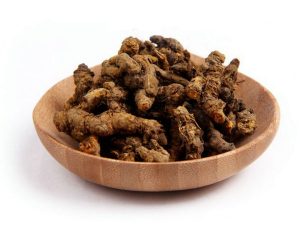
1. Xinjiang Lithospermum (Soft Lithospermum): Irregularly elongated cylindrical in shape, often twisted, 7–20 cm long, and 1–2.5 cm in diameter. The surface is purplish-red or purplish-brown; the cortex is loose, appearing in strip-like or flaky layers, often with more than 10 layers overlapping, and peels off easily.At the apex, remnants of branched stems may be visible. It is light in weight, soft and loose in texture, breaks easily, and has an irregular fracture surface; the xylem is small and yellowish-white or yellow. It has a distinctive odor and a slightly bitter, astringent taste.
2. Inner Mongolia Lithospermum: Conical or cylindrical in shape, twisted, 6–20 cm long, and 0.5–4 cm in diameter.The root crown is slightly thickened, with one or more stem remnants at the apex, covered with short, stiff hairs. The surface is purplish-red or dark purple; the cortex is slightly thin, often consisting of several overlapping layers that peel off easily. The texture is hard and brittle, breaking easily; the fracture surface is relatively neat, with a purplish-red cortex and a small, yellowish-white xylem. It has a distinctive odor and a astringent taste.
Properties of Processed Slices
1. Xinjiang Lithospermum Slices: Irregular cylindrical or strip-shaped slices, 1–2.5 cm in diameter. Purple-red or purplish-brown in color. The cortex is deep purple. In cylindrical slices, the xylem is small and yellowish-white or yellow.
2. Inner Mongolia Lithospermum Slices: Irregular cylindrical slices or strip-shaped pieces, some with visible short, stiff hairs, 0.5–4 cm in diameter. Hard and brittle in texture, purplish-red or purplish-brown in color. The cortex is deep purple. In cylindrical slices, the xylem is small and yellowish-white or yellow.
Botanical Information
Botanical Classification
Plants of the Boraginaceae family: Xinjiang Lithospermum and Inner Mongolia Lithospermum.
Morphological Characteristics
1. Xinjiang Lithospermum: A perennial herb, 15–40 cm tall. The entire plant is covered with white or pale yellow, long, stiff hairs. The root is stout and slightly conical; the root head is often twisted together with several lateral roots, and the outer bark is dark reddish-purple. The stem is erect, either single or dichotomously branched at the base, with a stem sheath formed by the remnants of leaf bases at the base.Basal leaves are clustered, linear-lanceolate or linear, 5–20 cm long and 5–15 cm wide, with a short acuminate apex, a base expanded into a sheath, and entire margins; cauline leaves are linear-lanceolate, acuminate, and lack a sheath at the base; they are sessile. Sickle-shaped cymes are densely clustered in the upper leaf axils of the stem, 2–6 cm long;Flowers are bisexual; bracts are leaf-like, lanceolate, and bear stiff hairs; the calyx is short-tubular, 5-lobed, with narrow-linear lobes densely covered with pale yellow stiff hairs on both surfaces; the corolla is tubular-campanulate, purple or pale purple, 1–1.5 cm long, with elliptic, spreading lobes; the outer surface is slightly covered with white hairs, while the throat and base are smooth and free of appendages;There are 5 stamens; the filaments are short or absent, attached to the middle or throat of the corolla tube; the ovary is deeply 4-lobed; the style is slender, with a shallow 2-lobed apex; the stigma is 2-lobed and obovate. The nutlets are broadly ovate, brown, 3.5 mm long, and about 3 mm wide. They bear coarse reticulate patterns and a few wart-like projections. Flowering occurs from June to July; fruiting occurs from August to September.
2. Inner Mongolian Lithospermum: A perennial herb, 10–35 cm tall. The root is conical or cylindrical, slightly twisted, with a purplish-brown outer skin that often peels off in flakes. The stem is erect, usually branching from the base into 2–4 branches (sometimes 1), densely covered with spreading, long, stiff hairs and short, appressed hairs.Leaves are sessile, alternate, elliptic, long-ovate-lanceolate, or spatulate-linear, 1.5–5.5 cm long and 3–11 mm wide, with an acute or obtuse apex, a gradually narrowing and extending base, entire margins or slightly notched, and densely covered on both surfaces with white, long, stiff hairs bearing basal discs. The inflorescence is a sickle-shaped corymb, 3–10 cm long;flowers are numerous and densely packed; bracts are linear-lanceolate; the calyx is short-campanulate, 5-lobed, with linear-lanceolate lobes 6–10 mm long;Corolla bright yellow, tubular-campanulate, slender, ca. 1.5 cm long; apical lobes ovate, spreading, often with purplish-black spots; throat without appendages; stamens 5, attached to the middle or throat of the corolla tube; anthers oblong, ca. 1.8 mm long; ovary 4-lobed; style filiform, extending slightly beyond half the length of the corolla tube; apex 2-lobed; stigma globose.There are 4 nutlets, triangular-ovate, 2–3 mm long, pale yellowish-brown, with small wart-like projections. Flowering period: June–August; fruiting period: August–October.
Distribution Area
1. Xinjiang Lithospermum: Distributed in Xinjiang, Gansu, and western Tibet. 2. Inner Mongolia Lithospermum: Distributed in Inner Mongolia, northern Hebei, Ningxia, western Gansu, Xinjiang, and Tibet.