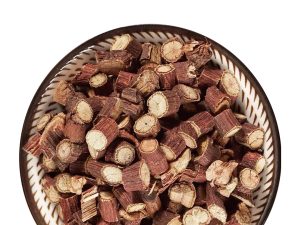
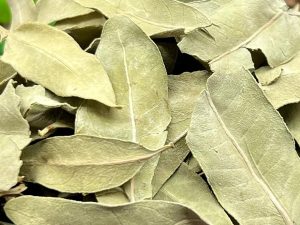
Litsea is a name used in traditional Chinese medicine. It refers to the fruits of the plants Litsea euosma W.W. Smith, Litsea mollis Hemsl. [L. mollifolia Chun], and Litsea pungens Hemsl., all belonging to the genus Litsea in the family Lauraceae. It has the effects of warming the middle burner and regulating qi, drying dampness and strengthening the spleen, and detoxifying and reducing swelling.It is primarily used to treat stomach pain caused by cold, vomiting and diarrhea due to summer heat and dampness, food stagnation and bloating, dysmenorrhea, hernia pain, malaria, and swollen and painful sores.

Litsea
Litsea is a name used in traditional Chinese medicine. It refers to the fruits of the plants Litsea euosma W.W. Smith, Litsea mollis Hemsl. [L. mollifolia Chun], and Litsea pungens Hemsl., all belonging to the genus Litsea in the family Lauraceae. It has the effects of warming the middle burner and regulating qi, drying dampness and strengthening the spleen, and detoxifying and reducing swelling.It is primarily used to treat stomach pain caused by cold, vomiting and diarrhea due to summer heat and dampness, food stagnation and bloating, dysmenorrhea, hernia pain, malaria, and swollen and painful sores.
Chinese Name : 木姜子
Aliases : Mountain Pepper, Wood Fragrance Seed, Wood Camphor Seed, Mountain Ginger Seed, Wood Pepper Seed, Winter Jasmine Twig, Large Wood Ginger, Fragrant Cassia Seed, Monkey Fragrance Seed, Ginger Root, Yellow Flower Seed, Spicy Ginger Seed
Nature, Flavor & Meridian Tropism : Taste: pungent and bitter; Nature: warm; Enters the Spleen and Stomach meridians
Benefits & Efficacy
Benefits
Warms the middle burner and regulates qi; dries dampness and strengthens the spleen; detoxifies and reduces swelling.
Indications
Mainly used to treat abdominal pain due to stomach cold, vomiting and diarrhea caused by summer heat and dampness, bloating due to food stagnation, dysmenorrhea, hernia pain, malaria, and swollen and painful sores.
Usage and Dosage
Internal use: Decocted as a soup, 3–10 g; taken as a powder, 1–1.5 g per dose. External use: Pounded into a paste and applied, or mixed with powder and applied as a poultice.
Precautions
Mu Jiang Zi is pungent and warm; using it in large quantities with cold or cool herbs may reduce its efficacy, so it is necessary to follow the principles of TCM formula composition.
Chemical Constituents
1. Fragrant Litsea: Fresh fruits contain essential oils (2.5%–3%), with main components including α- and β-citral, limonene, citronellal, linalool, and geraniol.The seed kernel contains 57.7% oil; fatty acids include lauric acid, decanoic acid, myristic acid, oleic acid, linoleic acid, palmitic acid, and tetradecenoic acid, among others. 2. Hairy-leaved Litsea: The fruit contains 3%–5% essential oil and 25% fatty oil. 3. Litsea cubeba: The dried fruit contains 2%–6% essential oil, with the main components being citral, geraniol, limonene, etc. The seed kernel contains oil; fatty acids include lauric acid and decanoic acid, as well as dodecenoic acid, decenoic acid, tetradecenoic acid, myristic acid, oleic acid, linoleic acid, and caprylic acid.
Pharmacological Actions
This product has bronchodilatory, antiarrhythmic, and antifungal effects.
Relevant Discussions
1. *Chongqing Herbal Medicine*: “Dispels cold, relieves pain, strengthens the stomach, and alleviates bloating. Treats cold-induced pain in the heart and stomach, cold bone wind, cold food-induced diarrhea, and dysmenorrhea.”
2. *Hunan Pharmacopoeia*: “Dispels wind and disperses cold.”
3. *Guizhou Folk Medicine*: “Strengthens the spleen, dries dampness, aids digestion, and treats external sores and toxins.”
4. *Manual of Gansu Chinese Herbal Medicine*: “Primarily treats chest and abdominal distension, indigestion, and watery diarrhea with abdominal pain.”
5. *Compendium of Chinese Herbal Medicine*: “Dispels wind and promotes the flow of qi; strengthens the spleen and drains dampness. Primarily treats heatstroke with vomiting and diarrhea.”
Applications
Clinical Applications
1. For treating pain caused by heat rash: 3 g each of Mu Jiang Zi, Qing Teng Xiang, and Zhu Zhu Xiang. Grind into a powder and swallow with wine. (From *Folk Medicines of Guizhou*)
2. For treating indigestion: Roast Mu Jiang Zi until dry, grind into a powder, and swallow 1–1.5 g at a time. (From *Folk Medicines of Guizhou*)
3. For joint pain: 30 g of (Mu Jiang Zi) fruit, 15 g of realgar, and 60 g of chicken droppings. Pound into a paste, stir-fry until hot, wrap in cloth, and rub onto the painful area. (From *Hunan Materia Medica*)
Notes
Patients requiring treatment with traditional Chinese medicine should first consult a licensed TCM hospital, where a TCM practitioner will conduct a professional pattern differentiation and issue a prescription.
Processing & Preparation
Harvesting & Processing
Harvest when the fruits ripen in the fall.
Processing Methods
Remove impurities and sun-dry.
Storage Methods
Store in an airtight container to prevent insect infestation and moisture.
Crude Drug Identification
Properties of Crude Drugs
The fruit is nearly spherical. The outer surface is dark brown or brownish-black with reticulate wrinkles; the apex is bluntly rounded; at the base, a circular scar where the fruit stalk detached is visible, with a few remnants of the calyx and broken fruit stalks. After removing the pericarp, a hard, brittle kernel with a dark brownish-black surface is revealed.It is hard and brittle, with a glossy surface and raised longitudinal and transverse ridges. When split open, it contains a single seed; the embryo has two cotyledons, which are yellow and rich in oil. It has an aromatic odor and a pungent, slightly bitter, and numbing taste.
Properties of Processed Slices
See “Characteristics of the Medicinal Material.”
Botanical Information
Botanical Classification
It refers to the plants of the genus Litsea in the family Lauraceae, specifically Litsea cubeba, Litsea hirsuta, and Litsea chinensis.
Morphological Characteristics
1. Fragrant Alpinia: A deciduous small tree reaching 10 m in height. Young branches are covered with short soft hairs; terminal buds are conical and covered with yellowish-brown soft hairs.Leaves are alternate; petioles are 1.5 cm long; leaf blades are ovate-elliptic or oblong, 7–14 cm long and 2.5–5 cm wide, with an acuminate apex and a wedge-shaped, slightly rounded base; the upper surface is dark green and glabrous, while the lower surface is pale green and sparsely pubescent, with slightly denser pubescence along the midrib.Dioecious; umbels axillary, often clustered in groups of four on short branches; each umbel bears 4–6 flowers, which open before or simultaneously with the leaves; perianth segments 6, yellowish-green or yellowish-white, elliptic; fertile stamens with grayish-yellow pubescence on the filaments; anthers 4-celled, all inwardly valvate.The fruit is spherical, 5–7 mm in diameter, with a small point at the apex, and black when ripe; the fruit stalk is 4 mm long; the receptacle does not enlarge and is sparsely covered with short soft hairs. Flowering occurs from February to March; fruiting occurs in September.
2. Hairy-leaved Galanga: This species resembles Fragrant Galanga and is characterized by plants reaching a height of up to 4 m. Leaves are alternate or clustered at the branch tips; petioles are covered with white soft hairs;leaf blades are oblong or elliptical, 4–12 cm long and 2–4.8 cm wide, with an acute apex and a cuneate base; the upper surface of the midrib is sparsely pubescent, while the lower surface is greenish-white and densely covered with white soft hairs. Umbellate inflorescences, often clustered in groups of 2–3 on short branches; the perianth is yellow and broadly obovate; there are no rudimentary pistils.The fruit is spherical, approximately 5 mm in diameter, turning blue-black when ripe, with a fruit stalk 58 mm long. Flowering occurs from March to April, and fruiting from September to October.
3. Chinese Ginger: This species resembles the Fragrant Chinese Ginger and is characterized by a plant height of 3–8 m. Young branches are yellowish-green, while older branches are blackish-brown; the scales of the terminal buds are glabrous.Leaves are alternate, often clustered at the branch tips; petioles are hairy at first but later become glabrous; leaf blades are lanceolate or obovate-lanceolate, 5–15 cm long and 2.5–5.5 cm wide, with a short acute apex and a cuneate base; the underside is pale green and covered with silky pubescence when young. Umbellate inflorescences are axillary;each bearing 8–12 flowers; perianth yellow; filaments hairy only at the base; rudimentary pistils minute. Fruit globose, 7–10 mm in diameter, bluish-black when ripe; fruit stalk 1–2.5 cm long, slightly thickened at the tip. Flowering period: March–May; fruiting period: September.
Distribution Area
1. Fragrant Litsea: Distributed in Jiangxi, Hunan, Guangdong, Guangxi, Sichuan, Guizhou, Yunnan, Tibet, and other areas. 2. Hairy-leaved Litsea: Distributed in Hubei, Hunan, Guangdong, Guangxi, Sichuan, Guizhou, Yunnan, and eastern Tibet. 3. Litsea: Distributed in Shanxi, Zhejiang, Henan, Hubei, Hunan, Guangdong, Guangxi, Sichuan, Guizhou, Yunnan, Tibet, Shaanxi, Gansu, and other areas.
Propagation Methods
Propagation by cuttings or seeds.
Cultivation Techniques
1. Propagation by Cuttings
Select vigorous mother trees of Alpinia galanga, take one-year-old branches, and plant them in the spring with a row spacing of 15 cm and a plant spacing of 5 cm. When the one-year-old seedlings reach a height of 50–60 cm, they can be transplanted out of the nursery;Planting can be done in early spring (February–March) at a planting density of 1.5 × 1.5 meters (320 plants per mu) or 1.5 × 2 meters (222 plants per mu). After planting, firm the soil and water thoroughly.
2. Seed Propagation
(1) Seed Collection: Seeds used for propagation must be fully mature. The optimal harvest time is from late August to early September, when the fruit peel turns purplish-black and glossy, and the seed kernel is red and hard.
(2) Seed Treatment: Soak the harvested Chinese ginger fruits in a solution of wood ash and water, then rub them to remove the pericarp and oils. Wash them thoroughly and air-dry. Since Chinese ginger seeds have a dormancy period, sowing them immediately after harvest results in slow germination and a low germination rate. Therefore, the seeds must be stored using the sand-layering method.Dig a pit on a well-drained slope measuring 2 meters × 1 meter × 1 meter. Spread a 10–15-centimeter-thick layer of coarse sand on the bottom of the pit, then alternate layers of seeds and sand, each 5 centimeters thick. Insert a bundle of straw in the center of the pit to ensure ventilation;When the seeds reach 30 centimeters from the top of the pit, cover them with a layer of sand, then cover with rice straw or crop stalks. Form a small mound by sealing it with soil, cover the top of the mound with straw to prevent rainwater from washing it away, and dig drainage ditches around the mound.
(3)Sowing and Seedling Rearing: Select a site with fertile, loose, and sunny soil for the Chinese nutmeg seedling nursery. Deep-plow the soil in winter and level it with a rake after the ground thaws in early spring. Apply base fertilizer (2,250 kilograms of burnt soil, 150 kilograms of cake fertilizer, and 75 kilograms of phosphorus-potassium fertilizer per mu), then dig furrows to form seedbeds (2–3 meters wide). Sow in rows spaced 30–40 centimeters apart;In late February, sow 5–10 kilograms per mu; seedlings will emerge 30 days after sowing. When seedlings reach a height of about 5 centimeters, thin them to maintain a spacing of 20–30 centimeters between plants, leaving 7,300 seedlings per mu, and apply human urine as a top dressing. When one-year-old seedlings reach a height of 60–80 centimeters and a stem diameter of 0.3–0.4 centimeters, they are ready for transplanting to the hillside.