Ye Jiao Teng is an alternative name for the Chinese medicinal herb Shou Wu Teng. It is the dried vine stem of Polygonum multiflorum Thunb., a plant in the Polygonaceae family, and is primarily produced in Henan, Hubei, Guangdong, Guangxi, and Guizhou. This herb nourishes the blood and calms the mind, dispels wind, and unblocks the meridians. It is primarily used to treat insomnia with frequent dreaming, body pain due to blood deficiency, rheumatic arthralgia, and itchy skin.

Yejiaoteng
Ye Jiao Teng is an alternative name for the Chinese medicinal herb Shou Wu Teng. It is the dried vine stem of Polygonum multiflorum Thunb., a plant in the Polygonaceae family, and is primarily produced in Henan, Hubei, Guangdong, Guangxi, and Guizhou. This herb nourishes the blood and calms the mind, dispels wind, and unblocks the meridians. It is primarily used to treat insomnia with frequent dreaming, body pain due to blood deficiency, rheumatic arthralgia, and itchy skin.
Chinese Name : 夜交藤
Aliases : Qi Teng, Shou Wu Teng
Authentic Producing Area : Henan, Hubei, Guangdong, Guangxi, Guizhou
Nature, Flavor & Meridian Tropism : Sweet in taste, neutral in nature; enters the Heart and Liver meridians
Benefits & Efficacy
Benefits
Nourishes blood and calms the mind; dispels wind and unblocks the meridians.
Indications
Polygonum multiflorum is primarily used to treat insomnia with frequent dreaming, body pain due to blood deficiency, rheumatic arthralgia, and itchy skin.
Usage and Dosage
1. Internal use: Decoct and take 9–15 g. 2. External use: Use an appropriate amount; decoct in water and wash the affected area.
Precautions
Patients requiring treatment with Chinese herbal medicine should first consult a licensed Traditional Chinese Medicine (TCM) hospital, where a TCM practitioner will conduct a professional pattern differentiation and prescribe an herbal formula.
Chemical Constituents
Polygonum multiflorum primarily contains anthraquinone compounds (emodin, chrysophanol, emodin methyl ether, etc.),flavonoids (such as luteolin xyloside), and diphenylstyryl glycosides (such as 2,3,5,4'-tetrahydroxydiphenylstyryl-2-O-β-D-glucoside).
Pharmacological Actions
Polygonum multiflorum exhibits pharmacological effects such as sedation and calming, protection against cerebral ischemia, lipid-lowering, anti-inflammatory and antibacterial properties, anti-allergic effects, and antioxidant activity.
Relevant Discussions
1. *Compendium of Materia Medica*: “For itchy skin conditions such as wind sores, scabies, and tinea, decoct it into a bath; it is highly effective.”
2. *Revised Compendium of Materia Medica*: “Tonifies the middle qi, promotes the flow of meridians, unblocks blood vessels, and treats fatigue-induced injuries.”
3. *Justification of Materia Medica*: “Treats insomnia at night.”
Applications
Clinical Applications
1. To treat insomnia with frequent dreaming, restlessness, and dizziness caused by yin deficiency and blood deficiency, it is often used in combination with heart-nourishing and spirit-calming herbs such as Albizia bark, sour jujube seeds, and cypress seeds; for insomnia resulting from yin deficiency and yang hyperactivity, it can be combined with yang-subduing and spirit-calming herbs such as pearl shell, dragon bone, and oyster shell.
2. To treat bodily pain caused by blood deficiency, it is often combined with Chicken Blood Vine, Angelica sinensis, and Ligusticum chuanxiong; to treat rheumatic arthralgia, it is often used in combination with Notopterygium, Angelica pubescens, Mulberry Parasite, and Gentiana macrophylla—herbs that dispel wind-dampness and relieve arthralgia.
3. To treat itchy skin conditions such as hives, scabies, and tinea, it is often used in combination with Cicada Shedding, Duckweed, Fagopyrum, and Cnidium, decocted into a solution for external washing, to achieve the combined effects of dispelling wind and relieving itching.
Related Compatibility
1. Polygonum multiflorum combined with Milettia reticulata: Polygonum multiflorum nourishes yin and blood, dispels wind, unblocks the meridians, and relieves pain; Milettia reticulata excels at nourishing and invigorating blood, unblocking the meridians, and relieving pain. When combined, these two herbs both nourish yin and blood while relaxing the tendons and invigorating the meridians. This combination is suitable for chronic rheumatic arthralgia that has not healed over time, as well as soreness and pain in the lower back and knees.
2. Polygonum multiflorum combined with Dragon Bone: Polygonum multiflorum nourishes the heart and calms the spirit; Dragon Bone calms the mind and alleviates anxiety. When combined, one nourishes while the other calms, resulting in a remarkable calming effect. This combination is suitable for symptoms such as restlessness, insomnia, frequent dreaming, and easily startled reactions caused by deficiency of yin and blood.
3. Polygonum multiflorum combined with Albizia Flower: Both Polygonum multiflorum and Albizia Flower are sweet and neutral in nature, and both have the effect of calming the heart and soothing the spirit.Polygonum multiflorum tends to nourish the blood and calm the heart, guiding yang into yin to achieve a calming effect; Albizia flower tends to dispel stagnation and relieve anxiety to eliminate restlessness and calm the spirit. When used together, these two herbs effectively nourish the blood, resolve stagnation, calm the heart, and soothe the spirit. This combination is suitable for conditions such as yin deficiency with blood deficiency, where the heart and spirit lack nourishment, leading to depression, restlessness, insomnia, frequent dreaming, and easy awakening.
4. Polygonum multiflorum combined with Ziziphus jujuba seed: Both herbs nourish the blood and calm the spirit; when used together, their efficacy is enhanced. This combination is suitable for insomnia due to blood deficiency, characterized by frequent dreaming and easy awakening.
5. Polygonum multiflorum combined with Pearl Shell: When used together, these two herbs nourish the blood, calm the spirit, and alleviate anxiety. This combination is suitable for symptoms of restlessness and insomnia, frequent dreaming, and easy awakening.
6. Polygonum multiflorum combined with Acanthopanax cortex: Polygonum multiflorum dispels wind and activates the meridians; Acanthopanax cortex dispels wind-dampness and promotes diuresis. When used together, they dispel wind and dampness, strengthen the tendons, and activate the meridians. This combination is suitable for those with rheumatic arthralgia, joint swelling, and numbness in the limbs.
7. Polygonum multiflorum combined with Schisandra chinensis: Both herbs nourish the heart and calm the spirit; Schisandra chinensis also tonifies qi and generates body fluids.When used together, they tonify heart qi and calm the spirit. This combination is suitable for treating deficiency of heart qi, restlessness of the spirit, and insomnia.
8. Polygonum multiflorum combined with Biota seed and Polygala root: Polygonum multiflorum and Biota seed nourish the blood and calm the heart; Polygala root resolves phlegm and calms the spirit. When these three herbs are combined, they resolve phlegm and calm the spirit. This formula is suitable for treating restlessness of the spirit, palpitations, and insomnia caused by phlegm-turbidity disturbing the upper burner.
Medicinal Identification
Polygonum multiflorum and Milettia reticulata: Both herbs can nourish the blood, relax the tendons, and invigorate the meridians, and are effective for treating blood deficiency syndromes and rheumatic arthralgia.Night-blooming Cuscuta tends to focus on nourishing the heart and calming the spirit; it is suitable for insomnia with frequent dreaming, restlessness, and dizziness caused by yin deficiency and blood deficiency. It also has the ability to dispel wind-dampness and relieve itching, making it effective for treating skin conditions such as hives, scabies, and tinea that involve itching. Chicken-blood Vine primarily promotes blood circulation and regulates menstruation; it is mainly used to treat menstrual disorders caused by blood deficiency and blood stasis.
Related Medicines
Blood-Nourishing and Calming Tablets, Mian’an’ning Oral Solution, Yin-Nourishing and Sedative Pills, Guanchian’an Oral Solution, and Yening Oral Solution.
Related Prescriptions
Jia-Yi Gui-Zang Decoction (*Yi Chuan Sheng Yi*), Tianma-Gouteng Decoction (*New Treatise on the Diagnosis and Treatment of Miscellaneous Diseases*), Soft-Shelled Turtle Carapace Yin-Nourishing Decoction (*Therapeutics of Traditional Chinese Gynecology*), Hua-He Ointment (*Complete Collection of Surgical Life-Preserving Methods*, Vol. 4), and Kangfu Pills (*Shandong Provincial Drug Standards*).
Processing & Preparation
Harvesting & Processing
Harvest in the fall and winter seasons; remove any remaining leaves, bundle into bundles or cut into sections while fresh, and dry.
Processing Methods
Remove impurities, wash thoroughly, cut into sections, and dry.
Storage Methods
Store in a dry place.
Crude Drug Identification
Properties of Crude Drugs
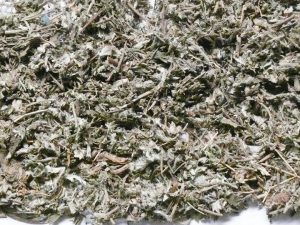
This product is oblong-cylindrical, slightly twisted, branched, of varying lengths, and 4–7 mm in diameter. The surface is purplish-red or purplish-brown, rough, with twisted longitudinal wrinkles; the nodes are slightly swollen and bear traces of lateral branches; the outer bark is thin and can be peeled off.The texture is brittle and breaks easily; the cross-section shows a purplish-red phloem and a yellowish-white or pale brown xylem with distinct vascular pores; the pith is loose and off-white.Segments are cylindrical in shape. The outer surface is purplish-red or purplish-brown; the cross-section shows a purplish-red phloem and a yellowish-white or pale brown xylem with distinct vascular pores; the pith is loose and off-white. It has a faint odor and a slightly bitter and astringent taste. Those with sturdy, uniform branches and a reddish-brown outer bark are considered superior.
Properties of Processed Slices
This product consists of cylindrical segments. The outer surface is purplish-red or purplish-brown. The cross-section shows a purplish-red phloem and a yellowish-white or pale brown xylem; the vessel pores are distinct, and the pith is loose and off-white. It has a faint odor and a slightly bitter and astringent taste.
Botanical Information
Botanical Classification
Polygonum multiflorum, a plant of the genus Polygonum in the Polygonaceae family.
Morphological Characteristics
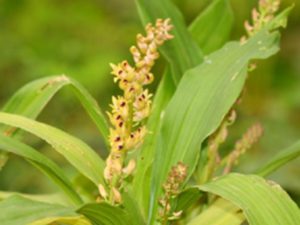
A perennial twining vine. The root is slender and elongated, ending in a swollen tuber; the outer surface is reddish-brown to dark brown. The base of the stem is slightly woody and hollow.Leaves are alternate; long-petiolate; stipule sheaths are membranous and brown; leaf blades are narrowly ovate or cordate, 4–8 cm long and 2.5–5 cm wide, with an acuminate apex and a cordate or sagittate base; margins are entire or slightly undulate; the upper surface is dark green, the lower surface is light green, and both surfaces are smooth and glabrous.Panicle inflorescence. Floral pedicels are jointed, with membranous bracts at the base; flowers are small, with a greenish-white perianth that is 5-lobed and of unequal size; the outer three lobes are winged on the back; there are 8 stamens of unequal length, shorter than the perianth; there is 1 pistil with a 3-lobed, capitate stigma.The achenes are elliptical, 3-angled, black, glossy, and enclosed by the persistent perianth, which bears three distinct wings. Flowering period: August–October; fruiting period: September–November.
Distribution Area
It is distributed in East China, Central and South China, as well as Hebei, Shanxi, Shaanxi, Gansu, Taiwan, Sichuan, Guizhou, and Yunnan.
Growth Habits
Prefers a warm, humid climate. Dislikes dry conditions and waterlogging; it is best cultivated in deep, loose, fertile, well-drained, humus-rich sandy loam. Clay soil is unsuitable for cultivation.
Propagation Methods
Propagated by seeds and cuttings.
Cultivation Techniques
1. Seed Propagation: Direct seeding is the primary method, though seedlings can also be raised and transplanted. Sow from early March to early April. Sow in rows with a row spacing of 30–35 cm. After applying manure or livestock slurry, sow the seeds evenly into the furrows and cover with 3 cm of soil. Thin the seedlings when they reach 5 cm in height, leaving a spacing of about 30 cm between plants.
2.Propagation by Cuttings: From early March to early April, select stems from vigorous, healthy plants free of pests and diseases. Cut them into cuttings approximately 25 cm long, each with 2–3 nodes. Plant the cuttings in rows spaced 30–35 cm apart, with plants spaced about 30 cm apart. Dig holes about 20 cm deep and place 2–3 cuttings in each hole; be sure not to insert them upside down. Cover with soil, press firmly, and apply manure or animal dung.
Pest and Disease Control
1. Diseases: Leaf spot. At the first sign of infection, spray with a 1:1:120 Bordeaux mixture once a week for 2–3 consecutive applications.
2. Pests: Aphids.