Gourd, a name in traditional Chinese medicine. It is the dried fruit peel of Lagenaria siceraria (Molina) Standl. var. depressa (Ser.) Hara, a plant of the genus Lagenaria in the Cucurbitaceae family. It is produced in most regions of China.This herb has a sweet taste and neutral nature; it enters the Lung, Spleen, and Kidney meridians. It promotes diuresis, reduces swelling, relieves dysuria, and alleviates jaundice. It is primarily used to treat edema, abdominal distension, dysuria, and jaundice.

Gourd
Gourd, a name in traditional Chinese medicine. It is the dried fruit peel of Lagenaria siceraria (Molina) Standl. var. depressa (Ser.) Hara, a plant of the genus Lagenaria in the Cucurbitaceae family. It is produced in most regions of China.This herb has a sweet taste and neutral nature; it enters the Lung, Spleen, and Kidney meridians. It promotes diuresis, reduces swelling, relieves dysuria, and alleviates jaundice. It is primarily used to treat edema, abdominal distension, dysuria, and jaundice.
Chinese Name : 葫芦
Aliases : Chouhu Lu, Hu Lu, Pu Lu
Authentic Producing Area : Produced in most regions of China
Nature, Flavor & Meridian Tropism : Sweet in taste, neutral in nature; enters the Lung, Spleen, and Kidney meridians
Benefits & Efficacy
Benefits
Promotes diuresis, reduces swelling, relieves dysuria, and alleviates jaundice.
Indications
Gourd is primarily used to treat edema, abdominal distension, dysuria, and jaundice.
Usage and Dosage
Internal use: Decoct and take 15–30 g. Double the dose for fresh specimens.
Precautions
Contraindicated for those with cold syndrome.
Chemical Constituents
It primarily contains glucose, xylans, and lignin.
Pharmacological Actions
This herb possesses hepatoprotective and antibacterial effects.
Relevant Discussions
1. *Herbal Materia Medica of Southern Yunnan*: “Relieves dysuria and clears heat from the heart and lungs.”
2. *Revised Materia Medica*: “Promotes diuresis; treats abdominal distension and jaundice.”
Applications
Related Compatibility
Gourd combined with Poria: Gourd excels at promoting urination and reducing swelling, while Poria excels at draining dampness and promoting diuresis. When used together, these two herbs enhance the effects of draining dampness, promoting diuresis, and reducing swelling. Used to treat facial and body edema, abdominal distension with edema, and difficulty urinating.
Medicinal Identification
Gourd and Winter Melon Rind: Both are diuretic and anti-edematous herbs, capable of promoting urination and reducing swelling, and are used for edema and difficulty urinating. However, gourd specializes in unblocking the urinary tract and reducing swelling, and its diuretic effect is superior to that of winter melon rind. It is used for abdominal edema, facial and facial swelling, and urinary disorders.Winter melon peel has a slightly cold nature and can clear heat, promote diuresis, and reduce swelling; it is particularly suitable for cases of edema accompanied by heat.
Related Prescriptions
Gourd and Glutinous Rice Wine Powder (from *Medical Records for the Common People*).
Notes
Patients requiring treatment with traditional Chinese medicine should first consult a licensed TCM hospital, where a TCM practitioner will conduct a professional pattern differentiation and issue a prescription.
Processing & Preparation
Harvesting & Processing
Harvest in the fall; crush the fruit to remove the pulp and seeds, then sun-dry it for use in its raw state. The best quality is dry, yellow in color, and free of mold.
Processing Methods
Take the gourd, remove the stem and seeds, wash it thoroughly, cut it into pieces, and dry it; alternatively, crush it after sun-drying.
Storage Methods
Store in a well-ventilated, dry place to prevent mold and insect infestation.
Crude Drug Identification
Properties of Crude Drugs
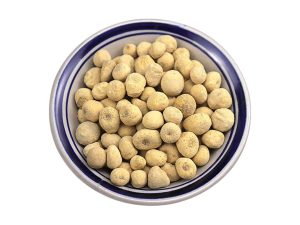
It is oblong-triangular in shape, 2–2.5 cm long and 0.8–1.2 cm wide. The apex is pointed, with a slightly oblique, depressed seed scar; the base is slightly concave. There is one distinct ridge on each side; the surface is yellowish-brown, with two pale yellowish-brown longitudinal ridges. The seed coat is hard and brittle; there are two cotyledons, which are white and oily.It has a faint odor and a bland taste.
Properties of Processed Slices
This product appears as irregular fragments or pieces. The outer surface is yellowish-brown to brownish-black and relatively smooth; the inner surface is yellowish-white to yellowish-brown, with a spongy white pulp. It is hard and brittle, breaks easily, and the fracture surface is yellowish-white to yellowish-brown and rough. It has a faint odor and a bland taste.
Botanical Information
Botanical Classification
Lagenaria sativa, a plant of the genus Lagenaria in the family Cucurbitaceae.
Morphological Characteristics
An annual climbing herb. The stems and branches are grooved and covered with long, sticky soft hairs, which gradually fall off as they age. The petioles are slender and hairy; the leaf blades are ovate-cordate or reniform-ovate, entire or 3–5-lobed, with 5–7 palmate veins, an acute apex, irregularly toothed margins, and a cordate base.Tendrils are slender, initially with fine soft hairs; the upper part is dichotomously branched. The plant is monoecious, with both female and male flowers solitary.Male flowers: Pedicel slender, slightly longer than the petiole; pedicel, calyx, and corolla all covered with fine soft hairs; calyx tube funnel-shaped, lobes lanceolate; corolla white, lobes corrugated, apically slightly notched with a small tip, 5-veined; stamens 3, filaments 3–4 mm long, anthers 8–10 mm long, oblong, anther chambers flexed.Female flowers: The pedicel is slightly shorter than or nearly equal in length to the petiole; the calyx and corolla are similar to those of the male flowers; the calyx tube is 2–3 mm long; the ovary is constricted in the middle and densely covered with long, viscous soft hairs; the style is short and stout; the stigma consists of three enlarged, bifid lobes.The fruit is dumbbell-shaped, constricted in the middle, with the lower and upper parts swollen; the upper part is smaller than the lower part. It is initially green, later turning white to yellowish, and the pericarp becomes woody upon maturity. The seeds are white, obovate or triangular, with a truncate or 2-toothed apex, rarely round, and about 20 mm long. Flowering occurs in summer, and fruiting in autumn.
Distribution Area
Gourds are distributed throughout tropical to temperate regions worldwide and are cultivated in all provinces (autonomous regions and municipalities) of China.