Tingli Seeds, a name in traditional Chinese medicine. These are the dried, mature seeds of the cruciferous plants Descurainia sophia (L.) Webb. ex Prantl. or Lepidium apetalum Willd.The former is commonly known as “Southern Tingli Seeds,” while the latter is commonly known as “Northern Tingli Seeds.” They have the therapeutic effects of clearing the lungs and relieving wheezing, as well as promoting diuresis and reducing swelling. They are primarily used to treat phlegm obstructing the lungs, wheezing and coughing with excessive phlegm, distension and fullness in the chest and flanks making it impossible to lie flat, edema of the chest and abdomen, and difficulty urinating.

Tingli Seeds
Tingli Seeds, a name in traditional Chinese medicine. These are the dried, mature seeds of the cruciferous plants Descurainia sophia (L.) Webb. ex Prantl. or Lepidium apetalum Willd.The former is commonly known as “Southern Tingli Seeds,” while the latter is commonly known as “Northern Tingli Seeds.” They have the therapeutic effects of clearing the lungs and relieving wheezing, as well as promoting diuresis and reducing swelling. They are primarily used to treat phlegm obstructing the lungs, wheezing and coughing with excessive phlegm, distension and fullness in the chest and flanks making it impossible to lie flat, edema of the chest and abdomen, and difficulty urinating.
Chinese Name : 葶苈子
Latin Name : Descurainiae Semen, Lepidii Semen
Aliases : Dingli, Dashi, Dashi
Authentic Producing Area : Hebei, Liaoning, Inner Mongolia, Jilin, Jiangsu, Shandong, Anhui, Zhejiang
Nature, Flavor & Meridian Tropism : Taste: bitter and pungent; nature: extremely cold; enters the Lung and Bladder meridians
Benefits & Efficacy
Benefits
Drains the lungs to relieve wheezing; promotes diuresis to reduce swelling.
Indications
Indicated for phlegm obstructing the lungs, wheezing and cough with copious phlegm, distension and fullness in the chest and flanks, inability to lie flat, edema of the chest and abdomen, and difficulty urinating.
Usage and Dosage
1. Internal use: Decocted as a soup, 3–9 g; or incorporated into pills or powders. 2. External use: Decoct an appropriate amount in water for washing, or grind into a powder and apply as a poultice. 3. Use raw to promote diuresis and reduce swelling; roast before use to treat phlegm-fluid retention with wheezing and cough; honey-roast before use for wheezing and cough due to lung deficiency with phlegm obstruction.
Precautions
1. Use with caution in cases of lung deficiency with wheezing and cough, or spleen deficiency with distension and fullness; prolonged use is not recommended. 2. Do not use in excessive doses when combined with antihypertensive drugs, diuretics, or cardiac glycosides.
Chemical Constituents
It primarily contains flavonoids (quercetin-3-O-β-D-glucose-7-O-β-D-gentiobioside,quercetin, etc.), essential oils (mustard oil, benzyl isothiocyanate, allyl isothiocyanate, diallyl disulfide, etc.), fatty acids (linoleic acid, linolenic acid, oleic acid, palmitic acid, stearic acid, and erucic acid, etc.), as well as alkaloids.
Pharmacological Actions
This product has antitussive, bronchodilatory, diuretic, anti-congestive heart failure, and antitumor effects.
Relevant Discussions
1. *Shennong Bencao Jing*: “It treats masses, accumulations, and stagnant qi; regulates dietary imbalances and fever; breaks up hard masses and expels pathogens; and promotes urination.”
2. *Mingyi Bielu*: “It drains bladder fluid, subdues retained heat, expels pathogenic dampness from the skin, and alleviates facial and ocular edema. It treats sudden onset of wind-heat rashes and itching, and relieves lower abdominal discomfort.”
Applications
Clinical Applications
1. To treat excessive phlegm and saliva accumulation, with shortness of breath preventing the patient from lying flat, it is often combined with jujube to moderate its nature, as in the *Tingli-Jujube Decoction for Draining the Lungs* (*Essentials of the Golden Cabinet*). It is also frequently combined with perilla seeds, white mulberry bark, and apricot kernels.
2. To treat abdominal distension and edema caused by stagnation of damp-heat, it is combined with Fangji, Jiaomu, and Da Huang to form the Ji-Jiao-Li-Huang Pills (from *Essentials of the Golden Cabinet*).
3. To treat chest constriction, pleural effusion, and abdominal distension and edema, it is combined with Apricot Kernel, Da Huang, and Mangxiao to form the Da Xianxiong Pills (from *Treatise on Cold Damage*).
Related Compatibility
1. Tingli Seeds combined with White Mustard Seeds: Tingli Seeds are bitter and cold in nature with a descending action; they specifically drain fluid retention and phlegm-fire from the lungs to relieve wheezing and cough. White Mustard Seeds are pungent and warm in nature with a dispersing action; they excel at warming the lungs, dispelling cold, transforming phlegm, and regulating qi. When used together—one cold and one warm—these two herbs work synergistically to drain the lungs, transform phlegm, and relieve cough and wheezing.This combination is indicated for cough, wheezing, and chest fullness caused by heat-phlegm obstructing the lungs and impaired lung function, characterized by yellow, sticky phlegm.
2. Tingli Zi combined with Zisu Zi: Tingli Zi is bitter, cold, and descending in nature; it specifically drains fluid retention and phlegm-fire from the lungs to relieve wheezing and cough. Zisu Zi is pungent, warm, and primarily descending in nature; it excels at descending lung qi and resolving phlegm and mucus.When used together—one cold and one warm—these two herbs enhance the effects of descending qi, resolving phlegm, and relieving wheezing. Indicated for cough, wheezing, and chest fullness caused by heat-phlegm obstructing the lungs and impaired descent and dispersion of lung qi, accompanied by yellow, sticky phlegm.
3. Capsella sativa Seed Combined with Stephania Root: Capsella sativa Seed is bitter, cold, and descending in nature; it both drains the lungs to relieve wheezing and promotes diuresis to reduce swelling;Fangji is bitter, cold, and descending in nature; it not only dispels wind and relieves pain but also promotes diuresis and reduces swelling. When combined, the diuretic and anti-edematous effects of both herbs are enhanced. This combination is suitable for cases of ascites and abdominal distension caused by the obstruction of damp-heat.
4. Tingli Zi combined with Da Huang: Tingli Zi is bitter, cold, and descending in nature; it not only drains the lungs and relieves wheezing but also promotes diuresis and reduces swelling;Rhubarb (Da Huang), which is bitter, cold, and descending, not only acts as a purgative to relieve constipation but is also effective at expelling damp-heat from the body. When combined, these two herbs enhance the bitter, cold, descending, and purgative effects, expelling phlegm-turbidity and damp-heat pathogens from the body. This combination is suitable for conditions such as constricted chest (jie xiong), pleural effusion, and abdominal distension and edema caused by damp-heat.
Medicinal Identification
1. Tingli Seeds and Mulberry Bark: Both can clear heat from the lungs and relieve wheezing, as well as promote diuresis and reduce swelling. They are both used to treat lung heat, fluid retention in the lungs, phlegm-fluid accumulation with cough and wheezing, and edema, and are often used in combination.However, Tingli Zi is bitter, pungent, and extremely cold, with a potent and vigorous nature. It focuses on draining fluid retention and phlegm from the lungs and is particularly suitable for patients with severe pathogenic factors causing wheezing and chest fullness that prevents lying down. Its diuretic effect is even stronger, making it effective for treating abdominal distension and fluid accumulation in the chest and abdomen;Mulberry Bark (Sangbai Pi) is sweet and cold in nature, with a milder pharmacological action; it excels at clearing lung heat and subduing lung fire, and is frequently used for lung-heat-induced wheezing and cough, yellow phlegm, and skin edema.
2. Tingli Seeds and Ephedra: Both can relieve wheezing, promote diuresis, and reduce swelling, and are effective for treating symptoms of wheezing, cough, and edema.However, Lepidium Seed is bitter and cold in nature, with a downward-draining action; it has a potent effect in draining the lungs and promoting diuresis, making it suitable for wheezing, coughing, and swelling caused by excessive phlegm and fluid retention, as well as difficulty urinating. Ephedra, on the other hand, is pungent and warm in nature with dispersing properties; it excels at promoting lung function and relieving wheezing, as well as promoting diuresis and reducing swelling. It is suitable for coughing, wheezing, and a sensation of fullness caused by external wind-cold obstruction, as well as wind-water syndrome resulting from impaired lung qi dispersion.
Related Medicines
Tingbei Capsules, Moisten-the-Lung-and-Resolve-Phlegm Pills (Jiming Pills), Descend-Qi-and-Relieve-Wheezing Pills, Tingli Lipid-Lowering Tablets, and Clear-Heat-and-Suppress-Cough Syrup.
Related Prescriptions
Tingli-Jujube Decoction for Draining the Lungs (from *Essentials of the Golden Cabinet*), Ji-Jiao-Li-Huang Pills (from *Essentials of the Golden Cabinet*), Da Xianxiong Pills (from *Treatise on Cold Damage*), Bi Xiao Powder (from *Ren Zhai’s Direct Pointers on Formulas*), and Huagai Powder (from *Comprehensive Record of Holy Remedies*).
Notes
Patients requiring treatment with traditional Chinese medicine should first consult a licensed TCM hospital, where a TCM practitioner will conduct a professional pattern differentiation and issue a prescription.
Processing & Preparation
Harvesting & Processing
Harvest the plants when the fruits ripen in summer, sun-dry them, rub out the seeds, and remove impurities.
Processing Methods
1. Raw Tingli Seeds: Take the raw herbal material, remove impurities, and sift out ash and debris (since they become sticky when exposed to water, they should not be washed with water).
2. Roasted Tingli Seeds: Place the cleaned Tingli seeds in a pan, heat over low heat, and roast until they swell slightly and release a fragrant aroma; remove and allow to cool.
3. Honey-coated Tengli Seeds: Take the cleaned Tengli seeds and stir-fry them with refined honey until the honey is fully absorbed, or mix them with refined honey and a small amount of water, stirring until they no longer stick to your hands. Use 15–30 kg of refined honey per 100 kg of Tengli seeds.
Storage Methods
Store in a dry, airtight container in a cool, well-ventilated, dry place to prevent insect infestation.
Crude Drug Identification
Identification
1. Physicochemical Identification
(1) Take a small amount of this product, soak it in water, and observe it under a magnifying glass. Southern Plantain Seeds have a thin, transparent mucilage layer, with a thickness of less than 1/5 of the seed’s width. Northern Plantain Seeds have a thicker, transparent mucilage layer, with a thickness that may exceed 1/2 of the seed’s width.
(2) Southern Plantain Seeds: Take 1 g of the powdered sample, add 20 mL of 70% methanol, heat and reflux for 1 hour, filter, and use the filtrate as the test solution.Separately, take a reference standard of quercetin-3-O-β-D-glucose-7-O-β-D-gentiobioside, dissolve it in 30% methanol to prepare a solution containing 90 μg per mL, and use this as the reference solution.Perform the test according to the thin-layer chromatography method (General Chapter 0502). Pipette 1 μL of each of the two solutions and apply them separately onto the same polyamide membrane. Develop with a mobile phase of ethyl acetate–methanol–water (7:2:1), remove the membrane, allow it to air-dry,spray with a 2% aluminum trichloride solution in ethanol, dry with hot air, and examine under ultraviolet light (365 nm). In the chromatogram of the test sample, yellow fluorescent spots corresponding to those in the reference standard chromatogram appear at the same positions.
2. Microscopic Identification
(1) Semen Lepidium: The powder is yellowish-brown.The outer epidermal cells of the seed coat are mucilage cells; in cross-section, they are roughly square, with thickened inner walls extending outward to form cellulose columns 8–18 μm long, with blunt, rounded, oblique, or flat-cut tips, and visible mucilaginous striations around them. The inner epidermal cells of the seed coat are yellow; in surface view, they are oblong-polygonal, 15–42 μm in diameter, with cell walls 5–8 μm thick.
(2) Northern Plantain Seed: The outer epidermal cells of the seed coat appear slightly rectangular in cross-section, with relatively long cellulose columns measuring 24–34 μm in length; the inner epidermal cells of the seed coat appear rectangular-polygonal or square-like when viewed from the surface.
Properties of Crude Drugs
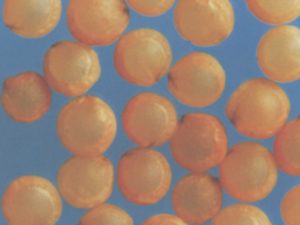
1. Southern Plantain Seed: Oblong and slightly flattened, approximately 0.8–1.2 mm long and 0.5 mm wide. The surface is brown or reddish-brown with a slight sheen, bearing two longitudinal grooves, one of which is more prominent. One end is bluntly rounded, while the other is slightly concave or relatively flat and truncated; the hilum is whitish and located at the concave end or the flat, truncated end.It has a faint odor, a slightly pungent and bitter taste, and is slightly sticky.
2. Northern Plantain Seeds: Flat-ovate in shape, 1–1.5 mm long and 0.5–1 mm wide. One end is bluntly rounded, while the other is pointed and slightly concave; the seed scar is located at the concave end. They have a slightly pungent taste and are more sticky.
Properties of Processed Slices
1. Tingli Seeds: See the “Characteristics of the Medicinal Material” section.
2. Roasted Tingli Seeds: Resemble Tingli Seeds, but are slightly swollen, occasionally with cracks from bursting; the surface color is darker, with an oily aroma and no stickiness.
3. Honey-Coated Tingli Seeds: Resemble Tingli Seeds, feel slightly sticky to the touch, and have a slightly sweet taste.
Botanical Information
Botanical Classification
A plant of the Brassicaceae family, specifically Polygonum aviculare or Polygonum repens.
Morphological Characteristics
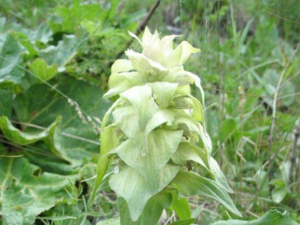
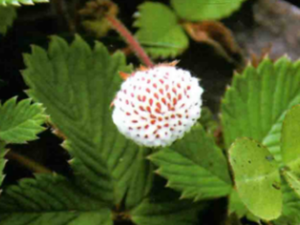
1. Solanum solanum: An annual or biennial herb, 5–30 cm tall. The stem is erect or branched profusely from the base, covered with minute white capitate hairs. Basal leaves are petiolate, with petioles 1–2 cm long;leaf blades are narrowly spatulate or oblanceolate, once pinnately shallowly or deeply lobed, 3–5 cm long, 1–1.5 cm wide, with a short acute apex, sparsely notched-serrate margins, and a gradually narrowing base; cauline leaves are lanceolate or oblong, with mid-stem leaves 1.5–2 cm long and 2–5 mm wide, slightly wider at the base, sessile, clasping the stem, and with sparsely toothed margins;the uppermost leaves are linear, with an acute apex and margins rarely sparsely toothed or nearly entire; both surfaces are glabrous or sparsely covered with capitate hairs. The raceme is terminal and may extend to 5 cm in length during fruiting;Flowers are small and sparsely arranged; sepals 4, nearly ovate, with white membranous margins, the outer surface bearing curved white soft hairs; petals absent or reduced to filamentous structures, shorter than the sepals; stamens 2 or 4, of equal length; nectaries 4, small and short; pistil 1, ovate-round and flattened, without a style, stigma round and flattened.The short silique is ovoid or elliptical, 2–3 mm long, flattened, with a slightly concave apex; it bears a very short persistent pedicel, and the fruit valves have very narrow wings at the apex; the false septum is less than 1 mm wide. The seeds are elliptic-ovoid, with a smooth surface, and are brownish-red or yellowish-brown. Flowering occurs from May to June; fruiting occurs from June to July.
2. Sowing Wormwood: An annual or biennial herb, 20–80 cm tall. The entire plant is grayish-white. The stem is erect, branched in the upper part, with longitudinal grooves, and densely covered with branched, short, soft hairs.Leaves are oblong or oblong-lanceolate in outline, 3–7 cm long and 1–4 cm wide, twice or thrice pinnately compound or deeply lobed; terminal lobes are linear or linear-oblong, 2–5 mm long, with a blunt apex, entire margins, and covered on both surfaces with branched short soft hairs; lower stem leaves have petioles, while those higher up have gradually shorter petioles or are nearly sessile.The inflorescence is a terminal raceme bearing numerous flowers; the calyx has 4 sepals, linear-oblong, with a blunt apex, approximately 2 mm long, membranous margins, and branched fine pubescence on the abaxial surface;petals are yellow, spatulate, and nearly as long as the sepals; stamens number 6, nearly as long as the petals, with a claw at the base; the pistil is single, with a cylindrical ovary, a short style, and a flattened, compressed capitate stigma.The silique is cylindrical, 2.5–3 cm long, glabrous, slightly incurved, not in a straight line with the fruit stalk, and has a prominent midvein. Seeds are arranged in a single row per locule; they are small, mostly round, slightly flattened, pale reddish-brown, with a fine reticulate pattern on the surface, and exude a sticky substance when moist. Flowering and fruiting occur from April to July.
Distribution Area
1. Solanum solanum: Distributed in Northeast, North, Northwest, East, and Southwest China. 2. Artemisia argyi: Distributed in Northeast, North, Northwest, East, and Southwest China.
Growth Habits
Prefers a warm, humid, and sunny environment; best cultivated on sloping land with fertile, loose, and well-drained soil.
Propagation Methods
Propagated by seed.
Cultivation Techniques
Sow before late September, planting in holes spaced 40 cm × 20 cm apart in rows. From November to December, thin and replant seedlings while weeding, leaving 4–5 strong seedlings per hole. In February of the following year, apply a top-dressing of human urine once while cultivating and weeding.
Pest and Disease Control
For sclerotium rot, soak seeds in a 5% saline solution for 20 minutes before sowing, or douse the planting holes with a 5% lime solution.