Anisodus luridus, a name in traditional Chinese medicine. It refers to the root of the plant Anisodus luridus Link. ex Totto (Solanaceae). Distributed in Tibet, Qinghai, and Sichuan. It has the effects of relieving spasms, promoting blood circulation, and alleviating pain. It is commonly used for epigastric pain, biliary colic, and abdominal pain.

Anisodus luridus
Anisodus luridus, a name in traditional Chinese medicine. It refers to the root of the plant Anisodus luridus Link. ex Totto (Solanaceae). Distributed in Tibet, Qinghai, and Sichuan. It has the effects of relieving spasms, promoting blood circulation, and alleviating pain. It is commonly used for epigastric pain, biliary colic, and abdominal pain.
Chinese Name : 赛莨菪
Latin Name : Anisodus luridus Linketotto.
Aliases : Mountain Belladonna, Tangut Belladonna
Authentic Producing Area : Tibet, Qinghai, Sichuan
Nature, Flavor & Meridian Tropism : Bitter in taste, warm in nature; enters the Stomach Meridian
Benefits & Efficacy
Benefits
Relieves spasms, promotes blood circulation, and alleviates pain.
Indications
Epigastric pain, biliary colic, abdominal pain.
Usage and Dosage
Internal use: Decoction, 0.3–0.9 grams.
Precautions
Contraindicated for patients with heart disease or cardiac weakness.
Relevant Discussions
*Commonly Used Tibetan Herbal Medicines*: “Bitter, warm, highly toxic.” “Relieves spasms and alleviates pain. Treats stomach pain, biliary colic, and acute and chronic gastroenteritis.” “Contraindicated for patients with heart disease or cardiac weakness.” “In cases of poisoning from an overdose of Saigaihu—manifesting as dry mouth and tongue, flushed cheeks, rapid heartbeat, dilated pupils, and coma—gastric lavage must be performed early, followed by administration of the supernatant of Huangshang or cold, thin congee. Concurrently, inject mao guo yunxiangjian, administer intravenous fluids, and provide other symptomatic treatments.”
Applications
Notes
In cases of Scopolus overdosage presenting with symptoms of poisoning such as dry mouth and tongue, flushed cheeks, rapid heartbeat, dilated pupils, and coma, early gastric lavage must be performed, followed by the administration of a clarified yellow earth solution or cold, thin congee. Concurrently, inject pilocarpine, administer intravenous fluids, and provide other symptomatic treatments.
Processing & Preparation
Harvesting & Processing
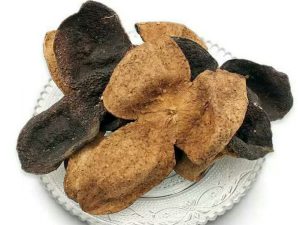
Dig up the roots from September to November, wash them thoroughly, slice them, and sun-dry them.
Crude Drug Identification
Botanical Information
Botanical Classification
Solanum nigrum, a plant of the Solanaceae family.
Morphological Characteristics
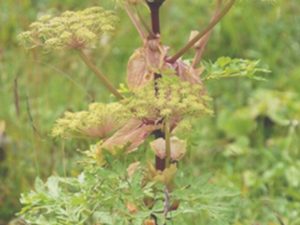
A perennial herb, 60–150 cm tall. The roots are stout and swollen. The stem is robust and heavily branched toward the top.Leaves are alternate and petiolate; leaf blades are ovate to oblong-elliptic, entire or wavy-margined, light green above and gray-green below. Flowers are solitary in leaf axils and pendulous; the calyx is bell-shaped and enlarges at fruiting, bearing 10 extremely robust longitudinal ribs; the corolla is bell-shaped and purple. The capsule is nearly spherical and enclosed by the persistent calyx. Seeds are numerous.
Distribution Area
Distributed in Tibet, Qinghai, and Sichuan.