Bitter Nightshade, a name in traditional Chinese medicine. It is the whole plant of Solanum dulcamara L., a member of the Solanaceae family. It is distributed in Sichuan and Yunnan. It has the effects of dispelling wind and dampness, clearing heat, and detoxifying. It is commonly used for rheumatic pain, tetanus, boils, malignant sores, scabies, and bleeding from external injuries.

Bitter Eggplant
Bitter Nightshade, a name in traditional Chinese medicine. It is the whole plant of Solanum dulcamara L., a member of the Solanaceae family. It is distributed in Sichuan and Yunnan. It has the effects of dispelling wind and dampness, clearing heat, and detoxifying. It is commonly used for rheumatic pain, tetanus, boils, malignant sores, scabies, and bleeding from external injuries.
Chinese Name : 苦茄
Aliases : Thousand-Year-Unrotting Heart, Tianpao Grass, Hairy Monk Grass, Shu Yangquan, Wind-Dispelling Vine, Hairy Scholar, White-Haired Vine, Liujia Grass, Hairy Vine Seed
Authentic Producing Area : Sichuan, Yunnan
Nature, Flavor & Meridian Tropism : Bitter and pungent in taste; cold in nature; enters the Liver, Stomach, and Lung meridians
Benefits & Efficacy
Benefits
Dispels wind and dampness; clears heat and detoxifies.
Indications
Rheumatic pain, tetanus, abscesses, malignant sores, scabies, and bleeding from external injuries.
Usage and Dosage
Internal use: Decoct 15–30 g. External use: Apply an appropriate amount of fresh, crushed leaves as a poultice; or grind the whole herb into a powder and sprinkle it on the affected area.
Precautions
Use with caution in cases of spleen and stomach deficiency-cold.
Pharmacological Actions
Antibacterial activity.
Relevant Discussions
1. *Guizhou Herbal Medicine*: “Dispels wind, removes dampness, clears heat, subdues wind, and detoxifies.”
2. *Compendium of Chinese Herbal Medicine*: “Clears heat and detoxifies. Primarily used to treat malignant sores, scabies, esophageal cancer, uterine cancer, breast cancer, and bleeding from external injuries.”
Applications
Related Compatibility
1. For rheumatic and overwork-related injuries: 90 g of Pai Feng Teng, steeped in 500 g of wine, then taken orally. (*Medicinal Herbs of Guizhou*)
2. For hemiplegia: 60–120 g of Pai Feng Teng, boiled in water to wash the entire body; alternatively, grind Pai Feng Teng leaves into a powder and take 3 g at a time with wine. (*Medicinal Herbs of Guizhou*)
Notes
The fruit is also used medicinally.
Processing & Preparation
Harvesting & Processing
Harvest the whole plant in summer or fall; use fresh or sun-dry.
Crude Drug Identification
Properties of Crude Drugs
The stem is cylindrical, 1–1.2 cm long, and 2–7 mm in diameter; the surface is yellowish-green or brownish-green, covered with sparse, short soft hairs; it is hard and brittle, breaks easily, and has a fibrous cross-section; the middle and upper parts are often hollow.Leaves are alternate, with petioles 1–2 cm long; leaf blades are wrinkled and curled, but when flattened, they are ovate-elliptic or lyre-shaped, 3–7.5 cm long and 1.5–4 cm wide, toothed or deeply pinnately lobed into 3–5 segments, or entire; lobes have wavy teeth or are shallowly lobed; both surfaces are sparsely covered with short soft hairs. The fruit is yellowish-green or dark red and contains numerous seeds.Slight odor; bitter taste.
Sturdy specimens with green leaves are preferred.
Botanical Information
Botanical Classification
A plant of the Solanaceae family, European white nightshade.
Morphological Characteristics
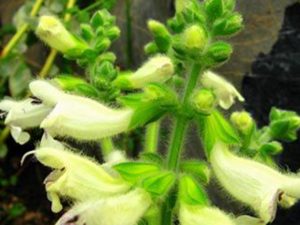
A thornless herbaceous vine, glabrous or sparsely covered with short soft hairs; twigs gray-green when dry, with fine striations.Leaves are lanceolate, 3–7.5 cm long, 1.5–4 cm wide, with an acuminate apex and a lanceolate base; they are dentate or deeply pinnately lobed into 3–5 lobes, with the central lobe being longer; the margins of the lobes are sometimes irregularly wavy-toothed or shallowly lobed; both surfaces are sparsely covered with short soft hairs; the midrib is prominent, and there are 4–7 slender lateral veins on each side; the petiole is about 1–2 cm long.Cymes are axillary, multi-flowered; the peduncle is about 1–2 cm long; pedicels are about 0.8–1 cm long and sparsely covered with short soft hairs; the calyx is cup-shaped, about 2.5 mm in diameter, 5-lobed, with triangular lobes that are blunt at the tips;The corolla is purple, about 1 cm in diameter; the corolla tube is concealed within the calyx and less than 1 mm long; the corolla lobes are about 6.5 mm long, 5-lobed, with elliptic-lanceolate lobes about 5 mm long; the filaments are short, about 0.5 mm long; the anthers are about 2.5 mm long, with apical pores slightly inward-facing;The ovary is ovate, about 1 mm in diameter; the style is slender and filiform, about 5.5 mm long; the stigma is small and capitate. The berry is globose or ovoid, about 6–8 mm in diameter, turning red when ripe; the seeds are flat, nearly circular, and about 1.5–2 mm in diameter. Flowering occurs in summer, and fruiting in fall.
Distribution Area
Sichuan, Yunnan.