Lengshuihua, a name in traditional Chinese medicine. It refers to the whole plant of Pileanotata C.H. Wright, a member of the Urticaceae family.It is distributed in Central and South China, as well as in Shaanxi, Gansu, Jiangsu, Anhui, Zhejiang, Jiangxi, Fujian, Taiwan, Sichuan, and Guizhou. It has the effects of clearing heat and draining dampness, relieving jaundice, reducing swelling and dispersing nodules, and strengthening the spleen and harmonizing the stomach. It is commonly used for damp-heat jaundice, red and white vaginal discharge, turbid urine, hematuria, summer heat in children, malaria, indigestion, contusions and bruises, and traumatic infections.

Coldwater Flower
Lengshuihua, a name in traditional Chinese medicine. It refers to the whole plant of Pileanotata C.H. Wright, a member of the Urticaceae family.It is distributed in Central and South China, as well as in Shaanxi, Gansu, Jiangsu, Anhui, Zhejiang, Jiangxi, Fujian, Taiwan, Sichuan, and Guizhou. It has the effects of clearing heat and draining dampness, relieving jaundice, reducing swelling and dispersing nodules, and strengthening the spleen and harmonizing the stomach. It is commonly used for damp-heat jaundice, red and white vaginal discharge, turbid urine, hematuria, summer heat in children, malaria, indigestion, contusions and bruises, and traumatic infections.
Chinese Name : 冷水花
Aliases : Water Hemp Leaf, Wild Licorice, Goat’s Blood, White Goat, Sweet Grass.
Nature, Flavor & Meridian Tropism : Taste: bland with a slight bitterness; nature: cool. Enters the Liver and Gallbladder meridians.
Benefits & Efficacy
Benefits
Clears heat and drains dampness; alleviates jaundice; reduces swelling and disperses nodules; strengthens the spleen and harmonizes the stomach.
Indications
Damp-heat jaundice; red and white vaginal discharge; turbid urine; hematuria; summer heat in children; malaria in pregnant women; indigestion; contusions and bruises; and infected wounds.
Usage and Dosage
Internal use: Decoct 15–30 g; or steep in wine. External use: Apply an appropriate amount, pounded into a paste.
Precautions
Use with caution during pregnancy. *Folk Medicines of Guizhou*: “Contraindicated for pregnant women.”
Relevant Discussions
1. *Compendium of Chinese Herbal Medicines*: “Treats jaundice and pulmonary tuberculosis.”
2. *Fujian Materia Medica*: “Dissolves nodules and reduces swelling. Primarily used to treat malaria, contusions and bruises, and infected wounds.”
Applications
Related Compatibility
1. For jaundice with generalized yellowing of the skin: 9 g of fresh wild licorice, 15 g of willow, 9 g of fresh gardenia, 9 g of yellow-spined thorn root, 7.5 g of liquidambar root, and a small amount of brown sugar. Decoct in water and take twice daily. (《Folk Medicines of Guizhou》)
2. For acute jaundice-type hepatitis: 30 g of the whole Coldwater Flower plant, 30 g of Tianji Huang, and 30 g of Yellow-haired Ear Grass. Decoct in water and take orally. (*Hunan Materia Medica*)
Notes
Through research on the botanical origin and identification characteristics of Lengshuihua in the Miao ethnic group’s time-tested formula, Yiganle Granules, this study provides a basis for establishing quality standards and promoting the development and utilization of Lengshuihua, a commonly used medicinal herb among the Miao people in Guizhou.
Processing & Preparation
Harvesting & Processing
Harvest in summer or fall; use fresh or sun-dried.
Crude Drug Identification
Botanical Information
Botanical Classification
Coldwater Flower, a plant of the Urticaceae family.
Morphological Characteristics
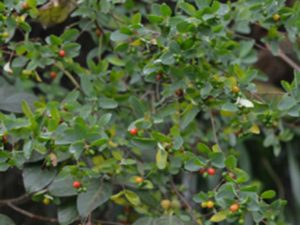
Coldwater Flower, also known as Long-stalked Coldwater Hemp. A perennial herb with creeping stems. The stems are fleshy, slender, slightly swollen in the middle, 25–70 cm tall, 2–4 mm thick, glabrous, rarely with short soft hairs on the upper part, and densely covered with linear stalactites.Leaves are papery; opposite pairs are nearly equal in size, narrow-ovate, ovate-lanceolate, or ovate, 4–11 cm long, 1.5–4.5 cm wide, with a caudate-acuminate or acuminate apex, a rounded base (rarely broadly cuneate), and margins with shallow teeth from the base to the apex (rarely double-toothed). The upper surface is dark green and glossy,the underside is pale green; the striated stalactites are 0.5–0.6 mm long, densely distributed on both surfaces and conspicuous; there are three basal veins, of which the two lateral ones are arcuate, extending upward to form a ring with the lateral veins; there are 8–13 pairs of lateral veins, slightly obliquely spreading to form a reticulate venation;The petiole is slender, 17 cm long, usually glabrous, rarely with short soft hairs; the stipules are large, greenish, oblong, 8–12 mm long, and deciduous. The plant is dioecious; the male inflorescence is a cymose raceme, 2–5 cm long, with few branches, and corymbs sparsely arranged on the flower branches; the female cymose inflorescence is shorter and denser.Male flowers are pedicellate or nearly sessile, approximately 1 mm long when in bud; perianth segments are greenish-yellow, deeply 4-lobed, ovate-oblong, with an acute apex, and bearing short, horn-like projections on the outer surface near the apex; stamens are 4, with white or pinkish anthers, and red filaments and connectives; the rudimentary pistil is small and conical.The achenes are small, ovoid, oblique at the apex, nearly 0.8 mm long, greenish-brown when ripe, and bear distinct spiny papillae; the persistent perianth segments are deeply 3-lobed, equal in size, ovate-oblong, blunt at the apex, and extending to about one-third of the fruit’s length. Flowering occurs from June to September, and fruiting from September to November.
Distribution Area
It is distributed in Central and South China, as well as in Shaanxi, Gansu, Jiangsu, Anhui, Zhejiang, Jiangxi, Fujian, Taiwan, Sichuan, and Guizhou.