Alpine Aster, a name in traditional Chinese medicine. It refers to the whole plant of Aster alpinus L., a member of the Asteraceae family. It is distributed in Northeast China, North China, and Xinjiang, among other regions. It has the efficacy of clearing heat and detoxifying, and is used to treat wind-heat headaches and conjunctivitis.
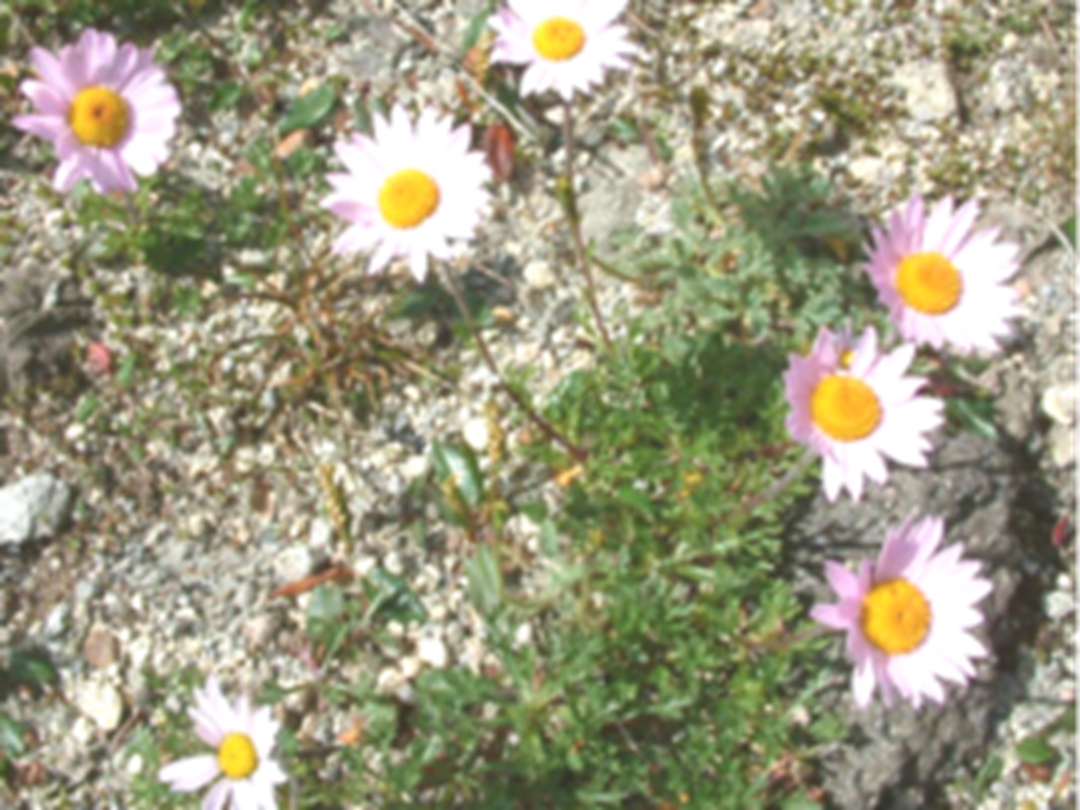
Alpine Aster
Alpine Aster, a name in traditional Chinese medicine. It refers to the whole plant of Aster alpinus L., a member of the Asteraceae family. It is distributed in Northeast China, North China, and Xinjiang, among other regions. It has the efficacy of clearing heat and detoxifying, and is used to treat wind-heat headaches and conjunctivitis.
Chinese Name : 高山紫菀
Latin Name : https://image.dayi.org.cn/public/uploads/20180627/f3dfb1a1595e655d443ba63847355c12.jpgAster alpinus
Authentic Producing Area : Northeast China, North China, and Xinjiang
Nature, Flavor & Meridian Tropism : Slightly bitter in taste, cold in nature; enters the Lung meridian
Benefits & Efficacy
Benefits
Clears heat and eliminates toxins.
Indications
Used for wind-heat headaches and conjunctivitis.
Usage and Dosage
Internal use: Decoction, 3–10 g.
Precautions
Not yet established.
Relevant Discussions
*Compendium of Medicinal Plants of Changbai Mountain*: “The aerial parts can be used to treat lymph node tuberculosis, eczema, cough, and joint pain. The flowers can treat gastrointestinal disorders and certain skin diseases.”
Applications
Processing & Preparation
Harvesting & Processing
Harvest the whole plant in July–August, cut into sections, and sun-dry.
Crude Drug Identification
Botanical Information
Botanical Classification
A plant of the Asteraceae family, Alpine Aster.
Morphological Characteristics
Alpine Aster, a perennial herb, 10–35 cm tall. The rhizome is stout, with tufted stems and rosette-like clusters of leaves. The stem is erect and unbranched, covered with fragments of withered leaves at the base and bearing dense or sparse hairs; the lower part bears dense leaves.Lower leaves are spatulate or linear-oblong, 1–10 cm long and 0.4–1.5 cm wide, with rounded or slightly pointed tips; they taper gradually at the base into winged petioles and are entire; middle leaves are oblong-lanceolate or nearly linear, tapering gradually toward the base, and sessile; upper leaves are small and narrow; all leaves are pubescent or bear a few glandular dots; the midrib and ternate veins are slightly raised on the underside.A solitary capitulum is borne at the stem apex. The involucre is hemispherical; the involucral bracts are arranged in 2–3 layers, with the outer layer entirely herbaceous and the inner layer membranous at the margins, often purplish-red, and densely or sparsely pubescent. There are 35–40 ray florets, with ligules that are purple, blue, or pale red; the corollas of the disk florets are yellow, with lobes approximately 1 mm long;the style appendage is 0.5–0.6 mm long. The pappus is white, with a few very short, external bristles. The achenes are oblong, narrower at the base, brown, and densely covered with silky hairs. Flowering occurs from June to August; fruiting occurs from July to September.
Distribution Area
Distributed in Northeast China, North China, and Xinjiang, among other regions.