Boshouguan is the name of a traditional Chinese medicine. It is the dried fruit of Citrus medica L. var. sarcodactylis Swingle, a plant of the Rutaceae family.This herb has a pungent, bitter, and sour taste; it is warm in nature and enters the Liver, Spleen, Stomach, and Lung meridians. It has the effects of regulating Liver Qi, harmonizing the stomach and relieving pain, and drying dampness to transform phlegm. It is primarily used to treat Liver-Stomach Qi stagnation, distending pain in the chest and flanks, epigastric fullness and distension, poor appetite and vomiting, and cough with excessive phlegm.

Buddha’s Hand
Boshouguan is the name of a traditional Chinese medicine. It is the dried fruit of Citrus medica L. var. sarcodactylis Swingle, a plant of the Rutaceae family.This herb has a pungent, bitter, and sour taste; it is warm in nature and enters the Liver, Spleen, Stomach, and Lung meridians. It has the effects of regulating Liver Qi, harmonizing the stomach and relieving pain, and drying dampness to transform phlegm. It is primarily used to treat Liver-Stomach Qi stagnation, distending pain in the chest and flanks, epigastric fullness and distension, poor appetite and vomiting, and cough with excessive phlegm.
Chinese Name : 佛手柑
Aliases : Buddha’s Hand, Buddha’s Hand Citron, Honey Mandarin, Five-Finger Citrus, Longevity Mandarin, Hand Mandarin
Authentic Producing Area : Guangdong, Fujian, Yunnan, Sichuan
Nature, Flavor & Meridian Tropism : Taste: pungent, bitter, and sour; nature: warm; enters the Liver, Spleen, Stomach, and Lung meridians
Benefits & Efficacy
Benefits
Regulates the liver and promotes the flow of qi; harmonizes the stomach and relieves pain; dries dampness and transforms phlegm.
Indications
Mainly used for liver-stomach qi stagnation, distending pain in the chest and flanks, epigastric fullness and distension, poor appetite and vomiting, and cough with excessive phlegm.
Usage and Dosage
Internal use: Decocted as a soup, 3–10 g; or steeped as tea, or incorporated into pills or powders.
Precautions
Patients requiring treatment with Chinese herbal medicine should first consult a licensed Traditional Chinese Medicine (TCM) hospital, where a TCM practitioner will conduct a professional pattern differentiation and prescribe an herbal formula.
Chemical Constituents
Buddha’s Hand contains essential oils, flavonoids, polysaccharides, and coumarin compounds. Major constituents include buddhadendrene, limonene, naringin, and bucillin (dioemin), among others.
Pharmacological Actions
This herb has effects such as regulating gastrointestinal motility, anti-inflammatory action, relieving asthma, expectorant action, and antidepressant effects.
Relevant Discussions
1. *Herbal Materia Medica of Southern Yunnan*: Nourishes the liver and warms the stomach; stops vomiting; eliminates cold phlegm in the stomach; treats stomach pain caused by qi stagnation; relieves cold pain in the face; harmonizes the middle burner and promotes qi circulation.
2. *Compendium of Materia Medica*: Boiled with wine and drunk to treat phlegm-induced cough; decocted as a soup to treat epigastric pain caused by qi stagnation.
3. *Benjing Fengyuan*: Specifically dispels stagnant qi. Treats tenesmus following dysentery; use aged specimens for this purpose.
4. *Bencao Zaixin*: Regulates qi and soothes the liver, harmonizes the stomach and resolves phlegm, breaks up stagnation, treats dysphagia and regurgitation, and eliminates masses, masses, and scrofula.
5. *Dietary Spectrum of Suixi Ju*: Revitalizes the stomach, dispels phlegm, wards off foul odors, relieves hangovers, aids digestion, and alleviates pain.
6. *Revised Materia Medica*: Regulates qi in the Upper Jiao to stop vomiting; promotes the absorption of food in the Middle Jiao to strengthen the spleen.
Applications
Clinical Applications
1. For symptoms such as chest and abdominal distension and pain: This herb has a fresh, fragrant aroma and a mild nature. Although it is classified as pungent, bitter, and warm, it lacks the drying and harsh side effects often associated with such properties. It enters the Lung, Liver, Spleen, and Stomach meridians and can be used to treat various forms of qi stagnation. To treat chest tightness caused by stagnation of Lung qi or stagnation of Spleen and Stomach qi, it can be combined with herbs such as Mu Xiang and Zhi Ke;To treat liver qi stagnation and conditions where liver qi invades the stomach, it can be combined with Qingpi and Chuanlianzi.
2. For coughs with excessive phlegm: This herb has a relatively mild effect in resolving phlegm and suppressing cough, but it also regulates qi and relieves chest congestion. Therefore, it is particularly suitable for chronic coughs with excessive phlegm accompanied by chest tightness and pain. It can be combined with Orange Pith, Luffa Rind, and Loquat Leaf.
Related Compatibility
1. Buddha’s Hand Citron Combined with Dried Tangerine Peel: Buddha’s Hand Citron is pungent, bitter, and warm in nature; it has the effects of soothing the liver and relieving depression, regulating qi and harmonizing the middle burner, and drying dampness to transform phlegm. Dried Tangerine Peel is pungent, bitter, and warm in nature; it regulates qi, strengthens the spleen, and dries dampness to transform phlegm. Buddha’s Hand Citron has a mild nature and excels at regulating the qi of the liver and stomach, while Dried Tangerine Peel has a stronger nature and excels at resolving qi stagnation in the spleen and stomach while also strengthening the spleen.When used together, these two herbs enhance their ability to regulate qi, dispel dampness, and transform phlegm. They are used to treat spleen-stomach qi stagnation, liver-stomach disharmony, and coughs caused by damp phlegm.
2. Citron Combined with Ginger: Citron soothes the liver, regulates qi, dispels dampness, and stops vomiting; ginger warms the middle burner, descends rebellious qi, and stops vomiting. When used together, these two herbs regulate qi, harmonize the stomach, descend rebellious qi, and stop vomiting.It is used to treat upward rebelling stomach qi, vomiting, and belching.
3. Citron combined with Green Orange Peel: Citron primarily promotes the free flow of qi, harmonizes the stomach, and resolves phlegm; Green Orange Peel primarily opens, descends, and disperses stagnation. When combined, these two herbs can soothe the liver, harmonize the stomach, regulate qi, disperse stagnation, and relieve pain.Used to treat symptoms such as distending pain in the flanks and fullness and oppression in the chest and abdomen caused by liver qi stagnation and disharmony of stomach qi.
4. Citron combined with Wood Fragrance: Citron regulates qi and stimulates the appetite, while Wood Fragrance promotes the flow of qi and relieves pain. When used together, these two herbs work to promote the flow of qi, relieve epigastric fullness, stimulate the appetite, and alleviate pain. Used to treat conditions such as spleen-stomach qi stagnation, epigastric and abdominal distension, poor appetite, vomiting, and diarrhea.
5. Citron combined with Atractylodes: Citron primarily soothes the liver and regulates the spleen, while Atractylodes primarily strengthens the spleen and dries dampness. When combined, these two herbs tonify the spleen and stomach, regulate the flow of qi, and dry dampness and turbidity; they tonify without causing stagnation and promote circulation without causing dispersion. They are primarily used to treat poor appetite caused by spleen deficiency with dampness stagnation.
Medicinal Identification
1. Fresh Citron vs. Sliced Citron: Both fresh citron and sliced citron have a fragrant aroma and serve to soothe the liver, relieve depression, regulate qi, harmonize the middle burner, dry dampness, and transform phlegm. However, in clinical practice, sliced dried citron is generally used more frequently than fresh citron.
2. Buddha’s Hand and Dried Tangerine Peel: Both are pungent and warm in nature, capable of regulating qi and harmonizing the middle burner, as well as drying dampness and transforming phlegm. They can be used to treat phlegm-dampness coughs, spleen-stomach qi stagnation, and vomiting. However, dried tangerine peel is more potent, while Buddha’s Hand is relatively milder.Dried tangerine peel (Chenpi) has pungent and bitter properties that disperse and drain, thereby promoting lung function; it can also warm and transform cold phlegm to treat coughs caused by cold phlegm. Furthermore, with its pungent, dispersing, and warming nature that enters the Lung meridian and travels through the chest, it can regulate qi, relieve obstruction, and alleviate pain, treating chest obstruction, chest tightness, and shortness of breath. Citron (Foshougan) enters the Liver meridian and can soothe the liver and relieve depression, making it suitable for treating liver depression-induced distension and pain in the flanks.
Related Medicines
Shanhai Dan Capsules, Wujunzhi Dan Tablets, Weisu Granules, Huangdan Hepatitis Pills, Shengxue Diaoyuan Decoction.
Related Prescriptions
Bai Zhu He Zhong Decoction (from *A Popular Treatise on Cold Damage*).
Notes
References: 1. *Clinical Guidelines for Medicinal Use of the Pharmacopoeia of the People’s Republic of China: 2020 Edition. Volume on Crude Chinese Herbal Slices* 2. Gao Xuemin, Zhong Gansheng. *Clinical Chinese Materia Medica* 3. *Chinese Materia Medica*
Processing & Preparation
Harvesting & Processing
Harvest in the fall before the fruits turn yellow or just as they begin to turn yellow. Cut lengthwise into thin slices and sun-dry or dry at a low temperature. Those with large slices, green skin, white flesh, and a strong aroma are considered the best.
Processing Methods
Take the raw herb and remove impurities; alternatively, spray with clean water to slightly moisten it, chop it into small pieces, and sun-dry.
Storage Methods
Store in a dry container in a cool, dry place.
Crude Drug Identification
Properties of Crude Drugs
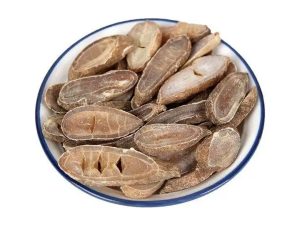
This product consists of thin, subelliptical or ovoid slices, often shriveled or curled, measuring 6–10 cm in length, 3–7 cm in width, and 0.2–0.4 cm in thickness.The apex is slightly wider and often has 3–5 finger-like lobes; the base is slightly narrower, and some specimens may show traces of the fruit stalk. The outer skin is yellowish-green or orange-yellow, with wrinkles and oil spots. The flesh is pale yellowish-white or pale yellow, scattered with uneven linear or punctate vascular bundles. The texture is hard and brittle but becomes pliable when moistened. It has a fragrant odor and a taste that is slightly sweet followed by bitterness.
Properties of Processed Slices
This product consists of subelliptical, ovate thin slices or irregular strips, often shriveled or curled. The slices are 6–10 cm long, 3–7 cm wide, and 0.2–0.4 cm thick; the apex is slightly wider, often with 3–5 finger-like lobes, while the base is slightly narrower, and some may show traces of the fruit stalk.The strips are 0.4–10 cm long, 0.2–1 cm wide, and 0.2–0.4 cm thick. The outer peel is yellowish-green or orange-yellow, with wrinkles and oil dots. The pulp is pale yellowish-white or pale yellow, scattered with uneven linear or punctate vascular bundles. It is hard and brittle, but becomes pliable when moistened. It has a fragrant aroma and a taste that is slightly sweet followed by bitterness.
Botanical Information
Botanical Classification
Citrus reticulata (Buddha’s Hand), a member of the Rutaceae family.
Morphological Characteristics
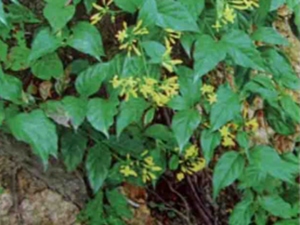
An evergreen small tree or shrub. Mature branches are gray-green; young branches are slightly purplish-red and bear short, stiff thorns. Simple leaves are alternate; petioles are short, 3–6 mm long, without wings or joints;leaf blades are leathery, oblong or obovate-oblong, 5–16 cm long and 2.5–7 cm wide, with a blunt apex, sometimes slightly concave, a nearly rounded or cuneate base, and margins bearing shallow, wavy, blunt teeth. Flowers are solitary, clustered, or arranged in racemes; the calyx is cup-shaped, shallowly 5-lobed, with triangular lobes;There are 5 petals, white on the inside and purple on the outside; numerous stamens; the ovary is elliptical, tapering to a narrow point at the top. The citrus fruit is ovoid or oblong, with the apex split like a palm or spreading like fingertips; the number of lobes corresponds to the number of carpels. The surface is orange-yellow and rough, and the pulp is pale yellow. There are several seeds, which are ovoid with pointed tips and sometimes incompletely developed.Flowering occurs from April to May; fruit ripens from October to December.
Distribution Area
Native to tropical and subtropical regions. Cultivated in Zhejiang, Jiangxi, Fujian, Guangdong, Guangxi, Sichuan, and Yunnan in China.