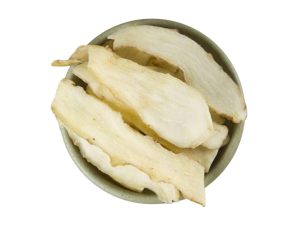
Caryopteris nepetaefolia, a name in traditional Chinese medicine. It is the whole plant of Caryopteris nepetaefolia (Benth.) Maxim., a member of the Verbenaceae family. It is distributed in Jiangsu, Anhui, Zhejiang, Fujian, and other regions. It has the effects of clearing summer heat, relieving exterior syndromes, promoting the elimination of dampness, and detoxifying. It is commonly used for summer colds, heatstroke, heat-induced dysuria, leukorrhea, and bleeding from external injuries.

Caryopteris nepetaefolia
Caryopteris nepetaefolia, a name in traditional Chinese medicine. It is the whole plant of Caryopteris nepetaefolia (Benth.) Maxim., a member of the Verbenaceae family. It is distributed in Jiangsu, Anhui, Zhejiang, Fujian, and other regions. It has the effects of clearing summer heat, relieving exterior syndromes, promoting the elimination of dampness, and detoxifying. It is commonly used for summer colds, heatstroke, heat-induced dysuria, leukorrhea, and bleeding from external injuries.
Chinese Name : 荆芥叶莸
Aliases : Formula: Moneywort, Hanging Bell, Wild Amaranth, Border Orchid, Half-Branch Lotus, and Eupatorium
Benefits & Efficacy
Benefits
Clears summer heat and relieves exterior syndromes; promotes diuresis and detoxifies.
Indications
Used for summer colds, heatstroke, heat-induced urinary disorders, leukorrhea, and bleeding from external injuries.
Usage and Dosage
Internal use: Decoct 15–30 g. External use: Apply an appropriate amount after pounding into a paste.
Relevant Discussions
*Commonly Used Folk Herbs of Zhejiang*: “Cool in nature, slightly sweet in taste.”
*Commonly Used Folk Herbs of Zhejiang*: “Dispels summer heat and relieves exterior syndromes; promotes urination and detoxifies.”
Applications
Related Compatibility
1. For the common cold: 9–15 g each of *Saussurea*, *Solidago*, *Schizonepeta*, and *Honeysuckle vine*. Decoct in water and take orally. (*Commonly Used Folk Herbs of Zhejiang*)
2. For heatstroke: 15–30 g of *Saussurea*. Decoct in water and drink as a tea substitute. (*Commonly Used Folk Herbs of Zhejiang*)
3. For urinary tract infections: 15–30 g of *Saussurea*,9g each of Shiwei, Mutong, and Plantain Herb. Decoct in water and drink. (From *Commonly Used Folk Herbs of Zhejiang*)
4. For leukorrhea: 120g of Shu. Decoct in water and drink. (From *Commonly Used Folk Herbs of Zhejiang*)
5. For bleeding from external injuries: Pound fresh Shu leaves into a paste and apply externally. (From *Commonly Used Folk Herbs of Zhejiang*)
Processing & Preparation
Harvesting & Processing
Harvest in summer or fall; cut into sections and sun-dry, or use fresh.
Crude Drug Identification
Botanical Information
Botanical Classification
Monocarpus, a plant of the Verbenaceae family.
Morphological Characteristics
A perennial herb, 30–90 cm tall. Sometimes trailing; the base is lignified; the stem is quadrangular and covered with downward-curving soft hairs.Leaves are simple and opposite; petioles are 0.3–1 cm long; leaf blades are papery, broadly ovate or nearly round, 1.5–5 cm long and 1.5–4 cm wide, with a blunt apex, a broadly cuneate or rounded base, and margins bearing 4–6 pairs of blunt teeth; both surfaces are covered with soft hairs and glandular dots; there are 3–5 pairs of lateral veins.Flowers solitary and axillary; pedicel slender, 1.5–3 cm long, with 2 small conical bracts near the middle of the pedicel; calyx cup-shaped, ca. 6 mm long, slightly enlarged when fruiting, both surfaces pubescent and sparsely glandular, 5-lobed, lobes ovate to ovate-lanceolate;The corolla is pale blue, sparsely hairy and dotted with glandular dots on the outside, usually pubescent at the throat; the median lobe of the lower lip is larger and entire; the corolla tube is 6–9 mm long; the stamens number 4 and, together with the style, extend beyond the corolla tube; the ovary is densely tomentose.The capsule is pale yellow, about 4 mm long, 4-valved; the valves are obovate, wingless, covered with coarse hairs, and bear indistinct reticulate ridges and depressions. Flowering and fruiting occur from May to September.
Distribution Area
Jiangsu, Anhui, Zhejiang, Fujian, and other areas.