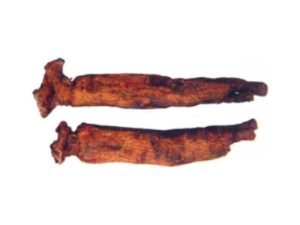
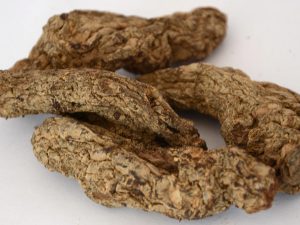
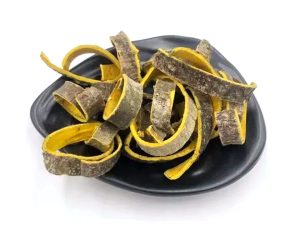
Cold-Region Euonymus, a name in traditional Chinese medicine. It refers to the branches of the plant Cold-Region Euonymus (Euonymus frigidus Wall. ex Roxb.) of the Celastraceae family. It is distributed in northwestern Yunnan and Tibet (Dingjie, Medog). It has the therapeutic effects of promoting blood circulation to remove blood stasis, resolving masses, regulating menstruation, and relieving pain. It is commonly used for abdominal pain caused by masses, irregular menstruation, postpartum fainting due to blood loss, and arthralgia.

Cold-Region Euonymus
Cold-Region Euonymus, a name in traditional Chinese medicine. It refers to the branches of the plant Cold-Region Euonymus (Euonymus frigidus Wall. ex Roxb.) of the Celastraceae family. It is distributed in northwestern Yunnan and Tibet (Dingjie, Medog). It has the therapeutic effects of promoting blood circulation to remove blood stasis, resolving masses, regulating menstruation, and relieving pain. It is commonly used for abdominal pain caused by masses, irregular menstruation, postpartum fainting due to blood loss, and arthralgia.
Chinese Name : 冷地卫矛
Latin Name : Euonymus frigidus Wall. ex Roxb.
Authentic Producing Area : Northwestern Yunnan, Tibet (Dingjie, Medog)
Nature, Flavor & Meridian Tropism : Bitter in taste, cold in nature
Benefits & Efficacy
Benefits
Promotes blood circulation to disperse blood stasis, regulates menstruation, and relieves pain.
Indications
Abdominal pain due to masses, irregular menstruation, postpartum syncope, and arthralgia.
Usage and Dosage
Internal use: Decocted as a soup, 3–9 g.
Precautions
Use with caution during pregnancy.
Relevant Discussions
*Commonly Used Chinese Herbs in Tibet*: “Promotes blood circulation, relieves pain, and kills parasites. Treats irregular menstruation, abdominal pain caused by masses, postpartum fainting due to blood loss, and arthritis.”
Applications
Processing & Preparation
Harvesting & Processing
Harvested in spring and summer; cut into sections and sun-dried.
Crude Drug Identification
Botanical Information
Botanical Classification
A plant of the Celastraceae family, Frigidus Euonymus.
Morphological Characteristics
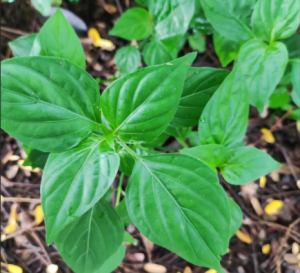
A deciduous shrub, 0.1–3.5 meters tall, with sparsely arranged branches.Leaves are thick and papery, elliptic or narrowly oblong-obovate, 6–15 cm long and 2–6 cm wide, with an acute or obtuse apex, sometimes tapering to a point; the base is mostly broadly cuneate or cuneate; margins have relatively stiff teeth; lateral veins number 6–10 pairs and are distinct on both surfaces; petioles are 6–10 mm long.The inflorescence is a loose corymb; the peduncle is long and slender, 2–5 cm long, with 3–5 branches at the apex, each branch 1.5–2 cm long; the pedicels are about 1 cm long; the flowers are purplish-green, 1–1.2 cm in diameter; the sepals are nearly round; the petals are broadly ovate or nearly round;the disk is slightly 4-lobed, with stamens attached to the lobes and lacking filaments; the ovary lacks a style. The capsule is 4-winged, 1–1.4 cm long, with wings 2–3 mm long, often slightly pendulous; the seeds are nearly disc-shaped, slightly flattened, 6–8 mm in diameter, and enclosed within an orange aril.
Distribution Area
Distributed in northwestern Yunnan and Tibet (Dingjie, Medog).