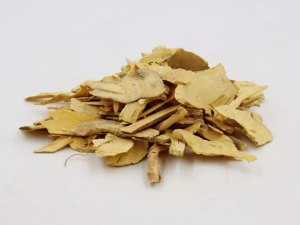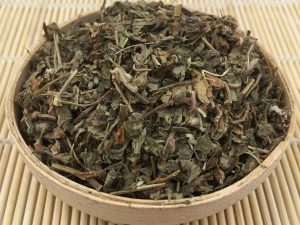
Sambucus chinensis is the stem and leaves of Sambucus chinensis Lindl., a plant in the Caprifoliaceae family.This herb has a sweet and slightly bitter taste, a neutral nature, and enters the Liver meridian. It has the effects of dispelling wind and dampness, as well as relaxing tendons and promoting blood circulation. It is primarily used to treat rheumatic arthralgia, hemiplegia due to stroke, edema, jaundice, masses, dysentery, trauma, retained lochia after childbirth, rubella, erysipelas, scabies, tonsillitis, and mastitis.
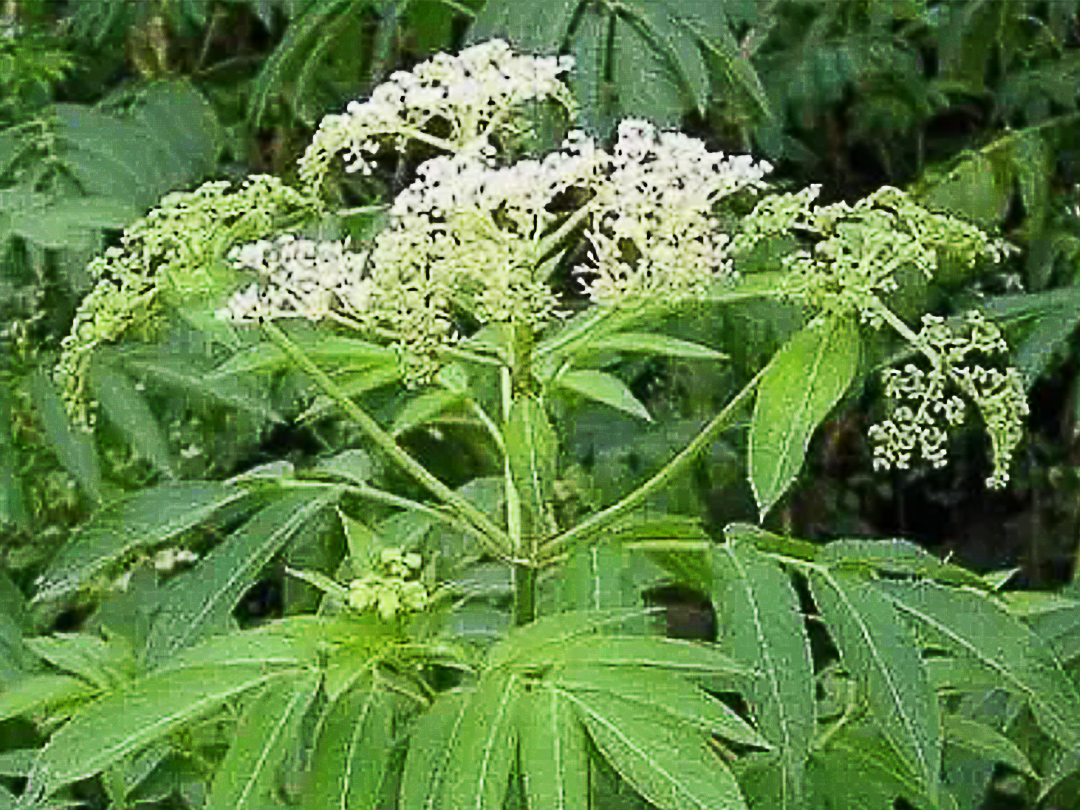
Chinese Elder
Sambucus chinensis is the stem and leaves of Sambucus chinensis Lindl., a plant in the Caprifoliaceae family.This herb has a sweet and slightly bitter taste, a neutral nature, and enters the Liver meridian. It has the effects of dispelling wind and dampness, as well as relaxing tendons and promoting blood circulation. It is primarily used to treat rheumatic arthralgia, hemiplegia due to stroke, edema, jaundice, masses, dysentery, trauma, retained lochia after childbirth, rubella, erysipelas, scabies, tonsillitis, and mastitis.
Chinese Name : 接骨草
Aliases : Lu Ying, Ba Leng Ma, Da Chou Cao, Yang Xin Cao, Xiao Jie Gu Dan, Da Chou Cao, Qi Ye Ma, Ma Bian San Qi
Nature, Flavor & Meridian Tropism : Sweet and slightly bitter in taste; neutral in nature; enters the Liver meridian
Benefits & Efficacy
Benefits
Dispels wind and dampness; relaxes tendons and promotes blood circulation.
Indications
Jiegu Cao is primarily used to treat rheumatic pain, hemiplegia due to stroke, edema, jaundice, masses, dysentery, trauma, retained lochia after childbirth, rubella, erysipelas, scabies, tonsillitis, and mastitis.
Usage and Dosage
1. Internal use: Decoct 9–15 g of dried herb or 60–120 g of fresh herb. 2. External use: Pound into a paste and apply as a poultice; decoct in water for washing; or grind into a powder and mix with a carrier for topical application.
Precautions
Contraindicated for pregnant women.
Applications
Clinical Applications
1. For nephritis-induced edema: 30–60 g of the whole Lu Ying plant. Decoct in water and take orally. (Compendium of Chinese Herbal Medicines)
2. For scabies and psoriasis: Dry Lu Ying leaves in the shade, grind into a powder, and apply with a small amount of oil. (Simple and Effective Formulas for Public Health)
Notes
Patients requiring treatment with Chinese herbal medicine should first consult a licensed Traditional Chinese Medicine (TCM) hospital, where a TCM practitioner will conduct a professional pattern differentiation and prescribe an herbal formula.
Processing & Preparation
Harvesting & Processing
Harvest in summer or fall; cut into sections; use fresh or sun-dry.
Processing Methods
Take the raw herb, remove impurities, cut into sections, and dry.
Storage Methods
Store in a dry container in a well-ventilated, dry place.
Crude Drug Identification
Properties of Crude Drugs
The stem has fine longitudinal ridges, is roughly cylindrical and stout, highly branched, with a diameter of about 1 cm, and a gray to grayish-black surface. Young branches are hairy. The stem is brittle and breaks easily; the cross-section reveals a pale brown or white pith. The leaves are pinnately compound, with 2–3 pairs of leaflets arranged alternately or oppositely;The leaflets are papery, easily crumpled, and often wrinkled; when flattened, they are narrowly ovate to ovate-lanceolate, with a long, acuminate apex, a bluntly rounded base, unequal sides, and finely serrated margins. Fresh leaves emit a foul odor when rubbed. Slight odor; slightly bitter taste.
Properties of Processed Slices
See “Characteristics of Medicinal Materials.”
Botanical Information
Botanical Classification
A plant of the genus Sambucus in the family Caprifoliaceae.
Morphological Characteristics
A tall herb or subshrub, 1–2 m tall. Stems are ribbed, with white pith. The stipules of the pinnate compound leaves are leaf-like or sometimes reduced to blue glands;2–3 pairs of leaflets, alternate or opposite, narrowly ovate, sparsely covered with long, soft hairs on the upper surface when young, with a long, gradually tapering apex, a bluntly rounded base, unequal sides, and finely serrated margins; the margins near the base or below the middle often bear one or several glandular teeth;The terminal leaflet is ovate or obovate, with a cuneate base, sometimes fused to the first pair of leaflets; these leaflets lack stipules, and the basal pair of leaflets sometimes has short petioles. The compound umbel is terminal, large and open; the peduncle is supported at the base by leaf-like bracts, with 3–5 slender branches covered with sparse, yellow soft hairs;The cup-shaped sterile flowers do not fall off; the fertile flowers are small; the calyx tube is cup-shaped, with triangular calyx teeth; the corolla is white, fused only at the base; the anthers are yellow or purple; the ovary is 3-chambered, with a very short or nearly absent style and a 3-lobed stigma.The fruit is red and nearly round. There are 2–3 seeds, which are ovate and bear small wart-like projections on their surface. Flowering occurs from April to May, and fruiting from August to September.
Distribution Area
Distributed in Shaanxi, Gansu, Jiangsu, Anhui, Zhejiang, and other provinces.