Liriodendron root is the name of a traditional Chinese medicinal material. It is the root of Liriodendron chinensis (Hemsl.) Sarg., a plant belonging to the genus Liriodendron in the family Magnoliaceae. Liriodendron chinensis is distributed in Jiangsu, Anhui, Zhejiang, Jiangxi, Fujian, Taiwan, Hunan, Hubei, Guangxi, Sichuan, Guizhou, and Yunnan.Its roots are effective in dispelling wind-dampness and strengthening tendons and bones. It is primarily used to treat rheumatic joint pain and muscle weakness.
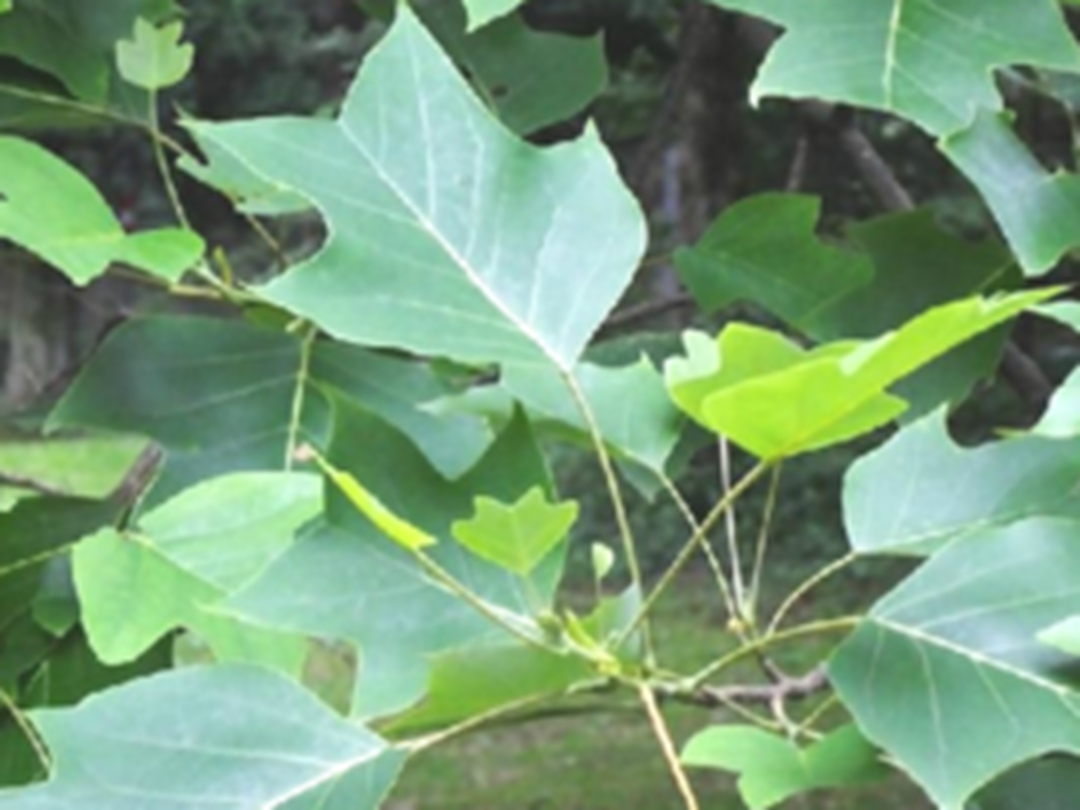
Chinese Tulip Tree Root
Liriodendron root is the name of a traditional Chinese medicinal material. It is the root of Liriodendron chinensis (Hemsl.) Sarg., a plant belonging to the genus Liriodendron in the family Magnoliaceae. Liriodendron chinensis is distributed in Jiangsu, Anhui, Zhejiang, Jiangxi, Fujian, Taiwan, Hunan, Hubei, Guangxi, Sichuan, Guizhou, and Yunnan.Its roots are effective in dispelling wind-dampness and strengthening tendons and bones. It is primarily used to treat rheumatic joint pain and muscle weakness.
Chinese Name : 鹅掌楸根
Aliases : Double-Feather Tree Root
Nature, Flavor & Meridian Tropism : Pungent in taste, warm in nature
Benefits & Efficacy
Benefits
Dispels wind-dampness and strengthens tendons and bones.
Indications
Rheumatic joint pain and muscle weakness.
Usage and Dosage
Internal use: Decoct 15–30 g; or steep in wine.
Precautions
Patients requiring treatment with Chinese herbal medicine should first consult a licensed Traditional Chinese Medicine (TCM) hospital to receive a prescription following a professional TCM differential diagnosis.
Relevant Discussions
*Guizhou Herbal Medicine*: “Dispels wind and dampness; strengthens tendons and bones.”
Applications
Clinical Applications
1. For atrophy (muscle wasting): 30g each of Double-Flowering Tree Root and Great Bloodvine; 9g each of Madder Root and One-Mouth-Blood; 15g each of Cowpea and Akebia; 1.5g of Safflower. Steep in wine and drink.
2. For rheumatic joint pain: 30 g each of Double-Feather Tree root and Ceiba. Simmer in water and drink. (Formulas 1–2 are from *Guizhou Herbal Medicine*)
Notes
References: [1] Nanjing University of Chinese Medicine. *Encyclopedia of Chinese Materia Medica* (2nd ed.) [M]. Shanghai: Shanghai Science and Technology Press, 2006: 3360. [2] Editorial Committee of *Zhonghua Bencao*, State Administration of Traditional Chinese Medicine. *Zhonghua Bencao* Vol. 2 [M]. Shanghai: Shanghai Science and Technology Press, 1999: 870–871.
Processing & Preparation
Harvesting & Processing
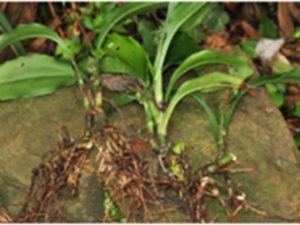
Harvest from September to November; thoroughly remove all soil; use fresh or dry in the sun.
Crude Drug Identification
Botanical Information
Botanical Classification
Liriodendron, a genus of the Magnoliaceae family.
Morphological Characteristics
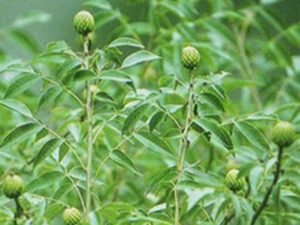
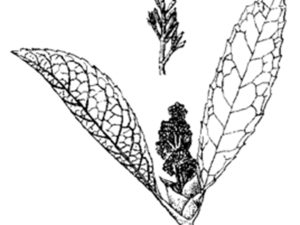
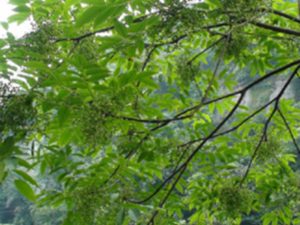
A deciduous tree reaching a height of up to 40 m. The bark is dark brown and longitudinally fissured. Leaves are alternate; petioles are 4–8 cm long; stipules and petioles are separate; leaf blades are rhomboid, 4–18 cm long and 2.5–20 cm wide, with a flat or slightly notched apex, a rounded or shallowly cordate base, and a pair of lateral lobes near the base.Flowers are solitary at the branch tips, cup-shaped, with a perianth of 9 nearly equal segments: the outer whorl of 3 is green, sepals-like, and spreading; the inner two whorls of 6 are erect, green on the outside with yellow longitudinal stripes; numerous stamens are densely stacked on a spindle-shaped column.The aggregate fruit is ovoid-conical; the small nuts extend into wings at the apex, and the fruit, including the wings, is 2–3 cm long. There are 1–2 seeds. Flowering occurs in May, and fruiting occurs from September to October.
Distribution Area
It is distributed in Jiangsu, Anhui, Zhejiang, Jiangxi, Fujian, Taiwan, Hunan, Hubei, Guangxi, Sichuan, Guizhou, Yunnan, and other areas.