Citronella is a name used in traditional Chinese medicine. It refers to the whole plant of Cymbopogon citratus (DC.) Stapf, a species of the genus Cymbopogon in the Poaceae family. It has the effects of dispelling wind and unblocking meridians, warming the middle burner to relieve pain, and stopping diarrhea. It is primarily used to treat headaches and body aches caused by the common cold, wind-cold-dampness arthralgia, cold pain in the epigastrium and abdomen, diarrhea, and injuries from falls or blows.
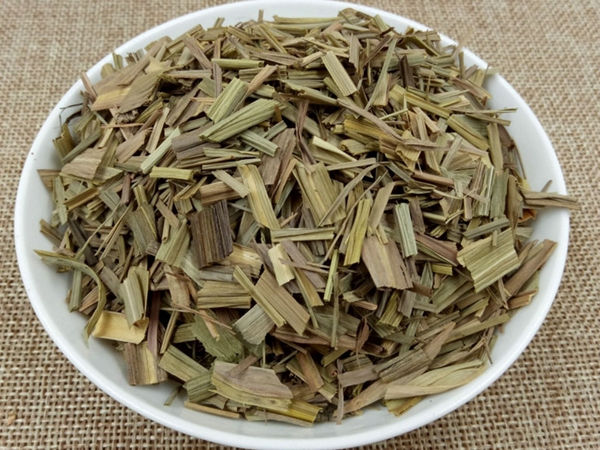
Citronella
Citronella is a name used in traditional Chinese medicine. It refers to the whole plant of Cymbopogon citratus (DC.) Stapf, a species of the genus Cymbopogon in the Poaceae family. It has the effects of dispelling wind and unblocking meridians, warming the middle burner to relieve pain, and stopping diarrhea. It is primarily used to treat headaches and body aches caused by the common cold, wind-cold-dampness arthralgia, cold pain in the epigastrium and abdomen, diarrhea, and injuries from falls or blows.
Chinese Name : 香茅
Latin Name : Herba Cymbopogonis Citrati
Aliases : Mao Xiang, Fragrant Hemp, Da Feng Mao, Lemon Grass, Reed Tea, Ginger-Leaf Grass, Ginger Grass, Fragrant Lemongrass, Lemongrass, Wind Grass
Authentic Producing Area : Fujian, Guangdong, Guangxi, Zhejiang, Sichuan, Yunnan
Nature, Flavor & Meridian Tropism : Sweet and pungent in taste; warm in nature; enters the Lung, Bladder, and Stomach meridians
Benefits & Efficacy
Benefits
Dispels wind and unblocks the meridians; warms the middle and relieves pain; stops diarrhea.
Indications
Headaches and body aches due to the common cold; wind-cold-damp bi syndrome; cold pain in the epigastrium and abdomen; diarrhea; and injuries from falls or blows.
Usage and Dosage
1. Internal use: Decoct 6–15 g in water. 2. External use: Apply an appropriate amount; decoct in water for washing or grind into a powder for topical application.
Chemical Constituents
The leaves contain citronellal, citronellol, luteolin, luteolin-6-C-glucoside, luteolin-7-O-β-glucoside, luteolin-7-O-neohesperidoside,isoflavone, 2"-O-rhamnopyranosylisoflavone, chlorogenic acid, caffeic acid, p-coumaric acid, octacosanol, tricosanol, triacontanol, hexacosanol, and β-sitosterol, monosaccharides, and sucrose. It also contains essential oils, including β-citral (i.e., nerol), citronellal, geraniol, methylheptenone, dipentene, and laurene.
Pharmacological Actions
This product possesses antibacterial, anti-inflammatory, and antihypertensive effects.
Relevant Discussions
1. *Kaibao Bencao*: “The shoots and leaves can be boiled to make a bath, which wards off evil spirits and imparts a pleasant fragrance to the body.”
2. *Lingnan Ciyao Lu*: “It disperses blood stasis caused by contusions and unblocks the meridians. For headaches, boil it in water and use the decoction for washing.Stir-fry lemongrass with rice, add water, and drink the decoction to immediately stop diarrhea. Washing the body with the decoction can dispel wind, reduce swelling, and eliminate foul odors. Extracting its oil relieves abdominal pain.”
3. *Chronicle of Sichuan Traditional Chinese Medicine* (1960 edition): “It dispels wind-dampness and alleviates cold symptoms. It treats pain in the tendons and bones, numbness on one side of the body, rheumatic pain, and whole-body pain caused by wind, cold, and dampness.”
4. *Guangdong Traditional Chinese Medicine*: “Dispels wind and reduces swelling. Primarily treats dizziness, headaches, wind-related disorders, and ‘crane’s knee’ syndrome. Relieves chest pain.”
5. *Guizhou Herbal Medicine*: “Tonifies deficiency, relieves cough, alleviates pain, and calms the mind.”
Applications
Clinical Applications
1. For treating whole-body pain caused by wind, cold, and dampness: 0.5 kg of lemongrass. Decoct in water and use the liquid for bathing. (*Compendium of Sichuan Traditional Chinese Medicine*, 1960)
2. For treating joint pain: 30 g each of lemongrass tea, paraffin wax (also known as “chili green medicine”), and wild schizonepeta. Pound into a fine powder, add a small amount of wine, heat in a pan, and apply as a poultice to the painful area.
3. For stomach pain: 30 g of lemongrass tea. Decoct in water and drink. (Recipes 2–3 are from *Guizhou Herbal Medicine*)
Notes
Patients requiring treatment with traditional Chinese medicine should first consult a licensed TCM hospital, where a TCM practitioner will conduct a professional pattern differentiation and issue a prescription.
Processing & Preparation
Harvesting & Processing
Can be harvested year-round; wash thoroughly and sun-dry.
Crude Drug Identification
Properties of Crude Drugs
The whole plant can grow up to 2 m tall, with stout stems often covered with a waxy powder at the nodes. The leaves are linear, approximately 15 mm wide, up to 1 m long, and clasp the stem at the base; both surfaces are rough and grayish-white; the leaf sheaths are smooth; the ligule is thick and scale-like. The entire plant has a lemony fragrance.
Botanical Information
Botanical Classification
A plant of the genus Cymbopogon in the family Poaceae.
Morphological Characteristics
A perennial herb. The culms are stout, reaching a height of 2 m. It has a lemony fragrance. The leaves are up to 1 m long and 15 mm wide, grayish-white and rough on both surfaces.The spathe is lanceolate, narrow, 1.5–2 cm long, red or pale yellowish-brown, and 3 to 5 times as long as the rachis; the pseud panicle is linear to oblong, loose, with three orders of branching, discontinuous at the base, and its branches are slender and drooping or slightly curved to arched.First-order branches have 5 to 7 nodes; second- or third-order branches have 2 to 3 nodes and are simple. Racemes are paired, 1.5–2 cm long, with 4 nodes;the rachis internodes are 2–3 mm long, bearing slightly longer soft hairs, but these hairs do not obscure the spikelets; the sessile spikelets are bisexual, linear or lanceolate-linear, awnless, and sharply pointed;The apex of the first glume bears two minute teeth; the keel has narrow wings; the back is slightly concave and deeply indented at the base; there are no veins between the keel and the glume; the apex of the second lemma is shallowly lobed with a short point; it is awnless; the pedicellate spikelets are dark purple.
Distribution Area
It is cultivated in southern and southwestern China, Fujian, and Taiwan.
Growth Habits
It prefers a warm climate and full sun; it is drought-tolerant but does not tolerate shade. It is not particular about soil type, but fertile, loose, well-drained sandy loam is best for cultivation.
Propagation Methods
Propagate by division.
Cultivation Techniques
In March–April, dig up plants that are at least two years old, divide them into several clumps, and dig holes with a row spacing of 60 cm and a plant spacing of 50 cm. Plant 2–3 seedlings per hole, cover with soil, and press firmly.
After planting, cultivate the soil and remove weeds 2–3 times per year, and apply liquid manure from humans and livestock as a top dressing. In winter, combine cultivation with hilling up the soil around the clumps. During the dry season, be sure to irrigate.
Pest and Disease Control
1. Diseases include leaf blight, which can be controlled with a 1:1:100 Bordeaux mixture.
2. Pests include stem borers and aphids, which can be controlled with chemical pesticides.