Dog’s Liver Herb is the name of a traditional Chinese medicinal herb. It refers to the whole plant of Dicliptera chinensis (L.) Nees, a species of the genus Dicliptera in the family Acanthaceae. It is distributed in Fujian, Taiwan, Guangdong, Hainan, Guangxi, and other regions. It has the effects of clearing heat, cooling the blood, draining dampness, and detoxifying.It is primarily used to treat common cold with fever, febrile rashes, vomiting of blood, bloody stools, hematuria, metrorrhagia and menorrhagia, cough due to lung heat, sore throat, red eyes due to liver heat, infantile convulsions, dysuria, leukorrhea, herpes zoster, boils and carbuncles, and snake and dog bites.

Dog’s Liver Herb
Dog’s Liver Herb is the name of a traditional Chinese medicinal herb. It refers to the whole plant of Dicliptera chinensis (L.) Nees, a species of the genus Dicliptera in the family Acanthaceae. It is distributed in Fujian, Taiwan, Guangdong, Hainan, Guangxi, and other regions. It has the effects of clearing heat, cooling the blood, draining dampness, and detoxifying.It is primarily used to treat common cold with fever, febrile rashes, vomiting of blood, bloody stools, hematuria, metrorrhagia and menorrhagia, cough due to lung heat, sore throat, red eyes due to liver heat, infantile convulsions, dysuria, leukorrhea, herpes zoster, boils and carbuncles, and snake and dog bites.
Chinese Name : 狗肝菜
Latin Name : Diclipterae Chinensis Herba
Aliases : Golden Dragon Stick, Pig Liver Herb, Green Snake, Roadside Green, Red Wheat Ear, Young Green Snake, Wild Chili, Goat Liver Herb, Wild Oryx, False Rice Needle, Purple Swallow Grass, Nine-Headed Lion Grass, Little Green, Sky Blue Herb, Great Blue
Authentic Producing Area : Guangdong, Guangxi, Fujian
Nature, Flavor & Meridian Tropism : Sweet and slightly bitter in taste; cold in nature; enters the Heart, Liver, and Lung meridians
Benefits & Efficacy
Benefits
Clears heat, cools the blood, drains dampness, and detoxifies.
Indications
Common cold with fever, febrile rashes, vomiting of blood, hematochezia, hematuria, metrorrhagia and menorrhagia, lung-heat cough, sore throat, liver-heat with red eyes, infantile convulsions, dysuria, leukorrhea, herpes zoster, boils and carbuncles, snake and dog bites.
Usage and Dosage
1. Internal use: Decoct 30–60 g; or pound fresh material to extract juice. 2. External use: Apply an appropriate amount of fresh, pounded material as a poultice; or use the decoction for washing.
Precautions
Patients requiring treatment with traditional Chinese medicine should first consult a licensed TCM hospital, where a TCM practitioner will conduct a professional pattern differentiation and issue a prescription.
Chemical Constituents
Contains essential oils, fatty acids, flavonoids, terpenoids, steroids, glycosides, polysaccharides, and other compounds.
Pharmacological Actions
This herb possesses antioxidant properties, enhances immune function, regulates liver enzyme activity, and exhibits anti-inflammatory effects.
Relevant Discussions
1. *Records of Medicinal Herbs from Lingnan*: “Dispels heat; known locally as ‘antelope herb.’ It is highly effective for conditions involving excessive heat or liver fire.”
2. *Chronicle of Lingnan Herbs*: “Clears liver heat, cools the blood, and promotes fluid production. Relieves bone pain caused by damp-heat, as well as rashes and fever.”
3. *Chronicle of Guangxi Traditional Chinese Medicine*: “Clears heat from the liver and lungs, promotes urination, and reduces fever. Treats eye pain caused by wind-heat, persistent high fever due to external pathogens, rashes, lung-heat cough, and hemoptysis.”
4. *Selected Compendium of Guangxi Materia Medica*: “Clears heat and promotes urination; cools the blood and detoxifies. Treats dysuria, childhood dysentery, and skin ulcers.”
5. *Concise Compendium of Guangxi Ethnic Medicines*: “Treats stomach disorders and hyperacidity (Dong people); nephritis (Yao people); and bleeding from knife wounds (Zhuang people).”
6. *Fujian Materia Medica*: “Clears heat and detoxifies; reduces swelling and relieves pain. Primarily used to treat the common cold, sore throat, pneumonia, cough, acute appendicitis, summer diarrhea, dysentery, chyluria, acute hepatitis, hypertension, leukorrhea, mastitis, conjunctivitis, shingles, boils, carbuncles, and abscesses, as well as venomous snake bites.”
Applications
Clinical Applications
1. For treating high fever due to the common cold: Dog’s Liver Herb, White-flowered Purslane, and Hairy Sugarcane Top. Use equal parts of each of the above ingredients raw, totaling 250 g, along with 30 g of gypsum and a pinch of red糙米. Simmer in several bowls of water until reduced to two or three bowls. Divide into three doses. Brown sugar may be added to taste. If the patient is physically weak, remove the herbal residue and add black beans before boiling and consuming the mixture.
2. For hematuria: 90–120g of dog’s liver herb and 90–120g of purslane. Add 500–1,000g of clean water and decoct for 2 hours; add an appropriate amount of salt and drink to achieve recovery. (Formulas 1 and 2 are from *Lingnan Herbal Medicine*)
3. For severe fever with skin rashes and hemoptysis: 60–120 g of dog’s liver herb. Pound fresh and mix with boiling water before drinking. (*Compendium of Guangxi Traditional Chinese Medicine*)
4. For bloody stools and bloody dysentery: 30 g of pig’s liver herb. Decoct in water, add brown sugar, and drink; or add 60 g of red pig’s liver herb, decoct in water, and mix with honey before drinking. (*Chaoshan Herbal Medicine*)
5. For painful, dribbling urination: 500 g of fresh dog’s liver herb and 30 g of honey. Pound into a paste to extract the juice, then mix with honey and boiling water before drinking. (From *Commonly Used Folk Herbs of Guangxi*)
6. For sore throat: 15–30 g of dog’s liver herb; decoct in water and drink; or grind into a powder and mix with boiling water before drinking.
7. For chyluria: 60–120 g each of fresh dog’s liver herb and purslane. Decoct in water, add an appropriate amount of salt, and take orally.
8. For leukorrhea and metrorrhagia: 120 g of fresh dog’s liver herb and 120 g of lean pork. Decoct in water; drink the broth and eat the meat.
9. For snake bites: Dog’s liver herb, blue sandalwood, and plowhead grass in appropriate amounts.Pound into a paste and apply as a poultice. (Recipes 6–9 are from *Manual of Herbs* of Jiangxi)
10. For treating shingles: 90–120 g of fresh dog’s liverwort. Add a small amount of salt and rice washing water, pound into a paste, strain to extract the juice, or mix with realgar powder, and apply to the affected area. (*Fujian Chinese Herbal Medicine*)
Notes
References: 1. *Chinese Materia Medica, Vol. 7* 2. *Compendium of Chinese Herbal Medicines* 3. *Guangdong Provincial Standards for Chinese Medicinal Materials, Vol. 3*
Processing & Preparation
Harvesting & Processing
Harvest in summer or fall; wash thoroughly; use fresh or sun-dry.
Processing Methods
Take the raw herb, remove impurities, wash thoroughly with running water, moisten slightly, cut into medium-length sections, dry, and sift out any dust or debris.
Storage Methods
Store in a dry container in a well-ventilated, dry place.
Crude Drug Identification
Properties of Crude Drugs
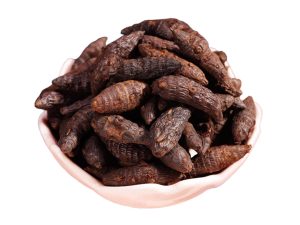
The whole plant can grow up to 80 cm in length. The roots are fibrous and pale yellow. The stem is highly branched, twisted, and ridged, with swollen, knee-like nodes; the lower nodes often produce creeping roots.Leaves are opposite, dark green or gray-green, often wrinkled; intact leaves are ovate or ovate-lanceolate, papery, 2–7 cm long and 1–4 cm wide, with an acute or acuminate apex, a cuneate base that extends downward, and entire margins; both surfaces are glabrous or slightly hairy, with more hairs along the veins on the upper surface; petioles are long and bear short soft hairs on the upper surface.Some plants bear flowers; a corymb composed of several capitula arises from the leaf axils. The leaf-like bracts are one large and one small, obovate-elliptic; the flowers are bilabiate. The capsule is ovate; in dehiscent capsules, the placenta is raised. The seeds have small wart-like dots. It has a faint odor and a mild, slightly sweet taste.
Properties of Processed Slices
Prepared as segmented pieces consisting of a mixture of roots, stems, leaves, and flowers. The roots are slender and pale yellow. The stems are highly branched, slightly quadrangular, with swollen nodes that are gray-green and sparsely pubescent; the cross-section contains pith. The leaves are shriveled, ovate or ovate-oblong, and dark green or gray-green. The flowers are axillary and pale brownish-purple. It has a faint odor and a bland taste.
Botanical Information
Botanical Classification
Dog’s Liver Herb (Dog’s Liver Herb genus, Acanthaceae family).
Morphological Characteristics
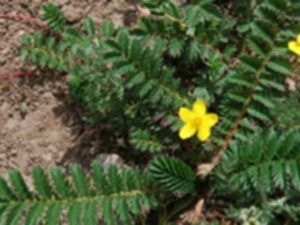
An annual or biennial herb, 30–80 cm tall. Erect or spreading outward near the base; nodes often swollen into knee-like swellings and sparsely hairy. Leaves opposite; petioles 5–25 cm long; leaf blades papery; ovate-elliptic, 2.5–6 cm long, 1.5–3.5 cm wide, with a short acuminate apex and a broadly cuneate or slightly decurrent base.Inflorescences are axillary or terminal, cymose, clustered in groups, rarely solitary; bracts are broadly obovate or nearly circular, rarely lanceolate, of varying sizes, 6–10 mm long, veined, and pubescent; bracteoles are linear-lanceolate, about 4 mm long; calyx is 5-lobed, awl-shaped, about 4 mm long;The corolla is pale purplish-red, about 10 mm long, pubescent, and bilabiate; the upper lip is broadly ovate, nearly circular, entire, and spotted with purplish-red; the lower lip is oblong and shallowly 3-lobed; there are 2 stamens, attached at the throat of the corolla, with 2-celled anthers—one cell above and one below—and pubescent filaments; the ovary is 2-celled. The capsule is about 6 mm long and pubescent.Seeds are hard, flattened-round, and brown. Flowering occurs from October to November; fruiting occurs from February to March of the following year.
Distribution Area
Distributed in Fujian, Taiwan, Guangdong, Hainan, Guangxi, and other areas.