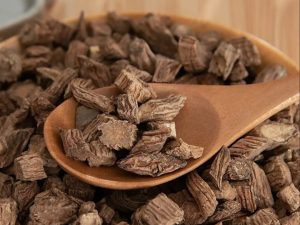
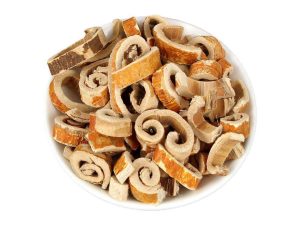
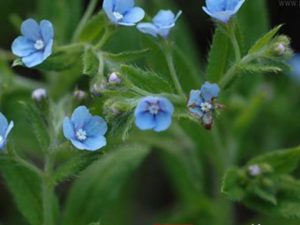
Fire Hemp Seeds, a name in traditional Chinese medicine, are the dried, mature fruits of Cannabis sativa L., a plant of the genus Cannabis in the Moraceae family. They are primarily produced in Shandong, Hebei, Heilongjiang, Jilin, and Liaoning. This product has the efficacy of moistening the intestines and relieving constipation, and is primarily used to treat blood deficiency, fluid deficiency, and constipation due to intestinal dryness.

Fire Hemp Seeds
Fire Hemp Seeds, a name in traditional Chinese medicine, are the dried, mature fruits of Cannabis sativa L., a plant of the genus Cannabis in the Moraceae family. They are primarily produced in Shandong, Hebei, Heilongjiang, Jilin, and Liaoning. This product has the efficacy of moistening the intestines and relieving constipation, and is primarily used to treat blood deficiency, fluid deficiency, and constipation due to intestinal dryness.
Chinese Name : 火麻仁
Latin Name : Cannabis Fructus
Aliases : Hemp Seeds, Hemp Seed Kernels, Hemp Kernels, Large Hemp Seeds, Large Hemp Seed Kernels, Winter Hemp Seeds, Fire Hemp Seeds
Authentic Producing Area : Shandong, Hebei, Heilongjiang, Jilin, Liaoning
Nature, Flavor & Meridian Tropism : Neutral in nature, sweet in taste; enters the Spleen, Stomach, and Large Intestine meridians
Benefits & Efficacy
Benefits
Moistens the intestines and relieves constipation.
Indications
Mainly used for blood deficiency and fluid deficiency, as well as intestinal dryness and constipation.
Usage and Dosage
1. Internal use: Decocted as a soup, 10–15 g; or incorporated into pills or powders. 2. External use: Pounded into a paste and applied topically; or decocted in water for washing.
Precautions
1. Not suitable for patients with spleen deficiency causing loose stools or yang deficiency causing watery diarrhea. 2. Should not be used in combination with oyster shell, white vetch, or poria. 3. Should not be used in combination with anticholinergic drugs such as atropine.
Chemical Constituents
This product primarily contains alkaloids (such as colchicine and betaine) and flavonoids (such as luteolin, vitexin, and isovitexin). In addition, it contains phenols, proteins, and various fatty acids.
Pharmacological Actions
This product has laxative, lipid-lowering, anti-atherosclerotic, antioxidant, anti-aging, immune-boosting, anti-inflammatory, and analgesic effects.
Relevant Discussions
1. *The Classic of Herbal Medicine*: “It tonifies the middle and boosts qi; long-term use promotes health and vitality.”
2. *The Interpretation of Medicinal Properties*: “Hemp seeds moisten the intestines; their moisturizing nature alleviates dryness and unblocks the large intestine to relieve qi stagnation and constipation. They treat conditions such as blood dryness in the elderly, disharmony of qi and blood after childbirth, insufficient recovery of vital energy after illness, or constitutional weakness that impedes circulation.When the large intestine is obstructed and constipated, forceful purgation is not appropriate, nor should the obstruction be allowed to persist for long. By combining this herb with Aster tataricus and Apricot Kernel to moisten the lung qi and nourish the large intestine, bowel movements will naturally become regular.”
Applications
Clinical Applications
1. For treating typhoid fever with a floating and涩 pulse in the Fu Yang position: a floating pulse indicates strong stomach qi, while a涩 pulse indicates frequent urination; when floating and涩 combine, stools become hard, and the spleen is constricted. Prescription: 2 sheng of hemp seeds,half a jin of peony root, half a jin of fried trichosanthes fruit, one jin of rhubarb (peeled), one chi of fried magnolia bark (peeled), and one sheng of apricot kernels (peeled, tips removed, roasted, and rendered into oil separately). Mix these six ingredients with honey to form pills the size of a paulownia seed. Take ten pills with a drink, three times daily, gradually increasing the dose until relief is achieved.(From *Treatise on Cold Damage*: Sesame Seed Pills)
2. For treating excessive blood loss after childbirth, resulting in depletion of body fluids and an inability to facilitate bowel movements, leading to constipation: Fire hemp seeds (ground to a paste), Zhi Ke (stir-fried with flour), and ginseng—each one liang; rhubarb—half a liang. Grind the above ingredients into a powder, mix with refined honey, and form into pills the size of a paulownia seed. Take twenty pills per dose on an empty stomach, washed down with warm wine or rice porridge.If bowel movement has not been achieved, gradually increase the number of pills, but do not exceed the recommended amount. (*Ji Yin Gang Mu*, Hemp Seed Pills)
3. For treating dryness and constipation of the large intestine in the elderly: fire hemp oil, perilla seeds, pine nut kernels, apricot kernels (roasted, with skin and tips removed), and sesame seeds (roasted, ground into a paste). Grind all ingredients together into pills the size of a marble. Take 1 pill at a time, dissolved in honey water. (*Xianxi Single-Formula Selection*)
4. For treating hemiplegia with uncoordinated limbs and a crooked mouth and eyes: 2 he of hemp seeds (roasted), 2 he of black beans (small and firm, roasted), 2 he of pigeon droppings (roasted), and two handfuls of weeping willow branches (chopped into half-cun lengths).First, simmer the willow branches in 7 sheng of wine until the liquid is reduced to 5 sheng. Roast the pigeon droppings, hemp seeds, and black beans until golden yellow; while still hot, add them to the willow branch wine. After a short while, strain to remove the residue. Take 2 to 3 he per dose, warm, on an empty stomach and before bedtime. (From *Shengji Zonglu*: Hemp Seed Wine)
5. For treating pain caused by wind-toxin in the bone marrow, where movement is impossible: Fire hemp seeds (soaked in water; select those that sink) one dasheng. Dry in the sun, roast until fragrant and cooked through, then immediately pound in a wooden mortar until extremely fine, like white powder. Divide evenly into ten doses.For each dose, take one bowl of ash-free liquor and grind the hemp powder into it. Strain immediately to extract the clear liquor, continuing until all the hemp powder is used up; discard the remaining husks. Combine all the liquor in one container and simmer until reduced by half. Allow to cool to a suitable temperature. Take the entire dose on an empty stomach; take one dose per day. (From *Qie Zhong Fang*: Hemp Seed Wine)
6. For severe thirst, drinking several dou daily, and red, scanty, and painful urination: 1 sheng of hemp seeds, 3 sheng of water. Boil for three or four boils, then drink the resulting decoction. (From *Formulas for Emergency Care*)
7. For edema caused by beriberi, distension of the chest and abdomen, and obstruction of urination and defecation: Half a sheng of winter hemp seeds (roasted, pounded, and ground; filtered with water to extract the juice), 2 he of rice. Cook the rice into porridge using the hemp juice and consume it on an empty stomach.(*The Mirror of Dietary Medicine*)
8. For the five types of dysuria, characterized by scant, reddish urine and pain in the penis: 1 sheng of winter hemp seeds (pounded, ground, and strained to extract 2 sheng of juice), mixed with 3 he of rice. Cook into porridge, add scallions and pepper, and cook thoroughly; consume on an empty stomach. (*Formulas for Universal Relief*)
9. For treating white dysentery (referred to as “uncontrollable bloody dysentery” in *Compendium of Materia Medica*): Boil mung beans in hemp seed juice and consume on an empty stomach; this is extremely effective. (*Wai Tai*, citing *Essential Effective Formulas*)
10. For amenorrhea lasting two to three months, or half a year to a year: Two sheng of hemp seeds and two liang of peach kernels. Grind them together, mix with one sheng of cooked wine, and steep overnight. Take one sheng daily. (*Pu Ji Fang*)
11. For retained blood after childbirth: One he of hemp seeds. Grind them, add two zhan of water, decoct until reduced to six fen, strain, and drink the liquid. (*Sheng Hui Fang*)
12. For intestinal parasitic infections: 3 sheng of ground hemp seeds and 8 sheng of coarsely chopped Dongxing cornelian cherry root. Soak in water. Take 2 sheng at dawn; the parasites will be expelled by nightfall. (From *Dietary Therapy Formulas*)
13. For facial sores in children: 5 sheng of hemp seeds. Grind into a powder, mix with water, strain to extract the juice, mix with honey, and apply as a poultice.(From *The Secret Transmission of Hua Tuo, the Divine Physician*)
14. For treating erysipelas with red, wandering lesions: Pound hemp seeds into a powder, mix with water, and apply topically. (From *Thousand Gold Prescriptions*)
15. For treating hair loss and failure to regrow: One sheng of hemp seeds. Roast until black, press out the oil, and apply it to the scalp; the hair will gradually grow back. (From *Simple and Easy Prescriptions for Health*)
16. For scalp itching with excessive white dandruff: Three sheng of hemp seeds (ground), two sheng of Sichuan pepper, and three sheng of cypress leaves (chopped). Soak the ingredients in rice washing water overnight; warm the mixture the next morning, strain out the solids, and use the liquid to wash the hair. (From *Yixin Fang*)
Related Compatibility
1. Fire Hemp Seeds Combined with Astragalus: Fire hemp seeds moisten the intestines and relieve constipation; astragalus tonifies the middle and boosts qi. When used together, these two herbs simultaneously replenish both qi and yin, boosting qi and relieving constipation. This combination is used for constipation in the elderly, postpartum women, and all cases of qi deficiency, as well as for treating sinking of central qi, constipation with rectal prolapse, and similar conditions.
2. Fire Hemp Seeds Combined with Ophiopogon: Fire hemp seeds nourish yin and blood, moisten dryness, and relieve constipation, while also tonifying central qi; Ophiopogon nourishes yin and generates body fluids, clears heat, moistens dryness, and nourishes the lungs and stomach. When used together, they enhance the effects of nourishing yin, generating body fluids, and moistening dryness. This combination is used for conditions such as a lack of appetite, night sweats, and constipation caused by constitutional weakness, heat-related fluid depletion, or insufficient stomach yin.
3. Fire Hemp Seeds Combined with Winter Mallow Seeds: Fire hemp seeds tonify deficiency, moisten the intestines to promote bowel movements, and facilitate urination; winter mallow seeds promote diuresis, relieve dysuria, and moisten the intestines to promote bowel movements. When combined, they both facilitate urination and lubricate the bowels. This combination is used for cases of heat-induced dysuria with painful urination accompanied by fluid depletion and constipation, or for edema caused by damp-heat.
4. Fire Hemp Seeds Combined with Apricot Kernels: Fire hemp seeds are slippery and moisturizing; they nourish yin and blood while moistening the intestines and promoting bowel movements; apricot kernels regulate and descend lung qi, moisturizing and promoting downward flow. When used together, this combination is indicated for constipation caused by lung heat descending to the large intestine or by intestinal dryness due to yin deficiency.
5. Fire Hemp Seed Combined with Trichosanthes Seed: Fire Hemp Seed lubricates the intestines to relieve dryness and also tonifies the spleen to distribute body fluids; Trichosanthes Seed enters the Large Intestine meridian to moisten stools and also enters the Lung meridian to moisten dryness. When used together, they moisten the body fluids of both the Lung and Large Intestine meridians, thereby alleviating intestinal dryness. This combination is used for constipation caused by insufficient body fluids and dry heat in the stomach and intestines.
6. Fire Hemp Seeds Combined with Perilla Seeds: Fire Hemp Seeds moisten dryness and lubricate the intestines, and also have a certain nourishing and tonifying effect; they are suitable for constipation due to deficiency of body fluids in the large intestine. Perilla Seeds descend qi, alleviate counterflow, and relieve diaphragmatic constriction to relax the intestines. When combined, their effects of nourishing blood, moistening dryness, descending qi, and promoting bowel movements are even more pronounced. This combination is used for intestinal dryness-induced constipation in postpartum women, those recovering from illness, and the elderly with blood deficiency.
7. Fire Hemp Seeds Combined with Peach Kernels: Both have the effect of moistening the intestines and promoting bowel movements, and peach kernels also disperse lung qi. When used together, they work synergistically to moisten the intestines, promote bowel movements, and disperse lung qi. This combination is used for constipation due to intestinal dryness caused by impaired lung qi dispersion.
Medicinal Identification
Fire Hemp Seeds and Cassia Seeds: Both herbs have the effect of moistening the intestines and promoting bowel movements, and are used for constipation due to intestinal dryness. However, Cassia Seeds are cool in nature and moisturizing; they also clear heat, moisten the intestines, and promote bowel movements, and are therefore more commonly used for constipation caused by internal heat and intestinal dryness.Cassia seeds are bitter and cold, dispersing heat, and sweet and salty, nourishing yin. They can both clear and disperse liver fire and nourish kidney yin, and are therefore also used for red or dim vision. Fire hemp seeds, on the other hand, are sweet and neutral in nature, moist and rich in oil; they can moisten the intestines and promote bowel movements, while also nourishing and tonifying deficiencies. They are frequently used for intestinal dryness-type constipation in the elderly, postpartum women, and those who are physically weak with insufficient body fluids and blood.
Related Medicines
Hemp Seed Capsules (soft capsules, pills), Hemp Seed Intestinal-Moistening Pills, Hemp Seed Spleen-Nourishing Pills.
Related Prescriptions
Hemp Seed Pills (from *Treatise on Cold Damage*), Hemp Seed Pills (from *Standards for Diagnosis and Treatment*).
Medicinal Diet Therapy
Fire Hemp Seed Longevity Soup:
1. Benefits: Lowers blood pressure and cholesterol, prevents arteriosclerosis, improves cardiac reserve, and promotes bowel regularity to help delay aging.
2. Ingredients: 50g fire hemp seeds, 250g mustard greens (other wild greens may be substituted), salt, MSG, and peanut oil to taste, 1500ml broth.
3. Preparation: First, wash the fire hemp seeds and grind them into a paste with a small amount of water using a stone mill. Then, strain the mixture through white cheesecloth to remove the residue and retain the liquid. Wash the mustard greens and cut them into small pieces. Pour the broth into a pot and bring to a boil over high heat. Add the oil, salt, MSG, mustard greens, and fire hemp seed paste. Cook until done, then serve immediately.
4. Usage: Consume regularly.
Notes
Patients requiring treatment with Chinese herbal medicine should first consult a licensed Traditional Chinese Medicine (TCM) hospital, where a TCM practitioner will conduct a professional pattern differentiation and prescribe an herbal formula.
Processing & Preparation
Harvesting & Processing
In October–November, when most of the fruits have ripened, harvest the fruit-bearing stems, sun-dry them, thresh the seeds, and sift them clean.
Processing Methods
1. Fire Hemp Seeds: Take the raw herbal material and thoroughly remove impurities and ash.
2. Roasted Fire Hemp Seeds: Take the raw herbal material, place it in a pan, and roast over low heat until it turns a light yellow color and emits a fragrant aroma; remove from heat and allow to cool.
Storage Methods
Store in a dry container; keep the roasted fire hemp seeds tightly sealed and place in a cool, dry location.
Crude Drug Identification
Properties of Crude Drugs
This product is oval in shape, 4–5.5 mm long, and 2.5–4 mm in diameter. The surface is grayish-green or grayish-yellow, with fine white or brown reticulate patterns; it is ridged on both sides, slightly pointed at the apex, and has a circular scar from the fruit stalk at the base. The pericarp is thin and brittle, breaking easily. The seed coat is green; there are two cotyledons, which are milky white and rich in oil. It has a faint odor and a bland taste.
Properties of Processed Slices
1. Fire Hemp Seeds: See “Characteristics of the Medicinal Material.”
2. Roasted Fire Hemp Seeds: Darker in color, glossy, with a faint roasted aroma.
Botanical Information
Botanical Classification
Cannabis sativa, a plant of the genus Cannabis in the Moraceae family.
Morphological Characteristics
An annual herb, 1–3 m tall. The stem is erect, with longitudinal grooves on the surface, densely covered with short soft hairs; the cortex is rich in fibers, and the base is lignified. The palmate leaves are alternate or opposite at the base, deeply lobed, with 3–11 lobes that are lanceolate to linear-lanceolate, tapering at both ends, with coarse serrations along the margins; the upper surface is dark green with coarse hairs, while the lower surface is densely covered with grayish-white felt-like hairs;petioles 4–15 cm long, covered with short cottony hairs; stipules small, free, lanceolate. Flowers unisexual; plants dioecious. Male inflorescences are loose panicles, terminal or axillary; male flowers have 5 perianth segments, 5 stamens, slender filaments, and large anthers;Female flowers are clustered in the leaf axils, greenish-yellow in color; each flower is surrounded by an ovate bract on the outside, with membranous perianth segments and a single pistil; the ovary is globose, and the style is dichotomous. The achene is ovoid, 4–5 mm long, hard, grayish-brown, with fine reticulate markings, and enclosed by a persistent yellowish-brown bract.Flowering occurs from May to June, and fruiting from July to August.
Distribution Area
It is cultivated throughout China.
Growth Habits
It prefers a warm and humid climate; seedlings can tolerate frosts ranging from -5 °C to 3 °C, and the optimal growth temperature is 19 °C to 23 °C. It is not particular about soil type, but is best grown in deep, loose, fertile, well-drained sandy loam or clay loam.
Propagation Methods
Propagated by seed.
Cultivation Techniques
1. Seed Propagation: Select female plants that are vigorous and bear abundant fruit; cut off the fruit-bearing branches, sun-dry them, thresh the seeds, and set them aside for later use.Sow in March–April. For hole sowing, dig holes with a row and plant spacing of 30 cm × 30 cm, planting about 10 seeds per hole; for row sowing, dig furrows with a row and plant spacing of 45 cm × 60 cm, sow the seeds evenly, cover with soil, and top with a layer of wood ash. Seedlings emerge 7–10 days after sowing.
2. Field Management: Thin and finalize the planting density when seedlings reach 6–10 cm in height.Leave 3–4 seedlings per hole. During the growing season, loosen the soil and weed 2–3 times; shallow hoeing is recommended during the seedling stage, while deep hoeing is suitable later on, combined with hilling. Apply top-dressing with human urine or ammonium sulfate; in the later stages, supplement with superphosphate and wood ash. Remove most male plants when inflorescences form.
Pest and Disease Control
Diseases include sclerotinia rot, which can be controlled by spraying a 600-fold dilution of 65% zinc mancozeb wettable powder; downy mildew can be treated with carbendazim; other diseases include damping-off and leaf spot.