Pufferfish is the name of a Chinese medicinal material. It consists of the meat of animals from the Tetraodontidae family, including the bow-spotted pufferfish (Fugu ocellatus (Osbeck)), the worm-spotted pufferfish (Fugu vermicularis (Temminck & Schlegel)), the dark-striped pufferfish (Fugu obscurus (Abe)), and various other species of the same genus. It has the effects of nourishing the liver and kidneys, dispelling dampness, and relieving pain.It is primarily used to treat impotence, enuresis, dizziness, soreness and weakness in the lower back and knees, rheumatic arthralgia, and itchy skin.
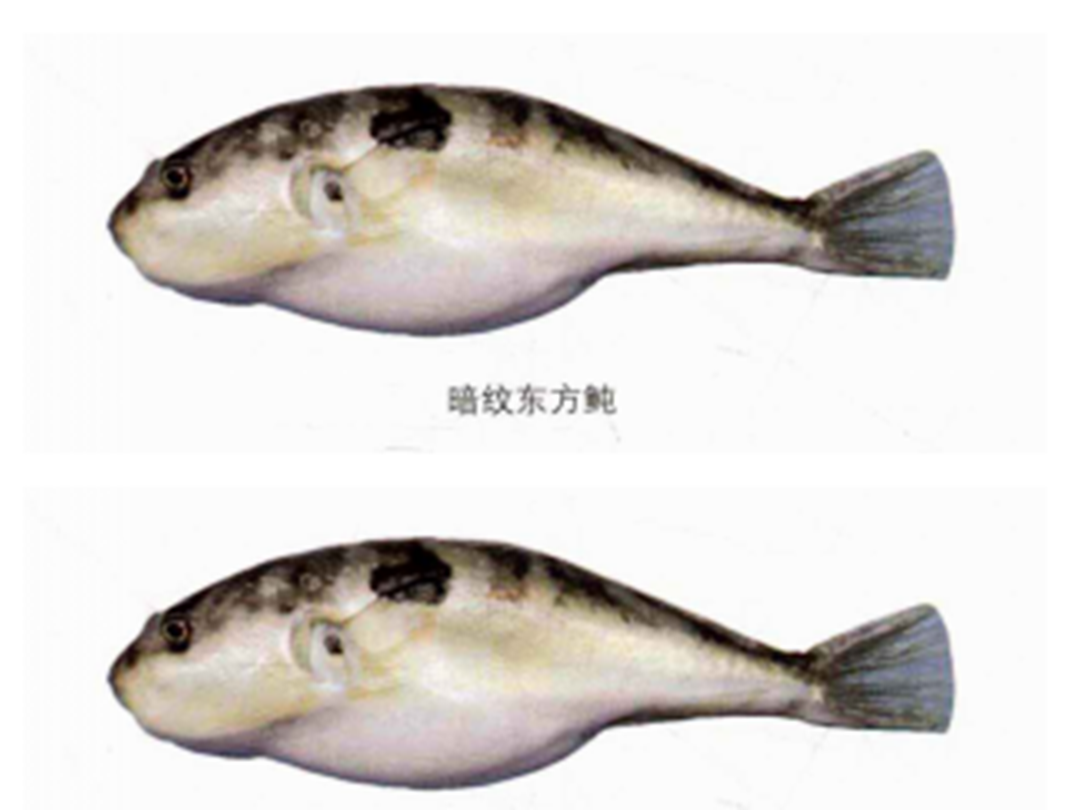
Pufferfish
Pufferfish is the name of a Chinese medicinal material. It consists of the meat of animals from the Tetraodontidae family, including the bow-spotted pufferfish (Fugu ocellatus (Osbeck)), the worm-spotted pufferfish (Fugu vermicularis (Temminck & Schlegel)), the dark-striped pufferfish (Fugu obscurus (Abe)), and various other species of the same genus. It has the effects of nourishing the liver and kidneys, dispelling dampness, and relieving pain.It is primarily used to treat impotence, enuresis, dizziness, soreness and weakness in the lower back and knees, rheumatic arthralgia, and itchy skin.
Chinese Name : 河豚
Aliases : Red Salmon, Mullet, Sea Bream, Salmon, Lu’yi Fish, Chen Fish, Blowfish, Mullet, River Pufferfish, Bubblefish, Hu’yi Fish, Air-Bladder Fish
Nature, Flavor & Meridian Tropism : Sweet in taste, warm in nature; enters the Liver and Kidney meridians
Benefits & Efficacy
Benefits
Nourishes the liver and kidneys; dispels dampness and relieves pain.
Indications
Erectile dysfunction, enuresis, dizziness, soreness and weakness in the lower back and knees, rheumatic arthralgia, and itchy skin.
Usage and Dosage
Internal use: Simmer for a long time (at least 2 hours) and consume in moderation.
Precautions
Patients with skin ulcers, scabies, or beriberi should use with caution. The internal organs and blood of the pufferfish are highly toxic. When preparing for consumption, thoroughly remove the testicles, ovaries, liver, and other internal organs, and wash the flesh repeatedly. Improper handling can easily lead to poisoning. Pufferfish poisoning sets in rapidly with severe symptoms, typically occurring 10–15 minutes after ingestion.Initial symptoms include nausea, vomiting, abdominal discomfort, and pallor, followed by numbness in the lips, tongue, and upper and lower limbs, along with diminished pain sensation. This gradually progresses to motor paralysis of the limbs,paralysis, ataxia, speech impairment, blurred vision, and hearing loss. In severe cases, patients may experience profuse sweating, a drop in body temperature and blood pressure, a weak, rapid, and thready pulse, shallow and rapid breathing, dilated pupils, and generalized cyanosis; however, they often remain conscious. An electrocardiogram (ECG) may reveal atrioventricular block. Patients who survive beyond 8 hours generally have a good prognosis for recovery.
Chemical Constituents
1. The leopard-spotted pufferfish contains tetrodotoxin, 4-epitetrodotoxin, and dehydrated tetrodotoxin. It also contains amino acids, betaine, and organic acids. 2. The muscle of the yellowfin pufferfish contains adenosine diphosphate (ADP), inosine monophosphate (IMP), adenosine triphosphate (ATP), adenosine monophosphate (AMP), inosine, and hypoxanthine (also known as 6-hydroxypurine). It also contains tetrodotoxin. 3. The muscle of the bow-spotted pufferfish, the worm-patterned pufferfish, and the dark-colored pufferfish contains protein, fat, and vitamins. 4. The liver and skin of the star-spotted pufferfish contain tetrodotoxin, while its muscle contains creatine phosphate and adenosine triphosphate (ATP).
Pharmacological Actions
1. Hemostatic effect: Tests using pufferfish skin gel hemostatic powder on dogs with completely severed arteries demonstrated that it can stop massive bleeding from a completely severed femoral artery within 6 minutes. 2. Local anesthetic effect: When tetrodotoxin is injected intradermally into rabbits, it produces a marked local anesthetic effect within 5 minutes. The effect is long-lasting, but its penetration of mucous membranes is weak; therefore, it has no surface anesthetic effect. 3. Effects on the Cardiovascular System: Injections of tetrodotoxin into rats with early ischemic arrhythmias induced by coronary artery ligation demonstrated that the drug can counteract arrhythmias caused by early myocardial ischemia. Tetrodotoxin also counteracts late-stage arrhythmias induced by coronary artery ligation in dogs. Additionally, tetrodotoxin exerts cardiac depressant and blood pressure-lowering effects. 4. Analgesic Effects: Tetrodotoxin provides significant relief for both dull and sharp pain. Its effects are characterized by a slow onset and long duration—lasting up to 12–20 minutes—and are non-addictive. When mice were administered 0.2 mL/10 g of a 33.3% crude liver extract of tetrodotoxin via oral gavage,rats were administered 0.2 mL/100 g subcutaneously, and rabbits were administered 1 mL/kg intraperitoneally. Using the hot plate test, the acetic acid writhing test in mice, the NaCl writhing test in rats, the pressure pain test in rats, and the radiant heat and K+ influx tests in rabbits, it was demonstrated that detoxified pufferfish liver oil exhibits analgesic effects, characterized by a slow and mild onset of action and a relatively long duration of effect. 5. Effects on Immune Function: Mice were administered 33.3% detoxified pufferfish toxin liver oil subcutaneously at a dose of 0.1 ml per mouse daily for 8 consecutive days. Following this treatment, the phagocytic function of intraperitoneal macrophages was significantly enhanced; the phagocytosis percentage showed a significant difference, and the phagocytosis index showed a highly significant difference.The number of vacuoles in the treatment group differed significantly from that in the control group; after 8 days of treatment, the number of splenic cells in the mice was significantly lower than in the control group. However, the number of antibody-forming cells (B cells) within the splenic cells increased. 6. Antibacterial Effects: Data indicate that pufferfish liver contains high levels of tetrodotoxin. Gauze strips impregnated with purified liver oil, when applied topically to wounds or used for sinus tract drainage, can treat ulcerated lymph node tuberculosis and chronic skin ulcers. 7. Other Effects: Tetrodotoxin possesses significant anticonvulsant properties; it can relieve muscle spasms and gastric spasms, and is highly effective against tetanus-induced convulsions. It can alleviate skin itching, ringworm, scabies, and dermatitis. It is used to treat enuresis. It enhances sexual function and has good therapeutic effects on erectile dysfunction, low female libido, and lack of sexual sensation.
Relevant Discussions
1. *Kaibao Bencao*: “Primarily used to tonify deficiency, dispel dampness, regulate the lower back and legs, treat hemorrhoids, and kill parasites.”
2. *Medicinal Marine Organisms of China*: “Nourishing and fortifying. Used for weakness and soreness in the lower back and legs.”
Applications
Related Compatibility
For weakness and soreness in the lower back and legs: Cook fresh pufferfish meat and consume it. (*Medicinal Marine Organisms of China*)
Processing & Preparation
Harvesting & Processing
Caught year-round; after capture, thoroughly remove the internal organs, blood, skin, and head to obtain the clean meat, which can be used fresh or sun-dried. When cooking pufferfish, it should be boiled for a relatively long time to prevent poisoning.
Crude Drug Identification
Botanical Information
Morphological Characteristics
1. Arched-spotted Oriental Pufferfish: Body length is generally 10–15 cm. The head, dorsal, and ventral surfaces are covered with fine, weak spines; the dorsal spine region is distinct from the ventral spine region. The snout, both sides of the head and body, and the tail are smooth.The dorsal and lateral surfaces of the head and body are grayish-brown with a slight greenish tint. On each side of the body, just above and behind the pectoral fins, there is a large blackish-green spot with an orange border. There is also a blackish-green, saddle-shaped mark arching across the back, which is edged with orange. On either side of the base of the dorsal fin, there is a large, circular black spot. The ventral surface is white, and all fins are grayish-yellow.2. Worm-spotted Oriental Pufferfish: This species differs from the Bow-spotted Oriental Pufferfish in that it has numerous round and elongated, worm-like white spots.3. Dark-striped Oriental Pufferfish: This species differs from the Bow-spotted Oriental Pufferfish in that it is brownish-gray, with 4–6 indistinct dark brown transverse stripes on the dorsal and lateral sides, separated by 3–5 narrow white stripes. There is a large, round black spot on the side of the body, just above and behind the pectoral fin, with a white border.
Distribution Area
1. Bow-spotted Oriental Pufferfish: Found along the coasts of China. 2. Worm-patterned Oriental Pufferfish: Found along all coasts of China. 3. Dark-patterned Oriental Pufferfish: Found in the Yellow Sea, Bohai Sea, and East China Sea.