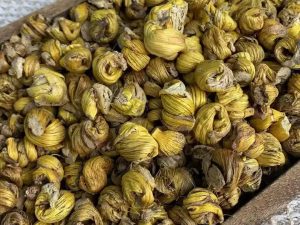
Raw Aconite is a name for a traditional Chinese medicine. It is the root tuber of Aconitum carmichaeli Debx., a plant in the Ranunculaceae family. It is distributed in Sichuan, Yunnan, Shaanxi, Hunan, and other regions. It has the efficacy of restoring yang and reversing critical conditions, and is primarily used to treat yang depletion with imminent collapse, cold extremities, spontaneous cold sweats, and a faint pulse on the verge of disappearing.

Raw Aconite
Raw Aconite is a name for a traditional Chinese medicine. It is the root tuber of Aconitum carmichaeli Debx., a plant in the Ranunculaceae family. It is distributed in Sichuan, Yunnan, Shaanxi, Hunan, and other regions. It has the efficacy of restoring yang and reversing critical conditions, and is primarily used to treat yang depletion with imminent collapse, cold extremities, spontaneous cold sweats, and a faint pulse on the verge of disappearing.
Chinese Name : 生附子
Latin Name : ACONITI LATERALIS RADIX PRAEPARATA
Authentic Producing Area : Sichuan
Nature, Flavor & Meridian Tropism : Pungent in taste, extremely hot in nature; circulates through the Twelve Meridians
Benefits & Efficacy
Benefits
Restores yang and reverses collapse.
Indications
Used for yang collapse on the verge of resolution, cold and numb limbs, spontaneous cold sweats, and a faint pulse on the verge of disappearing.
Usage and Dosage
One piece. Decoct for a long time.
Precautions
Contraindicated in cases of yin deficiency with yang excess or true heat with false cold. Contraindicated for pregnant women.
Chemical Constituents
Contains various alkaloids, including aconitine and hypoaconitine.
Pharmacological Actions
It has cardiotonic, antiarrhythmic, anti-shock, vasodilatory, and blood flow-enhancing effects, as well as the ability to boost adrenal cortical function and provide protection against cold.
Relevant Discussions
*Tangye Bencao*: Aconite is a remedy that enters the Shao Yang, San Jiao, and Ming Men channels; it penetrates all levels—from the floating to the deep—and reaches everywhere. Its pungent taste and intense heat make it the “Yang within Yang”; thus, it moves without ceasing, unlike Dried Ginger, which stops without moving. It must not be used indiscriminately for those with a cool body surface and cold extremities; if used in such cases, it is specifically to treat counterflow conditions.
Applications
Clinical Applications
For treating vomiting, diarrhea, profuse sweating, fever, aversion to cold, stiffness of the limbs, and cold extremities: 2 liang of licorice (roasted), 1.5 liang of dried ginger, and one Aconite root (raw, peeled, and split into eight pieces). Combine these three ingredients with 3 sheng of water, boil until reduced to 1 sheng and 2 he, strain out the residue, and divide the decoction into two doses to be taken warm.For robust individuals, use one large Aconite root and three liang of Dried Ginger. (*Treatise on Cold Damage*, Four Reversals Decoction)
Medicinal Identification
Raw Aconite and Processed Aconite: Raw Aconite has a sharp, dispersing nature, while the ability of Processed Aconite to dispel cold is significantly reduced. When used raw, it has a floating nature, primarily moving upward and outward, with a tendency toward warming and dispersing; when processed, it has a sinking nature, moving downward and into the interior, excelling in warming and tonifying.
Processing & Preparation
Harvesting & Processing
Harvest from late June to early August; remove the mother root, fibrous roots, and soil.
Crude Drug Identification
Botanical Information
Botanical Classification
A plant of the Ranunculaceae family, Aconitum.
Morphological Characteristics
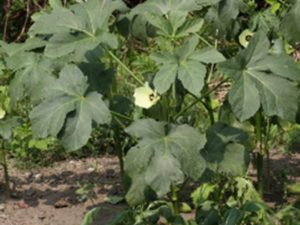
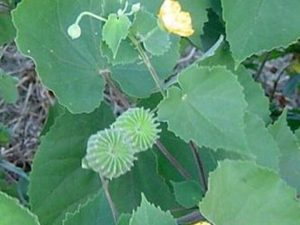
A perennial herb. The stem is erect, smooth and glabrous at the base, with a few scattered appressed soft hairs on the upper part. Leaves are alternate and petiolate; the leaf blade is ovate, deeply palmately 3-lobed, with the lateral lobes further divided into two, and the margins coarsely toothed or notched. The inflorescence is a terminal raceme; the rachis and the floral pedicels are densely covered with soft hairs;Flowers are blue-violet; there are 5 sepals, with the upper sepal high and helmet-shaped, 2–65px tall, and the lateral sepals 1.5–50px long; there are 2 petals with long claws, and a spur 0.1–7.5px long; numerous stamens; 3–5 carpels. 3–5 capsules.Flowering period: June–July; fruiting period: July–August.
Distribution Area
Distributed in Sichuan, Yunnan, Shaanxi, Hunan, and other areas.