Laohuli is the name of a traditional Chinese medicine. It consists of the stems and leaves of Dendrocnides sinuata (Bl.) Chew, a plant in the Urticaceae family. It is distributed in Hainan, Guangxi, Yunnan, Tibet, and other regions. It has the efficacy of dispersing blood stasis and reducing swelling. It is commonly used to treat swelling caused by trauma and fractures.

Laohuli
Laohuli is the name of a traditional Chinese medicine. It consists of the stems and leaves of Dendrocnides sinuata (Bl.) Chew, a plant in the Urticaceae family. It is distributed in Hainan, Guangxi, Yunnan, Tibet, and other regions. It has the efficacy of dispersing blood stasis and reducing swelling. It is commonly used to treat swelling caused by trauma and fractures.
Chinese Name : 老虎俐
Latin Name : Laportea siuata (Bl.) Miq
Aliases : Guardian of Heaven’s Gate, Unrivaled Under Heaven, Untouchable, Artemisia sinuata, Round-toothed Artemisia
Authentic Producing Area : Hainan, Guangxi, Yunnan, Tibet
Nature, Flavor & Meridian Tropism : Pungent in taste, warm in nature
Benefits & Efficacy
Benefits
Dispels blood stasis and reduces swelling.
Indications
Traumatic injuries with swelling, fractures.
Usage and Dosage
External use: Apply an appropriate amount of pounded tender stems and leaves as a poultice.
Precautions
The thorns on the plant are poisonous; take care not to prick your skin when using it.
Chemical Constituents
The spiny hairs contain formic acid and oxalic acid.
Relevant Discussions
*Xinhua Bencao Gangyao*: Entire plant: Toxic. Used for contusions and fractures.
Applications
Processing & Preparation
Harvesting & Processing
Can be harvested year-round; use fresh or sun-dried.
Crude Drug Identification
Properties of Crude Drugs
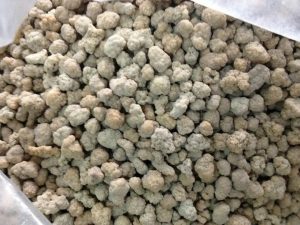
Leaves are elliptical, elliptic, or oblong-lanceolate, with an acute apex and a wedge-shaped base; margins are entire or slightly wavy; lateral veins of the pinnate venation are connected near the margin; the surface is green or dark green, with the upper surface relatively rough (densely covered with punctate stalactites), and the lower surface of the leaf bears prickly hairs. The texture is slightly thick. It has a faint odor and a bitter, astringent taste.
Botanical Information
Botanical Classification
A plant of the Urticaceae family, the whole-leaved fire hemp tree.
Morphological Characteristics
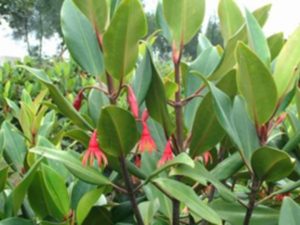
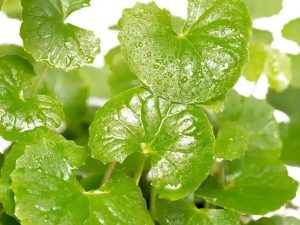
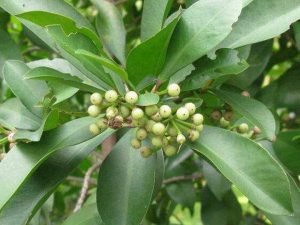
The whole-leaved fire hemp tree, also known as the whole-leaved fire hemp or the whole-margined fire hemp tree. An evergreen shrub or small tree, 3–7 meters tall; branches spreading, stout, slightly fleshy toward the upper part, gray-green, sparsely covered with prickly hairs.Leaves are leathery or stiff papery, with variable shapes: elliptic, elliptic-lanceolate, oblong, or obovate-lanceolate, rarely rhombic, 10–45 cm long and 5–20 cm wide, with an apex acute to long acuminate; the base is cuneate, rounded, truncate, or deeply cordate; the margin is entire, undulate, undulate-rounded-toothed, or irregularly shallowly toothed;nearly glabrous on both surfaces or sparsely covered with spiny hairs along the veins on the underside; lenticels fine and punctate, particularly prominent on the upper surface; with pinnate venation; 8–15 pairs of lateral veins, the lowest 1–2 pairs arising nearly straight and extending to the margin, while the pairs above are arcuate and interlaced near the margin; veins distinctly raised on the underside;Petiole 2–10 cm long, sparsely covered with soft hairs and bristles; stipules nearly leathery, ovate-lanceolate, 1.5–2.5 cm long, brown, with fine hairs on the outer surface.Inflorescences are dioecious, panicle-like, with relatively short branches; the rachis and branches are covered with spiny hairs, which are denser on the corymbs; male inflorescences are 5–10 cm long; female inflorescences are 10–20 cm long, with corymbs lacking an enlarged fleshy receptacle. Male flowers are nearly sessile, 1.2 mm long when in bud;The perianth consists of 4 segments, sparsely covered with fine hairs and small spines on the outer surface; there are 4 stamens; the rudimentary pistil is obovate, approximately 0.5 mm long. Female flowers are pedicellate; the perianth consists of 4 segments, fused to the middle, of unequal size—the 2 lateral segments are triangular-ovate, nearly 1 mm long, while the 2 dorsal and ventral segments are narrowly ovate and slightly shorter, with fine punctate stalactites and sparse small spines on the outer surface;The stigma is filiform, erect, and 2–3 mm long. The achene is long-stalked, pale green when fresh and turning purplish-black when dry; it is pear-shaped and flattened, 5–6 mm long, with a slightly oblique apex that abruptly narrows into a short beak-like tip; the persistent stigma is curved and bears wart-like projections on both surfaces. Flowering occurs from fall through the following spring; fruiting occurs in fall and winter.
Distribution Area
Distributed in Hainan, Guangxi, Yunnan, Tibet, and other regions.