Scissors-leg is the name of a traditional Chinese medicine. It is the whole plant of Xeris debilis A. Gray, a member of the Asteraceae family. It has the effects of clearing heat, detoxifying, promoting urination, and reducing swelling. It is primarily used to treat lung abscesses, sore throat, red eyes, mastitis, boils, carbuncles, and sores, as well as edema and difficulty urinating.
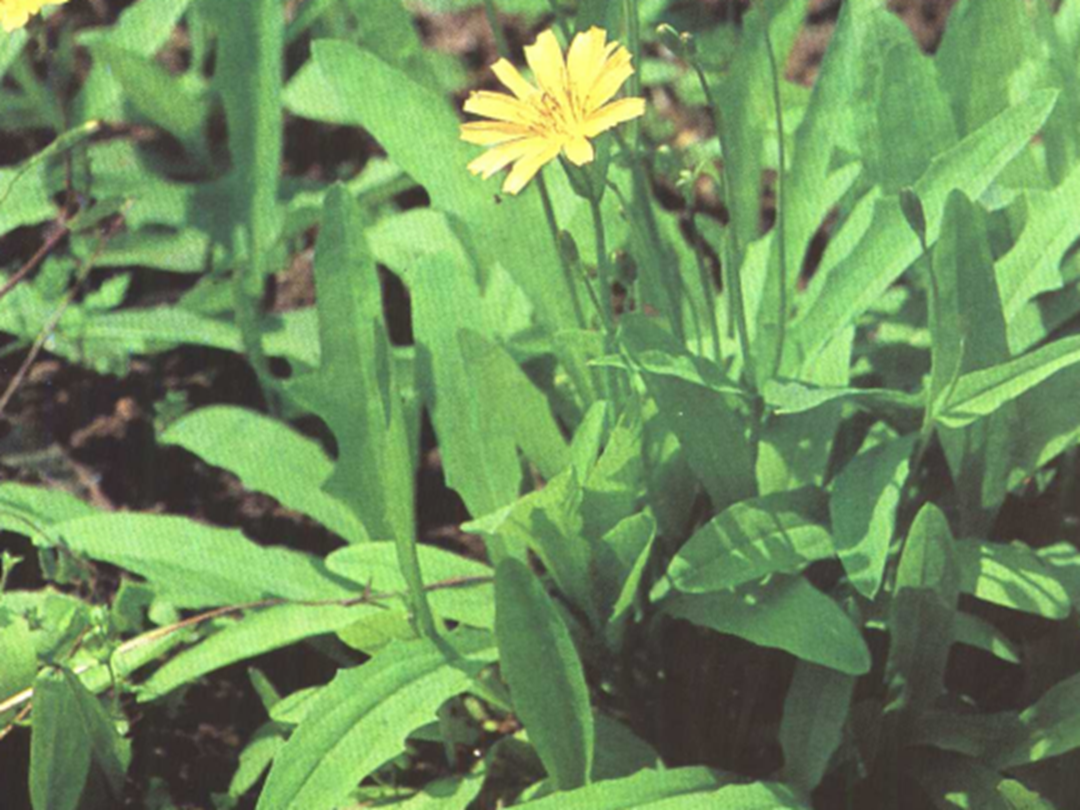
Scissors-Leg
Scissors-leg is the name of a traditional Chinese medicine. It is the whole plant of Xeris debilis A. Gray, a member of the Asteraceae family. It has the effects of clearing heat, detoxifying, promoting urination, and reducing swelling. It is primarily used to treat lung abscesses, sore throat, red eyes, mastitis, boils, carbuncles, and sores, as well as edema and difficulty urinating.
Chinese Name : 剪刀股
Aliases : False Dandelion, Dandelion, Duck’s Tongue Grass, Goose Dandelion
Nature, Flavor & Meridian Tropism : Bitter in taste, cold in nature; enters the Stomach, Liver, and Kidney meridians
Benefits & Efficacy
Benefits
Clears heat and detoxifies; promotes urination and reduces swelling.
Indications
Lung abscesses, sore throat, red eyes, mastitis, boils, carbuncles, and skin ulcers, edema, and difficulty urinating.
Usage and Dosage
Internal use: Decoct 10–15 g. External use: Apply an appropriate amount after pounding into a paste.
Precautions
1. Use with caution in patients with qi and blood deficiency. 2. *Compendium of Guangxi Traditional Chinese Medicine*: “Contraindicated for those with a cold and deficient constitution, weak qi, and deficient blood.”
Chemical Constituents
Lipids: 26-sterol, palmitic acid. Terpenoids: xererisides A–N, taraxasterol, α-amyrin, β-amyrin, germanin, oleanolic acid, ursolic acid, lupeol, etc.
Pharmacological Actions
Antimicrobial activity: Scissors-leg has inhibitory effects on both Staphylococcus aureus and Streptococcus pneumoniae.
Relevant Discussions
1. *Compendium of Guangxi Traditional Chinese Medicine*: “Clears heat toxins, resolves abscesses and swellings, cools the blood, and promotes diuresis. Treats mastitis, carbuncles, gonorrhea, edema, and redness, swelling, and pain of the eyes.”
2. *Compendium of Chinese Herbal Medicines*: “Clears heat and cools the blood; promotes urination and reduces swelling. Treats cough due to lung heat, sore throat, oral ulcers, acute conjunctivitis, appendicitis, edema, and difficulty urinating; used externally to treat mastitis, boils and abscesses, and skin itching.”
3. *Fujian Materia Medica*: “Clears heat and detoxifies. Primarily used to treat mumps, lung abscesses, pharyngitis, bronchitis, nocturnal emissions, neck abscesses, mastitis, and plantar abscesses.”
Applications
Clinical Applications
In modern clinical practice, it is used to treat acute mastitis, skin follicular infections, lung abscesses, appendicitis, itchy eczema, acute urinary tract infections with painful and difficult urination, and edema, among other conditions.
Related Compatibility
1. For mumps: 15 g of Scissors-Thigh root and 1 green-shelled duck egg. Simmer in water and drink the decoction.
2. For lung abscess: 30g each of Scissors-Thigh and Gourd Tea. Decoct in water and mix with honey or rock sugar before drinking.
3. For neck abscess: 120g of fresh Scissors-Thigh, 90g of fresh Tendon-Bone Grass, and 20g of winter honey. Pound into a paste and apply topically twice daily, morning and evening.
4. For nocturnal emissions: 15–30 g of Scissors-leg. Decoct in water; use the decoction to stew pork tripe or lean pork, then consume. (Recipes 1–4 are from *Fujian Materia Medica*)
5. For mastitis and carbuncles: Fresh Scissors-leg, pounded into a paste and applied topically. (*Manual of Common Chinese Herbs*, Guangzhou Air Force)
Processing & Preparation
Harvesting & Processing
Harvest in spring, wash thoroughly, and use fresh or sun-dry.
Crude Drug Identification
Properties of Crude Drugs
The main root is cylindrical or spindle-shaped, with a surface ranging from grayish-yellow to brownish-yellow. Leaves are basal, often fragmented or shriveled and curled; when intact and flattened, the leaf blade is spoon-shaped and oblanceolate, 5–15 cm long and 1.5–3 cm wide, with a blunt apex and a base extending downward into a petiole; the margin is entire or sparsely serrated, or deeply pinnately lobed.The flower stalk often bears incomplete capitula or involucres. Occasionally, oblong, flattened achenes are present. Slight odor; bitter taste.
Botanical Information
Botanical Classification
Scissors-leg, a plant of the Asteraceae family.
Morphological Characteristics
A perennial herb, 10–30 m tall. The entire plant is glabrous and has creeping stems. Basal leaves are rosette-shaped, with the leaf base extending downward to form a petiole; the leaf blade is spatulate-oblanceolate to obovate, 5–25 cm long and 1–3 cm wide, with a blunt apex, a base that extends downward, and margins that are entire or sparsely serrate or pinnately lobed toward the base;Leaves on the flower stalk number only 1–2, entire, and sessile. Heads 1–6; pedunculate; involucre 1–1.5 cm long; outer involucral bracts ovate; inner involucral bracts ca. 8, oblong-lanceolate, with a blunt apex; ray florets yellow, ca. 1.5 cm long.Achenes turn reddish-brown when mature, 5–6 mm long, with a beak 2–3 mm long; pappus white, 5–7 mm long. Flowering period: April–May.
Distribution Area
Distributed in Northeast China, East China, and Central and South China.