Magnolia Bark is the name of a traditional Chinese medicine. It consists of the dried bark, root bark, and branch bark of Magnolia officinalis Rehd. et Wils. or Magnolia officinalis Rehd. et Wils. var. biloba Rehd. et Wils., plants belonging to the genus Magnolia in the family Magnoliaceae. It has the therapeutic effects of dispelling dampness and phlegm, as well as descending qi and relieving fullness.It is primarily used to treat dampness stagnation affecting the middle burner, epigastric fullness with vomiting and diarrhea, food stagnation and qi stagnation, abdominal distension and constipation, as well as phlegm-fluid retention accompanied by wheezing and cough.

Magnolia officinalis
Magnolia Bark is the name of a traditional Chinese medicine. It consists of the dried bark, root bark, and branch bark of Magnolia officinalis Rehd. et Wils. or Magnolia officinalis Rehd. et Wils. var. biloba Rehd. et Wils., plants belonging to the genus Magnolia in the family Magnoliaceae. It has the therapeutic effects of dispelling dampness and phlegm, as well as descending qi and relieving fullness.It is primarily used to treat dampness stagnation affecting the middle burner, epigastric fullness with vomiting and diarrhea, food stagnation and qi stagnation, abdominal distension and constipation, as well as phlegm-fluid retention accompanied by wheezing and cough.
Chinese Name : 厚朴
Latin Name : Magnoliae Officinalis Cortex
Aliases : Houpi, Chongpi, Chipu, Liepu, Chuanpu, Ziyou Houpo
Authentic Producing Area : Sichuan, Hubei, Zhejiang, Anhui
Nature, Flavor & Meridian Tropism : Taste: bitter, pungent; Nature: warm; Enters the Spleen, Stomach, Lung, and Large Intestine meridians
Benefits & Efficacy
Benefits
Dries dampness and resolves phlegm; descends qi and relieves fullness.
Indications
Dampness stagnation injuring the middle burner, epigastric fullness with vomiting and diarrhea, food stagnation and qi stagnation, abdominal distension and constipation, phlegm-fluid retention with wheezing and cough.
Usage and Dosage
Internal use: Decocted, 3–10 g. May also be incorporated into pills or powders.
Precautions
1. Magnolia Bark is bitter, pungent, warm, and drying; it can easily deplete qi and body fluids, so it should be used with caution in patients with qi deficiency or fluid deficiency, as well as in pregnant women. 2. Magnolia Bark is contraindicated with nitre and Alisma; they must not be used together. 3. Long-term use of Magnolia Bark in combination with streptomycin, kanamycin, polymyxin, and similar drugs may exacerbate toxic reactions such as respiratory depression. 4. While taking Magnolia Bark, avoid raw, cold, and sticky foods; avoid legumes.
Chemical Constituents
It primarily contains lignans, alkaloids, and essential oils.The major components of the lignans include magnolol, tetrahydromagnolol, isomagnolol, magnolol, eugenol, and magnolaldehyde; from the demethyllignans, magnoltriol and magnolaldehyde have been primarily isolated; and from the monoterpene lignans, menthol-magnolol and borneol-magnolol have been isolated.The essential oil of Magnolia officinalis is one of its primary chemical constituents, accounting for approximately 1%. It is dominated by eucalyptol and also contains eucalyptol, alkenes, esters, alkanes, and other alcohols. The alkaloids in Magnolia officinalis are primarily magnoline and mustard aldehyde.
Pharmacological Actions
This product has effects such as regulating gastrointestinal function, inhibiting pathogenic microorganisms, reducing inflammation, and relieving pain.
Relevant Discussions
1. *Shennong Bencao Jing*: “Bitter in taste, warm in nature. Mainly used to treat stroke, typhoid fever, headache, alternating chills and fever, palpitations, qi and blood stagnation, necrotic muscle, and to expel the three types of parasites.”
2. *Mingyi Bielu*: “It warms the middle burner, tonifies qi, resolves phlegm, descends qi, treats cholera and abdominal pain, distension and fullness, cold reversal in the stomach, unceasing vomiting and retching in the chest, diarrhea and dysentery, dysuria, dispels fright, eliminates retained heat, relieves restlessness and fullness, and strengthens the stomach and intestines.”
Applications
Clinical Applications
1. For epigastric and abdominal distension and fullness caused by dampness stagnation in the middle jiao, accompanied by a white, greasy tongue coating, it is commonly used in combination with Atractylodes, Tangerine Peel, and Licorice, as in the Pingwei Powder (from *Taiping Huimin Heji Jufang*).
2. To treat constipation and abdominal distension caused by gastrointestinal stagnation, it is commonly used with Rheum palmatum and Zhi Shi, as in the Hou Po San Wu Tang (from *Treatise on Cold Damage*).
3. To treat wheezing, cough, and chest tightness caused by internal obstruction of phlegm-dampness and counterflow of lung qi, it is used with Perilla Seed, Chen Pi, and Ban Xia, as in the Su Zi Jiang Qi Tang (from *Taiping Huimin Heji Jufang*).
4. To treat cold fluid transforming into heat, manifested as coughing, wheezing, chest fullness, restlessness, a sore throat, and rattling phlegm sounds, it is often used in combination with Ephedra, Gypsum, and Apricot Kernel, as in the Houpo-Ephedra Decoction (*Essentials of the Golden Cabinet*).
5. For treating chronic asthma in which the patient has been re-exposed to wind-cold, and mild wheezing persists while the exterior syndrome has not yet resolved, it can be used in combination with Guizhi, Xingren, and Shengjiang, as in the Guizhi Jia Houpo Xingzi Decoction (*Treatise on Cold Damage*).
6. When combined with Banxia, Fuling, and Suye, it can be used to treat plum-kernel qi caused by phlegm and qi congealing in the throat.
Related Compatibility
1. Magnolia Bark Combined with Ephedra: Magnolia Bark is bitter and descends qi to relieve wheezing; its warming nature dries dampness and eliminates phlegm. Ephedra primarily ascends and disperses, promoting lung function and relieving wheezing. When used together, one disperses and the other descends, allowing lung qi to circulate freely. Suitable for conditions involving phlegm-dampness, wheezing, and coughing.
2. Magnolia Bark Combined with Rhubarb: Magnolia Bark is bitter and descends, while its pungent nature disperses stagnation; thus, it promotes qi circulation, eliminates fullness, and clears stagnation.Rhubarb is bitter and cold, with a descending nature, and is highly effective at purging heat. When used together, these two herbs enhance the purgative effect and the ability to eliminate food stagnation. This combination is suitable for cases of abdominal distension and constipation.
3. Magnolia Bark Combined with Fructus Aurantii: Magnolia Bark excels at relieving distension, while Fructus Aurantii excels at eliminating food stagnation. When combined, these two herbs synergize to powerfully descend qi and relieve fullness. This combination is suitable for qi stagnation with food stagnation and epigastric and abdominal distension.
4. Magnolia Bark combined with Hawthorn: Magnolia Bark has a bitter taste that descends and purges, and a pungent nature that disperses stagnation; it serves to regulate qi, eliminate mass, clear food stagnation, and resolve stagnation. Hawthorn is sour and sweet, and excels at aiding digestion and resolving food stagnation. When used together, these two herbs synergistically regulate qi and aid digestion. This combination is used for food stagnation and qi stagnation, characterized by belching of putrid odors, acid regurgitation, epigastric and abdominal distension and pain, and a sensation of fullness and discomfort.
5. Magnolia Bark Combined with Pinellia: Magnolia Bark dries dampness, resolves phlegm, descends qi, and relieves epigastric fullness; Pinellia, with its pungent nature, disperses nodules, transforms phlegm, and resolves epigastric fullness. When used together, these two herbs work synergistically to regulate qi, relieve depression, transform phlegm, and disperse nodules. This combination is suitable for “plum-kernel qi syndrome” caused by emotional stagnation and mutual obstruction of phlegm and qi.
6. Magnolia Bark Combined with Apricot Kernel: Magnolia Bark resolves phlegm, descends qi, and relieves fullness; Apricot Kernel promotes lung function, descends counterflow qi, and alleviates wheezing.When used together, these two herbs have the effect of promoting lung function, descending qi, resolving phlegm, and relieving wheezing; they are used for conditions involving qi reversal, wheezing, and coughing.
7. Houpo combined with Suzi: Houpo excels at drying dampness, resolving phlegm, descending qi, and relieving wheezing; Suzi excels at descending lung qi and resolving phlegm and mucus. When used together, these two herbs work to resolve phlegm and mucus while relieving wheezing and coughing; they are used for conditions where phlegm and fluid obstruct the lungs, lung qi fails to descend, and patients experience coughing, wheezing, and chest tightness.
Medicinal Identification
1. Raw Magnolia Bark and Ginger-Processed Magnolia Bark: These are two different processed forms of Magnolia Bark. Due to differences in processing methods, their therapeutic effects have distinct emphases. Magnolia Bark dries dampness, resolves phlegm, descends qi, and relieves distension; when used raw, its potency is relatively strong. After ginger processing, its efficacy in relieving chest congestion, harmonizing the stomach, and stopping vomiting is enhanced. It is generally considered that raw Magnolia Bark is more suitable for drying dampness and relieving distension, while ginger-processed Magnolia Bark is more suitable for stopping vomiting.
2. Atractylodes (Cang Zhu) and Magnolia (Hou Po): Both are aromatic herbs that transform dampness; they are pungent, bitter, warm, and drying, primarily entering the Spleen and Stomach meridians. Both can dry dampness and regulate the spleen, and are commonly used to treat epigastric and abdominal distension, loss of appetite, nausea and vomiting, fatigue and weakness, and a turbid, greasy tongue coating caused by dampness obstructing the middle jiao. The two are often used in combination to enhance each other’s effects.However, the distinction lies in the fact that Atractylodes is a key herb for drying dampness and strengthening the spleen; it can be used in all cases where spleen dampness predominates, such as phlegm-fluid retention, edema, and leukorrhea. It can also dispel wind-dampness, induce sweating, and improve vision, and is frequently used to treat wind-cold-dampness arthralgia, pain in the limbs and joints, as well as swelling and pain in the feet and knees, weakness, and atrophy caused by damp-heat descending to the lower body,exterior syndromes caused by exogenous wind-cold with dampness, as well as night blindness and blurred vision. Although Houpo is not as effective as Cangzhù in drying dampness, it can regulate qi and resolve food stagnation. It is suitable for conditions such as spleen-stomach disharmony caused by dampness obstruction, food stagnation, or qi stagnation, resulting in epigastric and abdominal distension; it is a key herb for relieving distension. It can also descend qi to relieve wheezing and is used to treat phlegm-fluid retention with wheezing and cough, as well as qi reversal with excessive phlegm.
Related Medicines
Zhongman Fenxiao Pills, Suzi Jiangqi Pills, and Kaixiong Shunqi Pills.
Related Prescriptions
Xiao Chengqi Decoction (*Treatise on Cold Damage*), Banxia Houpo Decoction (*Essentials of the Golden Cabinet*), Houpo Wenzhong Decoction (*Discourse on Distinguishing Confusions in Internal and External Injuries*), Pingwei Powder (*Concise Formulas for the Benefit of the Masses*), and Houpo Mahuang Decoction (*Essentials of the Golden Cabinet*).
Medicinal Diet Therapy
Hibiscus Tea
1. Benefits: Helps prevent and alleviate symptoms of the flu.
2. Ingredients: 1 water hibiscus flower, 6 g Magnolia officinalis.
3. Preparation: Rinse the water lotus flower thoroughly in clean water, drain, and place it in a pot. Quickly rinse the Magnolia Bark under clean water and add it to the pot as well. Add 3 bowls of water and simmer. Bring to a boil over high heat, then reduce to low heat and simmer for about 10 minutes. Remove the Magnolia Bark, retain the liquid, and drink it as tea.
4. Usage: Drink 1 cup daily in place of tea.
Notes
Patients requiring treatment with traditional Chinese medicine should first consult a licensed TCM hospital, where a TCM practitioner will conduct a professional diagnosis and prescribe the appropriate herbal formula.
Processing & Preparation
Harvesting & Processing
Harvest from April to June; air-dry the root bark and branch bark directly in the shade. Place the dried bark in boiling water and simmer briefly; then pile it in a shaded, damp area to “induce sweating” until the inner surface turns purplish-brown or brownish-black. Steam until soft, remove, roll into tubes, and dry.
Processing Methods
1. Magnolia Bark
Take the raw herb, scrape off the coarse outer bark, wash thoroughly, moisten thoroughly, cut into strips, and dry.
2. Ginger-Processed Magnolia Bark
(1) Take strips of Magnolia Bark, mix thoroughly with ginger juice, moisten thoroughly, place in a pan, heat over low heat, stir-fry until dry, remove, and allow to cool. Use 10 kg of fresh ginger for every 100 kg of Magnolia Bark.
(2) Take cleaned Magnolia officinalis, cut it into long sections. Separately, pound fresh ginger into a paste and boil to extract the juice. Repeatedly drizzle the juice over the Magnolia officinalis until thoroughly moistened to the core, then simmer until the liquid is completely absorbed. Remove, cut into strips, and dry. Use 20 kg of fresh ginger for every 100 kg of Magnolia officinalis.
(3) Take clean slices of fresh ginger, add an appropriate amount of water, and boil to extract the juice. Strain out the solids, then spray the ginger juice onto the Magnolia officinalis strips until thoroughly moistened, and air-dry. Use 10 kg of fresh ginger for every 100 kg of Magnolia officinalis.
(4) Grind fresh ginger to extract its juice, mix it with Magnolia officinalis, and steam until thoroughly permeated. Slice, roast until 80% dry, and seal in a clay jar for 6–8 months.For every 100 kg of Magnolia bark, use 12 kg of aged ginger.
3. Preparation of Magnolia Bark with Medicinal Decoction
Take cleaned Magnolia bark slices and mix them with the following medicinal decoction while it is still hot, ensuring even absorption and thorough mixing. Sun-dry or dry at a low temperature, then sift out any debris: For every 100 kg of cleaned Magnolia bark slices, use 10 kg of fresh ginger or 1.7 kg of dried ginger, add about 15 kg of water, and decoct for 1 hour;then add 5 kg of Perilla leaves and simmer for another 15–20 minutes; strain to remove the residue and retain the decoction; or take the raw material, soak it in clean water for 3–6 hours, place it in a copper pot, add Perilla leaves and ginger, cover the herbs with water, boil for 8 hours, and let it steep over residual heat for 16 hours; remove, scrape off the coarse bark, and slice;Then take the decoction after straining out the perilla leaves and ginger, pour it over the Magnolia officinalis slices, and let them absorb the liquid before sun-drying. For every 100 kg of Magnolia officinalis, use 5 kg of perilla leaves and 10 kg of ginger.
Storage Methods
Store in a dry container; keep Ginger-Processed Magnolia Bark and Decoction-Processed Magnolia Bark tightly sealed and place in a cool, dry location.
Crude Drug Identification
Identification
1. Cross-section of this product: The cork layer consists of more than 10 rows of cells; in some specimens, the periderm is visible. On the outer side of the cortex is a ring of stone cells, while the inner side contains numerous scattered oil cells and clusters of stone cells. The phloem rays are 1–3 cells wide; fibers are mostly arranged in bundles; oil cells are also scattered throughout.
The powder is brown. Fibers are very numerous, with a diameter of 15–32 μm; their walls are very thick, some are wavy or serrated on one side, lignified, and with indistinct pits and grooves.Stone cells are square, elliptical, ovoid, or irregularly branched, with a diameter of 11–65 μm; striations are sometimes visible. Oil cells are elliptical or nearly circular, with a diameter of 50–85 μm, containing yellowish-brown oily substances.
2. Take 0.5 g of the powdered sample, add 5 mL of methanol, seal tightly, shake for 30 minutes, filter, and use the filtrate as the test solution. Separately, prepare a reference solution containing 1 mg of each of the magnolol reference standards in methanol.Perform the test according to the Thin-Layer Chromatography method (General Chapter 0502). Pipette 5 μL of each of the two solutions mentioned above and apply them separately onto the same silica gel G plate. Develop with a toluene-methanol (17:1) mobile phase, remove the plate, allow it to air-dry, and spray with a 1% vanillin-sulfuric acid solution. Heat at 100°C until the spots become clearly visible.In the chromatogram of the test sample, spots of the same color appear at positions corresponding to those in the reference standard chromatogram.
Properties of Crude Drugs
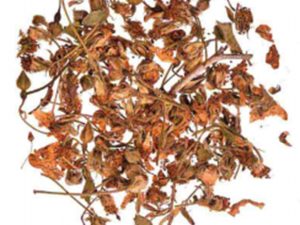
1. Dried bark: Roll-shaped or double-roll-shaped, 30–35 cm long and 2–7 mm thick; commonly known as “tongpu”; the end of the dried bark near the root flares out like a trumpet mouth and is commonly known as “xuetongpu.”The outer surface is grayish-brown or grayish-brown, rough, with scaly cork that peels off relatively easily; it has distinct oval lenticels and longitudinal wrinkles; when the cork is scraped off, the surface appears yellowish-brown. The inner surface is purplish-brown or dark purplish-brown, with fine, dense longitudinal striations; when scratched, it reveals an oily streak.It is hard and difficult to break. The cross-section is granular; the outer layer is grayish-brown, while the inner layer is purplish-brown or brown, with an oily texture; in some specimens, numerous small, shiny specks are visible. It has a fragrant aroma, a pungent taste, and a slightly bitter aftertaste.
2. Root Bark (Genpu): The bark of the main root and lateral roots, 3–5 mm thick, with varying shapes, including cylindrical, flake-like, and sheep-ear-shaped forms; the bark of small roots is curved like chicken intestines and is commonly known as “chicken-intestine bark.” The outer surface is grayish-yellow or grayish-brown. It is somewhat hard and breaks relatively easily; the fracture surface is fibrous.
3. Branch Bark (Zhi Pu): Single-tubular in shape, 10–20 cm long, and 1–2 mm thick. The outer surface is grayish-brown, and the inner surface is yellowish-brown. It is brittle, breaks easily, and has a fibrous cross-section.
Properties of Processed Slices
1. Magnolia Bark: Filamentous, 2–3 mm wide, with a brownish or purplish-brown outer surface that is relatively smooth. The cross-section is rough, with a distinct oily sheen; some specimens may exhibit numerous small specks. It has a fragrant aroma and a pungent, slightly bitter taste.
2. Ginger-processed Magnolia Bark: Resembles Magnolia Bark in shape, but with a darker color and a slight pungent, ginger-like odor.
3. Decoction-processed Magnolia Bark: Resembles Magnolia Bark in shape, with a darker color and a faint mixed odor of perilla and ginger.
Botanical Information
Botanical Classification
Magnolia and Magnolia concava, plants of the genus Magnolia in the family Magnoliaceae.
Morphological Characteristics
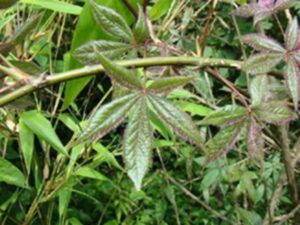
1. Magnolia officinalis: A deciduous tree, 5–15 m tall. The bark is purplish-brown; the twigs are stout, pale yellow or grayish-yellow. Winter buds are large and conical, with bud scales covered in pale yellow downy hairs. The petioles are stout, 2.5–4 cm long, with stipule scars extending to about two-thirds the length of the petiole.Leaves are nearly leathery and large, clustered in groups of 7–9 at branch tips; they are oblong-obovate, 22–46 cm long and 15–24 cm wide, with a short acute or bluntly rounded apex and a base tapering gradually to a wedge shape; the upper surface is green and glabrous, while the lower surface is gray-green and covered with gray pubescence.Flowers are solitary, fragrant, 10–15 cm in diameter; the perianth consists of 9–12 or more segments, with the outer whorl of 3 green segments curling outward when fully open, and the inner two whorls white and obovate-spatulate; stamens are numerous, 2–3 cm long, with red filaments; pistils are numerous and free.The aggregate fruit is oblong, 9–15 cm long, with a 2–3 mm beak on the silique. The seeds are triangular-obovate, with a red outer seed coat. Flowering occurs from April to May, and fruiting from September to October.
2. Concave-leaved Magnolia: This species closely resembles Magnolia officinalis; the main distinction is that the leaf apex of this species is concave, forming two blunt, rounded, shallow lobes. The base of the aggregate fruit is narrower. Flowering period: April–May; fruiting period: September–October.
Distribution Area
1. Magnolia officinalis: Distributed in Shaanxi, Gansu, Zhejiang, Jiangxi, Hubei, Hunan, Sichuan, Guizhou, and other regions. 2. Magnolia incisa: Distributed in Anhui, Zhejiang, Jiangxi, Fujian, and Hunan.
Growth Habits
1. Magnolia officinalis: Prefers a mild and humid climate; is intolerant of intense heat but cold-hardy. Seedlings are sensitive to strong sunlight, while mature trees thrive in sunny locations. It is best cultivated in loose, fertile, humus-rich, neutral or slightly acidic sandy loam. It can also be grown in mountainous yellow soil or yellow-red soil. 2. Concave-leaved Magnolia: Prefers warm conditions, is more heat-tolerant than Magnolia officinalis, grows more rapidly, and is also cold-tolerant. It thrives best in loose, fertile, humus-rich, neutral or slightly acidic sandy loam.
Propagation Methods
Propagation is by seed, layering, and cuttings.
Cultivation Techniques
1. Seed Propagation: Harvest ripe fruits in September–October or October–November and sow immediately, or store them in moist sand until spring for sowing. Before sowing, soak the seeds for 48 hours, then rub off the waxy coating with sand.Sow primarily in rows with a spacing of 30 cm × 33 cm, placing seeds 3–6 cm apart in the furrows, then cover with soil and straw. Seed rate is 150–225 kg per hectare. Weed regularly during the seedling stage, apply fertilizer 1–2 times per year, prevent waterlogging during the rainy season, and erect a shade structure.
2. Layering Propagation: In early November or February, select suckers from mature trees that are at least 10 years old. Cut the sucker stem horizontally in half, bend it in the opposite direction of the cut to split the stem lengthwise, place a small stone in the split, and cover with soil. The following year, after numerous roots have formed, cut the layer and transplant it.
3. Propagation by Cuttings: In February, select 1- to 2-year-old branches with a stem diameter of 1 cm. Cut them into cuttings approximately 20 cm long and plant them in a nursery bed for propagation. Propagated seedlings should be transplanted in February–March or October–November after leaf fall. Dig holes with a spacing of 3 m × 4 m or 3 m × 3 m, planting one seedling per hole.
Pest and Disease Control
1. Diseases include leaf blight, which can be controlled by spraying a 1:1:100 Bordeaux mixture; root rot and damping-off can be managed by removing diseased plants, disinfecting the affected planting holes with lime, and spraying a 1,000-fold dilution of 50% Topsin-M.
2. Pests include the brown longhorn beetle; adult beetles can be captured and killed.