Muscovite is the name of a traditional Chinese medicinal material. It is the ore of muscovite (Muscovite), a silicate mineral of the mica group in the monoclinic crystal system. It is primarily produced in Inner Mongolia, Liaoning, Jilin, Hebei, Shandong, Yunnan, Zhejiang, and Jiangsu. It has the effects of calming the mind, alleviating anxiety, promoting wound healing, and stopping bleeding.It is primarily used to treat palpitations, insomnia, dizziness, epilepsy, chronic diarrhea, leukorrhea, bleeding from external injuries, and eczema.

Mica
Muscovite is the name of a traditional Chinese medicinal material. It is the ore of muscovite (Muscovite), a silicate mineral of the mica group in the monoclinic crystal system. It is primarily produced in Inner Mongolia, Liaoning, Jilin, Hebei, Shandong, Yunnan, Zhejiang, and Jiangsu. It has the effects of calming the mind, alleviating anxiety, promoting wound healing, and stopping bleeding.It is primarily used to treat palpitations, insomnia, dizziness, epilepsy, chronic diarrhea, leukorrhea, bleeding from external injuries, and eczema.
Chinese Name : 云母石
Aliases : Mica, Silverite, White Mica, Cloud Pearl, Cloud Flower, Cloud Jade, Cloud Liquid, Cloud Sand, Phosphate, Cloud Powder Stone, Layered Glass, Layered Paper, Golden Star Stone, Old Crow Gold
Nature, Flavor & Meridian Tropism : Sweet in taste, warm in nature; enters the Lung, Heart, and Liver meridians
Benefits & Efficacy
Benefits
Calms the mind and alleviates convulsions; promotes wound healing and stops bleeding.
Indications
Mainly used to treat palpitations, insomnia, dizziness, epilepsy, chronic diarrhea, leukorrhea, bleeding from external injuries, eczema, etc.
Usage and Dosage
1. Internal use: Decocted as a soup; the common dosage is 10–15 g; or prepared as pills or powders for oral administration. 2. External use: Apply an appropriate amount as a powder or as a paste.
Precautions
1. Mica is generally not used in its raw form. After being calcined or quenched in vinegar, it becomes brittle and crumbly, making it easier to pulverize and extract its active ingredients. 2. After external application, monitor the skin for reactions. If allergic symptoms such as redness, swelling, or itching occur, discontinue use immediately. 3. Patients requiring treatment with Mica should first consult a licensed Traditional Chinese Medicine (TCM) hospital to receive a TCM prescription following a professional TCM differential diagnosis.
Chemical Constituents
Mica primarily contains potassium aluminum silicate hydrate (KAl₂(AlSi₃O₁₀)(OH)₂), as well as sodium, magnesium, iron, lithium, and other elements.
Pharmacological Actions
Modern pharmacological research has found that mica possesses hemostatic properties and helps protect the intestinal and gastric mucosa.
Applications
Related Compatibility
1. Calcined and vinegar-processed mica are often combined with ingredients such as white alum to treat conditions such as asthma due to deficiency, dizziness, palpitations, and epilepsy.
2. Calcined and vinegar-processed mica can be combined with ingredients such as dragon bone to treat malaria with pronounced cold symptoms.
Related Prescriptions
For example, Shuqi Powder (*Essentials of the Golden Cabinet*) and others.
Notes
The references for this entry are as follows: 1. *Encyclopedia of Chinese Medicinal Resources: Mineral Medicinal Resources* 2. *The Science of Processing Chinese Herbal Medicines, 2nd Edition*
Processing & Preparation
Harvesting & Processing
It can be harvested year-round. After digging it up, wash off the soil and remove impurities.
Processing Methods
1. Raw Mica: Take the raw herb, remove impurities, wash thoroughly, dry, and tear into thin sheets or grind into powder.
2. Calcined Mica: Take clean mica, place it in a suitable container, and heat over a strong, smokeless fire until it glows red throughout. Remove, allow to cool, then crush or grind into powder.
3. Vinegar-Treated Mica: Take purified mica, place it in a fireproof container, and calcine it over a strong, smokeless fire until it glows red throughout. Quench it with vinegar, remove it, dry it, and crush it when needed. Use 20 kg of vinegar for every 100 kg of mica.
Storage Methods
Store in a dry container in a dry place, taking care to keep it dust-free. Additionally, vinegar-treated mica must be stored in an airtight container in a cool, dry place, and care must be taken to protect it from moisture.
Crude Drug Identification
Properties of Crude Drugs
This product consists of a lamellar aggregate, appearing in plate-like or slab-like forms, which can be easily peeled layer by layer along its lateral edges into very thin sheets. It is colorless and transparent or slightly tinted with pale green or gray. The surface is smooth, with a vitreous or pearly luster. It can be scratched with a fingernail to leave a mark. The thin sheets are light in weight, tough, and elastic; they can straighten on their own after being bent and are not easily broken. It has a faint odor and a mild taste.
Properties of Processed Slices
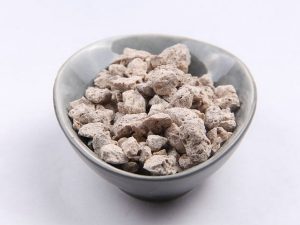
1. Raw Mica: Irregular flakes, colorless or white, with a slight tinge of light yellow-brown, pale green, or pale gray. It has a vitreous luster, is tough, and can be peeled into layers; the thin flakes are smooth, transparent, and elastic. It has an earthy odor and is tasteless.
2. Calcined Mica: A grayish-white or grayish-brown powder that is easily crushed and lacks luster. It has a slight odor of burnt earth and is tasteless.
3. Vinegar Mica: Powdery in form. It is loose and brittle. It has a slight vinegar-like odor.
Botanical Information
Morphological Characteristics
Monoclinic crystal system. Crystals are typically plate-like or massive, appearing hexagonal or rhombohedral in shape; occasionally, individual crystals are conical or columnar, with distinct transverse striations on the prism faces. Twins are also present. Generally colorless, but often exhibiting faint shades of pale yellow, pale green, or pale gray; streak is white. Glassy luster; cleavage surfaces exhibit a pearly luster. Transparent to slightly translucent.
Distribution Area
It is primarily found in Inner Mongolia, Tibet, Liaoning, Jilin, Shaanxi, Xinjiang, Shandong, Jiangsu, Zhejiang, Jiangxi, Hunan, Guangxi, Sichuan, and Yunnan.