Broussonetia fruit, a traditional Chinese medicine. It is the dried, mature fruit of Broussonetia papyrifera (L.) Vent., a plant of the genus Broussonetia in the Moraceae family. It has the effects of tonifying the kidneys, clearing the liver, improving vision, and promoting diuresis. It is primarily used to treat kidney and liver deficiency, soreness and weakness in the lower back and knees, consumptive fever, dizziness and blurred vision, corneal opacities, and edema with abdominal distension.

Paper Mulberry Fruit
Broussonetia fruit, a traditional Chinese medicine. It is the dried, mature fruit of Broussonetia papyrifera (L.) Vent., a plant of the genus Broussonetia in the Moraceae family. It has the effects of tonifying the kidneys, clearing the liver, improving vision, and promoting diuresis. It is primarily used to treat kidney and liver deficiency, soreness and weakness in the lower back and knees, consumptive fever, dizziness and blurred vision, corneal opacities, and edema with abdominal distension.
Chinese Name : 楮实子
Latin Name : Broussonetiae Fructus
Aliases : Gou Shi, Gou Zi, Chu Shi, Chu Tao, Jiao Shu Zi, Ye Yang Mei Zi, Gou Pao, Gou Mu Zi, Gou Shu Zi, Gou Shu Luo Zi
Authentic Producing Area : Henan, Hubei, Hunan, Shanxi, Gansu
Nature, Flavor & Meridian Tropism : Sweet in taste, cold in nature; enters the Liver and Kidney meridians
Benefits & Efficacy
Benefits
Tonifies the kidneys, clears the liver, improves vision, and promotes urination.
Indications
Deficiency of the Liver and Kidney, soreness and weakness in the lower back and knees, consumptive fever, dizziness and blurred vision, opacities on the cornea, edema and distension.
Usage and Dosage
1. Internal use: Decocted, 6–9 g. May also be incorporated into pills or powders. 2. External use: Pounded and applied as a poultice.
Precautions
Use with caution in patients with deficiency-cold patterns.
Chemical Constituents
It primarily contains fatty acids (linoleic acid, palmitic acid, stearic acid, etc.) and alkaloids (such as chlorogenic acid), as well as amino acids and saponins.
Pharmacological Actions
This product has effects such as improving memory, enhancing immune function, and anti-tumor activity.
Relevant Discussions
1. *Comprehensive Study of Medicinal Properties*: This substance is an excellent tonic for yin, nourishing the marrow and vital essence. People have discarded it because of the long-standing belief that prolonged use causes loose stools. The reason *Chu Shi* causes loose stools is due to its moisturizing nature, not because of its rapid downward action. To prevent this effect, administer it together with *Poria*, *Coix Seed*, and *Chinese Yam* beforehand; then, what is there to fear?
2. *Seeking the Truth in Materia Medica*: Paper mulberry seeds specifically enter the Kidney meridian; the texts describe them as having a sweet taste and a cold nature.Although it nourishes the yin blood of all the viscera—resulting in a radiant complexion, strong tendons and bones, robust lower back and knees, plump muscles, and the resolution of edema—and even leads to the restoration of erectile function and the enhancement of yang energy—this clearly indicates that in cases of vigorous yang and deficient yin, the herb’s nourishment of yin blood prevents yang from becoming excessive, rather than suggesting that erectile dysfunction stems from yang deficiency and that the herb merely aids yang.To claim that a purely yin substance can tonify yang would be entirely contrary to reason.
3. *Reflections on the Materia Medica*: (Paper Mulberry Fruit) is a herb for the Shao Yin channels of the hands and feet. For cases where kidney yin is deficient and yang is constantly contracted, using it to replenish kidney fluids and expand kidney function is most effective. However, it is not suitable for conditions such as kidney yang deficiency with excess yin, yin deficiency with excessive yang ascension, or cases of concurrent yin and yang deficiency.This reflects the intent of the *Classic of Herbal Medicine* regarding the treatment of impotence. When a substance tonifies yin while also promoting yang, the yin it tonifies inevitably expands in tandem with yang; this differs from the method of replenishment using purely yin substances.
Applications
Clinical Applications
1. Used for symptoms of liver and kidney deficiency—such as soreness and weakness in the lower back and knees, consumptive fever, night sweats, seminal emission, dizziness, and blurred vision—it is often combined with Goji berries (枸杞子) and black beans (黑豆).
2. For conditions involving heat in the Liver Meridian that cause opacities in the eyes, grind Chu Shi Zi alone into a powder and take it with honey-flavored broth, as in the Chu Shi San formula (*Ren Zhai Zhi Zhi Fang*). If wind-heat ascends, causing ocular opacities, tearing, and blurred vision, combine it with Jing Jie Sui and Di Gu Pi, form into refined honey pills, and take with rice broth.
3. This herb enters the Kidney meridian, tonifies Kidney yin, and aids in the generation of Kidney qi. For conditions such as abdominal distension and difficulty urinating caused by fluid retention due to impaired qi transformation, combine it with Clove and Poria, grind into a fine powder, and form into pills using Mulberry Fruit extract. Take until urination becomes clear and unobstructed, as in the Mulberry Fruit Pill (from *Su Wen: Collection of Pathogenesis, Appropriate Treatments, and Life-Preserving Methods*).
Related Compatibility
1. Mulberry Fruit combined with Goji Berries: Mulberry Fruit is sweet and cold, tonifying yin, and is particularly effective at tonifying the yin of the liver and kidneys; Goji Berries are sweet and neutral with a moisturizing nature, serving as a balanced tonic for both yin and yang. When combined, these two herbs enhance the effects of tonifying the kidneys and nourishing essence, as well as nourishing the liver and improving vision. This combination is suitable for symptoms of liver and kidney deficiency, such as soreness and weakness in the lower back and knees, consumptive fever, night sweats, seminal emission, dizziness, and blurred vision.
2. Paper Mulberry Fruit combined with Schizonepeta Spikes: Paper Mulberry Fruit is sweet and cold, with the function of clearing the liver and improving vision; Schizonepeta Spikes are pungent and warm, used to release the exterior and disperse wind. When combined, these two herbs enhance the effects of improving vision and removing corneal opacities. This combination is suitable for conditions such as wind-heat ascending, corneal opacities with tearing, and blurred vision.
3. Mulberry Fruit combined with Poria: Mulberry Fruit has the effect of tonifying kidney yang and assisting in the generation of kidney qi; Poria is used to promote diuresis, drain dampness, strengthen the spleen, and tonify the middle jiao. When combined, these two herbs enhance the effects of warming yang, transforming qi, promoting diuresis, and draining dampness. This combination is suitable for conditions such as abdominal distension and difficulty urinating caused by fluid retention resulting from impaired qi transformation.
4. Combining Chu Shizi with Bajitian: Chu Shizi excels at nourishing the kidneys, clearing the liver, improving vision, and promoting urination; Bajitian excels at tonifying the kidneys, strengthening yang, and fortifying tendons and bones. When combined, these two herbs enhance the effects of nourishing the liver and kidneys. This combination is suitable for treating kidney deficiency-induced impotence and symptoms such as lower back soreness and weak legs resulting from liver and kidney deficiency.
5. Toona Fruits Combined with Black Soybeans: Toona Fruits excel at nourishing the kidneys, clearing the liver, improving vision, and promoting diuresis; Black Soybeans are effective at nourishing the blood, calming the liver, nourishing yin, and clearing heat.When combined, these two herbs enhance the effects of nourishing the kidneys, clearing the liver, nourishing the blood, and clearing heat. This combination is suitable for yin deficiency of the spleen, kidneys, and liver, manifested as hemoptysis, hemoptysis, bone-consuming fever with night sweats, a bitter taste in the mouth with intense thirst, nocturnal emissions and seminal leakage, blurred vision, and uncontrollable tearing in the wind.
6. Paper Mulberry Fruit Combined with Red Adzuki Beans: Paper mulberry fruit excels at nourishing the kidneys, clearing the liver, improving vision, and promoting urination; red adzuki beans are effective at promoting diuresis, reducing edema, detoxifying, and draining pus. When combined, these two herbs enhance the effect of promoting urination. This combination is suitable for conditions such as edema and difficulty urinating.
Medicinal Identification
1. Prepared Rehmannia Root and Paper Mulberry Fruit: Both herbs have a sweet taste and enter the Liver and Kidney meridians; they nourish the Liver and Kidney. They are used to treat symptoms of Liver and Kidney deficiency, such as soreness and weakness in the lower back and knees, consumptive fever, night sweats, nocturnal emissions, dizziness, and blurred vision.However, Prepared Rehmannia Root is sweet and slightly warm in nature; as a key herb for nourishing blood, tonifying deficiency, regulating menstruation, and arresting metrorrhagia, it can also be used to treat blood deficiency of the Heart and Liver, a sallow complexion, dizziness, and tinnitus. For cases of blood deficiency complicated by qi deficiency leading to loss of control, stagnant blood, or conditions accompanied by heat or cold, the formula can be modified according to the specific symptoms.It also has the efficacy of nourishing essence and replenishing marrow, and is used for dizziness and blurred vision caused by deficiency of the liver and kidneys and deficiency of essence and blood, as well as premature graying of hair. Additionally, paper mulberry seeds (Chu Shi Zi) have the efficacy of clearing liver heat and improving vision, and can be used for conditions involving heat in the liver meridian and opacities in the eyes.Chu Shizi enters the Kidney meridian and tonifies Kidney yang while assisting in the generation of Kidney qi; therefore, it is also used for abdominal distension and difficulty urinating caused by stagnation of body fluids due to impaired qi transformation. Furthermore, Chu Shizi can clear heat, resolve toxins, remove necrotic tissue, and promote tissue regeneration; when pounded into a paste and applied topically, it can also be used to treat abscesses, boils, and traumatic wounds.
2. Poria and Paper Mulberry Fruit: Both herbs enter the Kidney Meridian and can be used to treat edema and abdominal distension. However, Poria is sweet and bland in taste, neutral in nature, and possesses diuretic and dampness-draining properties; it is used to treat edema and difficulty urinating caused by stagnation of water and dampness and impaired bladder qi transformation.In contrast, Paper Mulberry Seed (Chu Shizi) tonifies kidney yang and aids in the generation of kidney qi; it is used for abdominal distension and dysuria caused by water retention resulting from kidney yang deficiency and impaired qi transformation. Poria also strengthens the spleen, tonifies the middle jiao, calms the heart, and soothes the spirit; it is used for spleen deficiency manifested as fatigue, poor appetite, and loose stools, as well as for heart-spleen deficiency presenting as palpitations and insomnia.Chu Shizi, which is sweet and cold in nature, excels at tonifying the yin of the liver and kidneys; it is also used for symptoms such as soreness and weakness in the lower back and knees, consumptive fever, night sweats, seminal emission, dizziness, and blurred vision resulting from deficiency of the liver and kidneys. Additionally, Chu Shizi can clear liver heat and improve vision, making it suitable for conditions involving heat in the liver meridian that cause opacities in the eyes.
3. Mimonghua and Chushizi: Both herbs are sweet and cold in nature, enter the Liver Meridian, and possess the ability to clear Liver heat and improve vision; they are used for conditions involving Liver Meridian heat that cause opacities in the eyes. However, Mimonghua clears Liver fire, nourishes Liver blood, and improves vision by dispelling opacities. Chushizi also has the effect of dispersing wind-heat and is used for conditions where wind-heat ascends, causing ocular opacities, tearing, and blurred vision.Chu Shizi can also tonify kidney yang and assist in the generation of kidney qi; it is used for abdominal distension and difficulty urinating caused by kidney yang deficiency and impaired qi transformation leading to fluid retention. Chu Shizi, which is sweet and cold in nature, is also effective at tonifying the yin of the liver and kidneys; it is used for symptoms such as soreness and weakness in the lower back and knees, consumptive fever, night sweats, seminal emission, dizziness, and blurred vision resulting from deficiency of the liver and kidneys.
4. Eupatorium and Paper Mulberry Fruit: Both herbs enter the Liver Meridian and possess the efficacy of dispersing wind-heat; they are used for wind-heat rising upward, causing corneal opacities, tearing, and blurred vision. However, Eupatorium disperses wind-heat, clears corneal opacities, and also has the function of inducing sweating to resolve exterior syndromes; it is primarily used for exogenous wind-heat conditions presenting with red eyes, corneal opacities, excessive tearing, and concomitant exterior syndrome manifestations.Equisetum also has hemostatic properties and can be used for hematochezia and bleeding from hemorrhoids; however, its potency is mild, and it is rarely used alone. Paper Mulberry Fruit can also clear liver heat and improve vision, making it suitable for conditions involving liver meridian heat that cause ocular opacities.Chu Shizi can also tonify kidney yang and assist in the generation of kidney qi; it is used for abdominal distension and difficulty urinating caused by kidney yang deficiency and impaired qi transformation leading to fluid retention. Chu Shizi is sweet and cold in nature and is also effective at tonifying the yin of the liver and kidneys; it is used for symptoms of liver and kidney deficiency such as soreness and weakness in the lower back and knees, consumptive fever, night sweats, seminal emission, dizziness, and blurred vision.
Related Medicines
Xialing Granules, Huanshao Capsules, Boyun Tuiyi Pills, Ren Shen Weisheng Pills, Jianshen Quanlu Pills, Gujing Bushen Pills.
Related Prescriptions
Chu Shi Zi Pills (from *Pu Ji Fang*), Zhu Jing Bu Shen Ming Mu Pills (from *Yin Hai Jing Wei*), Chu Shi Powder (from *Ren Zhai Zhi Zhi Fang*), Cun Jin Pills (from *Song Dynasty: Tai Ping Hui Min He Ji Ju Fang*), and Jia Wei Wu Zi Ming Mu Pills (from *Notes on Clinical Ophthalmology*).
Notes
Patients requiring treatment with traditional Chinese medicine should first consult a licensed TCM hospital, where a TCM practitioner will conduct a professional diagnosis and prescribe the appropriate herbal formula.
Processing & Preparation
Harvesting & Processing
Harvest when the fruits ripen in autumn; wash them, sun-dry them, and remove the grayish-white membranous remnants of the calyx and any impurities.
Processing Methods
1. Chu Shi Zi: Take the raw herbal material, remove impurities, and sift out any dust or debris.
2. Roasted Chu Shi Zi: Place Chu Shi Zi in a pan and heat over low heat. Roast until popping sounds are heard and a fragrant aroma is released. Remove from heat and allow to cool.
Storage Methods
Store in a dry container; keep the roasted paper mulberry seeds tightly sealed and place in a cool, dry place.
Crude Drug Identification
Properties of Crude Drugs
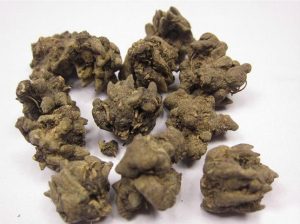
This product is slightly spherical or oval in shape, somewhat flattened, with a diameter of approximately 1.5 mm. The surface is reddish-brown, with reticulate wrinkles or granular protrusions; one side is ridged, the other has a groove, and some may have a fruit stalk. It is hard and brittle, easily crushed. The endosperm is whitish and rich in oil.It has a faint odor and a bland taste. The best quality is characterized by plump grains, a reddish color, mature seeds, and purity without impurities.
Properties of Processed Slices
1. Mulberry Seeds: See “Characteristics of the Medicinal Material.”
2. Roasted Mulberry Seeds: Resemble raw mulberry seeds in shape but are darker in color and have a slight aroma.
Botanical Information
Botanical Classification
Morus alba, a species of the genus Morus in the family Moraceae.
Morphological Characteristics
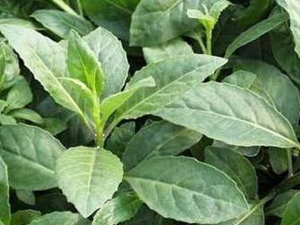
A deciduous tree, reaching a height of 14–16 m. Contains latex. Twigs are stout and densely covered with tomentum. Simple leaves are alternate; petioles are 1.5–10 cm long and densely covered with soft hairs;leaf blades are membranous or papery, broadly ovate to oblong-ovate, 5.5–20 cm long and 4–15 cm wide, entire or 3–5-lobed (particularly evident on young branches or leaves of small trees), with an acuminate apex, a rounded or shallowly cordate base that is slightly oblique, and margins bearing fine or coarse teeth; the upper surface is dark green and covered with coarse, appressed hairs,the underside is gray-green and densely covered with soft hairs. Flowers are unisexual, with separate male and female plants; male inflorescences are catkins, 1–1.5 cm in diameter, with a peduncle 1–1.5 cm long;male flowers are short-stalked, with 2–3 small bracts; the perianth is 4-lobed, fused at the base, and there are 4 stamens; the bracts of female flowers are club-shaped and hairy; the perianth is tubular; the pistils are scattered among the bracts; the style is slender, linear, covered with short hairs, and sticky. The aggregate fruit is fleshy, spherical, approximately 2 cm in diameter, and orange-red when ripe.Flowering period: April–July; fruiting period: July–September.
Distribution Area
It is distributed in East China, South China, and Southwest China, as well as in Hebei, Shanxi, Shaanxi, Gansu, Hubei, and Hunan.
Growth Habits
It prefers a warm and humid climate, is highly adaptable, and is tolerant of both drought and hot, humid conditions. It is not particular about soil type, but grows best in sunny locations with deep, loose, and fertile soil.
Propagation Methods
Propagation is by root division, though it can also be propagated by suckers or layering.
Cultivation Techniques
Propagation by root division: Generally, after the leaves fall in winter, select a fruiting branch, dig around its roots, and cut 15–20 cm long root segments for planting.Transplant after 1–2 years of cultivation. When seedlings reach 60–100 cm in height, choose a time in early spring before bud break or after winter leaf fall. Dig planting holes with a row and plant spacing of 5 m × 5 m; ensure the bottom of each hole is level, apply well-rotted manure, then cover with a layer of soil. Plant one seedling per hole, fill the hole with soil, firm it down, and water thoroughly. Since the species is dioecious, focus on cultivating female plants, while planting a suitable number of male plants to facilitate pollination.During the seedling stage, loosen the soil, remove weeds, and apply top dressing in April and July.