Phoenix Eye Fruit is a name used in traditional Chinese medicine. It refers to the seeds of Sterculia nobilis Smith, a plant in the Sterculiaceae family. It is distributed in Guangxi, Fujian, Taiwan, Guangdong, Hainan, Yunnan, and other regions. It has the effects of harmonizing the stomach, aiding digestion, detoxifying, and killing parasites. It is used to treat regurgitation, abdominal pain caused by parasitic infestations, hernia pain, and scalp sores in children.

Phoenix Eye Fruit
Phoenix Eye Fruit is a name used in traditional Chinese medicine. It refers to the seeds of Sterculia nobilis Smith, a plant in the Sterculiaceae family. It is distributed in Guangxi, Fujian, Taiwan, Guangdong, Hainan, Yunnan, and other regions. It has the effects of harmonizing the stomach, aiding digestion, detoxifying, and killing parasites. It is used to treat regurgitation, abdominal pain caused by parasitic infestations, hernia pain, and scalp sores in children.
Chinese Name : 凤眼果
Aliases : Luohuangzi, Pingpo Fruit, Jiucengpi, Pan’an Fruit, Qijie Fruit, Fugui Seed, False Jiucengpi, Hongpi Fruit
Nature, Flavor & Meridian Tropism : Sweet in taste, neutral in nature; enters the Stomach, Large Intestine, and Small Intestine meridians
Benefits & Efficacy
Benefits
Harmonizes the stomach and aids digestion; detoxifies and kills parasites.
Indications
Mainly used to treat regurgitation and vomiting, abdominal pain caused by parasitic infestation, hernia pain, and scalp sores in children.
Usage and Dosage
Internal use: Decoct 6–8 fruits in water; or grind into a powder. External use: Apply an appropriate amount of the powder after calcining to retain its properties and mixing with a carrier.
Precautions
Patients requiring treatment with traditional Chinese medicine should first consult a licensed TCM hospital, where a TCM practitioner will conduct a professional diagnosis and prescribe the appropriate herbal formula.
Relevant Discussions
*Essentials of the Properties of Raw Herbs*: “To treat pediatric ‘Tianpo Jiu’ (pediatric head sores), calcify until the essence remains, mix with oil, and apply topically; to dispel heat, boil with meat and consume.”
Applications
Clinical Applications
1. For gastroparesis with vomiting of food—where food is regurgitated immediately after ingestion, or where food eaten in the morning is vomited in the evening and food eaten in the evening is vomited in the morning: Seven Luohuangzi seeds, calcined until charred. Mix one fangcun bi of the powder with wine daily; continue until the entire dose is consumed.
2. For ascending roundworms in the abdomen causing excruciating pain beneath the heart and white spots on the face: Seven Luohuangzi seeds and seven Qianniuzi seeds each. Decoct in water and take orally.
3. For hernia pain: Seven Luohuangzi seeds. Decoct in wine and take orally. (Formulas 1–3 are from Yao Kecheng’s *Food Materia Medica*)
Notes
References: [1] Editorial Committee of *Chinese Materia Medica*, State Administration of Traditional Chinese Medicine. *Chinese Materia Medica* [M]. Shanghai: Shanghai Science and Technology Press, 1999. [2] Zhao Guoping, Dai Shen, Chen Renshou, et al. *Encyclopedia of Chinese Materia Medica* [M]. 2nd ed. Shanghai: Shanghai Science and Technology Press, 2006. [3] Miao Jianhua, Zhang Zhanjiang, Huang Hao, et al. *Guilin Encyclopedia of Traditional Chinese Medicine Resources* [M]. Guangzhou: Guangdong Science and Technology Press, 2021. [4] Li Jingwei, Yu Ying’ao, Wang Zhenrui. *Encyclopedia of Traditional Chinese Medicine* [M]. 3rd ed. Beijing: China Medical Science and Technology Press, 2023. [5] Chen Yuchun. Illustrated Guide to the Identification and Application of Wild Medicinal Herbs [M]. Beijing: China Medical Science and Technology Press, 2020. [6] Xu Honghua, Li Wei, Zhan Ruoting. Illustrated Atlas of Ex situ Conservation Plants of Lingnan Medicinal Herbs [M]. Wuhan: Huazhong University of Science and Technology Press, 2019.
Processing & Preparation
Harvesting & Processing
Harvest when the fruits are ripe, remove the seeds, and sun-dry them for later use.
Storage Methods
Store in a cool, dry place.
Crude Drug Identification
Properties of Crude Drugs
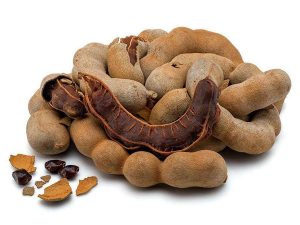
The seeds are elliptical-spherical, blackish-brown or dark chestnut-brown, with a diameter of about 1.5 cm. They have a faint odor and a bland taste.
Botanical Information
Botanical Classification
Pingpo, a plant of the family Sterculiaceae.
Morphological Characteristics
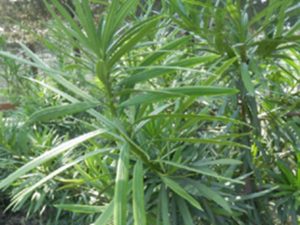
A tree reaching up to 10 m in height; the bark is blackish-brown, and young twigs are sparsely covered with stellate hairs. Simple leaves are alternate and thin, leathery; petioles are 2–3.5 cm long; stipules are early deciduous; leaf blades are oblong or elliptical, 8–26 cm long and 5–15 cm wide, with a blunt or acute apex, a rounded or blunt base, and entire margins. Both surfaces are glabrous.Panicles are terminal or axillary, spreading or pendulous, 8–20 cm long, pubescent, with pedicels much longer than the flowers;Flowers are bisexual, without a corolla; the calyx is initially milky white, later turning pale red, bell-shaped, about 1 cm long, covered with short soft hairs, 5-lobed, with linear-lanceolate lobes that are gradually tapering and incurved at the apex, fused together at the tip, and equal in length to the bell-shaped calyx tube;Male flowers are more numerous; the staminal and pistillate pedicels are curved, and the anthers are yellow. Female flowers are fewer in number and slightly larger; the ovary is globose, with 5 grooves, and hairy; the style is curved, and the stigma is shallowly 5-lobed. The capsule is bright red, oblong-ovate, about 5 cm long and 2–3 cm wide, with a beak at the apex; each capsule contains 1–4 seeds.Seeds are elliptical or oblong, approximately 1.5 cm in diameter, and dark brown. Flowering occurs from April to May.
Distribution Area
It is distributed in Guangxi, Fujian, Taiwan, Guangdong, Hainan, Yunnan, and other regions.
Propagation Methods
Propagated by seeds and cuttings.