Processed Polygala is a prepared form of the traditional Chinese medicinal herb Polygala. It is made by boiling the dried roots of Polygala tenuifolia Willd. or Polygala sibirica L. in licorice juice. This product is primarily produced in Shanxi, Shaanxi, Hebei, and Henan. It is known for its ability to calm the mind and enhance cognitive function, and is commonly used to treat restlessness, palpitations, insomnia, and forgetfulness.In addition, processed Polygala retains, to a certain extent, the original herb’s ability to harmonize the heart and kidneys, eliminate phlegm and open the orifices, and disperse abscesses and swellings. It can assist in treating conditions such as disharmony between the heart and kidneys, epilepsy and mania, difficult expectoration, abscesses and toxic swellings, and breast swelling and pain.
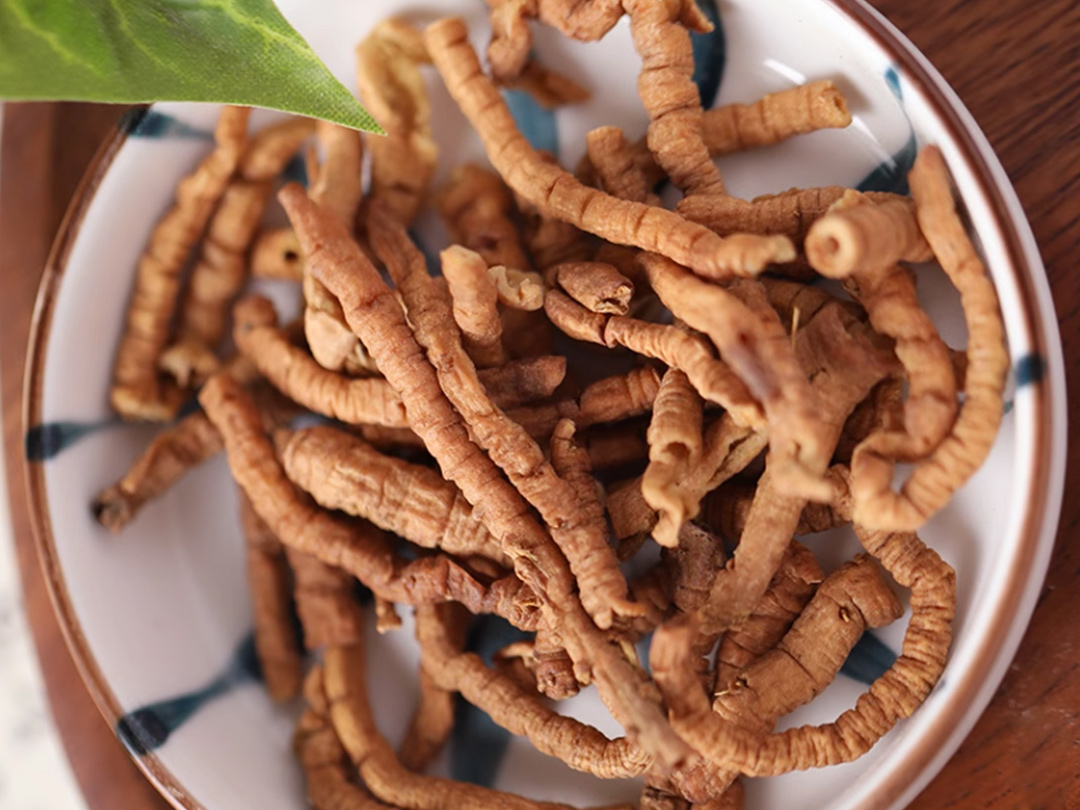
Processed Polygala
Processed Polygala is a prepared form of the traditional Chinese medicinal herb Polygala. It is made by boiling the dried roots of Polygala tenuifolia Willd. or Polygala sibirica L. in licorice juice. This product is primarily produced in Shanxi, Shaanxi, Hebei, and Henan. It is known for its ability to calm the mind and enhance cognitive function, and is commonly used to treat restlessness, palpitations, insomnia, and forgetfulness.In addition, processed Polygala retains, to a certain extent, the original herb’s ability to harmonize the heart and kidneys, eliminate phlegm and open the orifices, and disperse abscesses and swellings. It can assist in treating conditions such as disharmony between the heart and kidneys, epilepsy and mania, difficult expectoration, abscesses and toxic swellings, and breast swelling and pain.
Chinese Name : 制远志
Aliases : Processed Poria, Processed Poria Sclerotium, Processed Artemisia, Processed Fine Grass, Processed Thread Tea
Nature, Flavor & Meridian Tropism : Warm in nature, bitter and pungent in taste; enters the Heart, Kidney, and Lung meridians
Benefits & Efficacy
Benefits
Processed Polygala has a warm nature, a bitter and pungent taste, and enters the Heart, Kidney, and Lung meridians. It primarily calms the mind and enhances cognitive function, and also has certain effects in harmonizing the Heart and Kidney, eliminating phlegm and opening the orifices, and dispersing abscesses and swellings.
Indications
1. Processed Polygala is commonly used to treat restlessness, palpitations, insomnia, and forgetfulness. 2. Processed Polygala can also treat epileptic convulsions and febrile convulsions caused by phlegm obstructing the heart orifices. 3. Processed Polygala can also help treat conditions such as difficult expectoration, abscesses and swellings, and breast swelling and pain.
Usage and Dosage
Take 3–10 g as a decoction; or incorporate into pills or powders.
Precautions
Use with caution in patients with gastric ulcers and gastritis.
Chemical Constituents
This product primarily contains triterpenes and their glycosides (such as polygalaic acid, Polygala tenuifolia saponin, polygala aglycone A, and polygala aglycone B), as well as glutone compounds (such as 6-hydroxy-1,2,3,7-tetramethoxyglutone, 1,2,3,7-tetramethoxyglutonone, 1,2,3,6,7-pentamethoxyglutonone), alkaloids (such as 1-butoxycarbonyl-β-caryophyllene, 1-ethoxycarbonyl-β-caryophyllene),sterol compounds (such as α-betasitosterol glucoside, α-betasitosterol glucoside-6'-O-palmitate, and stigmasterol),phenolic glycosides (such as 3,6'-diisothiocyanato-sucrose and Polygala glycosides A, B, C, and D), etc.
Pharmacological Actions
Modern pharmacological studies have found that processed Polygala has sedative and hypnotic effects, antidepressant properties, improves learning and memory, enhances cardiac function, suppresses coughs and expels phlegm, inhibits gastrointestinal motility, stimulates uterine smooth muscle, combats diabetes and its complications, and exhibits anti-inflammatory effects.
Applications
Related Compatibility
Processed Polygala combined with stir-fried Ziziphus jujuba seeds: Processed Polygala has a bitter and pungent taste, a warm nature, and enters the Heart, Kidney, and Lung meridians; it can disperse stagnation of Heart Qi, harmonize the Heart and Kidney to calm the mind and enhance cognitive function; stir-fried Ziziphus jujuba seeds have a sweet and sour taste, a neutral nature, and enter the Liver, Gallbladder, and Heart meridians; they can nourish the Yin and blood of the Heart and Liver to calm the mind.When used together, these two herbs not only nourish yin and blood but also facilitate communication between the Heart and Kidney, enhancing their ability to calm the mind and soothe the spirit. They can be used to treat insomnia, palpitations, timidity, and forgetfulness resulting from deficiency of Liver blood and disharmony between the Heart and Kidney.
Medicinal Identification
Raw Polygala and processed Polygala are different prepared forms of the same herb. Due to differences in preparation methods, their therapeutic effects have distinct emphases. Raw Polygala calms the mind, enhances mental clarity, facilitates communication between the heart and kidney, eliminates phlegm, and reduces swelling. It is used to treat insomnia with frequent dreaming, forgetfulness, palpitations, and mental confusion caused by a lack of communication between the heart and kidney, as well as difficult expectoration, abscesses and swellings, and breast swelling and pain;Processed Polygala, on the other hand, not only mitigates its drying nature but also eliminates its numbing taste and prevents throat irritation. It primarily calms the mind and enhances cognitive function, and is frequently used to treat restlessness, palpitations, insomnia, and forgetfulness.
Related Medicines
Medicines containing processed Polygala include Brain-Nourishing Capsules, Brain-Tonifying Pills, Ginseng-Cinnamon-Deer Antler Pills, and Bi Zi Yang Xin Pills, among others.
Related Prescriptions
Formulas related to processed Polygala include Bai Zi Yang Xin Pills (from *Tiren Huibian*) and others.
Notes
Patients requiring treatment with processed Polygala should first consult a licensed Traditional Chinese Medicine (TCM) hospital to receive a TCM prescription following a professional TCM differential diagnosis.
Processing & Preparation
Harvesting & Processing
Harvest in spring and fall; remove fibrous roots and soil, then sun-dry. Cut into sections.
Processing Methods
Take licorice, add an appropriate amount of water, and decoct twice. Combine the decoctions, add the cleaned Polygala segments, and simmer over low heat until the liquid is completely absorbed. Remove and dry. Use 6 kg of licorice per 100 kg of Polygala segments.
Storage Methods
Store in a dry container, seal tightly, and keep in a well-ventilated, dry place.
Crude Drug Identification
Properties of Crude Drugs
Polygala is cylindrical, slightly curved, 2–30 cm long, and 0.2–1 cm in diameter. The surface is grayish-yellow to grayish-brown, with relatively dense and deeply sunken transverse and longitudinal wrinkles and fissures; the transverse wrinkles on older roots are denser and more deeply sunken, appearing slightly nodular.The texture is hard and brittle; it breaks easily. The cross-section shows a brownish-yellow cortex and a yellowish-white xylem; the cortex separates easily from the xylem, and the center is hollow when the woody core is removed. It has a faint odor and a bitter, slightly pungent taste; chewing it produces a scratchy sensation in the throat.
Properties of Processed Slices
Processed Polygala resembles Polygala segments, with a yellowish-brown surface. It has a slightly sweet taste, and chewing it does not cause a scratchy sensation in the throat.
Botanical Information
Botanical Classification
A plant of the genus Polygala in the family Polygalaceae.
Morphological Characteristics
A perennial herb. Height: 20–40 cm. The root is cylindrical, up to 40 cm long, fleshy, pale yellowish-white, and has a few lateral roots. The stems are erect or ascending, growing in clumps, and highly branched toward the top.Leaves are alternate, narrowly linear or linear-lanceolate, 1–4 cm long, 1–3 mm wide, with an acuminate apex, a gradually narrowing base, entire margins, and sessile or nearly sessile. The raceme is 2–14 cm long, borne obliquely at the tips of twigs, slender, and usually slightly curved; flowers are pale blue-purple, about 6 mm long;the pedicels are slender; bracts 3, minute, easily shed; the outer whorl of sepals consists of 3 relatively small, linear-lanceolate sepals, about 2 mm long; the inner whorl consists of 2 petal-like sepals, slightly curved and oblong-obovate;the lateral petals are obovate, about 4 mm long, while the central petal is larger, keel-shaped, with a cock’s-comb-like appendage at the apical end of the dorsal surface that is torn into strips; there are 8 stamens, with filaments fused into a sheath; the ovary is obovate and flattened, the style is linear and pendulous, and the stigma is 2-lobed.The capsule is flat, ovoid, and has narrow wings along the edges. The seeds are ovoid, slightly flattened, about 2 mm long, brownish-black, densely covered with fine white hairs, and have a well-developed aril at the upper end. Flowering occurs from May to July, and fruiting from July to September.
Distribution Area
It is distributed throughout most of China, primarily in Shanxi, Shaanxi, Hebei, and Henan.
Growth Habits
It prefers a warm and humid climate, is sun-loving, tolerant of high temperatures and drought, but not cold-hardy; it tolerates poor soil but is sensitive to waterlogging. It is highly adaptable and can grow in most types of soil, though it thrives best in well-drained, fertile, deep, humus-rich sandy loam.