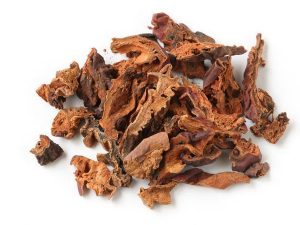
White Mugwort Flower is the name of a traditional Chinese medicinal herb. It refers to the flowers of Artemisia sieversiana Ehrhart ex Willd., a plant belonging to the genus Artemisia in the Asteraceae family. Artemisia sieversiana is distributed in Northeast China, North China, Northwest China, Southwest China, and Tibet, and is cultivated in Shandong, Jiangsu, and other regions. Its flowers have the effects of clearing heat and detoxifying, as well as drying dampness and promoting wound healing. It is primarily used to treat boils, carbuncles, toxic sores, damp sores, and eczema.
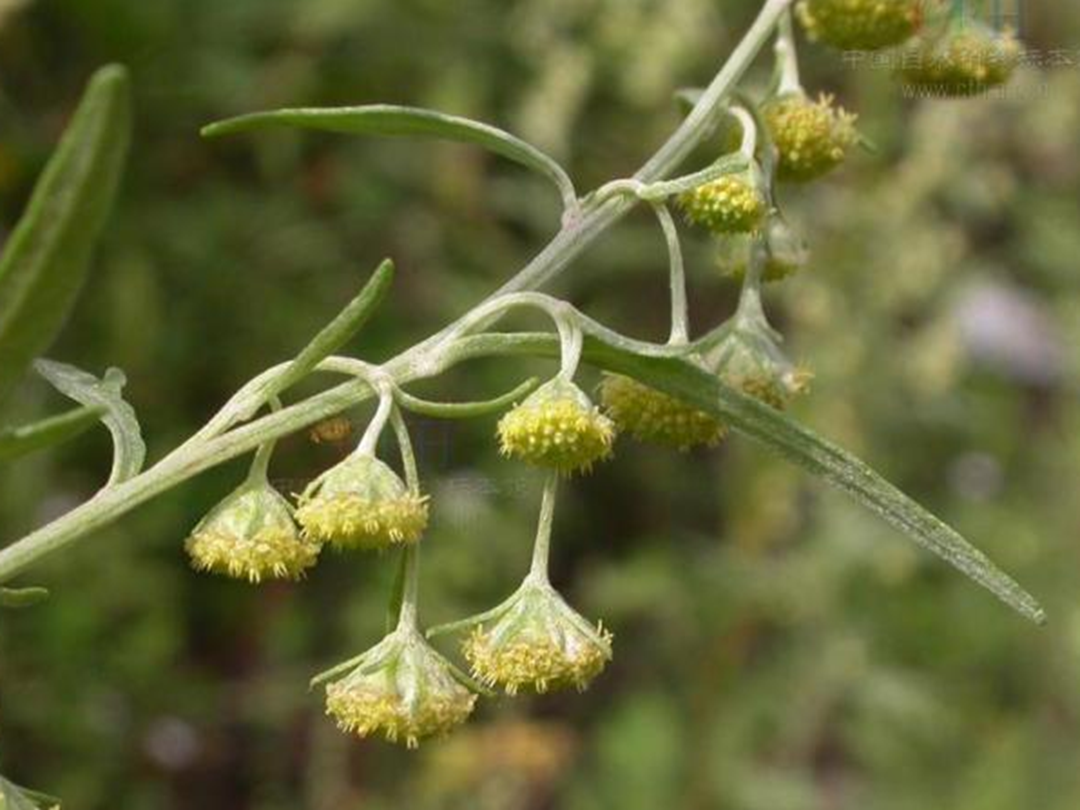
White Wormwood Flower
White Mugwort Flower is the name of a traditional Chinese medicinal herb. It refers to the flowers of Artemisia sieversiana Ehrhart ex Willd., a plant belonging to the genus Artemisia in the Asteraceae family. Artemisia sieversiana is distributed in Northeast China, North China, Northwest China, Southwest China, and Tibet, and is cultivated in Shandong, Jiangsu, and other regions. Its flowers have the effects of clearing heat and detoxifying, as well as drying dampness and promoting wound healing. It is primarily used to treat boils, carbuncles, toxic sores, damp sores, and eczema.
Chinese Name : 白蒿花
Nature, Flavor & Meridian Tropism : Bitter in taste, cool in nature; enters the Liver and Gallbladder meridians
Benefits & Efficacy
Benefits
Clears heat and detoxifies; dries dampness and promotes wound healing.
Indications
Boils, abscesses, carbuncles, damp sores, and eczema.
Usage and Dosage
1. Internal use: Decoct 10–15 g in water. 2. External use: Use an appropriate amount; decoct in water and use the solution for washing.
Precautions
Patients requiring treatment with Chinese herbal medicine should first consult a licensed Traditional Chinese Medicine (TCM) hospital, where a TCM practitioner will conduct a professional pattern differentiation and prescribe an herbal formula.
Applications
Clinical Applications
1. For abscesses, swellings, and carbuncles: 9–15 g of Artemisia argyi flowers. Decoct in water and take orally.
2. For weeping sores, eczema, and cervical erosion: An appropriate amount of Artemisia argyi flowers. Boil in water and use the solution to wash the affected area. (Formulas 1 and 2 are from *Medicinal Plants of Desert Regions*)
Notes
References: [1] Nanjing University of Chinese Medicine. *Encyclopedia of Chinese Materia Medica* (2nd ed.) [M]. Shanghai: Shanghai Science and Technology Press, 2006: 1017. [2] Editorial Committee of *Chinese Materia Medica*, State Administration of Traditional Chinese Medicine. *Chinese Materia Medica* Vol. 7 [M]. Shanghai: Shanghai Science and Technology Press, 1999: 694+696. [3] Miao Mingsan. *Supplementary Notes on Medicinal Resources* [M]. Taiyuan: Shanxi Science and Technology Press, 2024: 282.
Processing & Preparation
Harvesting & Processing
Harvested from June to August; used fresh or air-dried.
Crude Drug Identification
Botanical Information
Botanical Classification
Artemisia grandis, a plant of the genus Artemisia in the Asteraceae family.
Morphological Characteristics
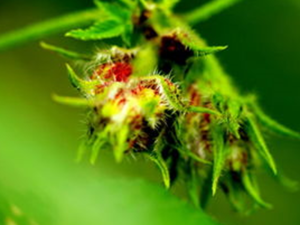
An annual or biennial herb, 50–150 cm tall. The taproot is single and narrowly spindle-shaped. The lower part of the stem is slightly lignified, with prominent longitudinal ridges; it is highly branched, and both the stem and branches are covered with grayish-white, fine pubescence. Leaves are alternate; petioles are 1–4 cm long; lower and middle leaves are broadly ovate or broadly ovate-orbicular, 4–8 cm long and 3–6 cm wide,pennately-pinnately or pinnately dissected two to three times, with 2–3 lobes on each side; the lobes are often further dissected into irregular pinnate divisions or deeply lobed; the small lobes are linear or linear-lanceolate, 2–10 mm long and 1–2 mm wide, with a blunt or acuminate apex, and bear small, pinnately-divided stipules at the base;Upper leaves and bract-like leaves are pinnately deeply lobed or entire, elliptic-lanceolate or lanceolate, sessile.Heads, numerous, hemispherical or nearly spherical, 3–6 mm in diameter, with short peduncles; often bearing small linear bracts at the base; arranged in racemes or compound racemes on branches; involucre in 3–4 layers; outer and middle layers grayish-white, finely pubescent or nearly glabrous on the abaxial surface, with a green midrib and narrowly membranous margins; inner layer membranous;The receptacle is hemispherical, with white receptacle hairs; male flowers are arranged in 2–3 layers, numbering 20–30, with corollas 2–4-lobed at the lobe tips, and styles linear, bifurcated at the apex;Hermaphroditic flowers are arranged in multiple layers, numbering 80–120; the corolla is tubular; the appendages at the upper end of the anthers are pointed and long-triangular, with a short point at the base; the style is as long as the corolla, with a forked apex, the fork ends being truncate and ciliate. The achenes are oblong. Flowering and fruiting occur from June to October.
Distribution Area
Distributed in Northeast China, North China, Northwest China, Southwest China, and Tibet. Cultivated in Shandong, Jiangsu, and other regions.