Racemose Inula, a name in traditional Chinese medicine. It refers to the root of the plant Inula racemosa Hook.f. (family Asteraceae). It has the effects of strengthening the spleen and harmonizing the stomach, regulating qi and relieving depression, and relieving pain and stabilizing the fetus. It is primarily used to treat pain in the chest and flanks, epigastric and abdominal pain, vomiting, diarrhea, and dysentery; contusions of the chest and flanks; pain caused by qi stagnation; and fetal restlessness.
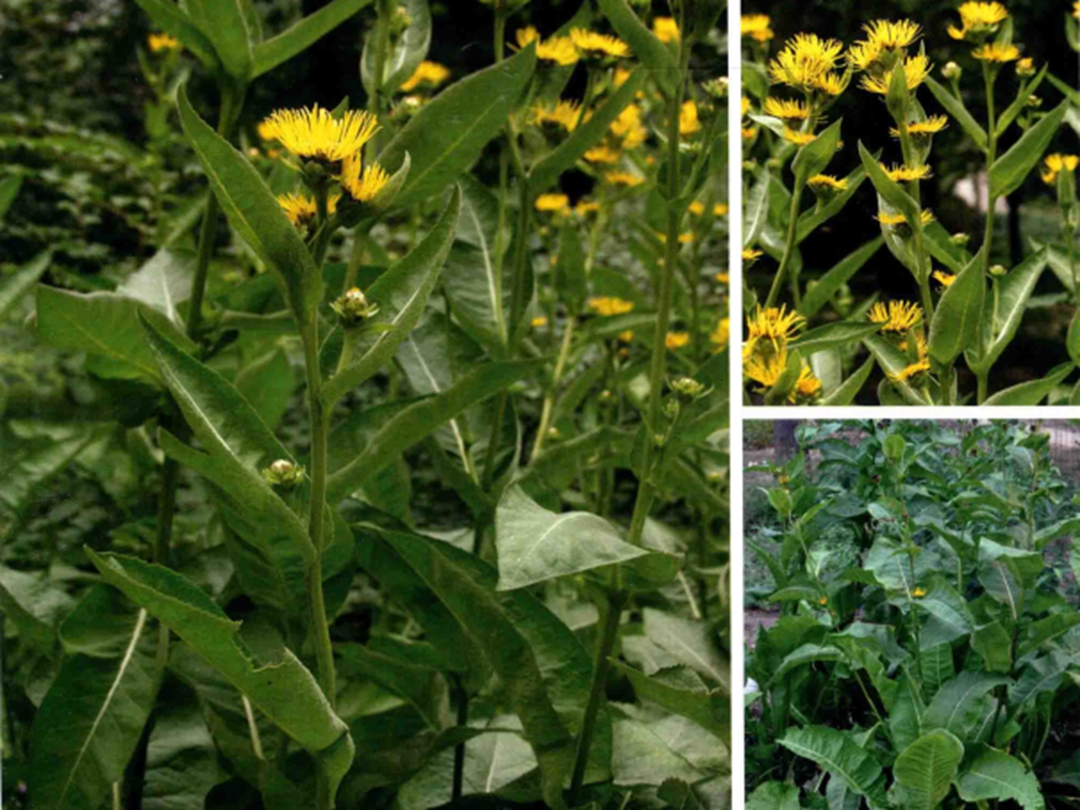
Racemose Inula
Racemose Inula, a name in traditional Chinese medicine. It refers to the root of the plant Inula racemosa Hook.f. (family Asteraceae). It has the effects of strengthening the spleen and harmonizing the stomach, regulating qi and relieving depression, and relieving pain and stabilizing the fetus. It is primarily used to treat pain in the chest and flanks, epigastric and abdominal pain, vomiting, diarrhea, and dysentery; contusions of the chest and flanks; pain caused by qi stagnation; and fetal restlessness.
Chinese Name : 总状土木香
Aliases : Zang Mu Xiang, Manu (Tibetan)
Nature, Flavor & Meridian Tropism : Pungent and bitter in taste; warm in nature. Enters the Spleen and Liver meridians
Benefits & Efficacy
Benefits
Strengthens the spleen and harmonizes the stomach; regulates qi and relieves stagnation; alleviates pain and stabilizes the fetus.
Indications
Mainly used to treat pain in the chest and flanks, epigastric and abdominal pain, vomiting, diarrhea, and dysentery; contusions of the chest and flanks; pain caused by qi stagnation; and restless fetus.
Usage and Dosage
Oral use: Decocted as a soup, 3–9 g; or incorporated into pills or powders.
Precautions
1. Patients requiring treatment with Chinese herbal medicine should first consult a licensed Traditional Chinese Medicine (TCM) hospital, where a TCM practitioner will conduct a professional pattern differentiation and prescribe the appropriate herbal formula. 2. If you need to take other medications concurrently while using this herb, consult your doctor or pharmacist first. Do not take any other medications on your own to avoid drug interactions that may reduce efficacy or increase the risk of adverse reactions. 3. Pregnant women, women planning to become pregnant, and breastfeeding women must proactively inform their doctor of their physiological status (such as stage of pregnancy or breastfeeding status) before taking this medication, so that the doctor can assess its safety and suitability based on individual circumstances.
Chemical Constituents
This product contains inulin and essential oils. The main components of the essential oils are thymolide, isothymolide, dioxythymolide, thymol acid, thymol alcohol, and triterpenoid compounds such as dammar dieneol acetate, daimunene D lactone, and 1-deoxy-8-epi-narin.
Pharmacological Actions
Modern pharmacological research has found that this product possesses anthelmintic and antibacterial properties.
Applications
Notes
References for this entry: [1] Encyclopedia of Traditional Chinese Medicine: http://zhongyaocai360.com/Z/zongzhuangtumuxiang.html [2] Qiu Wenqing. Compilation of Common Chinese Herbal Medicines: Color Illustrated Guide to Source Plants, Volume 2 [M]. Beijing: Traditional Chinese Medicine Classical Texts Press, 2012: 309. [3] Chen Renshou. Practical Manual of Chinese Materia Medica of the National Pharmacopoeia (2015 Edition) [M]. Nanjing: Jiangsu Phoenix Science and Technology Press, 2017: 367.
Processing & Preparation
Harvesting & Processing
Dig up the roots in late autumn, cut them into sections, and split the thicker ones lengthwise into segments; then sun-dry them.
Processing Methods
Remove impurities, wash thoroughly, moisten thoroughly, slice, and sun-dry.
Crude Drug Identification
Properties of Crude Drugs
This product is conical in shape, slightly curved, with numerous lateral roots. The surface is dark brown with longitudinal wrinkles; it is hard in texture and difficult to break. The vascular cambium ring is distinct on the cross-section, and the xylem exhibits a slightly radiating grain. It has a faintly fragrant odor and a bitter, pungent taste.
Botanical Information
Botanical Classification
A racemose Tussilago species of the Asteraceae family.
Morphological Characteristics
A perennial herb, the entire plant is hairy. The stem is erect and has longitudinal grooves. Basal leaves are clustered, with long petioles, serrated margins, a rough upper surface, and a densely tomentose lower surface; cauline leaves are smaller, nearly sessile, with oblong blades, and the basal parts of the upper leaves clasp the stem.The flower heads are arranged in racemes, with 4–5 layers of involucral bracts; the outer layer consists of yellow ray florets, while the central layer consists of tubular florets. The pappus is pale yellow and radiate. Flowering occurs from June to July, and fruiting from July to September.
Distribution Area
Mainly produced in Tibet and Xinjiang.