Southwest Buttercup, a name in traditional Chinese medicine. It refers to the aerial parts of the plant Southwest Buttercup (Ranunculus ficariifolius Lévl. et Vaniot) of the Ranunculaceae family. It is distributed in northern Yunnan, Guizhou, southwestern Sichuan, and western Hubei. It has the effects of draining dampness and reducing swelling, relieving pain and killing parasites, and arresting malaria. It is used to treat malaria.
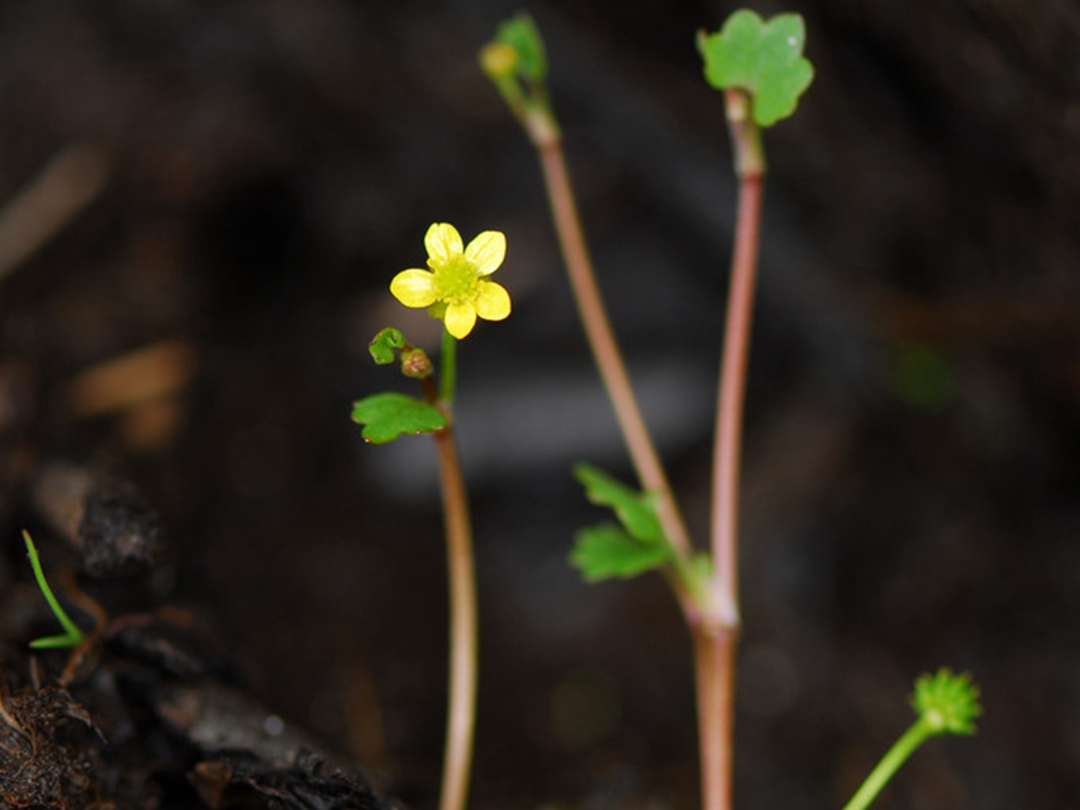
Southwest Buttercup
Southwest Buttercup, a name in traditional Chinese medicine. It refers to the aerial parts of the plant Southwest Buttercup (Ranunculus ficariifolius Lévl. et Vaniot) of the Ranunculaceae family. It is distributed in northern Yunnan, Guizhou, southwestern Sichuan, and western Hubei. It has the effects of draining dampness and reducing swelling, relieving pain and killing parasites, and arresting malaria. It is used to treat malaria.
Chinese Name : 西南毛茛
Nature, Flavor & Meridian Tropism : Pungent in taste, warm in nature. Enters the Liver and Spleen meridians
Benefits & Efficacy
Benefits
It drains dampness and reduces swelling, relieves pain, kills parasites, and cures malaria.
Indications
Used to treat malaria.
Usage and Dosage
External use: Apply an appropriate amount, pounded and applied to the affected area or acupoints.
Pharmacological Actions
It has the effect of relieving intestinal smooth muscle spasms.
Relevant Discussions
*Sichuan Chinese Herbal Medicine*: “Applying the stems and leaves to acupoints can treat malaria; applying them to the navel can treat abdominal pain and hernia pain.”
Applications
Processing & Preparation
Harvesting & Processing
Can be harvested year-round; typically used fresh.
Crude Drug Identification
Properties of Crude Drugs
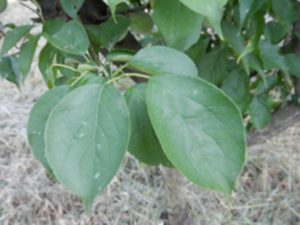
The whole plant is 10–30 cm long; roots sometimes grow from the lower nodes. Basal and cauline leaves are broadly ovate or nearly rhomboid, 0.5–3 cm long, with shallowly toothed or nearly entire margins; they are glabrous or bear appressed soft hairs and are yellowish-green; petioles are 1–4 cm long, with a sheath-like base.Flower stalks are opposite the leaves; flowers are 8–10 mm in diameter, with ovate sepals; there are 5 oblong petals. The aggregate fruit is nearly spherical, 3–4 mm in diameter; the achenes are ovoid-spherical, approximately 1.5 mm long, somewhat flattened on both sides, and bear small wart-like projections. It has a faint odor and a bitter, pungent taste.
Botanical Information
Botanical Classification
Southwest Ranunculus of the Ranunculaceae family.
Morphological Characteristics
Annual herb. Fibrous roots are slender and clustered. The stem is ascending and inclined, nearly erect, 10–30 cm tall, with numerous nodes; roots sometimes arise from lower nodes; the stem is densely pubescent or glabrous.Basal leaves resemble cauline leaves; leaf blades are entire, broadly ovate or nearly rhomboid, 0.5–2(–3) cm long, 5–15(–25) mm wide, with an acute apex, a cuneate or truncate base, and margins bearing 3–9 shallow teeth or nearly entire; glabrous or with appressed soft hairs;petioles 1–4 cm long, glabrous or pubescent, sheathing at the base. Cauline leaves numerous; the uppermost leaves are smaller, lanceolate, with short to absent petioles. Flowers 8–10 mm in diameter; pedicels opposite the leaves, 2–5 cm long, slender and curved downward, with appressed soft hairs; sepals ovate, 2–3 mm long, usually glabrous, spreading;There are 5 petals, oblong, 4–5 mm long, twice as long as wide, with 5–7 veins, rounded or slightly notched at the apex, and bearing a narrow claw 0.5–0.8 mm long at the base; the nectar groove is punctate on the upper part of the claw; anthers approximately 0.6 mm long; the receptacle is finely pubescent.The aggregate fruit is nearly spherical, 3–4 mm in diameter; the achenes are ovoid-spherical, about 1.5 mm long and 1.2 mm wide, somewhat flattened on both sides, with wart-like small projections, and a short, straight or curved beak about 0.5 mm long. Flowering and fruiting occur from April to July.
Distribution Area
It is distributed in northern Yunnan, Guizhou, southwestern Sichuan, and western Hubei.