Trichosanthes is the name of a traditional Chinese medicine. It consists of the dried, mature fruits of Trichosanthes kirilowii Maxim. and Trichosanthes rosthornii Harms, plants belonging to the genus Trichosanthes in the Cucurbitaceae family. It has the effects of clearing heat and eliminating phlegm, relieving chest congestion and dispersing nodules, and moistening dryness and lubricating the intestines.It is primarily used to treat coughs caused by lung heat with thick, yellow, turbid phlegm; chest pain due to chest obstruction; chest fullness and distension; mastitis; lung abscess; intestinal abscess; and severe constipation.
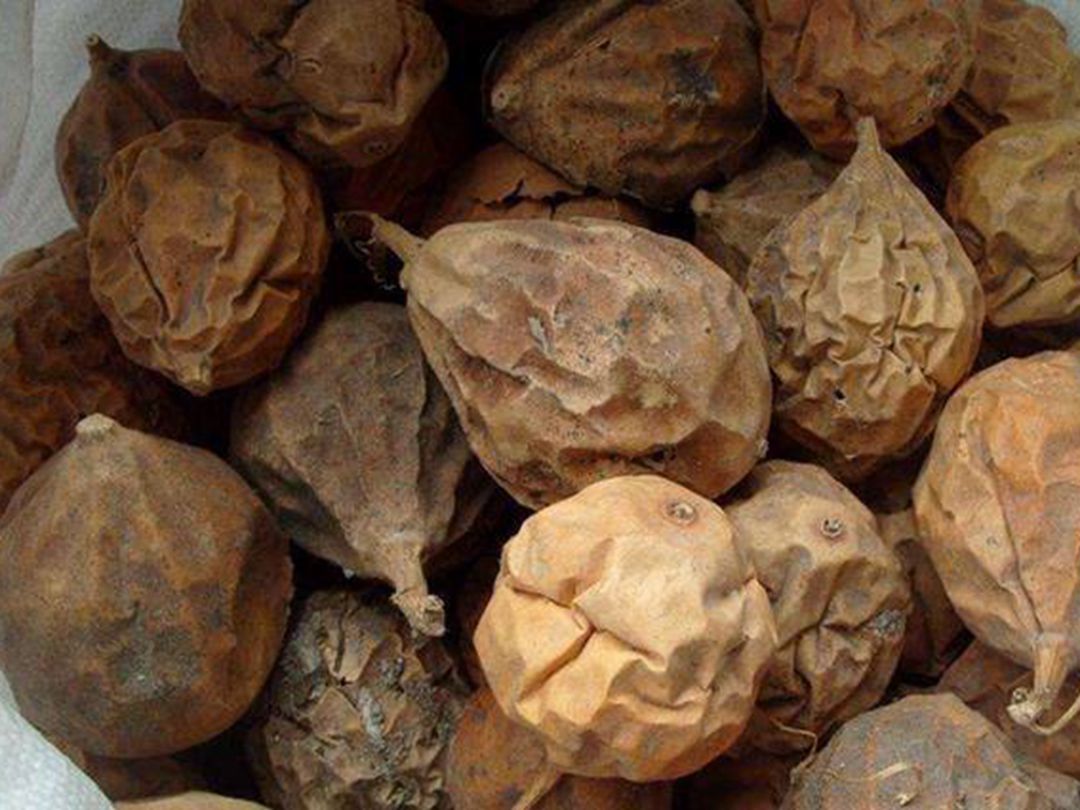
Trichosanthes
Trichosanthes is the name of a traditional Chinese medicine. It consists of the dried, mature fruits of Trichosanthes kirilowii Maxim. and Trichosanthes rosthornii Harms, plants belonging to the genus Trichosanthes in the Cucurbitaceae family. It has the effects of clearing heat and eliminating phlegm, relieving chest congestion and dispersing nodules, and moistening dryness and lubricating the intestines.It is primarily used to treat coughs caused by lung heat with thick, yellow, turbid phlegm; chest pain due to chest obstruction; chest fullness and distension; mastitis; lung abscess; intestinal abscess; and severe constipation.
Chinese Name : 瓜蒌
Latin Name : Trichosanthis Fructus
Aliases : Wangpu, Dilou, Zeju, Zeyi, Wangbai, Tiangua, Gulou, Zegu, Huanggu, Tianyuanzi, Shigu, Yekugu, Dugu, Dadugu, Yaogu, Shanjinpao
Authentic Producing Area : Shandong, Zhejiang, Henan
Nature, Flavor & Meridian Tropism : Sweet and slightly bitter in taste; cold in nature; enters the Lung, Stomach, and Large Intestine meridians
Benefits & Efficacy
Benefits
Clears heat and eliminates phlegm; relieves chest congestion and disperses nodules; moistens dryness and lubricates the intestines.
Indications
Cough due to lung heat with thick, yellow, turbid phlegm; chest pain due to chest obstruction; chest fullness and distension; mastitis; lung abscess; intestinal abscess; and constipation.
Usage and Dosage
1. Internal use: Decocted as a soup, 9–20 g; or incorporated into pills or powders. 2. External use: Apply an appropriate amount, pounded and applied as a poultice; or ground into a powder and mixed with a carrier for application.
Precautions
Contraindications for Combination with Other Chinese Herbs: Incompatible with dried ginger and Achyranthes root; contraindicated with Aconite.
Chemical Constituents
It primarily contains organic acids (n-tridecanoic acid, fumaric acid, succinic acid) and terpenoids (Trichosanthidol), as well as serine proteases A and B and sterols.
Pharmacological Actions
This herb possesses antitussive, expectorant, anti-myocardial ischemia, anti-hypoxia, anti-ulcer, antibacterial, antiplatelet aggregation, and antitumor effects.
Relevant Discussions
1. *Mingyi Bielu*: “Treats chest obstruction and imparts a radiant complexion.”
2. *Bencao Gangmu*: “Moistens lung dryness, reduces internal heat, treats coughs, clears phlegm congestion, soothes the throat, alleviates thirst, promotes bowel movements, and eliminates abscesses, swellings, and toxic sores.”
3. *Ben Cao Shu*: “The fruit of Trichosanthes kirilowii is rich in yin and moisturizing; therefore, it is an ideal remedy for phlegm caused by heat and dryness. However, if used for cold phlegm, damp phlegm, phlegm resulting from qi deficiency, or phlegm caused by food stagnation, it will be of no benefit and may even be harmful.”
Applications
Clinical Applications
1. For treating phlegm-heat obstructing the lungs, manifested as a cough with yellow, thick, and difficult-to-expectorate phlegm, accompanied by fullness and distension in the chest and diaphragm, it may be combined with Scutellaria baicalensis, Bile-processed Pinellia, and Fructus Aurantii, as in the Qingqi Huatan Pill (from *Yifang Kao*).To treat dry heat injuring the lungs, manifested as a dry cough with little or no phlegm—or phlegm that is scant and sticky and difficult to expectorate—it should be combined with Sichuan fritillary bulb, Trichosanthes root, and mulberry leaf.
2. For chest pain (xiongbi) caused by the mutual obstruction of phlegm and qi, with deficient chest yang, accompanied by shortness of breath, coughing, and spitting that prevents lying down, it is commonly combined with Allium tuberosum and Pinellia ternata, as in the Trichosanthes, Allium tuberosum, and White Wine Decoction or the Trichosanthes, Allium tuberosum, and Pinellia Decoction (*Essentials of the Golden Cabinet*).To treat phlegm-heat accumulation in the chest, characterized by fullness and distension of the chest and diaphragm with tenderness on palpation, it is combined with Coptis and Pinellia, as in the Minor Chest-Relieving Decoction (*Treatise on Cold Damage*).
3. To treat lung abscess with coughing up pus and blood, it is combined with Houttuynia, Reed Rhizome, and Platycodon; to treat intestinal abscess with abdominal pain, it may be combined with Patrinia and Red Vine;To treat early-stage mastitis with redness, swelling, heat, and pain, it is combined with dandelion, Tianhuafen, and frankincense.
4. To treat fluid deficiency and intestinal dryness with constipation, it is often used in combination with fire hemp seeds, prunus mume seeds, and raw rehmannia root.
Related Compatibility
1. Trichosanthes combined with Zhi Shi: Trichosanthes is sweet, cold, moistening, and descending; it clears heat, resolves phlegm, relieves chest congestion, disperses nodules, and moistens the intestines to promote bowel movements. Zhi Shi excels at breaking up stagnant qi, dispersing fullness, and eliminating phlegm. When used together, Trichosanthes clears and transforms congealed phlegm and turbidity; once the phlegm is removed, qi circulation is restored;Zhishi breaks up stagnant qi; as qi flows, it aids in the resolution of phlegm. Together, they achieve the effects of breaking up stagnant qi, resolving phlegm, eliminating fullness, and dispersing nodules. This combination is suitable for coughs with thick, yellow, and difficult-to-expectorate phlegm, chest and flank oppression and pain, accompanied by constipation; or for epigastric fullness caused by stagnant qi and internal obstruction of phlegm-heat, with chest and abdominal fullness, oppression, and pain; it can also treat large intestine qi stagnation and obstruction, resulting in abdominal distension and constipation.
2. Trichosanthes combined with Pinellia: Trichosanthes clears heat and resolves phlegm, relieves chest congestion, and disperses nodules; Pinellia, pungent, warm, and strongly drying, resolves phlegm, descends rebellious qi, eliminates fullness, and disperses nodules.When combined, these two herbs complement each other, demonstrating remarkable efficacy in resolving phlegm, dispersing nodules, relieving chest congestion, and eliminating epigastric fullness. This combination is suitable for epigastric fullness and distension caused by the mutual entanglement of phlegm-heat and stagnant qi, or chest pain resulting from the congealed accumulation of turbid phlegm; it is also effective for chest and diaphragm fullness due to phlegm-heat obstructing the lungs, accompanied by counterflow of qi, coughing, and the expectoration of thick, yellow phlegm.
3. Trichosanthes Fruit paired with Sichuan Fritillary Bulb: Both herbs have a sweet taste and a moist nature, clearing heat, resolving phlegm, and moistening dryness. When combined, they synergistically clear heat, moisten the lungs, and enhance the ability to resolve phlegm. This combination is suitable for coughs caused by phlegm-heat or dry-heat, characterized by difficulty expectorating phlegm and a dry throat.
4. Trichosanthes Fruit paired with Cinnamon Twig: Trichosanthes Fruit resolves phlegm, regulates qi, relieves chest congestion, and disperses nodules;Cinnamon Twig warms the meridians, promotes yang, and relieves pain. When used together, these two herbs complement each other, promoting the flow of yang, resolving phlegm, dispersing nodules, and alleviating pain. This combination is suitable for chest pain caused by phlegm-turbidity and chest obstruction.
5. Trichosanthes Fruit Combined with Scallop Shell: Trichosanthes Fruit is sweet and cold, with a moisturizing nature; it excels at resolving phlegm, relieving chest congestion, regulating qi, and dispersing nodules; Scallop Shell is bitter and salty, and excels at softening hard nodules and resolving thick phlegm.When used together, these two herbs reinforce and complement each other, enhancing the ability to clear the lungs and resolve phlegm while also relieving chest congestion and dispersing nodules. This combination is suitable for coughs caused by stagnation of phlegm-heat, impaired lung function (failure to disperse and descend), and qi stagnation in the chest and flanks, characterized by yellow, thick sputum and a sensation of fullness and oppression in the chest and flanks.
Medicinal Identification
1. Trichosanthes peel, Trichosanthes seeds, and whole Trichosanthes: All three come from the same source. Among them, Trichosanthes peel excels at clearing heat and resolving phlegm, regulating qi and relieving chest congestion, dispersing nodules, and reducing swelling; it is often used to treat coughs caused by phlegm-heat, chest constriction and fullness, and abscesses and swellings.Trichosanthes seeds are more effective at moistening dryness and resolving phlegm, as well as moistening the intestines and promoting bowel movements; they are frequently used to treat dry-heat coughs and intestinal dryness with constipation. Whole Trichosanthes fruit not only clears heat, resolves phlegm, regulates qi, and relieves chest congestion, but also moistens the intestines, promotes bowel movements, disperses nodules, and reduces swelling.
2. Trichosanthes Fruit and Tianhuafen: Both share the same origin; they are sweet in taste and cold in nature, and both can clear heat and moisten dryness. Trichosanthes Fruit excels at clearing tangible phlegm-heat from the lungs; it also moistens dryness and resolves phlegm, making it particularly effective for treating coughs and wheezing with heat-phlegm or dry-phlegm, as well as chest tightness. Additionally, it relieves chest constriction, regulates qi, and disperses nodules, making it suitable for treating epigastric fullness and chest constriction syndrome.Tianhuafen is sweet with a slightly bitter aftertaste; it excels at clearing intangible heat from the lungs, generating body fluids, and moistening dryness. It is particularly effective for treating feverish conditions with restlessness and thirst, as well as lung heat and dryness-induced coughs characterized by dry cough with scant phlegm or blood-streaked sputum, and internal heat-induced thirst;It can also reduce swelling and drain pus to treat skin ulcers. When used for early-stage skin ulcers with intense heat-toxin that have not yet formed pus, it can disperse the condition; for those where pus has already formed, it can promote ulceration and pus drainage.
3. Trichosanthes and Mustard Seed: Both can regulate qi, relieve chest congestion, and resolve phlegm; they are both effective for treating impaired qi circulation and chest and epigastric distension and pain caused by phlegm-dampness obstructing the lungs.However, Trichosanthes is cold in nature and moisturizing; it excels at clearing heat, moistening the lungs, resolving phlegm, regulating qi, relieving chest congestion, and moistening the intestines to promote bowel movements. It is particularly effective for treating coughs with yellow phlegm, fullness and distension in the chest and diaphragm, and chest bi syndrome caused by the intermingling of phlegm and heat.Mustard Seed (Jiezi) is pungent, warm, and intensely drying; it excels at warming the lungs, resolving phlegm, regulating qi, and dispersing nodules, making it suitable for chest and flank fullness and distension, as well as coughing and shortness of breath caused by the stagnation of cold phlegm.In addition, both can treat sores and abscesses; however, Trichosanthes is cold in nature and primarily treats ulcers, boils, and internal abscesses, while Mustard Seed is warm in nature and excels at eliminating phlegm from the skin and subcutaneous tissues, regulating qi, and dispersing nodules, making it particularly effective for treating swollen and painful yin-type abscesses.
4. Trichosanthes and Sichuan Fritillary Bulb: Both can clear heat, resolve phlegm, moisten the lungs, and disperse nodules, treating phlegm-heat and dry-heat coughs, as well as abscesses, sores, and toxic swellings. However, Trichosanthes excels at clearing lung heat and resolving phlegm; it is primarily used for lung-heat coughs and wheezing. It can also relieve chest constriction, disperse nodules, lubricate the intestines, and promote bowel movements, making it suitable for treating chest obstruction and intestinal dryness-induced constipation.Chuan Beimu has a more pronounced effect in moistening the lungs and resolving phlegm, and is particularly used for dry coughs caused by lung heat and chronic coughs due to lung deficiency.
Related Medicines
Cough and Asthma Relief Syrup, Chest Pain Relief Tablets, Shuanghu Liver-Clearing Granules, and Yan Zhi Dan Capsules.
Related Prescriptions
Gualou Decoction (*Shengji Zonglu*), Gualou-Xie Bai-Baijiu Decoction (*Jingui Yaolue*), Minor Xiantong Decoction (*Shanghan Lun*), Modified Gualou Powder (*Wai Ke Da Cheng*), and Tuoli Powder (*Jingyue Quanshu*).
Medicinal Diet Therapy
Stewed Pork Stomach with Trichosanthes Fruit and Da Fu Pi
1. Benefits: Relieves chest congestion, disperses nodules, promotes diuresis, and soothes the liver. Suitable for patients with liver cirrhosis complicated by diabetes.
2. Ingredients: 20 g Trichosanthes fruit, 25 g Da Fu Pi, 1 pork stomach, 5 g each of ginger, scallions, and salt, and 10 g garlic.
3. Preparation: Wash the Da Fu Pi and Trichosanthes fruit thoroughly.Wash the pork tripe, blanch it thoroughly in boiling water, then remove and set aside. Slice the ginger, cut the scallions into sections, and peel and slice the garlic. Place the pork tripe in a stew pot, put the Da Fu Pi and Trichosanthes fruit inside the tripe, add 1,500 ml of water, and add the salt, ginger, and scallions. Bring the stew pot to a boil over high heat, then simmer over low heat for 1 hour until done.
4. Usage: Consume once daily, eating 50g of pork stomach each time and drinking as much broth as desired.
Notes
Patients requiring treatment with traditional Chinese medicine should first consult a licensed TCM hospital, where a TCM practitioner will conduct a professional pattern differentiation and issue a prescription.
Processing & Preparation
Harvesting & Processing
In autumn, when the fruits are ripe, cut them off along with the fruit stalks and place them in a well-ventilated area to air-dry in the shade.
Processing Methods
1. Trichosanthes Fruit: Take the raw herb, remove impurities and the fruit stalks, wash thoroughly, flatten, cut into strips or chunks, and dry.
2. Honey-coated Trichosanthes: Take refined honey, dilute it with an appropriate amount of boiling water, pour it over the clean Trichosanthes strips or chunks, mix thoroughly, and let it soak until moistened. Place the mixture in a roasting pan, heat over low heat, and roast until it no longer sticks to the hands. Remove and let cool. Use 15 kg of refined honey for every 100 kg of Trichosanthes strips or chunks.
Storage Methods
Store in a dry container. Seal the honey-coated Trichosanthes and keep in a cool, dry place.
Crude Drug Identification
Identification
1. The powder of this product is yellowish-brown to dark brown. It contains a large number of stone cells, which occur in clusters of several or as scattered individuals. They are yellowish-green or pale yellow, with a roughly square or rounded polygonal shape, fine and dense pits, and fine, distinct pit canals.Epidermal cells of the fruit peel appear roughly square or polygonal in surface view, with vertical walls of varying thickness. Epidermal cells of the seed coat appear roughly polygonal or irregular in surface view, with horizontal walls bearing slightly curved or straight cuticular striations. Thick-walled cells are relatively large, mostly scattered singly, brown in color, and vary in shape. Spiral and reticulate vessels are commonly observed.
2. Take 2 g of the powdered sample, add 20 mL of methanol, subject to ultrasonic treatment for 20 minutes, filter, and evaporate the filtrate to dryness. Dissolve the residue in 5 mL of water, extract four times with 5 mL of water-saturated n-butanol each time by shaking, combine the n-butanol extracts, and evaporate to dryness. Dissolve the residue in 2 mL of methanol to prepare the test solution.Separately, take 2 g of Trichosanthes kirilowii reference material and prepare a reference material solution using the same method.Perform thin-layer chromatography (General Chapter 0502): Pipette 4 μL of each of the two solutions and apply them separately onto the same silica gel G plate. Develop with a mobile phase of ethyl acetate–methanol–formic acid–water (12:1:0.1:0.1), remove the plate, and allow it to air-dry.spray with a 10% ethanol solution of sulfuric acid, heat at 105°C until the spots become clearly visible, and examine under natural light and ultraviolet light (365 nm), respectively. In the test sample chromatogram, spots of the same color or fluorescent spots appear at positions corresponding to those in the reference herbal material chromatogram.
Properties of Crude Drugs
This product is subglobose or broadly elliptical, 7–15 cm long and 6–10 cm in diameter. The surface is orange-red or orange-yellow, wrinkled or relatively smooth. The apex bears a rounded stigma remnant; the base is slightly pointed and bears a residual fruit stalk. The weight varies.It is brittle and breaks easily; the inner surface is yellowish-white with reddish-yellow fibrous strands. The pulp is orange-yellow and viscous, clumped together with numerous seeds. It has a caramel-like odor and a slightly sour, sweet taste.
Properties of Processed Slices
1. Trichosanthes: Irregularly shaped strands or chunks consisting of a mixture of rind, pulp, and seeds. The rind is orange-yellow; the pulp is yellowish-white; the seeds are flat and oval, with a grayish-brown surface and a ring of grooves around the edges; they have a sour and slightly sweet taste.
2. Honey Trichosanthes: Brownish-yellow in color, sticky, and sweet in taste.
Botanical Information
Botanical Classification
Derived from Trichosanthes kirilowii or Trichosanthes unilobata, plants of the Cucurbitaceae family.
Morphological Characteristics
1. Trichosanthes: A climbing vine that can grow up to 10 m in length. The tuberous root is cylindrical, thick, and rich in starch. The stem is relatively thick, highly branched, with longitudinal ridges and grooves, and covered with white, spreading soft hairs. Leaves are alternate; petioles are 3–10 cm long, with longitudinal striations and covered with long soft hairs; tendrils are 3–7-branched and covered with soft hairs;leaf blades are papery, with an outline that is nearly circular or nearly heart-shaped, 5–20 cm in both length and width, often 3–7 shallowly to moderately lobed, rarely deeply lobed or unlobed with only unequal, coarse teeth; lobes are rhomboid-obovate or oblong, with a blunt or acute apex, margins often further shallowly lobed, base heart-shaped, with a deep notch 3–4 cm deep; upper surface is dark green and rough,the underside pale green; both surfaces covered with long, soft, bristly hairs along the veins; 5 basal palmate veins; fine veins reticulate.Dioecious; male racemes solitary or paired with a single flower, or solitary on the upper parts of branches; racemes 10–20 cm long, stout, with longitudinal ridges and grooves, bearing 5–8 flowers at the apex; bracteoles obovate or broadly ovate, coarsely toothed at the apex, stalked at the base, and covered with short soft hairs;The calyx tube is cylindrical, expanded at the apex, with lanceolate lobes that are entire; the corolla is white, with obovate lobes bearing a green tip at the central apex and filamentous fringes on both sides, and is pubescent; the anthers are connate, and the filaments are free, stout, and covered with long soft hairs; the female flowers are solitary, with a pedicel 7.5 cm long;The calyx tube is cylindrical, with lobes and corolla similar to those of the male flowers; the ovary is elliptical and green, the style is 2 cm long, and there are 3 stigmas. The fruit is elliptical or round, turning yellowish-brown or orange-yellow when ripe. The seeds are ovate-elliptical, flattened, pale yellowish-brown, and have ridges near the margins. Flowering occurs from May to August, and fruiting from August to October.
2. Bilateral Trichosanthes: This species closely resembles Trichosanthes, but its plants are smaller;leaves are usually deeply lobed 3–7 times, almost reaching the base; the lobes are linear-lanceolate or oblanceolate, and very rarely bear small sublobes; the small bracts of the male flowers are smaller, typically 5–16 mm long and 5–11 mm wide; the calyx lobes are linear; the ridges on the seeds are set farther from the margins.
Distribution Area
1. Trichosanthes: Distributed in North China, East China, Central and South China, as well as Liaoning, Sichuan, Guizhou, Yunnan, Shaanxi, and Gansu. 2. Bilobed Trichosanthes: Distributed in Jiangxi, southwestern Hubei, eastern Sichuan, Guizhou, northeastern Yunnan, southern Shaanxi, and southeastern Gansu.
Growth Habits
Prefers a warm and humid climate. Moderately cold-tolerant, not drought-tolerant, and susceptible to waterlogging. Best cultivated in sunny locations with deep, loose, fertile sandy loam. Not suitable for cultivation in low-lying areas or saline-alkali soils.
Propagation Methods
Propagation is achieved through seeds, root division, or layering; in commercial production, root division is the primary method, while seed propagation is mainly used for harvesting Trichosanthes root.
Cultivation Techniques
1. Direct Seeding: In September–October, select mature fruits with short, orange-yellow stalks. The following spring (March–April), soak the seeds in warm water (40–50°C) for one day and one night, remove and air-dry them, then stimulate germination using moist sand. Sow the seeds at 2-meter intervals between holes, covering them with 3–4 cm of soil. Seedlings emerge 15–20 days after sowing.
2. Propagation by root division: In early April, dig up all tuberous roots and root crowns. Select fresh, disease- and pest-free specimens for propagation and cut them into 7–10 cm segments. Ensure an appropriate mix of roots from female and male plants to facilitate pollination. Dig holes with a row spacing of 2 m and a plant spacing of 0.3 m. Place one segment of propagating root flat in each hole and cover with 4–5 cm of soil; seedlings will emerge in about one month.
Pest and Disease Control
Pests include the yellow melon beetle; adults begin feeding on leaves in May, while larvae bore into the roots. During the larval stage, apply a 30-fold dilution of nicotine solution as a root drench. The Trichoptera moth begins boring into stems and vines in July, causing entire branches to wither and die. Aphids damage tender terminal leaves.