Gardenia, a name in traditional Chinese medicine, refers to the dried, ripe fruit of Gardenia jasminoides Ellis, a plant of the genus Gardenia in the Rubiaceae family. It is primarily produced in Jiangxi, Hunan, Hubei, and Zhejiang.This product has the effects of purging fire and relieving restlessness, clearing heat and draining dampness, cooling the blood and detoxifying, and reducing swelling and relieving pain (for external use). It is mainly used to treat restlessness caused by febrile diseases, damp-heat jaundice, painful and difficult urination, vomiting and nosebleeds due to blood heat, redness, swelling, and pain in the eyes, sores and ulcers caused by fire toxins, and pain from sprains and contusions.

Gardenia
Gardenia, a name in traditional Chinese medicine, refers to the dried, ripe fruit of Gardenia jasminoides Ellis, a plant of the genus Gardenia in the Rubiaceae family. It is primarily produced in Jiangxi, Hunan, Hubei, and Zhejiang.This product has the effects of purging fire and relieving restlessness, clearing heat and draining dampness, cooling the blood and detoxifying, and reducing swelling and relieving pain (for external use). It is mainly used to treat restlessness caused by febrile diseases, damp-heat jaundice, painful and difficult urination, vomiting and nosebleeds due to blood heat, redness, swelling, and pain in the eyes, sores and ulcers caused by fire toxins, and pain from sprains and contusions.
Chinese Name : 栀子
Latin Name : Gardeniae Fructus
Aliases : Mudan, Xianzhi, Yuetao, Zhizi, Shanzhizi, Zhizi
Authentic Producing Area : Jiangxi, Hunan, Hubei, Zhejiang
Nature, Flavor & Meridian Tropism : Cold in nature, bitter in taste; enters the Heart, Lung, and Triple Energizer meridians
Benefits & Efficacy
Benefits
Purges fire and relieves restlessness; clears heat and drains dampness; cools the blood and detoxifies; reduces swelling and relieves pain (for external use).
Indications
Mainly used to treat restlessness due to febrile diseases, damp-heat jaundice, dysuria with burning pain, vomiting and nosebleeds caused by blood heat, redness, swelling, and pain in the eyes, sores and ulcers caused by fire toxins, and pain from sprains and contusions.
Usage and Dosage
1. Internal use: Decoct and take 5–10 g. 2. External use: Take an appropriate amount of the raw herb, grind into a powder, and apply as a poultice.
Precautions
1. This product is bitter and cold in nature and may damage the stomach; it is not suitable for individuals with yin and blood deficiency or spleen deficiency with loose stools. 2. Decocting Phellodendron, Scutellaria, and Gardenia together may cause a precipitation reaction. 3. It should not be used in combination with sedatives, anesthetics, beta-blockers, atropine, or similar medications.
Chemical Constituents
This product contains isogardin, dehydroisogardin, gardinone, shan-gardin, as well as the flavonoid gardenin, the triterpenoid compounds crocin and crocetin, and ursolic acid.
Pharmacological Actions
This product primarily exhibits antimicrobial, antipyretic, anti-inflammatory, analgesic, cholagogue, hepatoprotective, and hypoglycemic effects.
Relevant Discussions
1. *Shennong Bencao Jing*: “It treats pathogenic factors in the five internal organs, heat in the stomach, facial redness, acne caused by alcohol consumption, a crooked nose, and white and red leprosy-like sores and ulcers.”
2. *Ben Cao Zheng*: “When used as an auxiliary or messenger herb, Gardenia’s therapeutic applications vary: combined with Artemisia capillaris to eliminate damp-heat and treat jaundice; with fermented soybeans to clear heart fire and relieve restlessness; with Magnolia officinalis and Trifoliate Orange to alleviate fullness and irritability; with ginger and tangerine peel to stop vomiting and eliminate foul odors; and with Corydalis to dispel heat, stagnation, and blood stasis to relieve abdominal pain.”
Applications
Clinical Applications
1. A key herb for treating restlessness and agitation in febrile diseases; it may be used with light fermented soybeans, such as in the Gardenia and Fermented Soybean Decoction (*Treatise on Cold Damage*); for febrile diseases with intense fire-toxin, heat in all three jiao, and symptoms of high fever, restlessness, mental confusion, and delirium, it is combined with Scutellaria baicalensis, Coptis chinensis, and Phellodendron amurense, as in the Coptis Detoxification Decoction (*Wai Tai Mi Yao*)).
2. For jaundice caused by stagnant damp-heat in the liver and gallbladder, it is often combined with Yinchenhao and Da Huang, as in the Yinchenhao Decoction (*Treatise on Cold Damage*), or with Huangbai, as in the Gardenia and Phellodendron Decoction (*Essentials of the Golden Cabinet*).
3. For treating painful and scanty urination or heat-type dysuria, it is often combined with Akebia stem, Plantain seed, and Talc, as in the Eight-Correct Powder (from *Formulas of the Bureau of Medicinal Preparations*).
4. For conditions such as hemoptysis and epistaxis caused by uncontrolled blood flow due to blood heat, it is often combined with White Reed Root (Baimao Gen), Rhubarb (Da Huang), and Side Cypress Leaves (Ce Bai Ye), as in the Ten Ash Powder (Shihui San) from *The Divine Book of Ten Medicines*; for hemoptysis and epistaxis caused by excessive fire in the Triple Burner forcing uncontrolled blood flow, it is combined with Scutellaria (Huang Qin), Coptis (Huang Lian), and Phellodendron (Huang Bai), as in the Coptis Detoxification Decoction (Huanglian Jiedu Tang) from *Secret Essentials from the Outer Pavilion*.
5. To treat redness, swelling, and pain in the eyes caused by liver and gallbladder fire rising upward, it is often combined with Rheum palmatum, such as in the Gardenia Decoction (from *Shengji Zonglu*).
6. To treat fire-toxin sores and ulcers characterized by redness, swelling, heat, and pain, it is often combined with Lonicera japonica, Forsythia suspensa, and Taraxacum officinale; or combined with Angelica dahurica to aid in reducing swelling, such as in the Toxin-Reducing Powder (from *Puji Fang*).
Related Compatibility
1. Gardenia combined with Artemisia capillaris: Gardenia excels at purging fire, relieving restlessness, clearing heat, and draining dampness; Artemisia capillaris excels at clearing heat, draining dampness, promoting bile secretion, and alleviating jaundice.When used together, Yinchen serves as the primary herb and Gardenia as the auxiliary. With Gardenia’s support, Yinchen’s ability to clear heat, drain dampness, promote bile secretion, and alleviate jaundice is significantly enhanced, thereby guiding damp-heat out through urination. This combination is indispensable for treating damp-heat jaundice and is suitable for cases of damp-heat jaundice.
2. Gardenia combined with Scutellaria: Gardenia excels at clearing fire and heat in the Three Jiao, dispelling dampness, and detoxifying; Scutellaria primarily clears and drains fire and heat from the Upper and Middle Jiao, is particularly effective at clearing latent fire in the lungs, and can also dry dampness.When used together, Scutellaria’s ability to clear latent heat in the lungs is enhanced by Gardenia’s support. Combined, they can clear heat from the Three Jiao and drain lung heat. This combination is suitable for fever, restlessness, thirst, cough, and yellow phlegm caused by lung heat; damp-heat jaundice; and conditions such as menorrhagia, premature menstruation, and fetal restlessness caused by stagnant heat in the Liver meridian.
3. Gardenia combined with Forsythia: Gardenia is bitter and cold, with a descending and mild nature; it clears fire from the Heart, Lungs, and Triple Energizer while promoting urination, and also cools the blood to stop bleeding. Forsythia is light, clear, and ascending; it excels at clearing Heart fire, dispersing heat from the Upper Jiao, and promoting the smooth flow of qi and blood to disperse blood stasis and qi stagnation.When used in combination, these two herbs synergistically clear the heart, relieve restlessness, cool the blood, and eliminate toxins. This combination is suitable for conditions such as high fever and mental confusion caused by heat invading the pericardium in warm-heat diseases; mouth and tongue sores and dark, scanty, and painful urination due to heat in the Heart Meridian; and damp-heat jaundice accompanied by fever.
4. Gardenia combined with Moutan Bark: Gardenia is a blood-regulating herb that acts within the Qi level and excels at clearing stagnant fire in the Qi division;Peony Bark is a blood-regulating herb that acts on the Qi level, excelling at purging latent fire from the blood. When used together, one targets the Qi level and the other the blood level, enabling simultaneous treatment of both Qi and blood and effectively clearing and purging heat from the Liver Meridian. It is indicated for fever, headache, and red eyes caused by Liver Qi stagnation with excessive fire, as well as dizziness and headache due to hyperactive Liver Yang. It may also be used for menstrual irregularities resulting from heat in the Liver Meridian and Liver Qi stagnation.
Medicinal Identification
1. Raw Gardenia, Roasted Gardenia, Charred Gardenia, and Gardenia Charcoal: Gardenia is used medicinally in various forms, including raw Gardenia, roasted Gardenia, charred Gardenia, and Gardenia charcoal.Raw Gardenia is notably bitter and cold; it excels at purging fire and draining dampness, cooling the blood, and detoxifying. It is used for high fever in warm diseases, damp-heat jaundice, damp-heat dysuria, sores, swellings, and toxic abscesses, as well as sprains and contusions. Due to its strong bitter and cold nature, raw Gardenia can easily damage the middle qi and is irritating to the stomach; those with weak spleen and stomach may experience vomiting after ingestion, though this drawback can be eliminated by stir-frying.Fried Gardenia and Charred Gardenia have similar functions, though the former is slightly more bitter and cold than the latter. Both are effective at clearing heat and relieving restlessness, and are commonly used for heat-induced restlessness and red eyes due to liver heat. Generally, Fried Gardenia is used for more severe heat conditions, while Charred Gardenia is used for those with a weaker spleen and stomach.Gardenia Charcoal excels at cooling the blood and stopping bleeding; it is frequently used for hematemesis, hemoptysis, coughing up blood, epistaxis, hematuria, and metrorrhagia or menorrhagia.
2. Gardenia Peel and Gardenia Seed: These are different medicinal parts derived from the same source. Gardenia peel is the outer skin of the gardenia fruit, while gardenia seed is the seed itself. Ancient practitioners believed their therapeutic effects differed: gardenia peel tends to reach the exterior to dispel heat from the skin and muscles, whereas gardenia seed tends to penetrate the interior to clear internal heat.Modern research indicates that Gardenia seeds contain higher levels of gardenoside, while Gardenia peel contains lower levels; this aligns with the traditional theory that “seeds are used for internal heat, and peel is used for external heat.” However, modern clinical practice does not make such a strict distinction and often uses the two interchangeably.
3.Gardenia and Tianhuafen: Both are bitter and cold in nature and can clear heat, purge fire, reduce swelling, and detoxify. They are similarly used to treat restlessness in febrile diseases, heat-induced dysuria with red urine, and abscesses, swellings, and toxic sores. However, Tianhuafen is bitter with a slight sweetness and cold in nature; it has a strong ability to clear heat and generate body fluids, and is often used for thirst in febrile diseases and excessive thirst with frequent drinking; it can also clear lung heat and moisten dryness, primarily treating dry cough due to lung heat and cough with bloody sputum caused by phlegm-heat.Gardenia is bitter and cold in nature, with a descending action; it excels at clearing the heart and relieving restlessness, and is frequently used for restlessness and agitation caused by warm-heat diseases. It can also clear heat, drain dampness, cool the blood, and eliminate toxins, and is primarily used to treat jaundice, fever, and dark urine caused by stagnation of damp-heat in the liver and gallbladder, as well as hemoptysis, epistaxis, and hematuria resulting from uncontrolled blood heat.
Related Medicines
Gardenia and Honeysuckle Pills, Dao Chi Pills, and Longdan Xiegan Pills (water pills, granules, large honey pills, oral solution).
Related Prescriptions
Gardenia and Fermented Soybean Decoction (*Treatise on Cold Damage*), Coptis Detoxifying Decoction (*Secret Essentials from the Outer Pavilion*), Artemisia Decoction (*Treatise on Cold Damage*), and Eight-Correct Powder (*Formulas of the Bureau of Medicinal Preparations*).
Notes
Patients requiring treatment with Chinese herbal medicine should first consult a licensed Traditional Chinese Medicine (TCM) hospital to receive a prescription following a professional TCM differential diagnosis.
Processing & Preparation
Harvesting & Processing
Harvest from September to November when the fruits are ripe and reddish-yellow in color. Remove the fruit stalks and impurities, steam until steam rises or briefly blanch in boiling water, then remove and dry.
Processing Methods
1. Gardenia: Take the raw herb, remove impurities, and crush it. Alternatively, take the raw herb, remove impurities, grind it into a fine powder, sift it, and use either the kernel (after removing the peel) or the peel (after removing the kernel). Whole Gardenia clears heat, purges fire, cools the blood, and detoxifies. Gardenia kernel is particularly effective at clearing internal heat. Gardenia peel is particularly effective at clearing heat from the skin and muscles.
2. Roasted Gardenia: Place crushed Gardenia pieces in a pan, heat over low heat, and roast until deep yellow; remove and allow to cool. Roasting moderates the herb’s properties.
3. Roasted Gardenia Seeds: Place Gardenia seeds in a pan, heat over low heat, and roast until dark yellow.
4. Charred Gardenia: Place碎块 of Gardenia in a pan, heat over high heat, and stir-fry until it turns a charred yellow color; remove and let cool. Charred Gardenia cools the blood and stops bleeding; it is used for blood-heat-induced vomiting of blood, epistaxis, hematuria, and metrorrhagia.
5. Charred Gardenia Seeds: Place Gardenia seeds in a pan, heat over high heat, and stir-fry until they turn a charred orange color; remove and let cool.
6.Charred Gardenia: Place crushed gardenia pieces in a pan and heat over high heat, stir-frying until the surface turns dark brown. Sprinkle a small amount of water to extinguish any remaining embers, then remove and allow to cool completely. Charred Gardenia is used to astringe and stop bleeding.
7. Ginger-Processed Gardenia: Mix crushed gardenia pieces with ginger juice until thoroughly moistened. Place in a pan and stir-fry over low heat until dry, then remove and allow to cool.For every 100 kg of gardenia, use 10 kg of fresh ginger or 3 kg of dried ginger. The ginger treatment enhances the effects of relieving restlessness and stopping vomiting.
8. Salted Gardenia: Take clean gardenia and heat over high heat, stir-frying until the center is partially translucent. Spray with a measured amount of salt water, then continue stir-frying until dark brown. Remove and let cool. For every 100 kg of gardenia, use 3 kg of table salt.
Storage Methods
Store in a well-ventilated, dry place.
Crude Drug Identification
Identification
1. The powder of this product is reddish-brown. The stone cells of the inner pericarp are rectangular, circular, or triangular in shape, often arranged in alternating upper and lower layers or connected to fibers; they measure 14–34 μm in diameter, approximately 75 μm in length, and have walls 4–13 μm thick; the cell cavities often contain cubic crystals of calcium oxalate.The inner pericarp fibers are slender and fusiform, with a diameter of about 10 μm and a length of up to 110 μm; they are often arranged in an interlaced, oblique, mosaic pattern.The stone cells of the seed coat are yellow or pale brown, elongated polygonal, rectangular, or irregular in shape, with a diameter of 60–112 μm and a length of up to 230 μm; they have thick walls, very large pores, and a brownish-red cell cavity. Calcium oxalate cluster crystals have a diameter of 19–34 μm.
2. Take 1 g of the powdered sample, add 10 mL of 50% methanol, sonicate for 40 minutes, filter, and use the filtrate as the test solution. Separately, take 1 g of Gardenia jasminoides reference herbal material and prepare a reference herbal solution using the same method. Further, take a gardenoside reference standard and dissolve it in ethanol to prepare a solution containing 4 mg per mL, which serves as the reference standard solution.Perform the test according to the thin-layer chromatography method (General Chapter 0502). Pipette 2 μL of each of the three solutions and apply them separately onto the same silica gel G plate. Develop with a mobile phase of ethyl acetate–acetone–formic acid–water (5:5:1:1), remove the plate, and allow it to air-dry.In the chromatogram of the test sample, yellow spots of the same color appear at positions corresponding to those in the chromatogram of the reference herbal material; spray with a 10% ethanol solution of sulfuric acid and heat at 110°C until the spots become clearly visible. In the chromatogram of the test sample, spots of the same color appear at positions corresponding to those in the chromatograms of both the reference herbal material and the reference standard.
Properties of Crude Drugs
This product is oblong-ovate or elliptical, 1.5–3.5 cm long and 1–1.5 cm in diameter. The surface is reddish-yellow or brownish-red, with six wing-like longitudinal ridges; between the ridges there is often a distinct longitudinal vein, which is branched.The apex retains calyx lobes; the base is slightly pointed and bears remnants of the fruit stalk. The pericarp is thin and brittle, with a slight sheen; the inner surface is lighter in color, glossy, and features 2–3 raised pseudoseptae. The seeds are numerous, flattened-ovoid, clustered together, deep red or reddish-yellow, and densely covered with minute wart-like projections on the surface. It has a faint odor and a slightly sour and bitter taste.
Properties of Processed Slices
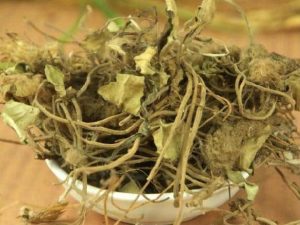
1. Gardenia Fruit: This product consists of irregular fragments. The surface of the pericarp is reddish-yellow or brownish-red; some may show wing-like longitudinal and transverse striations. The seeds are numerous, flattened ovoid, and deep red or reddish-yellow. It has a faint odor and a slightly sour and bitter taste.
2. Roasted Gardenia Fruit: The surface is reddish-yellow or yellowish-brown. The roasted gardenia seeds are flattened ovoid, with a dull yellow surface.
3. Charred Gardenia: The surface is charred yellow. The surface of the charred gardenia seeds is charred orange, with a charred aroma.
4. Carbonized Gardenia: The surface is dark brown or charred black.
5. Ginger-Processed Gardenia: The surface is golden yellow, with a ginger-like pungent taste.
6. Salted Gardenia: The surface is dark brown, with a salty and slightly bitter taste.
Botanical Information
Botanical Classification
Gardenia, a plant of the genus Gardenia in the Rubiaceae family.
Morphological Characteristics
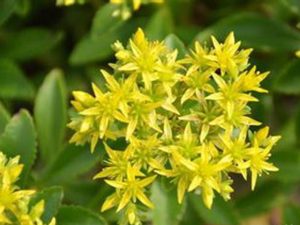
A shrub, 0.3–3 m tall; young branches are often covered with short hairs; branches are cylindrical and gray.Leaves are opposite or in whorls of three; leathery, rarely papery; leaf shapes vary, typically oblong-lanceolate, obovate-oblong, obovate, or elliptic, 3–25 cm long and 1.5–8 cm wide; apex acuminate, abruptly long-acuminate, or short-acuminate and obtuse; base cuneate or short-acuminate; both surfaces usually glabrous; upper surface bright green,the underside is darker; lateral veins number 8–15 pairs, raised on the underside and flat on the upper surface; petioles are 0.2–1 cm long; stipules are membranous. Flowers are fragrant, usually solitary at the branch tips, with pedicels 3–5 mm long;the calyx tube is inversely conical or ovate, 8–25 mm long, with longitudinal ridges; the calyx rim is tubular, expanded, and 5–8-lobed at the apex, usually 6-lobed; the lobes are lanceolate or linear-lanceolate, 10–30 mm long and 1–4 mm wide, elongating during fruiting and persistent;The corolla is white or creamy yellow, cup-shaped with a high rim, sparsely pubescent at the throat; the corolla tube is narrowly cylindrical, 3–5 cm long and 4–6 mm wide, 5–8-lobed at the apex (usually 6-lobed), with lobes widely spreading, obovate or obovate-oblong, 1.5–4 cm long and 0.6–2.8 cm wide;Filaments extremely short; anthers linear, 1.5–2.2 cm long, protruding; style thick and stout, ca. 4.5 cm long; stigma fusiform, protruding, 1–1.5 cm long, 3–7 mm wide; ovary ca. 3 mm in diameter, yellow, smooth.The fruit is ovate, nearly spherical, elliptic, or oblong, yellow or orange-red, 1.5–7 cm long, 1.2–2 cm in diameter, with 5–9 wing-like longitudinal ridges; the persistent sepals at the apex are up to 4 cm long and up to 6 mm wide; the seeds are numerous, flattened, nearly circular but slightly angular, approximately 3.5 mm long and 3 mm wide.Flowering period: March–July; fruiting period: May to February of the following year.
Distribution Area
It is distributed in Central and South China, Southwest China, as well as Jiangsu, Zhejiang, Anhui, Jiangxi, Fujian, and Taiwan.
Growth Habits
It prefers a warm and humid climate and likes sunlight but cannot tolerate intense sunlight; it thrives in loose, fertile, well-drained, slightly clayey acidic soil and is a typical acid-loving plant.
Propagation Methods
Propagation is by seed or cuttings.
Cultivation Techniques
1. Propagation by seed: Sowing can be done in spring or fall, with spring sowing being preferable. The optimal period is from early to late February (from the beginning of spring to the Rain Water solar term). Select plump, deep-red fruits, extract the seeds, rub them together in water to separate them, collect the seeds that sink to the bottom, and let them air-dry;Immediately mix them thoroughly with fine soil or wood ash, sow in rows within the furrows, cover with fine soil, and then cover with straw; after germination, remove the straw and weed regularly. If seedlings are too dense, thin them out gradually to maintain a spacing of 10–13 cm. Cultivate the seedlings for 1–2 years; once they reach a height of over 30 cm, they are ready for transplanting.
2. Propagation by Cuttings: The optimal cutting periods are late September to late October in the fall, and mid- to late February in the spring. Cut branches that are 2–3 years old and trim them into 17–20 cm long cuttings at the nodes. Plant the cuttings at a slight angle, leaving the top node exposed above the ground. They can be transplanted after about one year.
Pest and Disease Control
Diseases include brown spot, anthracnose, sooty mold, root rot, and chlorosis. Indoors, these diseases can occur year-round; in severe cases, plants may lose their leaves, drop their fruit, or die. Applying fungicides such as carbendazim or thiophanate-methyl at the onset or during the active phase of the disease can effectively control these conditions.